“Aitmatov”: how Bezrukov blessed Chingiz Torekulovich
A controversial biopic about the Kyrgyz writer with Tatar roots has been released in Russian distribution
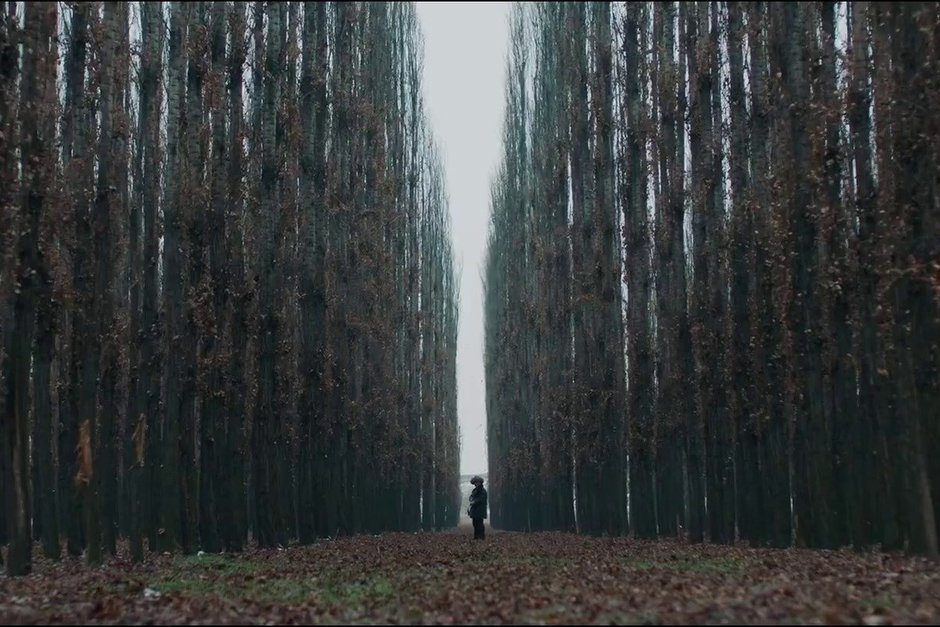
The debut film of the Kyrgyz director Kanybek Kalmatov, “Aitmatov” (16+), has been released in Russian distribution — about one of the main Soviet writers, whose roots are not only on Issyk-Kul but also in the Kukmorsky district of Tatarstan, from where the father of his mother came. The episodic roles of the poet Boris Pasternak and his wife Zinaida Neuhaus are performed by Sergei Bezrukov and Ravshana Kurkova, and the action of the picture takes place in the native steppes of the prose writer, as well as in Moscow and Berlin.
The train Frunze — Berlin
In the role of the writer — the 55-year-old Bolot Tentimyshov, who played almost his peer — in 1979, when the events of the picture took place, Aitmatov was 50—51. The director Kanybek Kalmatov in an interview emphasized that he wants to show the prose writer not as a monument.
At first the film frightens, then attracts with a scene from childhood, then causes bewilderment. The 1930s, the reading hall of the modern Russian State Library, which has preserved traces of the imperial style, the young Chyngyz, as they call him even in the Russian dubbing, performed by Nurislam Nadyrov, is writing something. And his father Torekul (Abylai Marat uulu) talks with Boris Pasternak (Sergei Bezrukov) and his wife Zinaida Neuhaus (Ravshana Kurkova). It is known that Bezrukov acted in the film for free, and Eldar Aitmatov presented him with the gold medal named after his father “for contribution to world culture and popularization of the work of Chingiz Aitmatov.”
The actor, fortunately, does not get into the role of Boris Leonidovich but says something simultaneously dissident and Soviet about freedom of speech, not forgetting to give a couple of compliments to the young prose writer too.
In the film this is not said, but we know that Torekul is the second secretary of the Kirghiz Regional Committee. And they are going to arrest him and make him an enemy of the people. The boy sees him for the last time at the station.
Meanwhile the already respected but as if dangerous to the authorities Aitmatov, who is writing “The Day Lasts More Than a Hundred Years," for some reason travels by train to Berlin accompanied by the head of the Union of Writers of the republic, Almaz Karaev (Marat Amiraev). It was he who crossed out his own grandfather, also a victim, from his life. And he also has a task from the KGB — to make sure that Aitmatov accepts in the GDR a contract from a certain publisher for the publication of a book and the family's move abroad.
A protest against what?
In these years Aitmatov became a Hero of Socialist Labor, received the second State Prize of the USSR for the literary basis of the feature film “The White Ship," and a second Order of Lenin. At this time he continued to be the head of the Union of Cinematographers of Kirghizia, actively developing this direction. And a few years later he would become the first secretary of the Union of Writers of Kirghizia. And from the 1990s he worked abroad, being ambassador to Luxembourg, Belgium, the Netherlands and France.
Why does the communist Aitmatov turn in the film into a person whom the regime does not need? In the film there appears a spy flavor unnecessary for a biopic. Karaev has a typewriter on which he types protocols in the next compartment. In addition to him, a car with surveillance drives around Berlin (the filming took place in Kaliningrad) after the writers. In short, “my name is Aitmatov, Chingiz Aitmatov.”
“Why did you come here?” Karaev asks, as if breaking the fourth wall. “I probably came here in order to return," Aitmatov answers in the logic of the film.
In the reports Karaev says that the writer leads an immoral way of life. The suddenly arisen frames about Aitmatov's relations with the ballerina Byubyusara Beishenalieva are devoted to this. In the frame his first wife Kerez and the children suffer, and on the stage of the theater Byubyusara tears herself out of Chingiz's embrace. Closer to the finale his second spouse Maria suddenly appears, again linking the son of Torekul with the son of Leonid, who puts an autograph by the lines “And the day lasts longer than a century.”
This is not a new topic for those interested: about the relations with the ballerina in 1997 Aitmatov himself wrote in detail in the book-dialogue with Mukhtar Shakhanov “The Hunter's Lament over the Abyss, or a Confession at the End of the Century”; in 2009 the film “Chingiz and Byubyusara” (16+) by Zhanych Kulmambetov came out. Their relations lasted 14 years; they lived in Frunze in neighboring entrances; Beishenalieva died in 1973 of oncology, which became the sad finale of their romance. An important part of the writer's story, although decided beautifully, is cut off abruptly, probably as an attempt to show the classic “not as a monument.”

The boy who remembers
Kalmatov, who began as a director of photography, at the same time authentically and historically conveys the picture and deftly changes the shots: for example, he sometimes films the conversations in the train from above, and achieves an effect of perspective in the tiny Soviet apartments. Therefore, if one closes one's eyes to the events of 1979, we get a beautiful and dramatic cinema about the writer's childhood. After the arrest of her husband his mother Nagima (Arina Isakova) remains with four children in her arms. The eldest son delivers the mail, manages to buy a cow and almost stages a lynching over a neighbor boy. He sees a wolf (as if from “The Scaffold”), looks through binoculars (as in “The White Ship”). But he does not forget his father either.
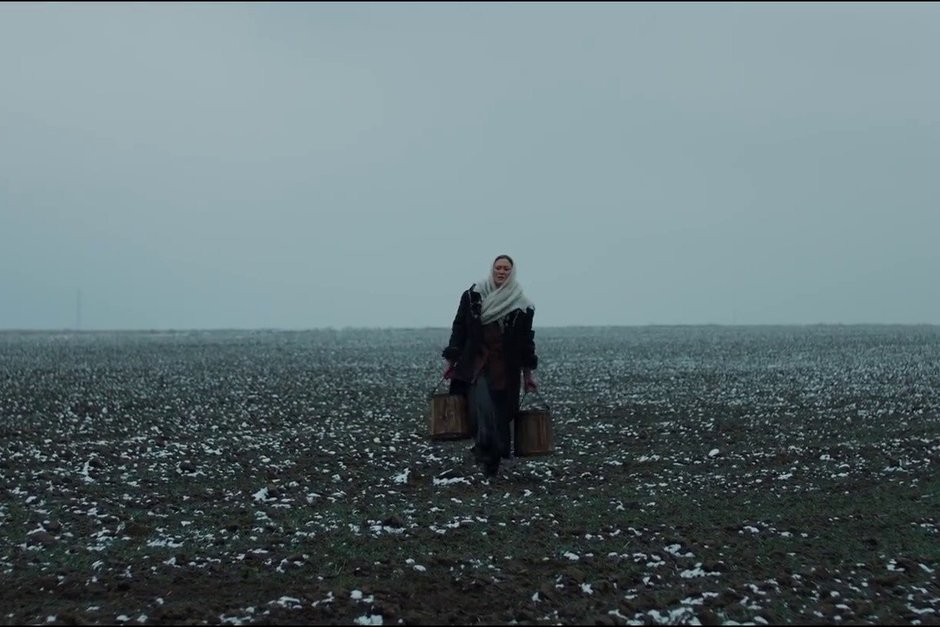
Of course, the theme of memory is the main one in the film. In Berlin the writer suddenly begins to sketch on the contract the image of a mankurt, a person who has forgotten his family, father, past, and Kalmatov transfers the classic in his jacket into the steppe, where these unfortunate mankurts go mad.
On the other hand, in the finale we traditionally see the wise leaders of the republic who read the finished novel “The Day Lasts More Than a Hundred Years," and the classic gives speeches about memory before students. It remains only to open the internet and read that Torekul was rehabilitated in 1958, and in 1959 Chingiz joined the CPSU.
The theme of the relations of the son of an enemy of the people with the state, which he with his great books made an important part of the world literary process (and then himself entered the power elite), is given minimal attention. Possibly in this film the author of “The Scaffold” and “Jamila” does not look 100% like a monument, but maybe the director should have taken a more serious risk?