Apocalypse as a new reality: M. John Harrison's novel became the Booker laureate
“Real Time” explains why the 2026 Booker Prize was given to the author of the science fiction novel “The End of All Things”
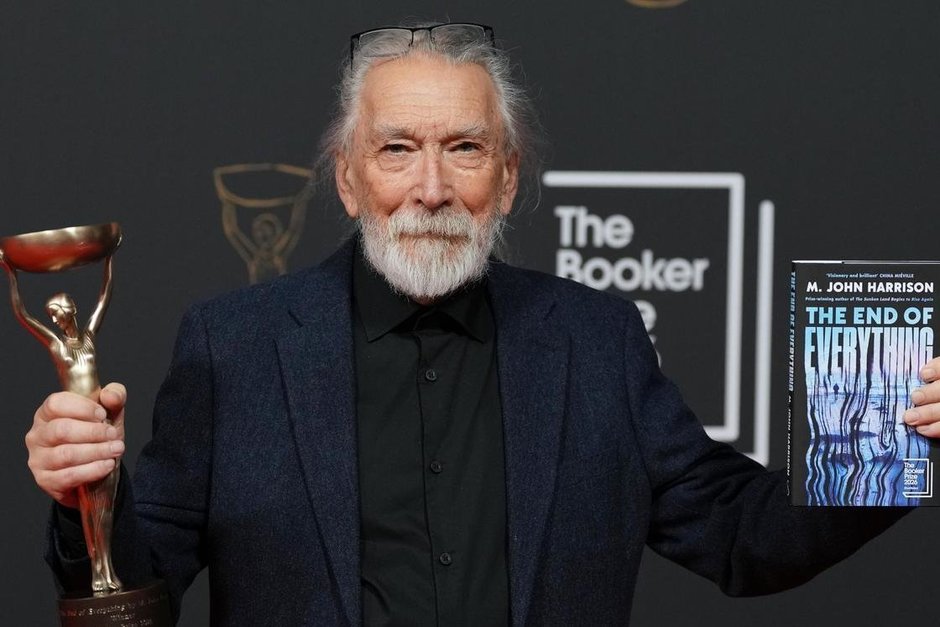
In M. John Harrison's novel “The End of All Things” a post-apocalyptic world after a mysterious catastrophe is shown. The customary system is destroyed, state institutions practically do not work. Besides, strange creatures appear on the coast of England. Only this is not a heroic story about the end of the world. The most terrible thing in the book is the non-understanding of what happened; people do not know how to live further. Therefore they try to preserve a semblance of normality: they engage in everyday affairs, go to cafes and restaurants, arrange holidays. It was precisely for such a story that the British writer M. John Harrison received the 2026 Booker Prize. Why the jury decided to award precisely this book, and not a more traditional novel, is explained by the literary reviewer of “Real Time” Ekaterina Petrova.
For what the Booker was given: science fiction that is more real than reality
The Booker Prize is awarded for outstanding works of fiction written in English and published in Great Britain or Ireland. The nationality of the author does not matter here. This year the jury considered 163 works; 13 books entered the longlist, six got into the final list.
M. John Harrison with the novel “The End of All Things," which will come out in Russian in the spring of 2027 at the Fanzon publishing house in Sergei Karpov's translation, won by the unanimous decision of the judges. In 2026 the chair of the jury was the historian and TV presenter Mary Beard. Among the other members — the British-Jamaican poet Raymond Antrobus, the British musician and songwriter Jarvis Cocker, the journalist specializing in the themes of the Middle East and human rights, Rebecca Lowe, and the American writer and poet Patricia Lockwood.
“The End of All Things” is the first science fiction novel to receive the Booker Prize. At the same time the book cannot be called classical science fiction, since dystopia and satire, psychological prose and a peculiar social realism (not to be confused with socialist realism) have united here. In Harrison there is no detailed explanation of the catastrophe; the reader finds himself in the position of the heroes who are not fully capable of comprehending what is happening. And on the whole this is very similar to modernity, when it is unclear where the world is rolling, public institutions cope poorly with their duties, there is a crisis of trust in the authorities, an impending ecological catastrophe, the influence of technologies and information chaos. In this sense the Booker noted the writer's ability to speak about the present in the language of science fiction.
— The politics of today, seen through the prism of the future, — thus Mary Beard characterized the novel.
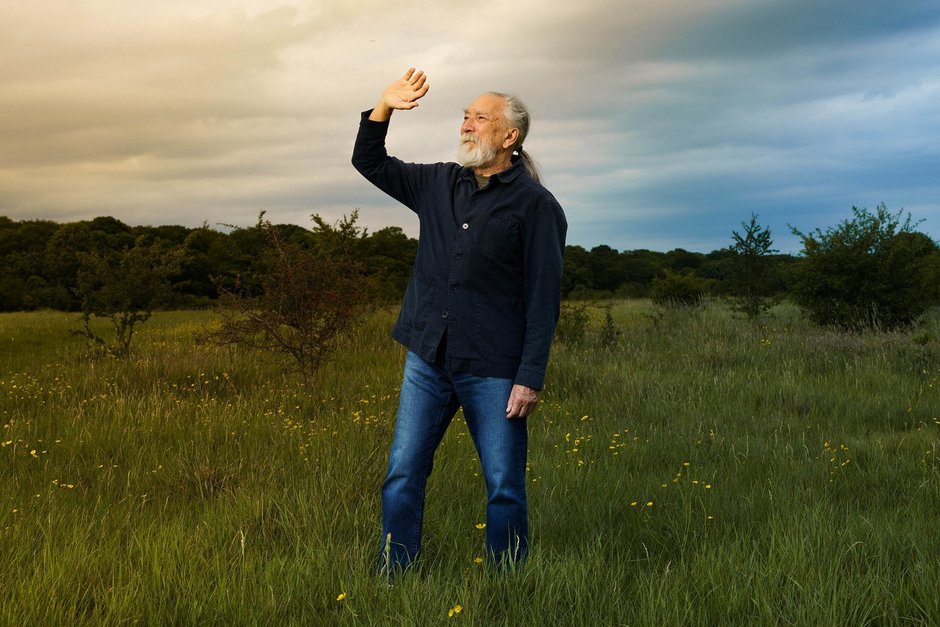
Harrison, who became the oldest winner of the Booker (he is 81), stated that he doe not want to be driven into the framework of the label of science fiction. He also said: receiving the Booker Prize after sixty years of writing career proves that the era of “genres as fences, boxes and cells has ended.”
— The prize showed that it is quite possible to write a book in which not only two genres are combined, but three or four, Harrison told journalists at a press conference after the award ceremony.
What “The End of All Things” is about: the world after the catastrophe
The action of M. John Harrison's novel “The End of All Things” takes place on the southern coast of England in the near future. The catastrophe happened several years ago, but its causes remain unclear. The main hero, Philip Tennent, collects on the coast the objects that the sea throws up. Thus he earns his living. Philip lives together with his elderly aunt Marnie. She is an artist who possesses a very difficult character and who has her own opinion about what is happening. Besides, Marnie suffers from dementia, and this is an important semantic element. It shows not only society but also an individual person losing the ability to order the surrounding world.
The European continent has changed beyond recognition. Arbitrariness reigns in the street, since state and public institutions no longer work, and with them the laws. In all this chaos Philip finds a strange object on the shore. This something, resembling a formless mass, begins to grow, change appearance, speak and interact with people. It is connected with the mysterious iGhetti — alien creatures whose invasion became part of the general catastrophe. The discovery of this being launches a chain of events, but the author deliberately does not give the reader a full explanation of either the nature of the mysterious creation or the causes of the catastrophe.
Again, Harrison's book cannot be called classical science fiction about an alien invasion. The creatures in the novel rather serve as an instrument for talking about the human inability to understand and control what is happening. “The End of All Things” consists of short, almost cinematic chapters, and the volume of the novel in the English version does not exceed 200 pages. By the way, this is the shortest book on the Booker 2026 shortlist.
— What will happen when all our expectations and explanations of the world turn into an unceasing catastrophe, but we still have to build our life? — Harrison explains his idea.
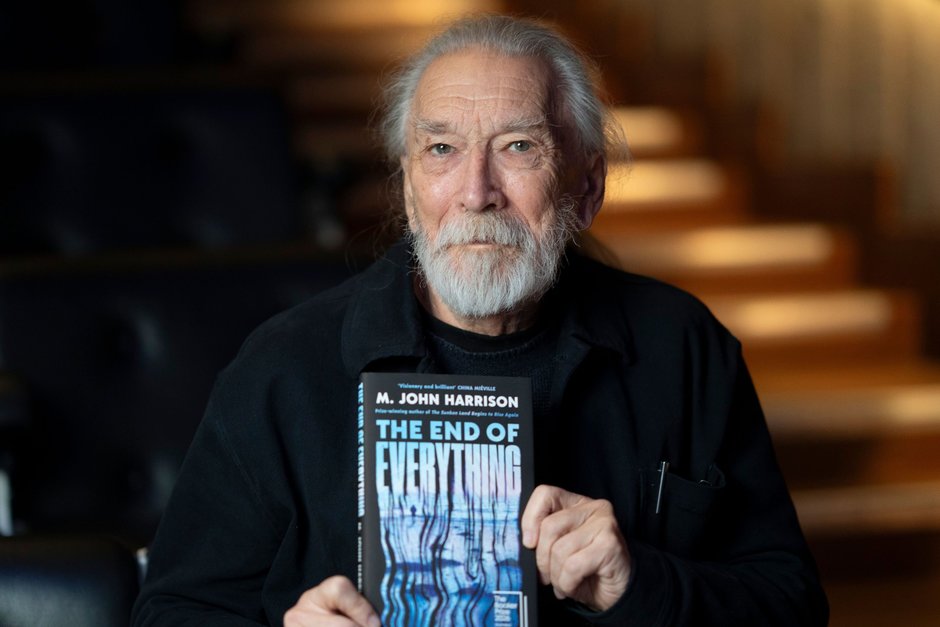
The uncertainty and the feeling that something incomprehensible is happening in the book resonates with reality. The heroes of “The End of All Things” are in a state of prolonged non-understanding. This is not the case when something sharply happened and broke life, and the remaining survivors try to reassemble everything anew. No, in Harrison everything happens slowly, without understanding where it will lead. If one raises the fantasy element in the novel a little, then all modern ailments surface — from artificial intelligence to late capitalism. According to the writer himself, the book collects all possible problems of modernity: from “the collapse of rationality that came with Trumpism and the internet” to “the inexplicable attempt of humanity to destroy and renounce the environment without which it cannot live.”
— “The End of All Things” is an attempt to live as if nothing happened. This is a story about a catastrophe in which the catastrophe is the inability to understand, said Harrison.
M. John Harrison: six decades on the literary periphery
Michael John Harrison was born in 1945 in the town of Rugby in the county of Warwickshire in Great Britain. He debuted in literature rather early; his first story was published in 1966. Three years later Harrison joined the editorial staff of the British New Worlds — one of the main publications connected with the new wave of science fiction. Until 1978 he worked there as the editor of the book department.
Besides fiction prose, Harrison was also engaged in literary criticism. He wrote reviews for The Guardian, The Telegraph, The Times Literary Supplement and The New York Times. Over his whole career he has released 13 novels, five collections of stories and an unusual autobiographical book, which he calls “anti-memoirs.” Throughout his whole writing activity Harrison was constantly engaged in literary experiments. For lovers of unusual prose and science fiction he long remained a cult figure, although his work was highly appreciated by other well-known writers too. For example, Olivia Laing, Robert Macfarlane and Neil Gaiman. By the way, four years ago, in 2022, Harrison himself was among the members of the jury of the Booker Prize.
In his books Harrison uses elements of science fiction, fantasy, horror and psychological prose. But one cannot say that he strives to follow the rules of some one direction. He borrows genre devices and reinterprets them. The writer rather destroys genre boundaries. “The End of All Things” is not his only book where unusual creatures appear. Fantastic worlds and inexplicable phenomena are present in all his works. But behind the fantasy elements are hidden quite vital problems: loneliness, alienation, social conflicts, the instability of society and the crisis of identity.
— The strange is a way of writing about the real, Harrison noted in his anti-memoirs “I Would Rather Be Here” (2023).

The writer works much with the atmosphere of place. Coasts and urban outskirts, abandoned spaces and landscapes become a full-fledged part of the narrative. For example, in the novel “Climbers” (1989) the rocks in the north of England and the weather conditions are inseparable from the inner state of the hero. In the novel “Nova Swing” (2006) Harrison brings his method to the limit. Here the plot recedes into the background in favor of atmosphere. The action takes place in the city of Saudade, which is located on a nameless planet in another star system. Fragments of a mysterious alien structure fell into the center of the city, which violated the laws of physics. It is precisely this atmosphere of decline that becomes the main one in the novel.
In his anti-memoirs Harrison reflects on literature and his own past. And in the book “The Sunken Land Begins to Rise Again” (2020) he narrates about modern Great Britain and the gradual disintegration of customary reality. Both works again turn to the feeling of the instability of modern life, although they use different plot constructions.
Harrison's victory at the Booker Prize is an important event for science fiction, which for a long time was perceived as a separate, less prestigious literary direction. “The End of All Things” has a fantastic plot, but the novel shows life under conditions when the world ceases to be understandable. And this is already far from science fiction.
Ekaterina Petrova — literary reviewer of the online newspaper “Real Time," host of the Telegram channel «Булочки с маком».