In Kazan they told about the gates of Rus to the East
An exhibition about the Kasimov Khanate has opened in the “Kazan Kremlin”
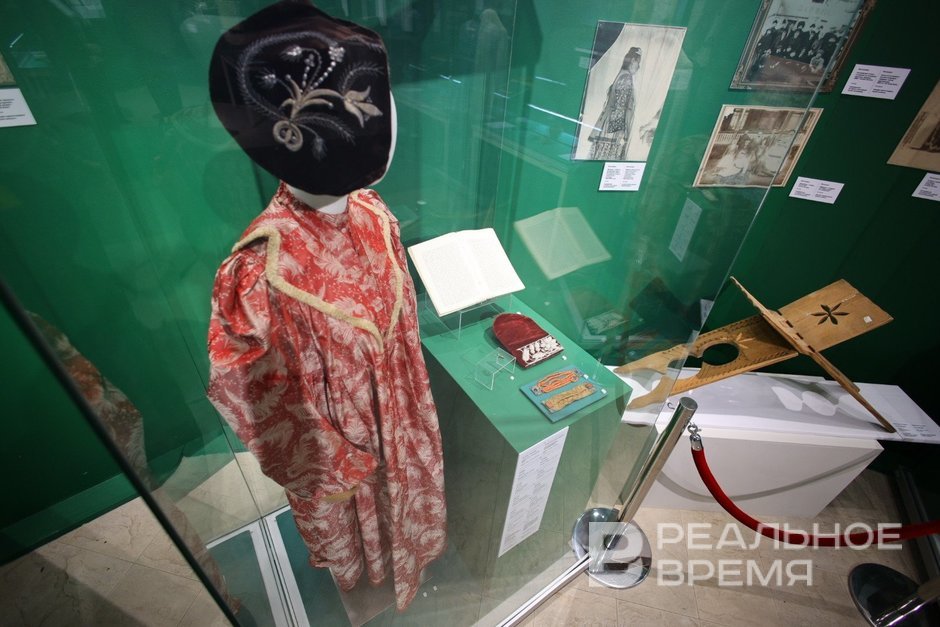
An exhibition “Kasimov-Khankerman: History and Heritage” has opened at the Museum of the History of Statehood of the Tatar People and the Republic of Tatarstan. About the Kasimov Khanate, which existed as part of the Russian state with a partial preservation of the Turkic-Tatar system of governance headed by representatives of the Genghisid dynasty on the throne, they tell about the results of excavations and ethno-research — from stones to kalfaks. In the plans — to make a series of similar exhibitions in the republic.
From Kasim to Fatima-Sultan
There are several points of view on how and why the Kasimov Khanate arose. According to one version this is a fragment of the Ulus of Jochi dependent on the Moscow state. According to another — an appanage principality in which the Genghisids who had gone over to Russian service ruled.
Let us take it that the khanate described at the exhibition arose in 1452 as a result of the collapse of the Golden Horde. Its first ruler was the son of the founder of the Kazan Khanate Ulugh Muhammad — Kasim, who received from Vasily II Gorodets Meshchersky, which later came to be called Kasimov.
The Kasimov Khanate is a kind of gate of Rus to the East and vice versa. Its history ended in 1681 with the death of Fatima-Sultan, the wife of Khan Arslan and the stepmother of Tsarevich Seid-Burkhan (in baptism Vasily Arslanovich). She came from the noble Kasimov family of the descendants of the Prophet Muhammad, the Sayyids Shakulovs. The first Tatar woman to become a professor of mathematics, Sara Shakulova, is also from them. In the “Demidov Mansion” the play “Taboo," telling about her life, is successfully running.
Finally, it was here too that Tsarina Syuyumbike lived her last years. It is symbolic that the exhibition took place in the museum that is located next to her tower.
In the Kasimov Khanate an important role was played by the service Tatars, who back in the era of the Golden Horde had gone over to the service of the Russian princes. In the diplomatic service they worked as translators and scribes, were participants of embassies, engaging in the advancement of Russian military-political interests. Separate military formations were also created from them, which participated in battles with Lithuania and Poland, in the Livonian War, and in defense against the raids of the steppe peoples. Among the well-known surnames of the service Tatars — the Yusupovs, Urusovs, Tenishevs, Yenikeyevs, Yaushevs, Shirinsky-Shikhmatovs.
In 2021 the head of the Department of Culture of the Spiritual Administration of Muslims of the Russian Federation, Renat Abyanov, and the historian-journalist Marat Safarov presented a book about the modern Tatars from these parts, “The Shadows of the Kasimov Khanate.” During the research they went ten times on an expedition to the district and took about a thousand interviews. Now 5 thousand Tatars live in Ryazan Oblast, of whom, as the authors indicated, 4 thousand are Mishar Tatars. In Kasimov one can still visit the buildings of the middle of the 16th century, as well as the mausoleums of the khans and the burials of the 16th—17th centuries.
In Kasimov they are looking for ours, the Kazan ones
Every year the Academy of Sciences of the Republic of Tatarstan works here; the fresh results of the field work of the 2026 season can be seen at the exhibition.
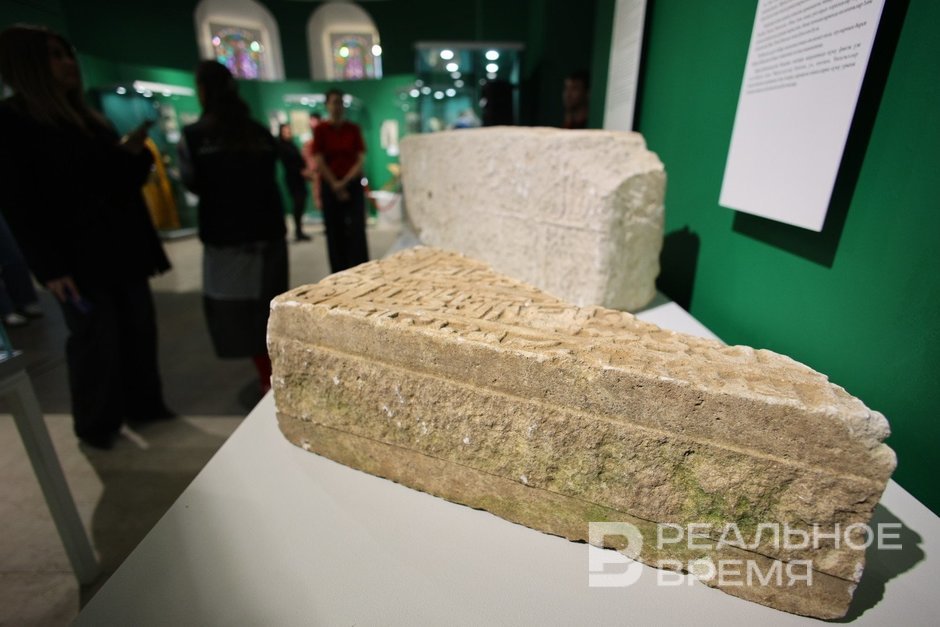
— In recent years archaeological research of the city has been actively conducted, confirms Nail Sadriev, a researcher of the Museum of Archaeology of the Republic of Tatarstan of the Institute of Archaeology named after A. Kh. Khalikov. — A large number of architectural monuments of this era are preserved: the khan's, the tsar's, as well as of subsequent periods. These materials too can be seen here: ceramics, metal products, iron locks, a barn lock, as well as engravings, sketches and photographs of those objects that have survived to our days.
Especially actively, Sadriev points out, the local Old Tatar cemetery is now being studied, thanks to which the graves of the last Kazan khan, Shah-Ali, and his wife were discovered here.
— Kasimov was famous for its fairs and bazaars, says the chief curator of the Kasimov Historical and Cultural Museum-Reserve, Nadezhda Martishkina. — The Kasimov merchants had large connections abroad. The Kazan Fair thundered throughout the entire Ryazan Governorate. What did they not trade here! The turnover of the fair — two hundred thousand in silver.
The name of the fair, by the way, points to the first place of holding — near the Kasimov Kazan Women's Monastery. It began on July 21 on the day of the celebration of the Kazan Icon of the Mother of God and lasted a whole week. Then the fair was moved to the outskirts; because of the fear of fires it was located next to a pond that never dried up. The fair existed until the 1920s.
Also among the Kasimov Tatars, Martishkina noted, at the end of the 19th century seasonal migration for work was developed: the peasants left to work as waiters, janitors, coachmen and footmen.
— They were willingly taken, because they were distinguished by conscientiousness and a responsible attitude to their work. Often the Kasimov Tatars worked in the best restaurants of St. Petersburg, added the museum curator.
An exhibition about service to the fatherland
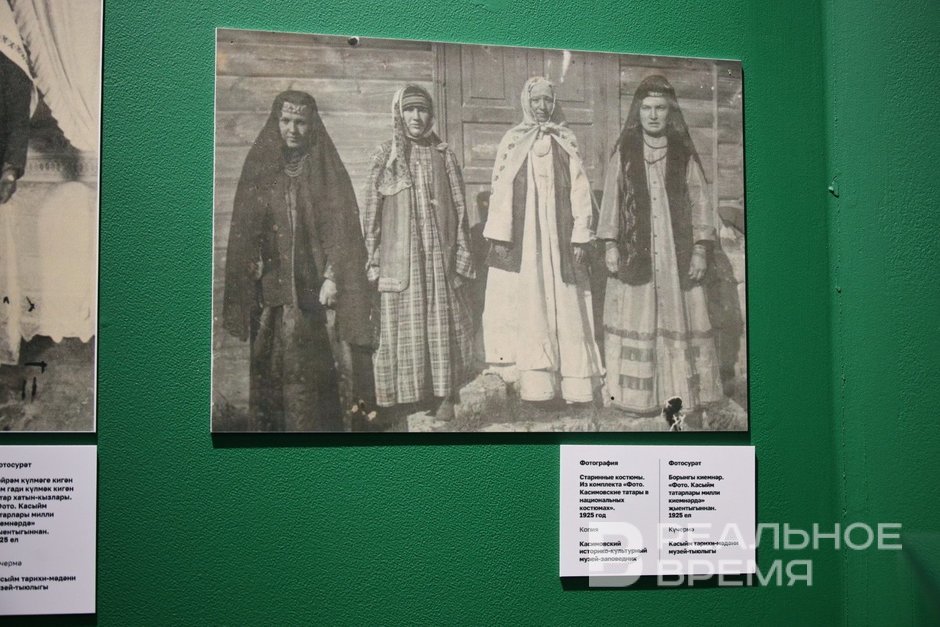
Besides the stones and other finds of the archaeologists, at the exhibition one can see the outfits of the Kasimov Tatar women — dresses, camisoles, kalfaks, bracelets and shawls. At once one notes their rich decoration and trimming — velvet, silk, beads, lace, gimp. There are also many photographs here.
The exhibition, besides the two museum-reserves, is organized by the Academy of Sciences of the Republic of Tatarstan and the Tatar National-Cultural Autonomy of Ryazan Oblast. In a certain sense this is already the beginning of a series dedicated to Tatar cities. Before this, in the “Kazan Kremlin” they told about the medieval city of Narovchat, which was the northern capital of the Golden Horde.
— In the plans are exhibitions about the large urban centers of the Middle Ages, which played a large role both in the formation of the world and in the history of Russia of various regions, explained the head of the Institute of History named after Marjani, Radik Salikhov. — Both the newest archaeological finds and documentary sources will be used. Thus we speak about service to the Fatherland, and moreover in a new format. Now our work will be accompanied not simply by conferences and round tables, but also by exhibitions, popular lectures and simply informal communication. We want this to be a history that will reach the soul, the heart of every person.