AI blockbuster in China, American negotiator at OpenAI: technology news
Apple warned German politicians about a possible iPhone hack, Huawei presented its first desktop computer without Windows

Several significant events occurred at once in the sphere of technology this week. Apple warned German politicians about a possible attack of spyware on their iPhones, OpenAI hired the former US negotiator on Ukraine, and DeepSeek presented an AI agent for work chats. Besides, the hosting provider Beget lost the data of its cloud infrastructure after a cyberattack, Huawei released a desktop computer without Windows, and the first Chinese film fully generated by neural networks failed at the box office. About these and other news — in the material of “Real Time.”
Indian startup raised $1.3 million for glasses for silent typing
A startup from India raised about $1.3 million for the creation of glasses for silent typing. The device recognizes speech by reading the movements of the lips and speech muscles with the help of radio waves.
The project began at a hackathon at Stanford University*. At first the team used electromyographic sensors, then tested video, inertial sensors and radio waves, settling on the last option.
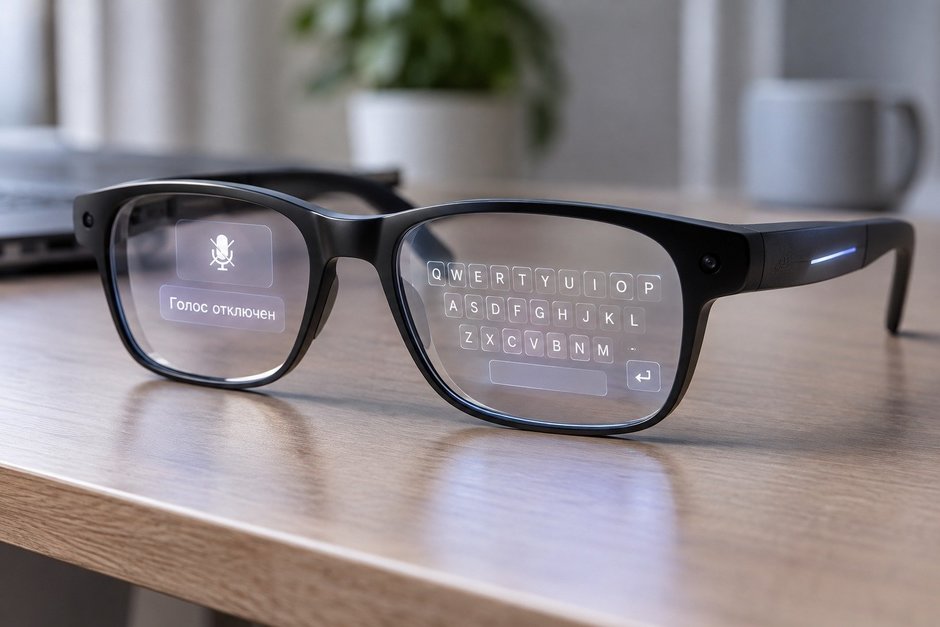
The glasses are capable of processing more than 200 words per minute, and the recognition accuracy amounts to 85—92% after about a minute of calibration. In the company they emphasize that the device does not read thoughts but fixes only the intentional movements of the speech apparatus.
Now the startup is accepting pre-orders at $499, after which the price will rise to $699. The shipping of the devices is planned to begin in the first quarter of 2027, however the terms of the first deliveries may change.
The first Chinese AI blockbuster failed at the box office
The film “Sanxingdui: The Past of the Future," fully created with the help of AI, failed at the box office. Spectators and critics criticized it for the unnatural acting of the characters and the disjointed plot.
In the first four days it collected only 1.2 million yuan (about 14.5 million rubles) with expenses of over 10 million yuan. The occupancy of the halls did not exceed 0.2%, and on average there were 0.3 tickets sold per showing. In total 8.3 thousand showings took place, and the box office amounted to $198 thousand.

The reaction of the market turned out to be painful: after the premiere the shares of Bona Film Group fell by 10.06%, to 5.54 yuan. The company's CEO Jiang Defu acknowledged the cool reception but emphasized that Bona was the first to bring the technology to the wide screen and to audience evaluation.
Apple warned German politicians about a possible iPhone hack
The company Apple warned the deputies of the Bundestag and members of the German government about a possible attack of spyware on their iPhones. The Minister of Digital Technologies Karsten Wildberger confirmed that certain devices could have been compromised, and noted that the Federal Office for Information Security (BSI) reacted promptly and notified all affected persons in writing.
On October 29 several iPhones received Apple warnings about the threat of an attack using targeted spyware (mercenary spyware). The agency recommended that the recipients “as a precautionary measure proceed from the assumption that the device could have been compromised," although it does not follow from the notifications whether the attack was successful. At the BSI they stated that for now they do not have the details about the causes and circumstances of the mailing.
Apple explains that such notifications are received by users who could have become part of an individual attack. Earlier German politicians had already become victims of cyberattacks: in April, with the help of phishing, the messenger in the phone of the chairwoman of the Bundestag, Julia Klöckner, was attacked, and in October hackers gained access to the account of the CDU branch in Heilbronn and sent about 6.5 thousand phishing letters to ministries and politicians, including Chancellor Friedrich Merz.
OpenAI hired the former US negotiator on Ukraine
American OpenAI hired the former US negotiator on Ukraine and ex-minister of the army Dan Driscoll. He joined the developer of ChatGPT as a senior adviser on the modernization of national security.
Dan Driscoll will advise the leadership and partners of the company on the use of advanced AI technologies for strengthening national and cybersecurity, paying special attention to cooperation with US allies. He will also work with developers and representatives of state structures, industry and the academic community to promote “democratic AI.”
The CEO of OpenAI, Sam Altman, stated that artificial intelligence must give people more possibilities to manage their own lives, and called the USA a country with an exceptional possibility to promote the spread of “democratic AI.” Driscoll himself noted that the requirements of national security are changing faster than ever in the last 50 years, and the technology will help “keep up with the changes: reduce the volume of paperwork, allow analyzing large arrays of information and provide the needed answers to the needed people faster.”
Russians were offered to create their own design of the iPhone Duo
For the foldable smartphone iPhone Duo a jewelry collection Zodiac was released, dedicated to the 12 signs of the zodiac, and an online constructor was launched that allows one to independently select the design of the device. At the base of the collection is the image of one's personal constellation: the night sky, star maps and zodiac symbolism are embodied in precious stones, relief medallions and inserts of natural meteorite, and the central element becomes the zodiac circle.

The number of possible combinations reaches 15 million: the same zodiac sign can be designed in different ways, changing the metal of the frame and medallion, the stones, the color of the enamel and the material of the rear panel. The constructor allows customizing individual details and immediately seeing the result.
Before sending, the smartphones undergo additional testing of the folding mechanism. The cost of the collection starts from 810 thousand rubles, and the price of the most expensive configurations reaches about 8 million rubles.
Beget lost the data of its cloud infrastructure after a cyberattack
The hosting provider Beget on the night of November 1 to 2 was subjected to a cyberattack and lost the data of its cloud infrastructure. The malefactors gained access to the management contour of the whole architecture and launched zeroing scripts: in the cloud all the data was lost, the settings of the CDN and the IP addresses were also lost. At the same time the file backups of the virtual servers were preserved, and the provider counts on using them for restoration.
According to a preliminary estimate, almost 100% of the sites on the virtual hosting are subject to restoration. The provider has already restored the dedicated servers, the DNS servers and 80% of the infrastructure of the mail service, and counts on resuming the full operation of the mail in the near future. Also Beget agreed with the Coordination Center that domains in the zones .ru, .rf and .su with an expiring delegation term will continue to work.

On the servers with user information there were no attempts to download or change the data, however clients were recommended to change all passwords and access keys. On the morning of November 2 Beget reported a “major incident” that affected all levels of the infrastructure, and later named a cyberattack as its cause. The failure also affected the provider's clients — in particular, the carsharing BelkaCar had interruptions in the operation of the service.
DeepSeek presented an AI assistant for work chats
The DeepSeek team published a prototype of the AI assistant Super-Agent, which is able to receive tasks from work discussions and execute them in a software project. It connects to the GitHub repository and, if necessary, to the corporate messenger Feishu.
Having received a request from a team member with the needed permissions, the assistant creates a task, works on it in a separate environment and sends the result to the original discussion — for example, it can prepare a proposal of changes in the code. Tasks requiring human intervention are displayed on a web panel.
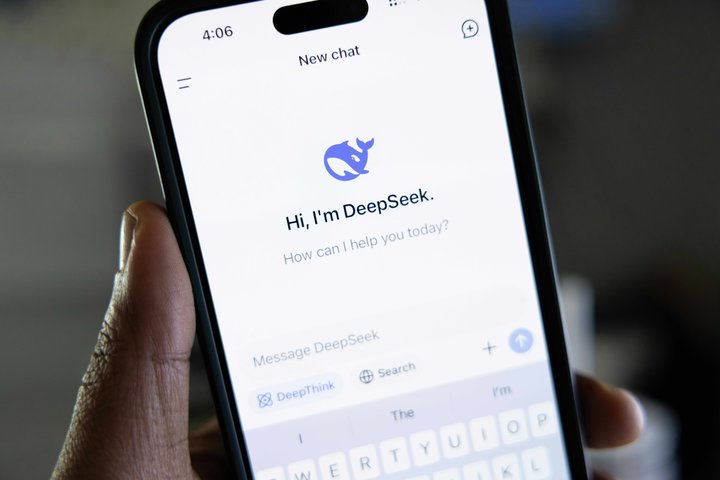
The agent acts only on request or within the rules set by the team in advance, and must interfere in people's work only when a decision is needed or when a useful result is ready. The authors emphasize that Super-Agent is a research prototype: errors are possible, therefore the code is recommended to be checked and adapted before use.
The first desktop computer without Windows has been presented
Huawei presented the Qingyun HM650 — the company's first desktop computer on the HarmonyOS operating system. The device is oriented toward state institutions, corporate customers, the financial sector and energy companies.
At the base of the HM650 is the Kirin X90 processor with integrated Maliang 910 graphics and the proprietary two-layer cooling system. The combination of hardware, HarmonyOS and cloud technologies allows using the computer not only for office work but also for engineering design, modeling and programming.

With the release of the HM650 the Huawei computer line on HarmonyOS now includes laptops, devices with foldable screens and desktop PCs. The company positions the device as a fully domestic solution not dependent on foreign suppliers of components. Sales in China started on November 5.
Mathematicians explained the unpredictability of AI training
Mathematicians revealed a fundamental principle explaining why even small changes in the procedure of AI training can lead to unpredictable results. As the press service of the University of Sydney reported, this peculiarity of neural networks does not allow simultaneously achieving high predictability and speed of training of new AI systems.
Earlier differences in the behavior of AI were connected with external accidents: the order of data input or the peculiarities of computing systems. However the unpredictability is connected with the very mathematical nature of neural networks.
The scientists came to this conclusion by comparing the training of 500 thousand relatively simple neural networks for recognizing images and texts, and discovered that even a change of one bit in the parameters at initialization leads to just as serious changes as any external factors.
The researchers derived a set of formulas describing the variations in the behavior of neural networks through the regularities of fractals. They rigidly link the speed of training and the predictability of AI operation, which imposes fundamental limitations on the process of their development.