Not subject to return: the incredible story of love and life in the USSR of the Frenchman Gaston Thivet
“Gaston” by Yves Gauthier — a story about how a lathe operator from Paris found love, lost his home, got stuck in the USSR, but managed to carry his French identity through the decades
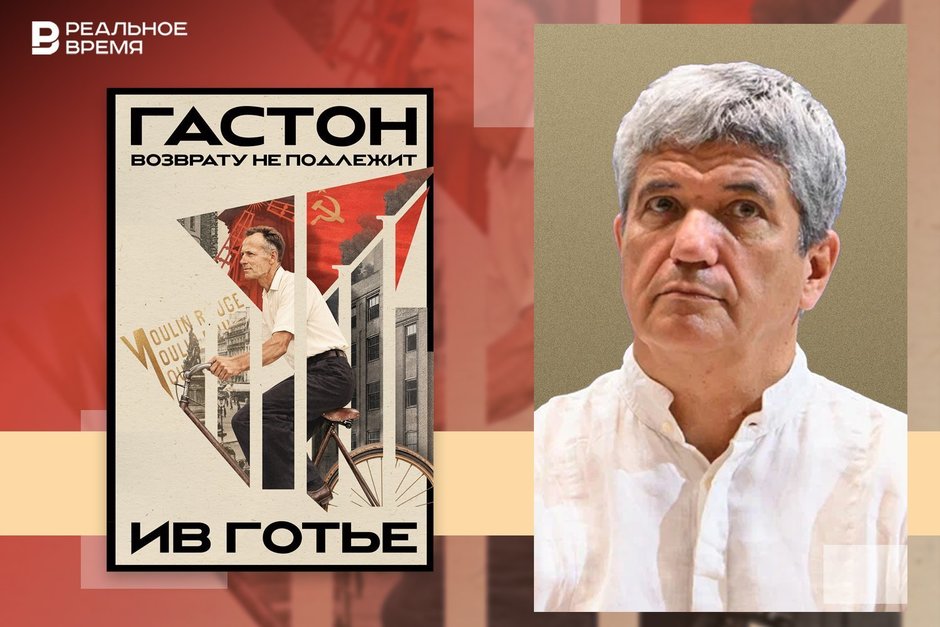
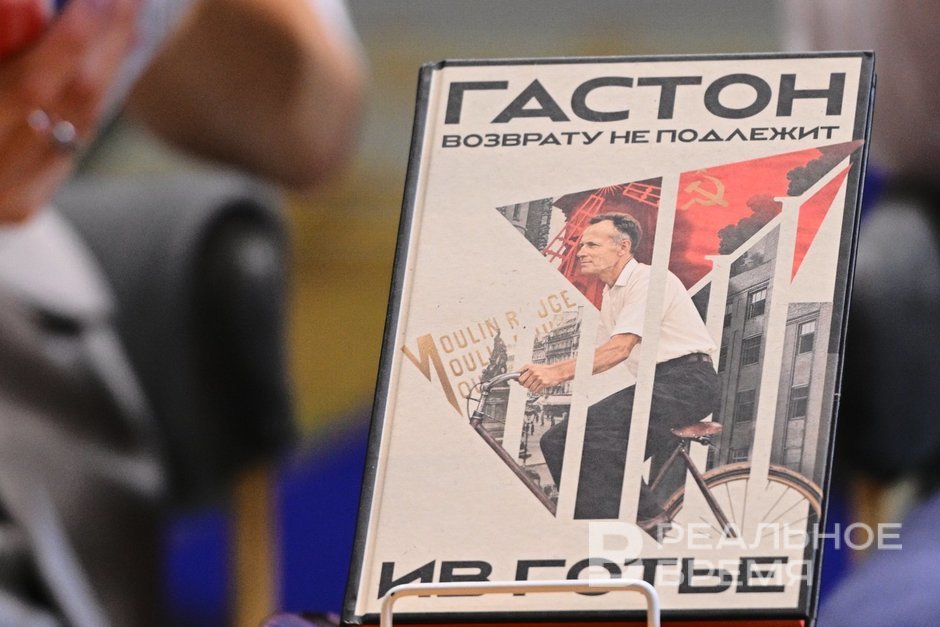
Usually the heroes of biographical books are famous personalities, and one would never suppose that an entire book could be devoted to a lathe operator from Soviet Ukraine. Only Gaston is an unusual lathe operator. He is a Frenchman who during World War II fell in love with a Soviet girl, married her and went to the USSR to meet the family of his young wife, counting on returning home. But the trip, conceived as temporary, turned out to be emigration. “Gaston. Not Subject to Return” by Yves Gauthier is the story of a French worker stuck in the Soviet Union, and also a tale about the price of historical decisions that are taken without the participation of a particular person but determine his whole life. The literary reviewer of “Real Time” Ekaterina Petrova explains how Gauthier tells the story of Gaston in the role of witness and researcher, and also how he turns a private biography into a reflection on identity and the price of non-return.
Yves and Gaston: voluntary and forced life in Russia
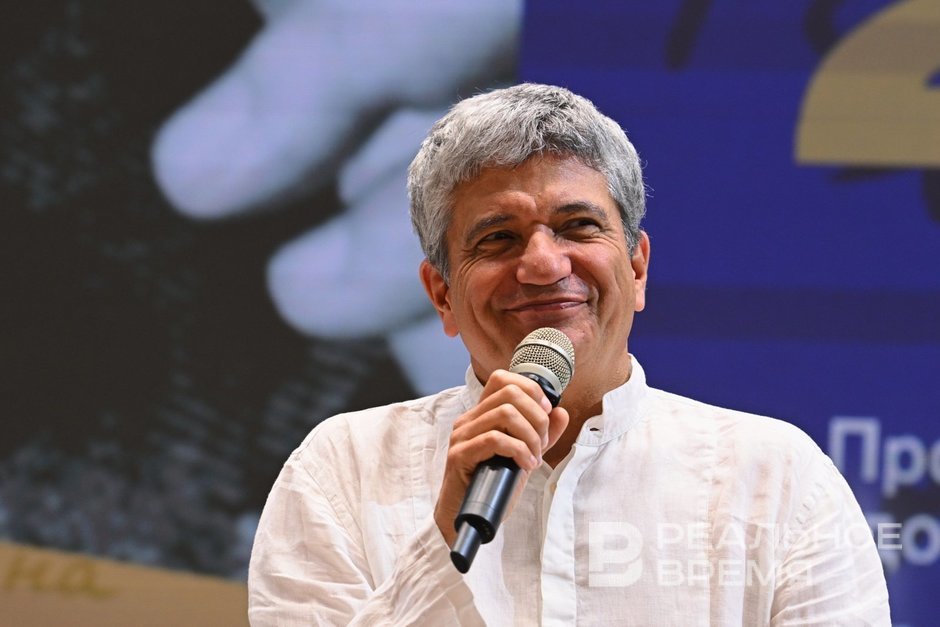
Yves Gauthier is a French writer, translator and essayist whose biography and professional activity are closely connected with Russia. He was born in 1960 in Poitiers and received a philological education with a specialization in the Russian language. At the beginning of the 1980s Gauthier came to the USSR and lived here for more than 20 years. During the perestroika years he worked as a translator and editor at the “Progress” publishing house. And in the mid-90s he was engaged in the cruise river business. On routes from Moscow to St. Petersburg, Astrakhan and Rostov-on-Don he gave lectures on Russian history and culture. Telling the French media about his conscious decision to live in Russia, Gauthier calls himself a “voluntary shipwreck victim.”
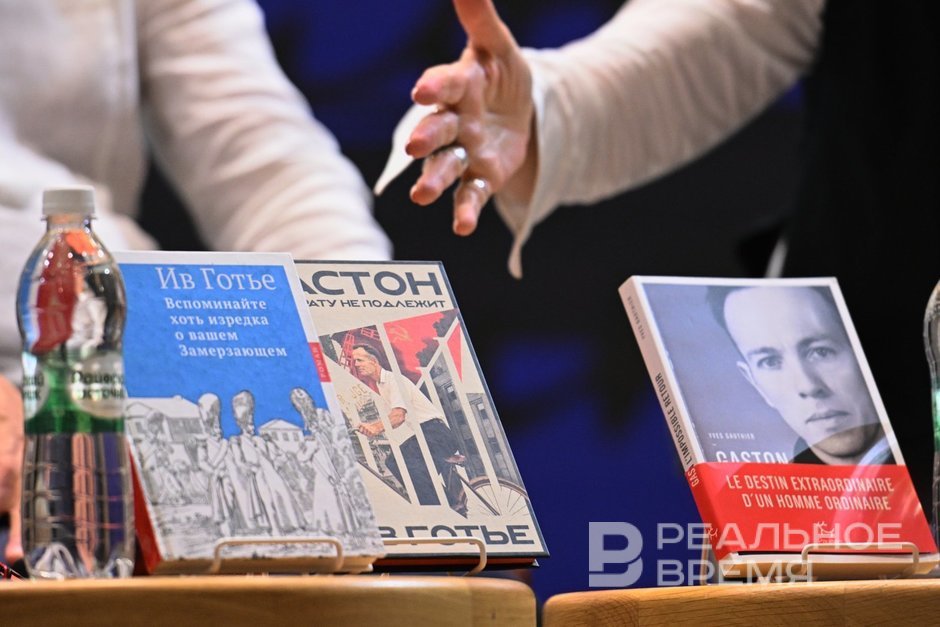
In France Yves Gauthier is known as a talented translator. By various estimates he has translated from thirty to fifty works of Russian-language authors. Among them, for example, “Taiga Dead End” by Vasily Peskov and the works of the Chukchi writer Yuri Rytkheu. Besides this, he has written several books, many of which are also connected with Russia: “The Discovery of Siberia” (1996), “Gagarin, or the Russian Dream of Space” (1998) and “Remember at Least Occasionally Your Freezing One” (2017). It is hard to call Gauthier an external researcher who reconstructs life in a foreign country from archives or a few interviews. He himself lived in the Soviet environment, knows the language and cultural codes. But, unlike his hero Gaston, Yves Gauthier ended up in the USSR of his own will.
Gaston Thivet was born in 1920 and grew up in Batignolles — a working-class district of Paris. Hence his specific Parisian accent and the habits of a person belonging to the working class. Gaston was a decent lathe operator, but all his plans were destroyed by the war. As a communist in 1943 he was sent to forced labor in Germany. There at a factory in Eschenstrut he met the “eastern slave” Lyuba, with whom he fell in love. After the war Gaston and Lyuba registered their relationship, first in Germany, and then in France. But Lyuba missed her close ones and her native Shostka, a settlement from which she came. She talked Gaston into going to the USSR to see her relatives. Only the return turned out to be impossible.
— Trains, young man, go only in one direction. To the east.
Gaston was “given to understand” (precisely such an expression he often used in conversations with Gauthier) that it would not be possible to return to his homeland. Once he even tried to get to the French embassy in Moscow, but almost at the porch he was caught and sent back to Shostka. Lyuba's distant relatives had some relation to the NKVD; they “explained in popular terms” to the Frenchman that his homeland was now here, and issued a new passport. Thus Gaston Thivet became Gaston Sharlovich Klimov (by the surname of his wife). He got a job as a lathe operator at the Shostka film factory, became a shock worker of labor, and then a father. The French past was gradually displaced from Gaston's life. He fully adapted to life in the USSR, but at the same time did not lose his French “self.” Speech, manners, clothing and attitude to the profession — all this pointed to his “non-Sovietness.”
What the book was made from and how its documentary quality is formed
In the book Gauthier tells that he met Gaston in Shostka at the beginning of the 1980s. The young literary man was attracted by the unusual French voice and manner of speech of the hero. And then the acquaintance grew into friendship; Gaston's stories gradually opened the story of his life. After that they maintained a correspondence, but over time the contacts faded away.
Gaston “reminded” of himself in 2017 in Paris, when at the “Book Quarter” festival Gauthier presented his book “Remember at Least Occasionally Your Freezing One” — a fictionalized story of a soldier of Napoleon's army, Nicolas Savin. After the presentation one guest said that “this so reminds me of Gaston Thivet.” Gauthier was stunned: for him Gaston Thivet was a man from Shostka, and to hear his name in Paris was “like a shot from space.”
The guest turned out to be Inès Kelchevskaya, the wife of the French consul general in St. Petersburg in 1999, Alexandre Kelchevsky. She told that her husband had received an unexpected letter from Gaston Thivet, who was born on June 27, 1920 in Paris. In the letter Gaston asked for nothing (as, indeed, always), but the consul decided to use a formal pretext (a “solidarity allowance” for French people older than 65 living abroad) in order to establish contact with him and help. In the end Gaston's French citizenship was restored and a pension allowance was assigned.
— “Monsieur Thivet, France has answered: 'Yes!'" For fifty-four years no one had addressed Gaston as “monsieur.”
At the presentation of the book in Kazan Yves Gauthier told that the story of Gaston turned into an artistic story and entered a collection of several documentary works. With this manuscript Gauthier went around several French publishing houses but received a refusal everywhere. Although all the editors expressed interest precisely in the story of Gaston, asking to expand it into a full-fledged book.
In the end the work “Gaston. Not Subject to Return” came about, which could be characterized as a documentary novel, but that is too vague a concept for Gauthier's narration, to which he has resorted more than once. Rather the book can be defined as a documentary-artistic biography with a memoir and essayistic narrative layer. Gauthier used the stories already known to him told by the main hero, as well as documentary sources — archives of French newspapers, documents of the Soviet period, letters, family photographs and the testimonies of descendants. In a few places these seams are a bit rough, but on the whole a very organic text came out.
The author built the scenes, restored the setting, described the gestures and intonations, compared the facts and offered his own interpretations. For example, when Gauthier tells about the birth of Gaston, he turns to registration records and newspapers for June 27, 1920, and tells about the circumstances of the life of the hero's parents. The biography begins with an almost detective reconstruction of documentary truth.
The role of the narrator, Soviet everyday life and love
Gauthier constantly reminds the reader that his role is not limited only to research interest; he himself was present at part of the events described. The writer tells about his life in Shostka, the trips, the relations with the family, the first meetings with Gaston and his own delusions. A double perspective results: the reader learns about Gaston and at the same time how the author's understanding of the hero changed. At the same time Gauthier does not always remain in the role of an inconspicuous biographer. Sometimes his recollections become full-fledged plot episodes. Such a manner of narration strengthens the emotional part of the book.
Gauthier describes Soviet everyday life in detail, moreover from inside and outside simultaneously. He notices what Soviet citizens perceived as ordinary and translates it into a system of cultural comparisons. In places Gauthier tells about Soviet everyday life with irony, showing the contradictions between the official language of the system and the real experience of people. At the same time the fate of one Frenchman is inscribed in the historical context. Here one can learn about restrictions on movement, bureaucracy, the production environment, the habit of caution and general distrust.
Of course, one cannot fail to speak about love. Love for Lyuba explains why Gaston ended up in the USSR, but there is no simple answer to the question of how the Frenchman perceived his fate. Did he regret his decision? How freely did he accept the circumstances that could not be changed? Was he happy, in the end? If one relies exclusively on Gauthier's interpretation, then love unambiguously helped to cope with all the difficulties. The author describes the Klimov family as an example of a great love that did not fade after separation, and also expresses regret that in his own life he did not manage to build something similar to what Gaston had with Lyuba.
But this is only Gauthier's interpretation. We cannot reliably assert how happy Gaston was. The author shows family life, attachment, humor and the duration of the marriage. But the inner world of the hero remains closed to understanding. Gaston did not like to tell not only the personal but also the superfluous. And no documents and archival materials will be able to restore the inner experiences of a person. We can only guess about them.
And another important feature of the book — its translation, which from French into Russian was done by Yves Gauthier himself. At the meeting with readers in Kazan he said that it was a professional challenge. Of course, this is not the first case when a writer himself translates his works into other languages. Vladimir Nabokov, Joseph Brodsky, Karen Blixen, Rabindranath Tagore and Czesław Miłosz did this. All of them translated from their native languages into English. But there were no cases of a foreign author (not bilingual) making a translation into Russian. Probably Yves Gauthier is the first.
Publisher: “Alpina. Proza”
Translation from French: Yves Gauthier
Number of pages: 200
Year: 2026
Age restriction: 16+
Ekaterina Petrova — literary reviewer of the online newspaper “Real Time," host of the Telegram channel «Булочки с маком».