“Summer in Baden-Baden” — a novel about Dostoevsky that becomes a novel about the author himself
Book of the week — Leonid Tsypkin's novel “Summer in Baden-Baden”

This week the film “Summer in Baden-Baden” with Philip Yankovsky in the main role came out in Russian distribution. It is a cinematic reinterpretation of the same-name novel by Leonid Tsypkin. Its text is built on long, almost continuous sentences and constant transitions between times. Such a specific narration is hard to reproduce literally in cinema. The film is focused more on the biography of Tsypkin himself, and the story of Dostoevsky becomes part of his inner world. In the novel Leonid Tsypkin uses the biography of the classic to reflect on literature, love, dependence and his own time. The literary reviewer of “Real Time” Ekaterina Petrova sorts out what exactly in the book turned out to be so strong that decades after the author's death it became the occasion for a film.
How a pathologist wrote about Dostoevsky
Leonid Borisovich Tsypkin was born on March 20, 1926 in Minsk in a Jewish family of doctors. He was a pathologist, a doctor of medical sciences, a research associate of medical institutions. In his main specialty Tsypkin published about a hundred scientific works, but his real great passion was literature.
Interest in it arose back in his youth. In his student years Tsypkin tried to write, but the first literary experiments turned out to be unsuccessful. After forty years he nevertheless returned to prose. According to the recollections of his son, Mikhail Tsypkin, his father perceived literature as a possibility of honest self-expression and investigation of himself. Tsypkin did not strive to invent characters; he was interested in real people, life circumstances, memories, documents and the inner contradictions of the human psyche.
It was precisely such contradictions that attracted Tsypkin to Dostoevsky. In the classic religiosity and doubt could simultaneously coexist, moral ideals and human weakness, compassion for the oppressed and personal intolerance, the striving for spiritual perfection and dependence on passions, creative genius and psychological imbalance.
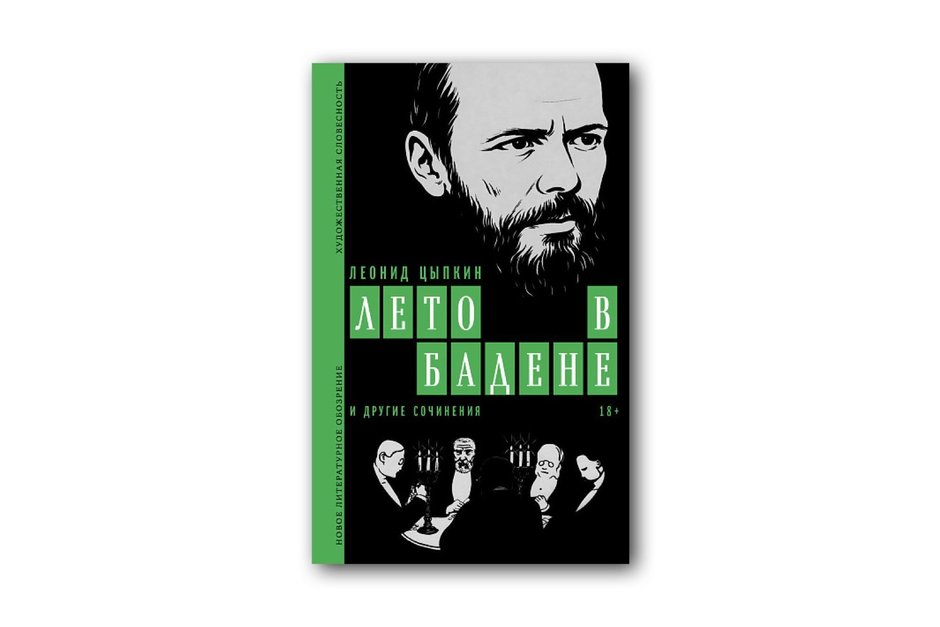
“Summer in Baden-Baden” is the result of long and painstaking research work. In the preface to the novel Mikhail Tsypkin tells that his father studied the recollections of Dostoevsky's contemporaries, carefully worked with the diaries of Anna Dostoevskaya, turned to bibliographic works, investigated the real houses and streets connected with the life of the writer. But “Summer in Baden-Baden” is not a biography and not even a biographical novel. Tsypkin took historical testimonies as the basis for an artistic reconstruction. Here chronology is completely unimportant; here psychological truth is important. What could Dostoevsky have felt? How did he perceive what was happening? What did he hide behind outward actions? Why did he consistently engage in self-destruction?
Tsypkin finished the novel at the end of 1980. At this time the authorities of the USSR intensified political pressure, restricted freedom of speech, persecuted dissidents; the situation of Soviet Jews was especially difficult. All this directly affected Tsypkin. In 1977 his son emigrated to the USA, and two years later the writer was dismissed from the Institute of Poliomyelitis and Viral Encephalitis, where he had worked for 22 years. Tsypkin and his wife also tried to leave, but received a refusal of an exit visa. The writer found himself in a difficult position: he could not work in his profession, and literary activity had no prospects for publication in the USSR. In fact Tsypkin wrote “Summer in Baden-Baden” in literary isolation.
The story of the novel's success is a series of astonishing and tragic events. The manuscript was taken out of the USSR with the help of the translator Azary Messerer and the American journalists Walter and Mary Vishnevsky. The first pages of the novel appeared in the emigrant “Novaya Gazeta” in New York on March 13, 1982, and a week later, on the day of his 56th birthday, Leonid Borisovich died in Moscow.
— My father was a published writer for one week, recalls Mikhail Tsypkin.
Later “Summer in Baden-Baden” was translated into German and English. In 2001 the American writer and critic Susan Sontag accidentally came across the English edition in a secondhand bookstore in London. In the essay “Loving Dostoevsky” for The New Yorker she highly appreciated the work and in every way promoted its publication in the USA. Sontag called the novel one of the most outstanding and original achievements of the 20th century. In Russia the novel was first published only in 1999, and as a separate book it came out at the “Novoye Literaturnoye Obozreniye” publishing house in 2003.
“Summer in Baden-Baden”: two journeys and two epochs
In Tsypkin's novel “Summer in Baden-Baden” there are two storylines. The novel begins with the journey of the narrator, which takes place in the 1970s. He is a Soviet person, carried away by the work of Dostoevsky, and sets off by train from Moscow to Leningrad. An apparently ordinary trip turns into a literary pilgrimage through the places of Dostoevsky. With himself the narrator takes the diary of Anna Grigoryevna Dostoevskaya — a book that he sought for a long time and then restored. His attitude to this diary is almost religious: he keeps it on his writing desk “like a Bible.” On the train the narrator rereads the diary, compares Anna's thoughts with his own ideas about the writer and runs through the events of the past in his head.
In Leningrad, which the narrator calls Petersburg, he visits the houses and streets connected with the life and work of the classic, as well as the museum in the house where the writer spent his last days and died. For the narrator this journey turns into a deeply personal spiritual search, during which he tries to understand not only Dostoevsky but also himself. He is occupied by questions of faith, national identity, moral responsibility and belonging to culture.
The second storyline narrates the trip of Dostoevsky and Anna Grigoryevna across Europe in 1867. They visit Germany and arrive in Baden-Baden, where the writer again encounters his destructive passion for gambling. Tsypkin investigates in detail the psychology of this dependence. Dostoevsky, although he understands the destructiveness of his actions, cannot give up the roulette. Hence the financial problems of the spouses, their everyday difficulties abroad, and also complex relations with those around them and inner conflicts. Anna Grigoryevna observes these complex states but tries by all means to preserve the family, showing love and patience.
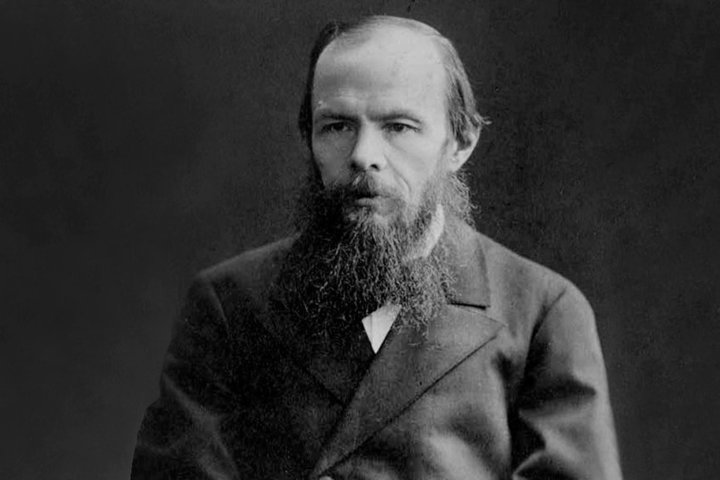
Gradually the boundaries between the two journeys are erased. The past is perceptible almost physically, and the present acquires the character of a recollection. In Tsypkin the transitions between the temporal layers occur within one paragraph and even one sentence. Although some sentences seem endless. Events from Dostoevsky's life evoke the narrator's recollections of his own experience, then a historical association arises, after which the narration again returns to the 19th century. The composition of the novel seems to reproduce the movement of human consciousness, and the two storylines converge into one space of memory in which the past and the present are inseparably connected.
To love Dostoevsky or not?!
In culture Dostoevsky is presented as a genius writer who understood human psychology, sympathized with the humiliated and insulted, investigated the moral fall of man and his spiritual rebirth. But in the novel “Summer in Baden-Baden” Dostoevsky is a living, ordinary person, with his own passions and dependencies. He is irritable and egoistic, often internally unstable. Genius does not automatically make a person wise and morally impeccable. This contradiction runs through the whole novel.
The narrator admires Dostoevsky as a writer but completely does not share some of his views, for example anti-Semitism. The thing is that the narrator, like the author himself, is a Jew who is deeply connected with Russian culture and Russian literature. He develops a painful inner contradiction between love for the culture and a historical grievance, between attachment to literature and rejection of individual views of its creator.
So can one in such a case love the great writer if his convictions and actions cause a feeling of revulsion? Tsypkin has no simple answer. He does not try to justify Dostoevsky's anti-Semitism, but he also does not call for renouncing his work. One can appreciate the greatness of the work and at the same time criticize the convictions of the writer.
But the one who loves Dostoevsky despite everything is Anna Grigoryevna. Her relations with her husband constitute one of the emotional supports of the novel. Love here is a heavy moral labor that requires patience and the ability to accept another person with all his weaknesses. Anna cannot be called a passive victim of circumstances. She is shown as a self-sufficient personality who can act and even resist in certain situations. Anna Grigoryevna participates in solving everyday problems and experiences the breakdowns of her husband and financial difficulties. But like Dostoevsky, Anna is not a monument of a saintly wife, and their relations are hard to call cloudless. She suffers and takes offense, but continues to support her husband.

In one of the scenes Anna, who usually does not approve of Dostoevsky's gambling dependence and in every way tries to protect the family from the destructive consequences of gambling mania, comes to play roulette. She is in despair and, wishing to save their shaky position, tries to obtain money with the help of gambling. Yes, Anna is a decisive woman, capable of acting. But her action is from the same destructive system against which she fights. Dostoevsky's dependence has sent long roots into their marriage, destroying not only the financial position and the trust between the spouses but also Anna's human dignity.
At first glance Leonid Tsypkin wrote a novel about Dostoevsky, but rather it is an investigation of the very possibility of understanding and loving a person while closing one's eyes to his weaknesses. Perhaps it is precisely for this reason that the book written almost half a century ago turns out to be relevant today.
Publisher: NLO
Number of pages: 672
Year: 2026
Age restriction: 18+
Ekaterina Petrova — literary reviewer of the online newspaper “Real Time," host of the Telegram channel «Булочки с маком».