“A Week Like Any Other”: the endless domestic Groundhog Day and the “second shift” of the Soviet woman
Natalya Baranskaya's novella is a subtle study of the contradiction between women's formal equality and actual inequality in the distribution of domestic labor
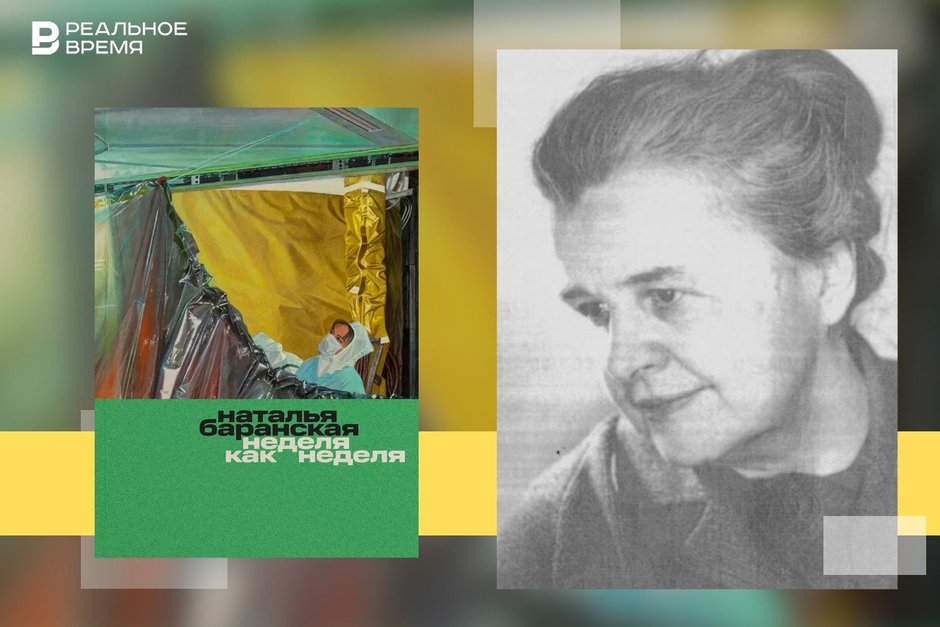
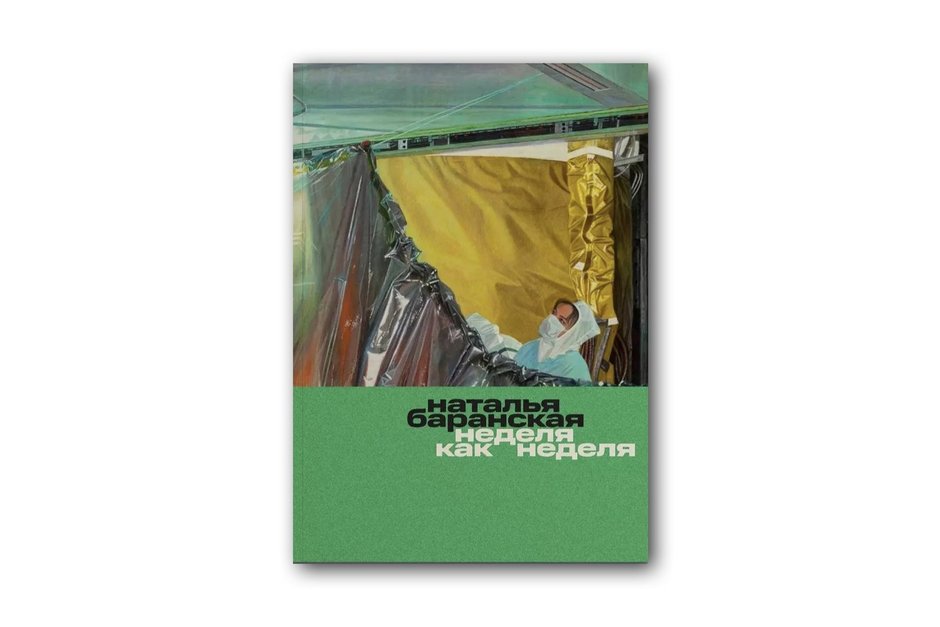
The “Nosorog” publishing house has reissued Natalya Baranskaya's novella “A Week Like Any Other," which was first published in 1969. It shows the most ordinary week in the life of a young Soviet woman. This story strikes with the contrast between the ordinariness of the events and the scale of the problems hidden behind everyday life. Why does a woman who works on equal terms with a man still bear responsibility for most of the family's domestic life? It is precisely this question that Baranskaya poses in the novella. The literary reviewer of “Real Time” Ekaterina Petrova explains why the uneven distribution of unpaid labor still remains a subject of public discussion despite almost sixty years since the publication of the novella, changes in technology and living conditions.
Natalya Baranskaya: from museum to literature
The Russian writer, literary scholar and art historian Natalya Vladimirovna Baranskaya (1908—2004) was born in St. Petersburg and received a historical-philological education at Moscow State University, which she graduated from in 1930. She worked for most of her life in the museum sphere, in particular at the State Museum of A. S. Pushkin in Moscow, where she was engaged in research work. Baranskaya came to literature rather late. She published her first story “The Send-Off” in 1968, at about 60 years old. At that same time her other literary publications came out, and in 1969 “A Week Like Any Other” appeared.
— Fairly soon a turn occurred in my life that I am inclined to consider a miracle: I began to write prose (before this I wrote only articles), Baranskaya writes in “An Autobiography Without Omissions," which “Nosorog” will publish in November of this year.
The novella was first published in the magazine “Novy Mir” in 1969. In that period it was one of the most notable literary platforms of the “thaw.” Here texts were published that expanded the boundaries of permissible literary conversation. But at the same time it was a time when the possibilities of free literary expression were gradually narrowing. The events of 1968 in Czechoslovakia had already happened, and “the screws began to be tightened” in all countries of the socialist bloc.
The editor-in-chief of the magazine then was Alexander Tvardovsky. The manuscript of the novella was passed to him by the poet Lev Yelnitsky, a school friend of Baranskaya. But the work, which told about everyday life, caused ideological questions. In the novella there is no direct political polemic, but there is a critical depiction of everyday life, bureaucracy, social expectations and the position of woman. Therefore Tvardovsky had to fight with censorship. After the publication of the novella the magazine was quickly bought up, and readers in libraries queued up to read the much-talked-about novella.
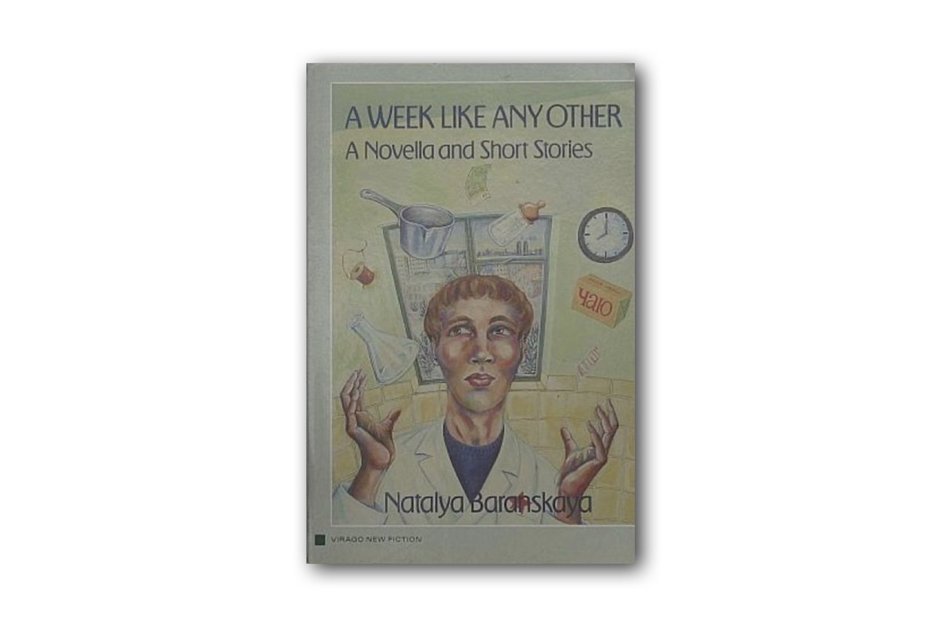
“A Week Like Any Other” caused lively discussions precisely because of the depiction of that very Soviet everyday life. And, as a result, this novella became Baranskaya's most famous work. It was actively translated into other languages, and abroad it was avidly read as a bright example of literature about the life of the Soviet woman and post-Stalinist women's literature. From 1971 to 1989 three English translations came out, and the novella was also published in German, French, Italian and Estonian. In 1975 an English-language radio version of the work even came out on the BBC. At the same time in the USSR they were in no hurry to accept Baranskaya's other works for publication.
— However neither my personal contacts nor the successful activity of VAA P in distributing my works abroad could remove the anxiety and offense that the unceasing difficulties with publication and edition in the Soviet Union caused, writes Natalya Vladimirovna in her autobiography.
The “working mother” as the norm and its price
The story of the novella unfolds around Olga Voronkova. She is a young employee of a research institute, a wife and mother of two children — Kotka and Gulka. Olga is married; her husband Dima is also a researcher. The family lives in a new apartment on what was then the outskirts of Moscow; the children go to kindergarten and nursery. At first glance before the reader is an ordinary well-off family. However throughout the week the main heroine constantly switches between research work, household duties, caring for the children, endless transfers on transport and fleeting communication with her husband. This is what her whole week consists of.
But one day the female employees of the research institute receive a questionnaire in which they must answer questions about their everyday life and household chores so that demographers can determine the cause of the “insufficient rates of population growth.” It is precisely the questionnaire that makes Olga think about why women do not want or are afraid to have children.
The question of the equality of women in the USSR is a story of a sharp legal breakthrough followed by a long and contradictory convergence of formal norms with real life. The peculiarity of the Soviet model is that equality was proclaimed “from above”; it gave women the right to work and education. But at the same time there was no redistribution of household duties and real power. As a result the woman, having received “emancipation," also received a “double burden” — at work and at home.
By the end of the 1960s the Soviet gender system had finally taken shape in the model of the “working mother.” Half of all workers and employees were women. Among doctors, nurses and medical workers their share was 85%, among teachers — 72%. In 1960 women among specialists with higher and secondary education were 59%, and this indicator was preserved until 1985. The symbol of gender progress in the 1960s was the flight of Valentina Tereshkova, for which she was nicknamed the “space Cinderella," who confirmed the ability of Soviet women to compete with men in the most knowledge-intensive spheres.
However the asymmetry did not go anywhere. The spheres where women predominated gradually became less prestigious and low-paid, even with a higher level of education. Besides, women were poorly represented where real political decisions were made. And the presence of women in the presidiums and delegate corps was mainly decorative. At the same time the structure of the household did not change in any way. Now the woman was obliged to work in order to live more or less normally, and she still did not have equal rights in living conditions and all the more in power.
The “second shift” — such a name was given to the unpaid domestic labor that women do after their main work. In the case of the main heroine of the novella “A Week Like Any Other” this is cooking, cleaning, washing, buying groceries, caring for the children, organizing the family routine. Baranskaya describes how Olga tries to keep all this in her head simultaneously with work, and also calculates and optimizes time: she irons clothes while the soup is cooking, or washes the floors while the laundry is soaking for washing. There is no end to these tasks: one ends, another begins. Olga is in a mode of constant planning and control, and also in a state of an astonishing female ability — foreseeing the needs of her husband and children. She is in fact responsible for the domestic life functioning in principle.
Moreover household duties are perceived by those around as a natural continuation of the female role. If for being late for work, when the children were capricious in the morning and did not want to get ready for kindergarten, Olga has to account to her superiors, then for being late home she accounts already to her husband.
The family conflict is also a social problem
And what about Olga's husband, Dima? He is not a tyrant. He loves his wife and children and cares about them. But Dima does not notice how large a part of the domestic responsibility lies on Olga. His behavior fits into the traditional model of the family: he can help around the house (when in a good mood), but on the whole this is not his concern. While Olga after a tense working day washes, cooks, cleans and deals with the children, Dima reads books and magazines. When at the weekend Olga irons the laundry, running through her head the further actions — to shorten her skirt so as, in the end, to look like a young beautiful woman and not her pitiful semblance — Dima asks her to iron his trousers at the same time. And he sincerely does not understand why she cannot do this and then shorten her skirt.
It is not surprising that periodically in all this domestic race Olga boils over and spills out her emotions. Then Dima logically proposes that she give up work and deal only with the home and the children. Olga does not want this, not only because of financial difficulties. She has an education and a profession that she is passionate about. Work is part of her identity. In fact, by proposing this, Dima devalued the whole professional path Olga had gone through. And the point is not in Dima's “short-sightedness.” Baranskaya shows how deeply gender attitudes are embedded in the Soviet person.
The novella is divided into seven parts that correspond to the days of the week: from Monday to Sunday. The writer emphasizes the cyclicity of the everyday life of the Soviet woman, where the end of one week does not mean the end of the problems. At the same time the weekends do not give the desired liberation; they only change the character of the cares. And then Sunday also ends, but the order of life remains the same. Olga has again run off.
Running — is in general the central image of the novella. The heroine constantly runs because she is always late: for transport, on the escalator, in the metro, up the stairs, to the store; even at home she is like an electric broom. Reading the questions of the questionnaire about sport, Olga ironizes that she goes in for running.
— I personally am fond of sport — running. There running — here running. A bag in each hand and… up — down: trolleybus — bus, into the metro — out of the metro.
Olga often ironizes not only over the questions of the questionnaire but also over her own life. Possibly this is the only way to cope with stress. Therefore there is a lot of irony in the text. All the more so since the reader sees what is happening through the eyes of the main heroine, who also conducts the narration. But running dictates its rules here too. The novella is arranged on the principle of an inner monologue, and since the number of Olga's tasks is off the scale, her thoughts often jump. Baranskaya seems to montage short episodes of the heroine's life that alternate among themselves: here she runs, here a quick dialogue, here the running through her head of the upcoming tasks, here something happens, here again there is not enough time.
By the way, the deficit of time manifests itself in everything. Several years ago Dima gave Olga Galsworthy's “The Forsyte Saga," but Olga has no time even to begin reading this saga, let alone read it. And the symbol of the deficit of time becomes the treacherous alarm clock.
— Already sleep weighs down my body, but suddenly it seems to me that Dima out of habit will set the alarm clock. I shove it under the sofa with the words “sit and be silent.” But its ticking pierces the thickness of the sofa. Then I carry it out to the kitchen and lock it in the cupboard with the dishes.
Almost 60 years have passed since the publication of the novella “A Week Like Any Other.” But which of us can boast that they do not suffer from a deficit of time?! And this is not the only relevant theme. Formally the daily life of the modern Russian woman has become better; technologies have eased many domestic processes. But in essence nothing has changed. Women still run, trying to manage to do the work and home tasks, to which there has now been added a race for beauty.
Publisher: “Nosorog”
Number of pages: 88
Year: 2026
Age restriction: 16+
Ekaterina Petrova — literary reviewer of the online newspaper “Real Time," host of the Telegram channel «Булочки с маком».