Marat Gilyalov: “We are involved in practically all surgery of the head and neck”
What the head of the otolaryngology department of the RCH of Tatarstan talks about
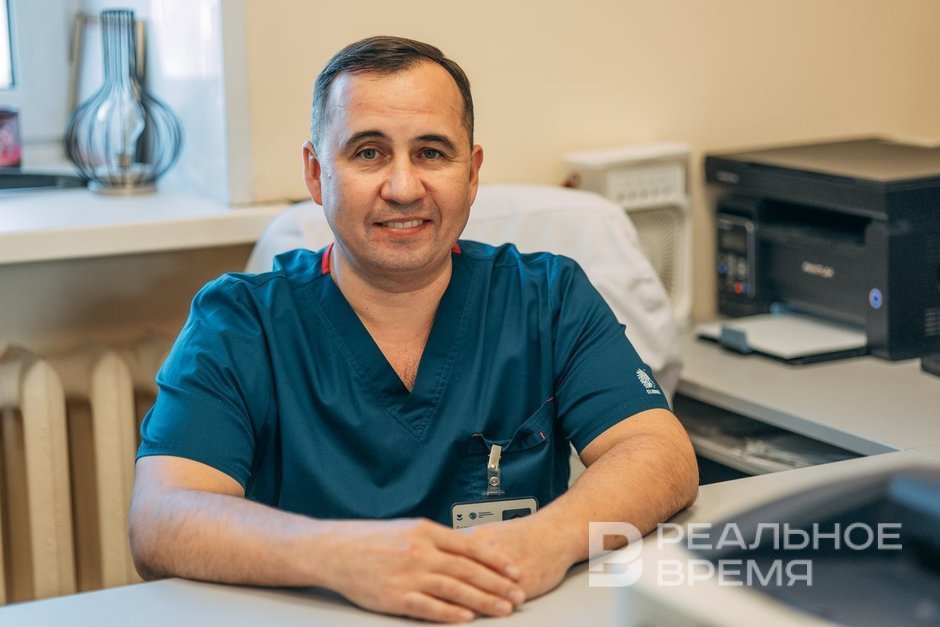
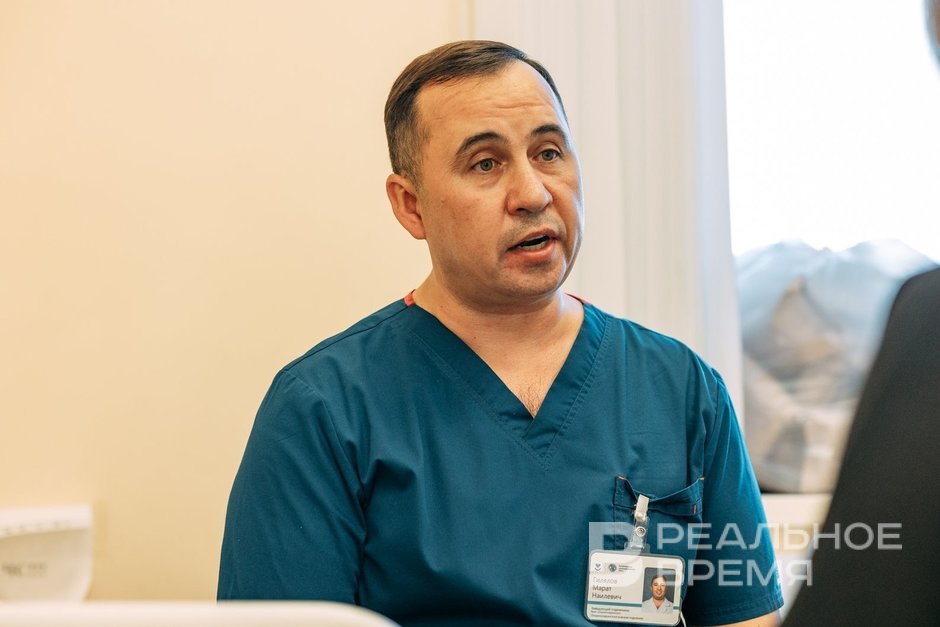
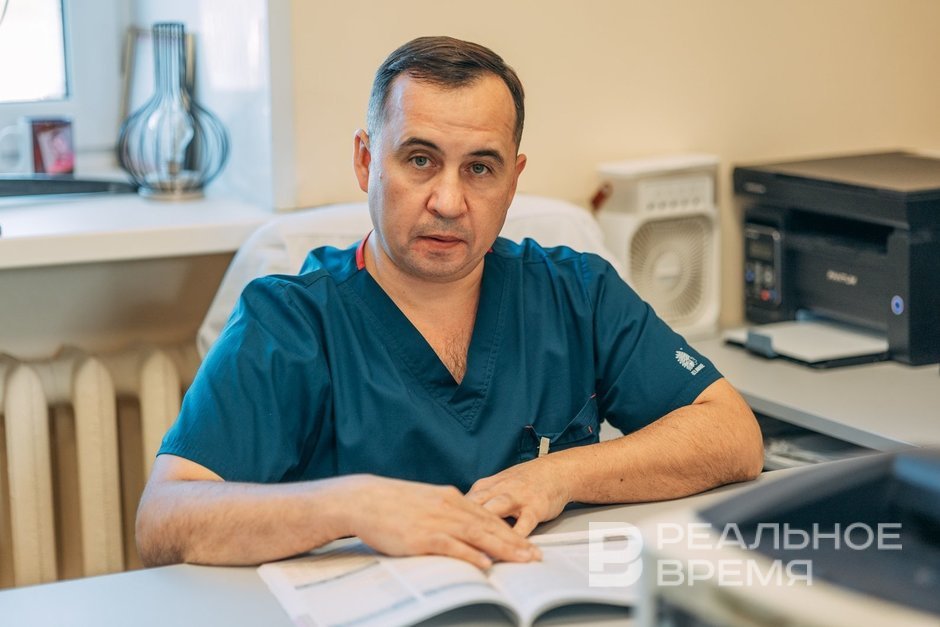
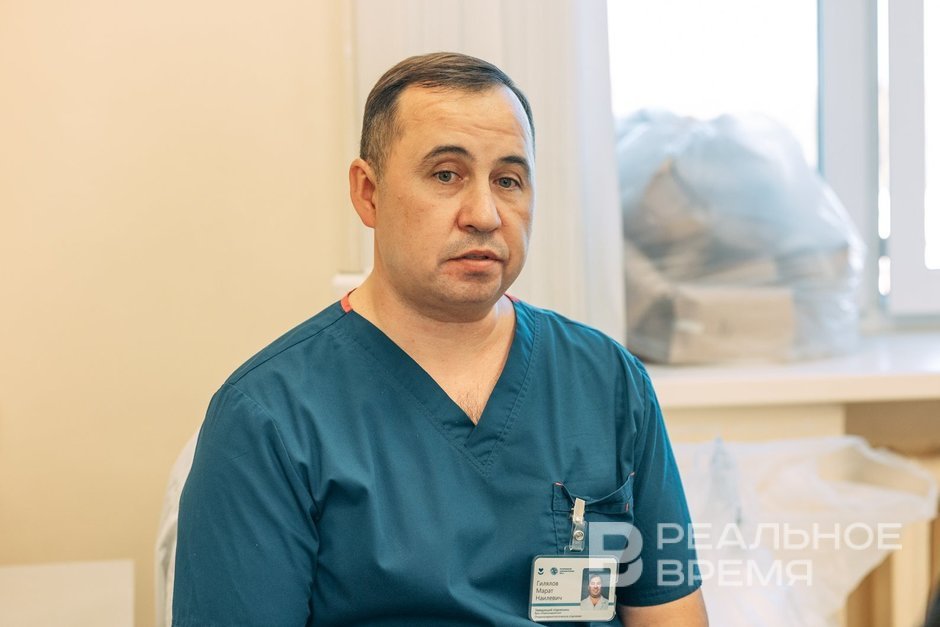
Marat Nailevich Gilyalov heads the otorhinolaryngology department of the Republican Clinical Hospital of Tatarstan. Otorhinolaryngology is a complex medical science that is not limited to the nose, throat and ear. A modern otorhinolaryngologist works at the junction of several specialties and is engaged in complex surgery. He treats chronic diseases and deals with the rehabilitation of the function of damaged organs. About why a surgeon-otorhinolaryngologist should not fight with the patient, why a doctor must study all his life, why not every problem should be solved by surgery and how Marat Nailevich sees the otorhinolaryngology of Tatarstan in the future — in the next “Portrait” of “Real Time.”
“You must become a doctor”
Marat Nailevich grew up in a medical family in Leninogorsk. His father worked as the chief doctor of the sanitary-epidemiological supervision in his native city. The boy saw the peculiarities of the work from childhood and heard conversations about medicine. True, he had no dream of becoming a doctor. Sport occupied him far more strongly: he wanted to become a world champion in ski jumping. One could say that the family made the choice for him.
— I, honestly, do not know such people who from childhood burned with the dream of becoming a doctor. Because a person finally chooses a profession later. We come to it already consciously. And in my upper grades they said to me: “You must become a doctor.” The task was set, recalls Marat Nailevich.
In 1997 he entered the Kazan State Medical University at the medico-prophylactic faculty. In 2003, upon graduating from the university, he decided that he would not work in the sanitary-epidemiological supervision — he was drawn to the clinical network. Therefore the yesterday's student underwent a year of retraining at the medical faculty under a targeted assignment — this study was paid for by Leninogorsk, where even today there is no surplus of medical personnel.
When the time came to choose a specialty, the chief doctor of the Leninogorsk Central District Hospital proposed two options — ophthalmology or otorhinolaryngology. These two specialists were acutely lacking in the city. Our hero admits that otorhinolaryngology sank into his soul more strongly. Possibly the personality of the well-known Kazan otorhinolaryngologist Shamil Ismagilov, who in those years was a docent and drove a red “eight," played its role in this.
— I looked, and I saw no one else in such a car here at the RCH. Well, I thought: “Well, since otorhinolaryngologists can and know how — that means it is an interesting and promising specialty!”, our hero admits with a smile.
And he entered residency. Otorhinolaryngologists are not divided into adult and pediatric, so they studied at several bases at once: at the RCH, at the DRKB, and at the RCOD. In large cities it is probably more convenient to work in this specialty: as a rule, there is a division. Some doctors work with adults, others — with children. Some are engaged in surgery in hospitals, others conduct outpatient appointments. But in small towns and settlements an otorhinolaryngologist, as a rule, conducts a mixed appointment and provides help to both adults and children. Therefore the preparation must be all-round.
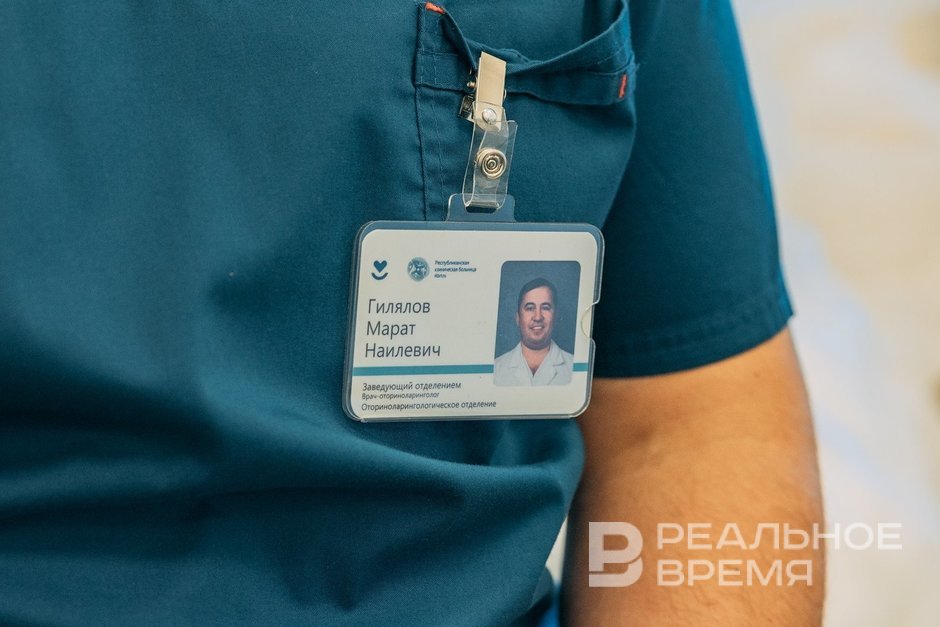
After residency the young doctor went to his native Leninogorsk. From 2006 to 2010 he worked in a surgical hospital with otorhinolaryngological beds. To this day he recalls with great gratitude his mentor, Nail Nigmatullin, who helped our hero go through the basics of the profession and become an accomplished doctor.
In 2016 Marat Nailevich received an invitation to Kazan, to city hospital No. 18. And in 2018 he moved to work at the Republican Clinical Hospital, where he was immediately invited to head the otorhinolaryngology department. He has headed it to this day.
“We are involved in practically all surgery that concerns the head and neck”
From the outside it may seem that otorhinolaryngology is not the broadest medical specialty. Nose, ear, throat — three organs, a few customary diagnoses, a set of complaints familiar to everyone. But this is a very simplified and distorted impression. Otorhinolaryngology is a huge area of medicine in which high-tech, complex, very intellect-intensive surgery is concentrated. It is precisely at the RCH that the surgical part of this specialty is mainly concentrated. But therapeutic otorhinolaryngology is mainly outpatient. Although patients who need conservative treatment in a hospital setting are sometimes also hospitalized in Marat Nailevich's department.
— Since the time of the USSR such an opinion has formed that otorhinolaryngologists are minor surgery, a narrow specialty. “LORiki," as they call us, can look into the nose, wash out ear plugs and look at the throat. But in fact everything is completely different. We are involved in practically all surgery that concerns the head and neck. For example, operations in the area of the paranasal sinuses may affect structures next to the eye socket, therefore LOR doctors work together with ophthalmologists. We work closely with neurosurgeons if we need to help a patient with a complicated form of sinusitis, when pus breaks through toward the brain. Meningitis, brain abscesses may be connected with diseases of the ears — chronic purulent otitis of the middle ear. After all, all this happens inside the skull, therefore we act at the junction with neurosurgery, Marat Nailevich explains.
If we switch to the throat, then if otorhinolaryngologists work with purulent abscesses — they may form a team with thoracic and maxillofacial surgeons. Because, for example, a retropharyngeal paratonsillar abscess can quickly descend from the tissue of the neck toward the heart. And abscesses of the maxillofacial area, in turn, can go toward the neck. Otorhinolaryngological surgery has intersections with neurosurgery, vascular and maxillofacial surgery. And in the area of therapy LOR doctors work closely with neurologists.
And even with gastroenterologists this profession intersects: for example, behind the larynx (for which otorhinolaryngologists are responsible) comes the esophagus (the area of work of gastroenterologists). And if a patient has reflux — the reflux of stomach contents into the overlying sections — the acid from the gastric juice can enter the cavity of the larynx and even rise into the nasopharynx. The result — a sore throat, chronic irritation. One can treat a sore throat in such a patient as much as one likes, but one has only to start treating the reflux — and immediately the otorhinolaryngological symptoms go away.
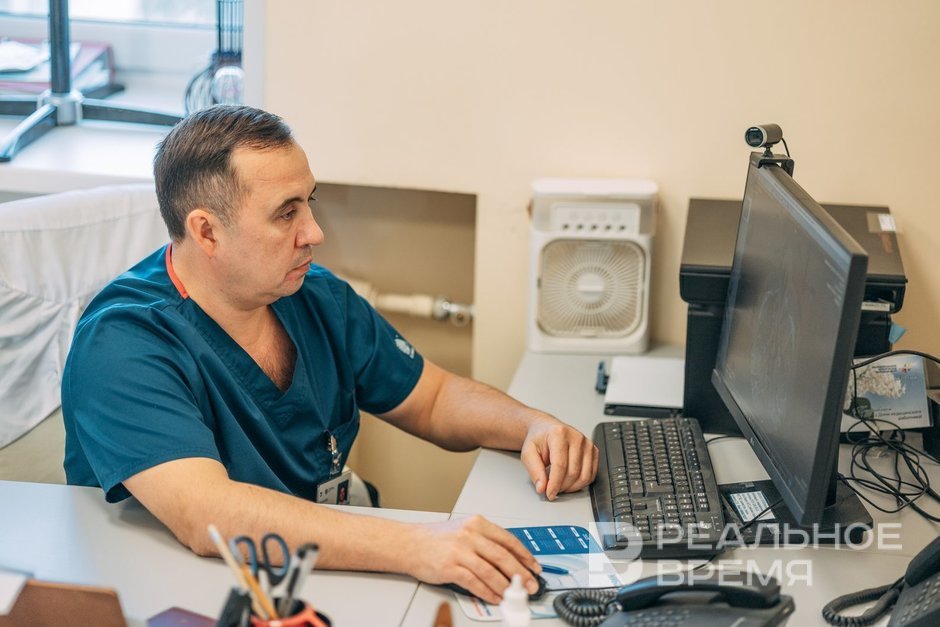
“First the word, then the herb, then the knife”
Of course, this surgery is developing by leaps and bounds. Endoscopic technologies are moving forward, and operations on the larynx are performed under a microscope. In short, otorhinolaryngology is a fascinating, high-tech, and most importantly — a very in-demand specialty. Judging by Marat Nailevich's burning eyes, he has found his place. The doctor says with conviction: “We are microscopic surgeons. But by no means narrow!”
Within the specialty each LOR surgeon has his preferred area. Of course, all are excellently prepared and ready to provide help in all directions, but each doctor has his “favorite.” For example, Marat Nailevich himself defended his candidate's dissertation on diseases of the nasal cavity — on the surgery of the nasal septum. In it, the optimization of the surgical approach in order to avoid complications is proposed — a unique suture technique and the creation of a new surgical instrument specifically for suturing in the nasal cavity are described. All this is patented.
— Now we, of course, deal with the problems of the ear, and the larynx, and the trachea. I myself have now begun to pay more attention to the surgical problems of the ear. This is all that is connected with chronic otitis and other complex diseases, says Marat Nailevich.
Otorhinolaryngologists encounter very serious and terrible diagnoses, when purulent inflammations from the pharynx literally in a matter of hours spread into the retrosternal space. Then the acute question of the patient's life and death arises. The doctor says that in such cases both thoracic surgeons and purulent surgeons are involved. Such patients are saved by common efforts.
But surgery must not always be applied thoughtlessly. The better a doctor knows the possibilities of surgery, the more clearly he understands its boundaries. Chronic tonsillitis, adenoiditis, otitis, rhinitis — far from all of this requires an operation. Sometimes a person needs regular observation, treatment, lavages, physiotherapy. It is important not to bring the disease to a state when conservative methods no longer help.
The attitude toward the tonsils and adenoids has also changed in recent years. Before they were removed much more readily; now doctors think more about their role in the formation of local immunity and try to preserve the tissues if there are no serious grounds for an operation.
— Over time I notice an important thing: one does not always actually want to operate. The further you work, the more you understand: one must try maximally to conduct treatment conservatively. Even Hippocrates said: “First the word, then the herb, then the knife," reflects Marat Nailevich. — Therefore it is important to maintain a fine line and balance in deciding such questions.
Such an approach requires patience from the doctor. An operation is a clear action: there is a problem, it is eliminated. Conservative treatment is more complicated at least because the result does not always appear immediately. One must observe the person, adjust the treatment, return to them again. Sometimes the patient wants precisely an operation. It seems to them that this is the fastest way to get rid of the problem. But the doctor may see the situation differently.
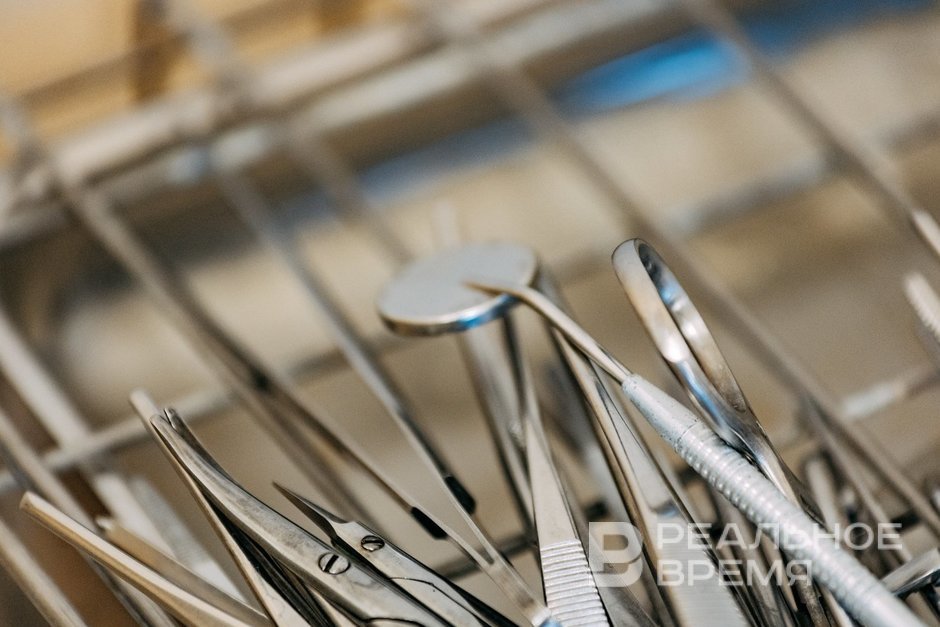
Marat Nailevich cites snoring as an example. A person may come with a ready request: it is necessary to remove part of the soft tissues of the palate, and the snoring will disappear. But first one must understand why it even arose. If sleep apnea stands behind it, surgery may turn out to be not at all the method the patient needs.
This is one of the difficult sides of the profession: sometimes to help means not to do what is expected of you.
“A lack of diagnostics leads to problems”
Most patients initially turn to otorhinolaryngologists through the outpatient-polyclinic service with problems of the upper respiratory tract. Most often the nasal cavity and nasal sinuses suffer. But human anatomy and physiology are arranged so that everything in the system of the ear and nose is interconnected with each other. As soon as problems begin in the nasal sinuses (inflammation in rhinitis, sinusitis, sinusitis) — they can go further. Because after the nasal and maxillary sinuses come the auditory tubes. With a strong runny nose their blockage and edema begin. From the mastoid processes of the ear the outflow stops — blockage of the middle ear begins and its diseases “are pulled in.” That is precisely why otorhinolaryngology unites this whole finely interconnected system.
Accordingly, after the diseases of the nose and nasal sinuses, in occurrence come the inflammatory diseases of the ear, pharynx and larynx. Sinusitis, chronic rhinitis, otitis, adenoiditis, chronic tonsillitis — all this is the daily work of an otorhinolaryngologist. The larynx suffers to a lesser degree, but it too can give various failures and diseases. Separate specialists — phoniatrists — deal with it. There are audiologists — specialists in hearing, and for them a separate residency is now even being allocated.
Depending on the severity and prevalence of the diseases, patients are treated either conservatively on an outpatient basis or in a hospital, including surgically. A huge part of the work is taken on by polyclinic otorhinolaryngologists: they diagnose, perform manipulations, and refer to third-level clinics in time in complicated forms. If it is not possible to sort out the problem in the polyclinic, patients can be referred to the department for consultations — here the pharynx and larynx will be examined more precisely, not to mention the middle ear and eardrum.
So diagnostics is a separate work. The same larynx is examined with the help of a very complex instrument — a special mirror for indirect laryngoscopy. Not every doctor knows how to correctly look at the larynx with such an instrument; one must specially learn this, and the general otorhinolaryngological service of the republic is engaged in this among other things. New methods also appear — for example, fibrolaryngoscopy. True, the equipment for it is not available everywhere. But otorhinolaryngologists, of course, would like an expansion of their diagnostic possibilities.
— Because a lack of diagnostics can lead to serious problems. For example, we diagnose laryngeal cancer not at an early stage, but only when a person already comes with a complaint that he is suffocating. At the early stages people do not know that they need an examination. In this case the only way out is to remove the whole larynx, and this is already different surgery and a different quality of life, states Marat Nailevich. — Of course, we have oncological alertness, and we always discuss at forums that otorhinolaryngologists must be able to see these problems. But it is not always possible to track this on the spot.
Our hero explains what the difficulty is, and why an otorhinolaryngologist cannot be prepared in 36 hours. Not even to speak of such a complex examination as the larynx — not every doctor can see even the eardrum in the case of severe inflammation, purulent otitis. How many cases there have been when the ear is densely blocked with stale pieces of cotton wool, in which bacteria and fungi multiply. And the doctor at the district sets the diagnosis “otitis media” — inflammation of the middle ear. He does not see this cotton wool, he thinks that this is already the beginning of the eardrum. But at the RCH the specialists extract all this from the ear — and it turns out that the person has external otitis, the inflammation has not penetrated beyond the eardrum and is treated conservatively. Without a microscope in such a situation it is sometimes impossible to sort it out. And the doctor must also have accumulated experience, and it is formed over years.
— But I hope that we will come to the point that there will be a fibrolaryngoscope at every district. That all this will be tracked in time, and there will be digitalization, and electronic cards with all the photographs and examinations will be uploaded. We are not far from this! dreams Marat Nailevich.
“Surgery is aimed at helping to restore what the Almighty created”
Patients of all ages turn to otorhinolaryngologists; there is no predominant strong skew toward the older generation. But the doctor observes an interesting picture: the development of medicine, the spread of an active lifestyle, the increase in longevity — all this leads to the fact that patients who earlier were ready to live with this defect to the end of their lives now turn for operations (for example, to correct a deviated nasal septum).
— Before, doctors said: “You are 45 years old. Perhaps you do not need to touch the nasal septum, because there may be complications — atrophy, perforation, and then there will be a worsening of the quality of life instead of an improvement. You can go on for another 15—20 years as you are.” But now the development of surgery and the growth of life expectancy dictate other approaches. I have patients whom we corrected the septum at 70, and they breathe easily now! says Marat Nailevich.
Strongly deviated nasal septa occur in people after injuries — and this seriously hinders the direct passage of air flows and the formation of healthy breathing. So “correcting the nose” in such situations is not an aesthetic but a completely functional requirement. After all, if normal nasal breathing is not evened out — it is useless to work with the ear. After all, the auditory tube will not be able to equalize the pressure. We have already spoken about how finely everything is interconnected.
New times bring new operations — when surgeons practically reassemble the middle ear after acoustic barotrauma. Patients with the SMO, whose ears were covered with headphones during an explosion but whose mouth was open, sometimes receive such injuries: the blast wave injures the ears not from outside, but from inside, through the mouth and further through the auditory tube.
The three bones of the inner ear are knocked out: the malleus, the incus and the stapes. A mechanical sound signal is transmitted along these tiny bones. And when this mechanism is destroyed, the otorhinolaryngologist-surgeons of the RCH try to reassemble it. They put in an artificial eardrum, put in one bone instead of the three lost. And it works. People begin to hear again (but only if the auditory nerve, which transmits the signal to the brain for processing, is not damaged).
— I think that now in all spheres surgery is aimed at not removing much — but only helping to restore what the Almighty created, says Marat Nailevich.
“You do not fight with the patient”
A patient comes to the doctor not only with a diagnosis. They already have their own experience of the illness, fears, an idea of treatment, and sometimes a diagnosis found on the internet. The internet has greatly changed the relationship of doctor and patient. Today a person may come to the appointment and tell in advance what their diagnosis is (in their own opinion), why it happened and even what operation they need to have. With the appearance of artificial intelligence there have become even more such independent “consultations.”
Marat Nailevich does not consider this a cause for conflict. If a person came with a ready version, it can be analyzed together and one can see what is confirmed by examinations and what is not. For him the patient is not a client who must be convinced to buy treatment, and not an opponent to whom one must prove one's own rightness. The doctor and the patient are on the same side, and this is the doctor's clear conviction.
— The main thing that I think: you do not fight with the patient. And you do not want to do something for them for a checkmark and let them go. You are a professional, you must do well, and you go to do well. This is probably the main thing in the work of a surgeon, admits Marat Nailevich.
Like most heroes of our column, Marat Gilyalov notices a general decline in respect for the medical community on the part of fellow citizens. He is sure that the matter is also in the change of official rhetoric: if before doctors rendered medical help, now they provide medical services:
— But one cannot treat us like that! We are not a sphere of services, we render help. After all, it does not occur to anyone to say “police service.” If something happens, a person calls 02 and does not say “They are killing me, render me an urgent service.” They ask for help. Or if there is a fire — no one waits for a fire service. And in medicine we too are constantly putting out fires. After all, if you sort out each patient's situation — in their organism there is a fire, a catastrophe that must be stopped. They did not go to a hairdresser to get a haircut; they went to receive help and, possibly, the salvation of their life. But for some reason a different thought has been laid into society now.
Of course, if a patient comes already “heated up," Marat Nailevich tries to talk with them as calmly as possible, to calm them. He proposes to find a consensus. And even if the person's problem is not in the otorhinolaryngological key, he proposes ways out: “We will now talk with you and come to something. I cannot help you, but I know who can. And we will resolve this question — how for you to get there.” After all, above Tatarstan there are also federal centers with an extensive program of telemedicine consultations.
— Many conflicts happen because someone did not have enough three to five minutes to listen to the patient or to tell them something more. We try to find these minutes. And the person relaxes when they feel that they have begun to be dealt with, that they are not left on the sidelines alone with their problem, says Marat Nailevich.
“I joke that I will put on for them my most golden hands and most eagle eyes”
From the point of view of emotional load this work requires great dedication. Our hero is sure: no matter how a doctor declares the presence of an “iron curtain” between his own psyche and the patient, he will still pass through himself everything that happens in the operating room.
— And if you encounter, God forbid, some other complication — you will still pass it through yourself for a long time afterward and return to it. What was that? Why was that? When you approach the delicate places during an operation — all your signal systems switch on. Your sharp-sightedness grows, adrenaline rises, noted Marat Nailevich.
Before an operation the doctor tells the patient about the possible risks. Marat Nailevich does not like to create the feeling as if surgical intervention is a button after pressing which the problem will be guaranteed to disappear. An operation is not a walk in the forest to breathe fresh air; it is a serious intervention.
For a doctor to acknowledge responsibility does not mean to acknowledge weakness. A surgeon must think not only about how to enter an operation, but also about how to come out of it, imagining possible complications and variants of action in advance.
— Patients often ask me: “Do operate on me well.” What can you answer to that? I joke that I will put on for them my most golden hands and most eagle eyes that I can find. After all, I have no others. And I will do each operation at the limit of my strength and possibilities. As well as I can, reflects the doctor.
“As long as we do not have preventive medicine, urgency will be greater”
For Marat Nailevich prevention begins not with loud medical campaigns, but with the ordinary work of the polyclinic. To observe a patient with a chronic disease, to prescribe treatment in time, to see changes, not to let the problem pass into a severe form — all this in the end influences the load of the hospital too.
In otorhinolaryngology preventive treatment of chronic tonsillitis, otitis, adenoiditis, rhinitis is especially important. If a person receives help in time, they have less chance of ending up in a situation when an urgent operation is required.
— One simply must regularly go for checkups, and then the number of patients for surgery will decrease, states the obvious Marat Nailevich.
But for this there must be doctors in the polyclinic. And these doctors must have enough time. Fifteen minutes for an appointment does not always allow one to do everything that a specialist requires. One must listen to the person, examine them, perform a procedure, look at the results of examinations, make a diagnosis and fill out documents. For some manipulations special equipment is also required.
— We need more otorhinolaryngologists. As long as we do not have preventive medicine, our urgency will be greater. We need the training of personnel, the equipping of offices! says the doctor. — And here one thing pulls another. Maybe the equipment exists, but there is no specialist. Or the opposite: a young doctor arrives, but he has nothing to work on. Or there is something to work on, but he does not very much want to…
In this phrase Marat Nailevich actually lists the whole chain: the doctor, training, the office, the equipment. If one link falls out, the rest begin to work worse.
There is also another problem: young specialists must not only be trained, but also retained. A doctor may leave for Moscow or St. Petersburg, choose private medicine. Therefore the republic needs conditions under which a specialist will find it interesting to work here and grow professionally.
Marat Nailevich says that many young people are now entering residency in this specialty — more than there were in his time. The question is different: will they come to work in the state network. Our hero is convinced: one can interest anyone!
— And the main thing — one can interest them by the fact that in our specialty there is an enormous number of possibilities. If someone wants to be a “handicraftsman” — surgery is indicated for you. We have a huge surgical specialty with various possibilities. If you are afraid of blood — go into audiology or phoniatrics. Or you will always be in demand in the outpatient-polyclinic network, where the manipulations are not so extensive. In short, our specialty is one of the few that can boast that here one can successfully establish oneself both as a surgeon and as a therapist! the doctor says with burning eyes.

To develop the service, and not only the surgical department
Beyond Kazan the otorhinolaryngological service is also developing. In Tatarstan specialized second-level centers operate, called upon to solve one of the tasks — not to bring to the capital of the republic every patient who needed the help of an otorhinolaryngologist. Part of the problems can be solved on the spot. But if more complex help is needed — the patient is taken to a third-level clinic, to the RCH. If necessary, specialists from clinics of different levels can consult with each other, including remotely.
Thus a system is gradually being built in which the RCH ceases to be the only point where serious help can be obtained. At the same time the development of surgery inevitably pulls other directions along with it. New operations appear, specialists who know how to perform them are trained, equipment is purchased, diagnostics grow, rehabilitation methods are built. The importance of audiology and phoniatrics is growing: besides saving patients' lives, now they also think about its quality. A number of decisions have already been adopted on equipping second-level medical centers with equipment for interventions that until now were done only at the RCH. The doctor explains: there are cases when it is better to transport a patient in 15 minutes to Naberezhnye Chelny and help him there than to take him two and a half hours to Kazan with the risk of worsening the situation. As head of the department he knows the possibilities of all clinics in the districts and cities of the republic and precisely understands where and with what local specialists can cope. Proceeding from this he also builds the routing, if colleagues from the districts or specialists of the air ambulance turn to him.
Marat Nailevich also speaks about more complex prospects — cochlear implantation. This is a surgical operation to implant an electronic device that replaces the cochlea of the inner ear and restores hearing in severe deafness or profound hearing loss. The introduction of such a technology requires the further development of technologies at the junction of otorhinolaryngology and neurosurgery. But he does not present this as a story only about expensive equipment that is enough to buy and switch on.
Behind a new technology stands a whole system of training specialists. This path our hero also sees as the presumed path of his own professional development. This, it seems, is precisely the main professional quality of Marat Nailevich: it is not enough for him that his department already knows how to do. Even if the system works, there always remains the question of what can be done as the next step.

“You studied — you became a centimeter taller”
We ask: did our hero not want to leave his complex, hyper-responsible work and go to receive patients in a clean and bright private clinic, where there is neither urgency nor irritated patients? Marat Nailevich shakes his head: no, he sees nothing for himself other than the RCH. As long as he has the strength — he will work. He will fly on the air ambulance, will solve complex problems, do several operations a day, head the department and help people.
Marat Nailevich continues to engage in science, works at the department and does not separate academic work from clinical practice. For a doctor this is not an additional load “for a checkmark," but a way to remain in a profession that is constantly changing.
In medicine one cannot study once and then work for many years on the same set of knowledge. New methods of treatment, equipment, surgical technologies gradually become part of everyday practice, and what only recently was considered complex and rare may in a few years turn into an ordinary procedure.
Therefore one must study constantly. It is not necessary to make a discovery every day — it is important not to stop. Marat Nailevich admits: he is an ambitious person, and, as long as neuroplasticity and learning ability have not gone, he tries to constantly master something new.
— My parents laid this into me from childhood: if you do not learn something, there will be stagnation, you stop. Each time one must invest something into oneself, learn something every year in order to grow in the profession. You studied — you became a centimeter taller, you studied more — you grew another centimeter, the doctor explains.
In about 20 years Marat Nailevich does not exclude an academic career for himself: science remains an important part of life for him. Although the doctor admits: possibly teaching is a calmer job than heading a complex surgical department, nevertheless it too is colossal labor. For it he will need to rebuild himself. To attract young people to the profession is enormous work and enormous responsibility.
“The main thing is that we can help and do help people”
When Marat Nailevich speaks about what keeps him in the profession, the conversation quickly returns to patients. Not to the number of operations and not to the position. To the moment when a person after treatment begins to live normally again. The nose breathes again, the ear hears, the person did not receive a disability, returned to work. Complex technologies and many-hour operations are ultimately needed precisely for this.
— Probably, after all, the main thing is that we can help and do help people. This cannot be bought — the feeling that you did something, that it is right, that the person feels better. This is the most colossal! says the doctor.
Money also appears in this conversation, and quite honestly, without attempts to pretend that a doctor does not need it. They are needed, like for everyone else. Marat Nailevich speaks about this calmly: he would like a good car, an apartment, and someday he dreams of buying his own boat for sea walks. And, of course, the sea, which is not near Kazan.
The doctor tries to rest actively. In winter he goes skiing and tries to do a warm-up every day. In summer he walks a lot. When possible he goes mountain skiing. Our hero loves his dacha very much — and moreover he does not lie in a hammock, but constantly tries to plant or build something, repair, assemble together with his sons. Marat Nailevich admits: after the operating room one wants to do something simple with one's hands and see a clear result.
Marat Nailevich and his wife have three children. The eldest already works, the younger ones are still growing. And when he speaks about the future, he first of all wants to see how the children grow up, find their calling and begin an independent happy life. At the same time he is not going to force the children to continue the medical dynasty at any cost. Far more important for him is the very fact that they will establish themselves in life. But if one of the younger ones wants to go into medicine — our hero will only be glad:
— After all, in medicine there are many branches for every taste, in which one can find oneself. It is not necessary to become an otorhinolaryngologist. There is big surgery. There is the queen of sciences — neurology. From it one can go into reflexotherapy, which is very promising. One can become a diagnostician, or one can become a pathologist, a histologist. If you want — work with people, and if you want — with a microscope. One can find oneself both in the applied aspect, and in the scientific, and even in the technical. Medicine is boundless! It is one of the few structures that always were, are and will be. And in it everyone can find possibilities for themselves.