Unfortunate Egyptian cats, a map of the brain's depths, “living fertilizers”
Interesting science news of the week
In the USA the world's first CRISPR therapy that edits genes directly inside the human body may be approved. In the Kuiper Belt on the outskirts of the young Solar System there was a huge reservoir of water. Scientists are devising ways to turn bacteria into “living factories” of nitrogen fertilizers. The most complete atlas of structures deep in the brain that may influence the development of Parkinson's disease, schizophrenia and other diseases has been compiled. The sacred cats of Ancient Egypt lived in cramped conditions, fell ill, were injured and died. More about the science news of the week — in the review of “Real Time.”
One injection instead of lifelong treatment: CRISPR therapy has been working for four years already
Imagine that a chronic incurable disease can be brought under control with just a single injection. Once and for all. The developers of an experimental gene therapy count on such a result. The American biotech company Intellia Therapeutics published a study according to which its preparation continues to effectively prevent attacks of hereditary angioedema four years after administration.
With this disease a person periodically develops uncontrolled swelling in any part of the body — including the throat. Such attacks can be life-threatening. The new therapy uses the CRISPR–Cas9 genome editing system to switch off the gene responsible for the production of prekallikrein. This protein is produced in the liver and is responsible for increasing vascular permeability — it is precisely because of this that fluid leaves into the surrounding tissues and edema arises.
The main feature of the proposed preparation is the fact that the “molecular scissors” are delivered directly into the patient's body and work inside it. In this it differs from the CRISPR therapy Casgevy already approved in the USA, in which the patient's cells are extracted from the body, edited in the laboratory and returned back into the organism.
The “courier” delivering the therapy into the organism in the new preparation are fat particles containing messenger RNA with instructions for assembling the components of CRISPR–Cas9. They are introduced into the bloodstream and sent to the liver. Having received the genetic instructions, the liver cells “switch off” the gene responsible for the production of prekallikrein. The whole procedure takes one day. The main advantage of this approach is that the whole procedure is greatly simplified. And the patient is also spared the necessity of undergoing intensive chemotherapy, which is always prescribed before the use of Casgevy in order to prepare a place for the modified stem cells.
The long-term results of the study the company that developed the preparation presented this week. Before the start of treatment the participants of several clinical trials on average endured more than three edema attacks per month. After the administration of lonvo-z their frequency declined to less than half an attack per month. Such an indicator was preserved over four years of observation. Serious adverse events were not registered over this period. Additional results of the study with the participation of 80 people, published earlier this year, showed that within six months after treatment there were no edemas in 62% of the participants who received the preparation. In the placebo group there were 11% of such participants.
But editing the genome directly in the organism carries additional risks too. First, doctors cannot check all the cells in advance and weed out those in which undesirable changes have occurred in other sections of the DNA. Second, there is a probability of an immune reaction to the preparation. Third, genome editing presupposes that now the organism will always work in a new way. And that means the consequences of such a decision may not manifest themselves immediately. A polemic has already unfolded: after all, prekallikrein is a normal protein that is present in the organism under ordinary conditions. Switching it off helps reduce the leakage of fluid from the vessels, but scientists do not yet know whether the absence of this protein will lead to other undesirable consequences in the long term.
Intellia Therapeutics has already filed an application for the approval of the preparation with the FDA. If the American regulator agrees, lonvo-z will become the world's first approved CRISPR therapy that edits genes directly inside the human body. For the developers this is an opportunity to approach the concept of treatment “once and for all.” But four years of observation, however encouraging they may be, still do not give an answer to the main question: how safe is the lifelong switching off of a gene that was initially part of the normal work of the organism.
Traces of an ancient reservoir of water found on the outskirts of the Solar System
Scientists from the University of California in Los Angeles and the Lyndon B. Johnson Space Center discovered evidence of the existence of a large reserve of water with an unusual isotopic composition beyond the orbits of the giant planets — in the region of the Solar System called the Kuiper Belt. The clue became microscopic particles of cosmic dust that flew in from there. The discovery will help better understand how the young Solar System was arranged and where its most ancient reserves of water were located.
Water in the Solar System was not always the same. At the early stages of its formation in different regions of the protoplanetary disk — the cloud of gas and dust around the young Sun — there could exist reservoirs with a different ratio of oxygen isotopes. Now scientists have obtained new evidence that beyond the orbits of the giant planets there was a large reserve of water noticeably differing in its composition from the water in the inner regions of the Solar System.

The researchers studied 12 microscopic particles of interplanetary dust collected in the stratosphere of the Earth. By the characteristic traces of the impact of solar energetic particles the researchers determined that the dust flew in from the Kuiper Belt — the region beyond the orbit of Neptune where numerous icy bodies are located.
The main clue became the oxygen in the composition of these particles — by the isotopic composition of the minerals of the dust the researchers were able to reconstruct the characteristics of the ancient water that participated in their formation. The calculations showed that the water was extremely enriched with heavy oxygen isotopes. The authors consider that its source was a large reservoir in the outer part of the Solar System that remained isolated from the matter of the inner regions for a very long time. The mixing of matter could have been hindered by Saturn: according to computer models, at the early stages of the formation of the system beyond its orbit there existed a region of increased pressure that slowed down or stopped the movement of dust particles toward the Sun.
Thus tiny particles of cosmic dust preserved chemical evidence of the processes that occurred billions of years ago on the farthest outskirts of our planetary system. By studying them scientists can reconstruct not only the history of water but also the conditions in which the most ancient building materials of the Solar System were formed.
Bacteria instead of chemistry: scientists create living fertilizers for corn and wheat
Genetically modified microorganisms can take upon themselves part of the work of synthetic nitrogen fertilizers. Researchers are already testing new bacterial strains in the fields and count in the future on replacing with them up to half of the traditional fertilizers. The ideal variant — a fertilizer that does not need to be produced at a factory, transported thousands of kilometers and applied to the soil according to a schedule. Instead it is independently produced next to the roots of the plant thanks to bacteria living in the soil. This technology — is a long-standing dream of scientists, and the first steps have already been taken. According to preliminary assumptions, such biofertilizers in the future will be able to replace up to half of the synthetic ones. If this happens, a new revolution in agriculture will occur.
Scientists modify the genes of microorganisms so that they can produce nitrogen compounds accessible to plants, using nitrogen from the air and from the soil. The problem is that plants do not know how to “eat” the stable molecules of nitrogen with which the air is filled. They need it to be converted into an accessible, soluble form. In nature special bacteria are responsible for this, which take nitrogen from the air, process it — and pass it on to the plants. For example, soybean and peanut enter into a partnership with bacteria that settle in special formations on the roots of the plants — nodules. The microorganisms provide the host with nitrogen, and in exchange receive carbohydrates. The result is a kind of deal, a symbiosis: the plant feeds the bacteria, and the bacteria supply the plant with the necessary element.

But corn, wheat and many other most important agricultural crops do not have such natural partners. Therefore farmers are forced to apply nitrogen to the soil in the form of industrial fertilizers.
Scientists have long been trying to change this situation. Initially they collected natural strains of nitrogen-fixing bacteria in the soil and then applied them to the seeds or sprayed them on the plants. However the method turned out to be of little effectiveness: nodule bacteria take root poorly on such crops. Therefore now the researchers are trying not simply to add suitable microorganisms to the plants but to reprogram their behavior.
One of the technologies already provably allows reducing the usual norm of applying nitrogen fertilizers by 20—25%.
But even if scientists learn to create effective bacteria, another problem remains: the plants must be ready to accept the new microscopic partners. After all, in nature such cooperation took shape in the course of long evolution, and corn and wheat do not possess the same mechanisms of interaction with nitrogen-fixing microorganisms as soybean or peanut. Therefore the researchers are considering the possibility of changing not only the bacteria but also the agricultural crops themselves. For example, one of the laboratories is trying to genetically modify corn so that its roots become more attractive for colonization by nitrogen-fixing bacteria.
In other words, scientists want to tune both sides of the future partnership — to teach the microorganisms to produce nitrogen and to help the plants create suitable conditions for them.
New clues to the mysteries of schizophrenia and Parkinson's disease found in a detailed map of the brain
Deep inside the brain are the basal ganglia — groups of cells that help process information about movements, mood, thinking and decision-making. If their work is disrupted — a variety of neurodegenerative and psychiatric diseases may arise — Parkinson's disease, schizophrenia, all kinds of addictions and other ailments. Now scientists have obtained an unprecedentedly detailed map of this area of the brain that allows examining it literally at the cellular level, moreover not only in humans but also in two related species — macaques and marmosets.
The atlas united information about 25.5 million cells of humans, macaques and marmosets. The results of the international project are published in 26 scientific works in 6 authoritative journals. Hundreds of scientists from nine countries participated in the study. The work became part of the initiative BRAIN Initiative Cell Atlas Network (BICAN) — a large-scale project of the US National Institutes of Health costing 500 million dollars, launched in 2022 for creating cellular maps of the mammalian brain.
The basis of the new atlas was formed by data about 21 million cells from the brain of six humans, three million cells of three rhesus macaques and crab-eating macaques and 1.5 million cells of two marmosets. They studied not only the structure of the cells but also the activity of genes, DNA changes regulating the work of the genetic apparatus, the electrical activity of the cells and the peculiarities of DNA packaging inside the cell nuclei. Besides, the researchers determined the location of the cells in the brain and developed a general system of their classification.
The comparison of data of different species of primates allowed the discovery of 61 types of cells preserved in humans, macaques and marmosets over 76 million years of evolution. This gives the possibility to study not only the peculiarities of the human brain but also those mechanisms of its work that turned out to be common for different species. The created system in fact became a framework on which the further map of the whole brain can be built.
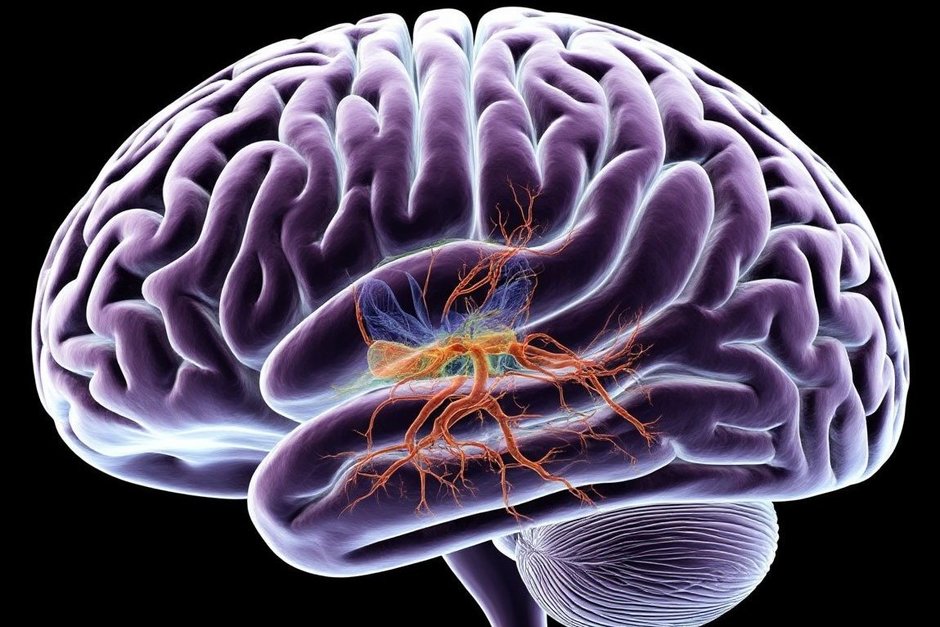
One of the studies was devoted to the striatum — the largest structure of the basal ganglia. The scientists analyzed 1.1 million cells from brain samples of 19 deceased people. In the striatum six zones with different molecular characteristics were identified. Each contains its own populations of neurons and glial cells. The most interesting thing is that under the microscope the cells of these zones look identical. The differences are detected only at the level of the work of genes.
Another work was devoted to the age-related changes of the brain. The researchers studied almost four million cells of the striatum and the prefrontal cortex — an area participating in complex cognitive processes.
It turned out that the cellular composition of these areas differs noticeably in different people. Individual differences are especially expressed among glial cells, which perform auxiliary functions and support the work of neurons. Besides, with age the ratio of some types of neurons and glial cells changes. By the character of the activity of genes the researchers were able to predict a person's age with a median error of only 6.6 years.
Another study helped draw attention to a rare and little-studied type of neuron of the striatum that is encountered in different species of primates. The scientists discovered that the genetic variants connected with the risk of schizophrenia are located next to the genes that work especially actively precisely in these cells. This points to the possible role of this type of neuron in the mechanisms of the development of the disease. Now it remains to find out how exactly these cells participate in the work of the brain circuits and how genetic changes influence their functions.
For now the atlas does not give ready answers to the questions about the causes of diseases but helps determine which types of cells should be studied first of all. In the future the created system of classification may become the basis for mapping the whole human brain. The participants of the BICAN project count on the next large series of publications being devoted already to the full atlas of the brain.
Ancient Egyptian cats lived in cramped conditions and fought to the death
The ancient Egyptians revered cats and mummified them as offerings to the gods. Cats were associated with some ancient Egyptian deities. For example, Mafdet, Bastet and Sekhmet, responsible for justice, fertility and might, were depicted as people with cat heads. But the sacred animals lived by no means like gods — this became clear recently when scientists studied a collection of 131 cat skulls found in the necropolis of Beni Hasan and kept in the Museum of Natural History in Vienna.
In 81 animals traces of severe injuries and diseases were discovered — that is 62% of the studied skulls. Among them — problems with teeth, inflammations, loss of teeth and changes of bone tissue that could be connected with infections or metabolic disorders. In 14 cats traces of injuries were preserved: fractures and holes in the skulls. Part of the damage probably appeared during fights between the animals themselves; others point to violence on the part of people. Some injuries had managed to heal, but on others there were no signs of recovery at all — that means the animals died soon after the blow.
According to the authors of the work, the cats were kept together in cramped conditions where infections spread easily and conflicts between the animals were an ordinary matter.
The analysis of the skulls showed that among the animals there were not only domestic cats. The scientists confidently identified seven jungle cats — this is a wild species, larger and more aggressive than our domestic kitties. Among the rest there could also be African wild cats and hybrids. The isotopic analysis of the bones helped establish that the jungle cats did not reproduce in captivity: the Egyptians caught them in nature and added them to the other cats.

Radiocarbon dating showed that almost all the studied animals lived at the end of the late period of Egyptian history and at the beginning of the Hellenistic era — predominantly between 380 and 40 BC. One skull turned out older and may relate to the period from 980 to 800 BC.
The collection comes from the necropolis of Beni Hasan, where in the 19th century huge accumulations of cat mummies were discovered. In 1890 about 200 thousand mummies were taken to Liverpool, where they were sold at auction for processing into fertilizer. The skulls that the scientists have now studied got to Vienna back in 1883.