Mikhail Kamenskikh: “China is not Proposing the creation of a new structure to replace the UN”
MSU Associate Professor on China’s Global Governance Initiative asa New Vector in the Development of International Relations
This summer, China concluded a series of its initiatives with the publication of a “White Paper” on building a fairer system of global governance — a document that summarizes the experience of previous projects (development, security, and civilizational initiatives) and links them to the concept of a “community with a shared future for humanity.” The key message of the document is not to weaken existing institutions, but to strengthen them, explained Mikhail Kamenskikh, an associate professor at the Center for European and Asian Studies of Moscow State University–Peking University in Shenzhen. In his column for Realnoe Vremya, the expert analyzes the publication and explains that the PRC is advocating the preservation of the UN Charter as a foundation and broader participation by different countries in order to achieve a balanced and sustainable balance of power.
Openness and Global Governance in a New Era
On June 17, 2026, the Press Office of the State Council of the PRC published a “White Paper” entitled “Building a More Just and Equitable System of Global Governance: China’s Concepts, Initiatives and Actions.” This is the first comprehensive document in which China systematically sets out its vision of the world order in the 21st century, the principles for reforming international relations, and its role in these processes.
This article is devoted to an analysis of this publication, as well as the processes against the backdrop of which it was developed. It should be noted that the book concludes a series of China’s global initiatives of recent years, including the Global Development Initiative, the Global Security Initiative, and the Global Civilization Initiative. The Global Governance Initiative is the last in this series and, in many respects, summarizes the experience of all the previous initiatives.
It appears that the Global Governance Initiative began to take shape as early as the development of the concept of a community with a shared future for humanity, proposed by Xi Jinping back in 2013. However, building a new infrastructure for interstate relations is a lengthy process. China and its allies are nevertheless moving confidently along this difficult path. Today, we can already see its main directions, some of which were outlined at the Lanting Forum in October 2025.
At this event, Chinese Foreign Minister Wang Yi presented nine main areas for reforming the international system of relations and security. They all essentially come down to the idea of mutual recognition and respect, rejection of unilateral unlawful actions, and resolving one’s own problems at the expense of others. The main goal of these proposals is to make the modern world more open and just.
Questions About a Fair Future for the World
Of course, China is not proposing the creation of a new structure to replace the UN. The entire initiative is based on the principle of preserving the UN and the UN Charter as its foundation. However, changes in the system of international relations and the balance of power among different countries today undoubtedly require consideration of possible reforms to existing interstate institutions, not with the aim of weakening them, but rather of strengthening them and reinforcing their international authority. The unilateral actions of individual countries bypassing the UN Charter in recent years only confirm the existence of this problem.
The Global Governance Initiative proposes expanding the range of participants and making it more balanced. All these ideas are reflected in the “White Paper” — “Building a More Just and Equitable System of Global Governance: China’s Concepts, Initiatives and Actions.”
The publication raises questions about a fair future for the world, including such important issues as artificial intelligence, space exploration, sovereign equality, global security, the development of multilateralism, and the preservation of civilizational diversity. Resolving all these issues in the future will make it possible to create a fairer world, make the balance of power more sustainable, and enable the international community to confront global threats such as terrorism, global warming, poverty, and so on.
The establishment of the Group of Friends of Global Governance at the end of 2025 was also a concrete step toward achieving this goal. The very fact that in just over a year the number of participating countries exceeded 60, while the initiative received the full support of nearly 160 countries in May 2026, is evidence of the demand in many countries for change, as well as of the initiative’s timeliness and the need to transition to a new model of global governance.
“Not One Country, but All of Humanity — This Is a Community with a Shared Future”
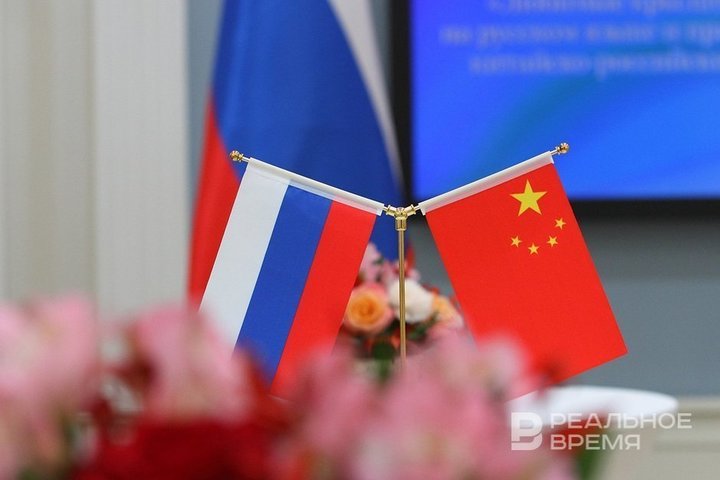
China is not only making proposals but also demonstrating through its own example its readiness to take steps toward greater openness. A good example is the introduction of a visa-free regime between Russia and China in 2025. This reduced the workload of consular services and significantly facilitated travel planning for citizens of Russia and China. As a result, tourism revenues in both countries increased, it became much easier to organize various events involving international participants, and unnecessary barriers became a thing of the past. Modern China is taking similar steps toward other countries as well.
In the 19th century, the rise of the United States was associated with its commitment to openness and equality in the world. The country actively advocated equal trading conditions, the abolition of tariffs and additional taxes. History already showed at that time that the pursuit of openness and equality is an important instrument of global influence. Unfortunately, the United States has forgotten this lesson today.
Meanwhile, in the 21st century, with the development of transportation and information technologies, the creation of barriers and obstruction of development cause even greater harm. In the new global world, the advantage goes to countries that move toward openness, for which not one country, but all of humanity, constitutes a community with a shared future. And we can see that today it is China that is boldly moving in this direction, becoming increasingly open to the world and receiving ever stronger and more comprehensive support from different countries around the world.