Ayrat Fayzrakhmanov: “Our museums should move into residential areas”
Director General of the National Museum of Tatarstan — about fund exhibitions and the board of trustees
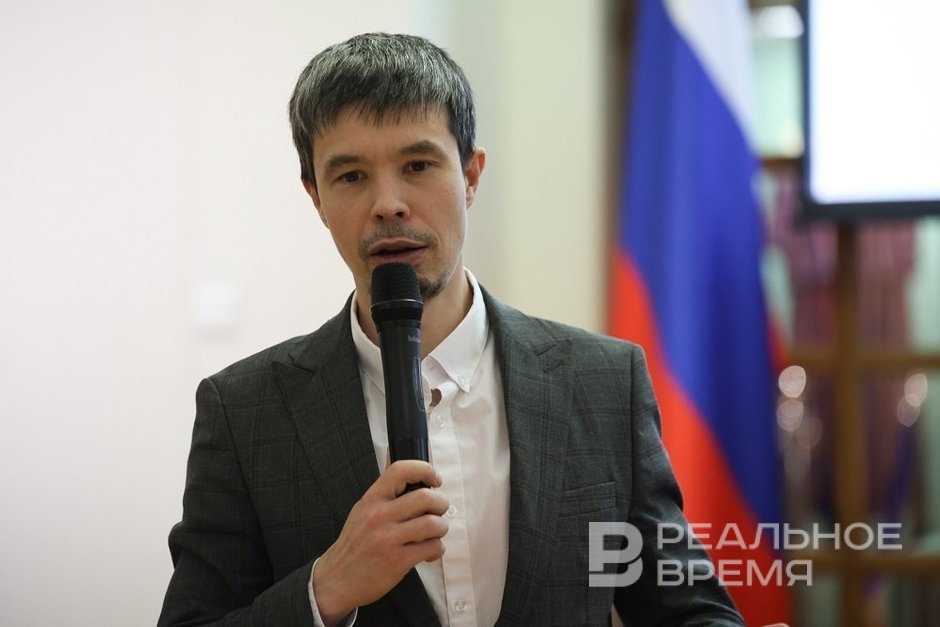
Ayrat Fayzrakhmanov, who took over the National Museum of Tatarstan at the beginning of the year, has noticeably transformed the institution's work over seven months. In addition to new exhibitions, lectures, performances, and festivals were held in the main building and branches, and personnel changes also took place. In an interview with Realnoe Vremya, the director spoke about how the museum's extra-budgetary revenues are formed and what role they play in its activities.
“Alisa Lvovna left a good legacy”
— Alisa Vyatkina, who was the Director General of the National Museum until last year, once said that in the nine months of 2022, the National Museum of the Republic of Tatarstan earned 41 million rubles.
— Alisa Lvovna left a good legacy, and we need to maintain this pace. Especially since it has become more difficult with tourists now and competition is growing. Currently, we are earning more than in 2022. And in this, I repeat, much of the credit goes to Alisa Lvovna and the museum team, which was able to take advantage of changes in the tourist market environment.
When we grow, it primarily means that people are more involved in history and learn more about our heritage.
— The first part of the income is, of course, tickets. And when you became director, it seems the first news was a price increase, as well as a subscription system.
— First of all, the increase is planned; we also offered time slots then when you can visit cheaper in the first half of the day. Secondly, admission to the museum is free for children under 18. Thirdly, we kept the cost of guided tours as it was and even reduced the price for audio guides. It should also be noted that the flow of beneficiaries has increased, which is also pleasing.
Ticket sales themselves account for about 80% of our income. About half of the flow are individual visitors who were walking down the street and came in: “Interesting building, what's here?” or “I haven't been to the National Museum in a long time.” Visitors to the National Museum's branches come more consciously and purposefully; many of them have formed their own communities of visitors. Slightly less than 40% are organized excursions from travel agencies, schoolchildren, and students using the Pushkin Card. We work closely with it; we are one of the leaders in the industry, and recently our team was awarded by the Cabinet of Ministers for this. In general, visitors are roughly divided fifty-fifty: half are Kazan residents, half are tourists.
— Have you studied the issue of returning visitors? How many come regularly?
— We haven't looked deeply into this issue yet. But we can say something about individual audiences. Schools and colleges often bring children once every two years. And some classes love the museum and come every quarter, choosing different branches. School visits are free for us; accompanying adults also enter free of charge, but an organized excursion is a paid service, quite inexpensive — four hundred rubles per child — and a qualified guide works with you for two hours. We understand that the ideology of museum development should be built around this — what should happen in the museum so that people come here several times a year?
Just yesterday, the team and I held a brainstorming session on the Pushkin Card. Our task is for a child to come here many, many times. After all, many people have the feeling: “I've been to the National Museum, what else will I see here?” The museum should attract with new temporary exhibitions, immersive programs on the main exhibition, exclusive things like fund exhibitions and museum classes, lectures, performances, and even fashion shows with a historical emphasis. This way, we can attract people for a second, third, fourth time, and at the same time, visitors rediscover the main exhibition, seeing exhibits they previously overlooked.
Of course, what could greatly increase museum traffic is further renovation of our building, updating the exhibitions, and adding additional halls — we have so much wealth that we want to show. There is some truth in my half-joking remark that we actually have the khan's treasures. But the prospect of global changes is still with unclear dates. The high leadership understands that the museum is a crucial ideological place, a place for preserving heritage, and it needs to be presented more worthily and beautifully.
“Projects were made, but they were never fully approved”
— You must have studied the entire museum building by now. How much more space can be opened here?
— Currently, almost half of the space in the “horseshoe” of Gostiny Dvor, excluding the “Begemot” building on Chernyshevsky Street, is occupied by the storage facilities. It was previously planned to move these storage facilities to the “Begemot” building on Chernyshevsky Street. This is a matter of renovation work and construction expertise. Projects were made, but they were never fully approved. Now we will go through these procedures again. In general, plans for creating a large museum quarter began half a century ago. If even part of our storage facilities are relocated, a significant part of the building will be freed up for exhibition space.
This means new exhibitions, including new temporary and traveling ones. Federal museums and major regional museums are very interested in Kazan. Everyone wants to be friends, everyone wants to show their exhibitions in the Republic of Tatarstan. This practice of exchange exhibitions exists. Federal museums have two traveling exhibitions prescribed in their state assignments, which are carried out at their expense. Interesting exhibitions could come to us, not only from Moscow and St. Petersburg but also, for example, from the Kaliningrad Museum of the World Ocean or federal museum-reserves. Most importantly, we can supplement such exhibitions with our own materials from our storage facilities, as we often do.
— Does the National Museum have the ability to act as a tour operator? Sviyazhsk is known to use this actively.
— So far, this is a practically undeveloped niche; we would like to explore it too. At the same time, we differ greatly from museum-reserves, which have also worked for many years to ensure an endless flow of tourists specifically to them. We are located in the center of Kazan, with many other interesting institutions nearby; so far, we cannot offer much as part of our product, besides the exhibition, excursion, and cultural programs, unlike Yelabuga, Sviyazhsk, or Bolgar, where a stay takes a whole day and includes meals. That is, we have a somewhat different structure of the tourist product. Of course, we have city tours, master classes, and we offer visits to our branches, but so far this is not enough.
— The question is precisely about master classes and lectures. How much do they justify themselves?
— Many are very popular. For over ten years, the interactive game “Streams of the Volga Region” has been very popular — it talks about our peoples and shows costumes. We would like to update it, but people like it as it is; schools love it. In the structure of products, cultural immersive excursions occupy a fairly high share, and this is a profitable venture. As for lectures by specific scholars or local historians, our ideology here is simple: we usually ask people to buy an entrance ticket for these lectures. And many speakers do not ask for money; it is pure enlightenment. There is always demand for musical evenings and chamber concerts.
— Let's move on to souvenirs.
— This direction has become more active for us. It began to grow in volume in the post-COVID years. A number of very interesting products appeared; this process was launched by my first deputy, Umida Dzhuraevna Gaparova. Again, our souvenirs have been noted at special competitions; women's scarves, for example, are very popular. This is good extra-budgetary activity. By the way, returning to cultural programs, we also go directly to educational institutions, for example. That is also a profitable venture. With the Pushkin Card, we are welcome there. We just need to constantly remind people of ourselves and update the product. We can have up to ten outings a week, with two groups going out simultaneously. The same “Streams of the Volga Region," “Time Machine," “Soviet Tatarstan” are very popular products. All of this is combined with the history curriculum.
I would like to note that when we talk about extra-budgetary activities, we are primarily not talking about making money. We sell tickets, which means people come to us. The more we develop extra-budgetary activities, the more people are educated.
In this regard, this year the project of holding weddings in museums, mainly in our five branches, has become especially lively. It is very popular; there have been about 100 weddings already, and another 20 will take place by the end of August. Many people come to a specific museum branch for the first time, and many great photos remain. We discussed this seriously with the team beforehand, and not everyone accepted it: after all, there are museum exhibits and excursions — that is our main activity! But it turns out that people come here, often for the first time, and are inspired by the museum. That is the most important thing. And a wedding ceremony in a museum is part of our educational mission, I believe. By the way, the most popular museum among newlyweds is the Tukay Museum. We also offered all newlyweds free admission to all our museums for a month after marriage registration: I think this is a wonderful opportunity for a wedding trip to Kazan, and we would like to promote this opportunity.
— At the same time, you remain a scientific institution.
— A significant part of the team, the backbone of the museum, are research staff. Any excursion or long-term product goes through our internal scientific filter; we have a scientific and methodological department and verify all texts, which private museums probably do not have. We have internal accreditation for guides who lead our tours, including freelance ones. I believe, for example, that the Old Tatar Settlement should develop its own accreditation system so that people do not say whatever they want on excursions.
We ourselves also help create new museums — we have such a service: creating scientific concepts, design projects, or even some exhibitions. For example, the Oil and Gas Forum is coming up, and we are preparing one of the exhibitions for it. In addition, various information from the storage facilities is often requested. It seems like an inexpensive service, but there are just a huge number of requests.
How Rubin fans came to the museum
— Among the museum's unusual events in recent months, the presentation of FC Rubin's new uniform stands out.
— The new uniform was connected to Tukay's heritage, and one of our branches is his literary museum. This was a partnership event that also had an indirect effect. We had a flow of people before the event — a new audience, many of whom were at our museum for the first time. I assume that even those who were in the museum's courtyard had a desire to come back here again. It was an opportunity to convey information about our cultural heritage to a huge audience of fans.
— Among partnership projects, the story of the restoration of Syuyumbike's portrait also comes to mind.
— Yes, we have slightly activated work with sponsors now. Ahead is the creation of a powerful board of trustees with the participation of big business; moreover, this experience exists not only in Moscow and St. Petersburg but also in major regional museums and their branches. We have already had several sponsors who helped, for example, with the “Paradise Garden” exhibition. At the same time, they asked not to be mentioned publicly, but this is big business interested in preserving cultural heritage — thank you to this person and this organization. Several construction companies have helped us this year, for example, Unistroy helped with the renovation of the summer stage and the preparation of the museums for the wedding project.
— You became director at the beginning of the year and surely see many things differently now. Is there anything from other museums that you would like to adopt?
— There are, of course, many such examples. It is clear that the best museums in Moscow and St. Petersburg, as well as the capital museums of Kazakhstan and Uzbekistan — our museum alter egos — are inspiring. But I also recall the excellent Nizhny Novgorod Museum-Reserve; I am interested in their experience of open storage facilities. We wanted to have open storage where people could come and see a large number of objects. The Nizhny Novgorod Museum-Reserve has a unique porcelain collection — and it is all displayed in open storage. This is one of the most popular excursions; VIPs often visit it.
In addition, in Nizhny Novgorod, I was interested in the experience of the “Gorky Center," which is located in a residential area and conducts active educational and cultural work that affects the entire district. And I believe that our museums should move into residential areas, not just be located in the city center. It seems to me that when we talk, for example, about the Museum of the City of Kazan, we should also move in this direction. We also need to open departmental and school museums, at least on weekends. There is a lot of museum wealth in Kazan, but unfortunately, there are few good modern spaces.