Xiang Bo: “We are once again at a crossroads between unity and division, dialogue and confrontation”
The Consul General of the People's Republic of China in Kazan talks about the 80th anniversary of China's victory over Japan and the contemporary significance of the lessons of World War II
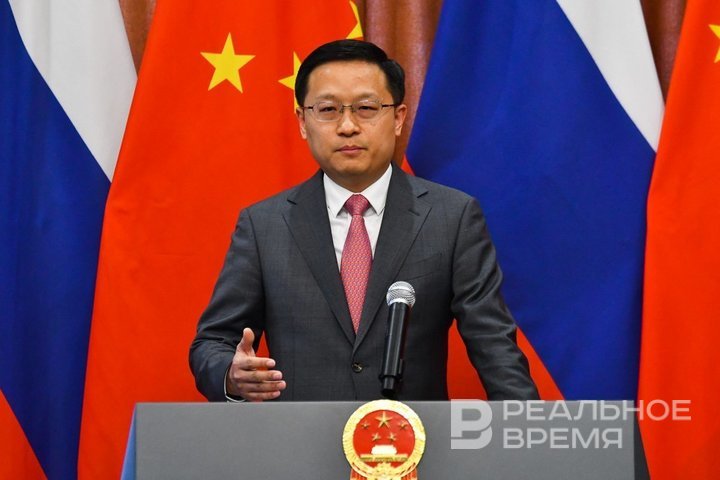
In September, Beijing is preparing to celebrate the 80th anniversary of the Victory over militaristic Japan and the end of World War II. At the large-scale celebrations, Russian President Vladimir Putin, who has already confirmed his arrival in the fall, will participate at the invitation of the Chinese side. “China and Russia made a decisive contribution to the victory in the world anti-fascist war," noted Xiang Bo, Consul General of the People's Republic of China in Kazan. In his article for Realnoe Vremya, he talks about the role of the two peoples who united in the fight against a common enemy and heroically fought to win for the sake of peace and progress of humanity.
The peoples of China and Russia supported each other during the war
On August 15, 1945, Japan unconditionally capitulated. The victory of the Chinese people in the War of Resistance Against Japanese Aggressors became a great triumph of justice over evil, light over darkness, and progress over reaction.
This year marks the 80th anniversary of the victory in the Chinese people's War of Resistance Against Japanese Aggressors and the victory in the world anti-fascist war. On September 3 of this year, a solemn commemorative event will be held in Beijing, where history will be remembered together, the memory of the heroes will be honored, the стремление к миру (striving for peace) will be strengthened, and the path to the future will be paved.
80 years ago, forces of justice from all over the world, including China and Russia, united in the fight against a common enemy and heroically fought to defeat the arrogant fascist forces. They made enormous sacrifices for the sake of peace and progress of humanity, making an indelible contribution. Standing at this historical juncture, we must remember the history of the war, draw strength from it, and together defend the peace that was hard-won.
China and Russia made a decisive contribution to the victory in the world anti-fascist war. The Chinese people's War of Resistance Against Japanese Aggressors marked the beginning of the world anti-fascist war, creating the first major eastern front of the fight against fascism, binding and exhausting the main forces of Japanese militarism. Russia became the main theater of military operations in Europe during World War II: in 1418 days of bloody fighting, at the cost of 27 million lives, it achieved a great victory in the Patriotic War.

The peoples of China and Russia supported each other during the war, laying the foundation for a deep combat friendship. China successfully contained Japanese troops, preventing them from opening a second front in the east of the USSR. More than 2,000 Soviet pilots fought in volunteer air detachments in China, of which over 200 died in the skies of China. The USSR supplied China with a large amount of weapons, and China, in turn, supplied the USSR with strategic materials, together paving the international “road of life” through deserts and steppes. At the final stage of the war, the USSR declared war on Japan and sent troops to northeastern China, accelerating the defeat of Japanese fascism. The Chinese people will always remember the Soviet soldiers and civilians who gave their lives for the liberation of China.
“We must forever remember the tragic lessons of World War II”
The Chinese people's War of Resistance Against Japanese Aggressors became the main eastern front of the world anti-fascist war. From the Mukden Incident (September 18, 1931) to the end of World War II, the Chinese people fought for 14 years — longer than anyone else, binding and destroying the largest number of Japanese troops. From 1937 to 1945, up to 90% of Japan's ground forces were deployed in China. Even in the later stages of the war, more than half of the Japanese army remained on the Chinese front. Chinese troops destroyed over 1.5 million Japanese soldiers, and after Japan's surrender, about 1.28 million more surrendered. The casualties of the Chinese people were enormous: more than 35 million dead and wounded, direct damage — over 100 billion dollars, indirect — over 500 billion.
As the main eastern front of the Allies, China played a decisive role in defeating the Japanese aggressors, simultaneously supporting strategic operations in Europe and Asia. As former US President Franklin Roosevelt said: “If there had been no China, if China had been defeated, just imagine how many Japanese divisions could have been transferred to fight in other regions?”
The Communist Party of China was a powerful guiding core of the Chinese people's War of Resistance Against Japanese Aggression. After the Mukden Incident, the Communist Party of China was the first to raise the banner of struggle, calling for a nationwide war against aggression — this was the first manifesto of the anti-fascist movement in the world. After the Lugouqiao Bridge Incident (July 7, 1937), the party contributed to the creation of a united anti-Japanese front, uniting the forces of all the Chinese people.
In response to the “state collapse theory” and “quick victory theory” prevalent at the time, the Communist Party of China proposed and implemented a general strategic policy of protracted war, systematically outlining the scientific conclusion that the war of resistance against Japanese aggression would be protracted and that China would surely achieve ultimate victory, providing the Chinese people with a powerful ideological weapon for the war of resistance.
For 14 years of war, under the party's leadership, extensive partisan bases were created, binding 60% of Japanese and 95% of puppet troops, which undermined the enemy's morale and instilled hope for the nation's salvation. History has proven: it was thanks to the faithful leadership of the Communist Party that the Chinese people were able to survive and win in extremely difficult conditions.
Today, 80 years later, unilateral approaches, hegemony, and aggressive actions are causing serious damage to humanity. We are once again faced with a choice between unity and division, dialogue and confrontation, mutual benefit and zero-sum game. We must forever remember the tragic lessons of World War II and firmly defend what was hard-won in it.
“Today, the idea of a common destiny of humanity is more important than ever”
To protect the results of the Victory, it is necessary to firmly and consistently support the post-war international order. The establishment of the UN was a key decision of the international community after the war. China and the USSR were the first to sign the UN Charter, and their status as permanent members of the Security Council is enshrined in history and paid for with blood. The modern world is based on one system — the UN — and one set of rules — the principles of the UN Charter.
The return of Taiwan to China is an integral part of the post-war order. China's sovereignty over Taiwan is confirmed by a number of documents that are binding under international law, including the Cairo and Potsdam Declarations. These historical and legal facts are indisputable, and the authority of UN General Assembly Resolution 2758 is beyond doubt. Russia firmly adheres to the “one China” principle and consistently supports China's position on the Taiwan issue.
To protect the results of the Victory, it is necessary to firmly and consistently follow the path of peaceful development. History warns us that hegemony and bloc confrontation only drag humanity into disaster. Cold War thinking is re-emerging today — sanctions, threats of force, the creation of military blocs. China is firmly on the path of peaceful development, and Chinese modernization strengthens the global forces of peace and progress. China opposes unipolarity and hegemony, supporting multipolarity and economic globalization.
BRICS and the SCO are important platforms for cooperation of the Global South, their main member states — China and Russia — actively promote multilateralism and mutually beneficial partnership. The upcoming SCO summit in Tianjin will strengthen the “Shanghai spirit”, taking the organization to a new stage of qualitative development.
To protect the results of the Victory, it is necessary to firmly and consistently promote the building of a community of a shared destiny of humanity. The victory in the world anti-fascist war was the result of the unity of countries with different systems and cultures. Today, in the face of terrorism, climate threats, and pandemics, the idea of a common destiny of humanity is more important than ever. China has put forward the Initiatives for Global Development, Global Security, and Global Civilization, using high-quality joint construction within the framework of the Belt and Road Initiative as a platform for practical implementation, to promote the building of a community of a shared destiny of humanity from concept to action, from vision to reality, bringing precious stability to this turbulent and changeable world.
“The great path will not be lonely” — in the year of the 80th anniversary of the victory in the World Anti-Fascist War, China and Russia, as major world powers and permanent members of the UN Security Council, continue to unite powerful forces to build a community of a shared destiny of humanity, guiding the world to a bright and beautiful future.