Roman Anisimov: “In Spain they do not make kazylyk, and in Tatarstan — jamon”
A seller of delicacies and farm products — about the peculiarities of business, imports and local producers
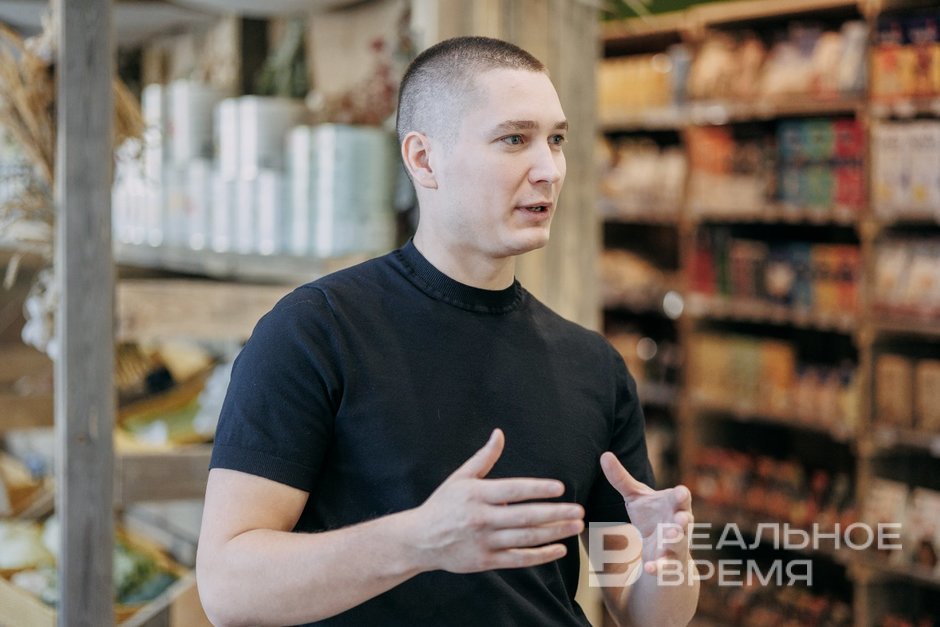
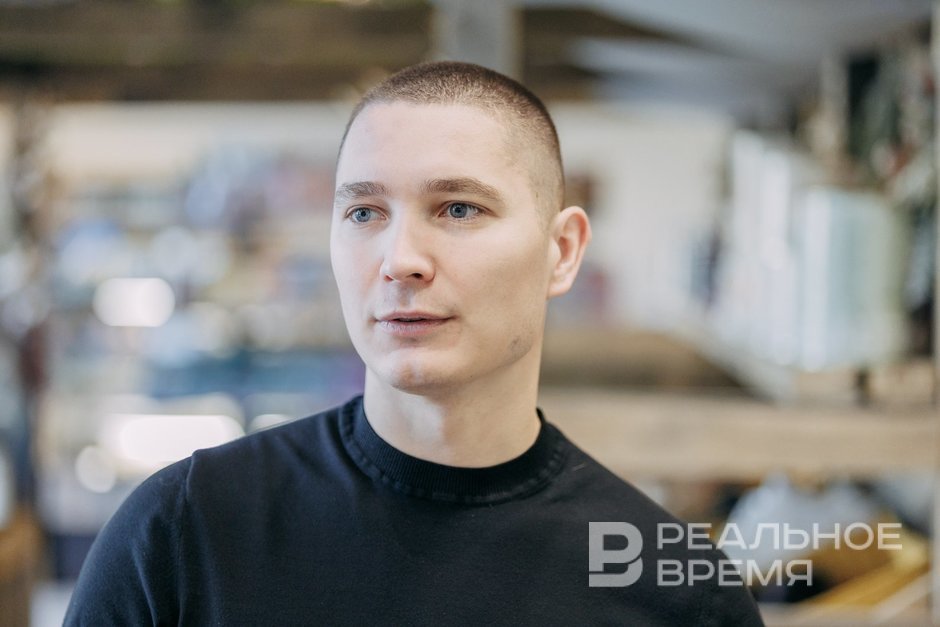
In the first half of 2026, the number of registered commercial enterprises in Russia decreased by almost a quarter over the year — to 67 thousand. This is a record low indicator for at least the last 17 years, calculated the analysts of FinExpertiza based on FNS data. Roman Anisimov, the owner of the chain of eco-markets “Shurany Eco Garden," told “Real Time” in an interview about what difficulties young business faces today, how to find one's niche and what one would like to change.
“Finding personnel who will empathize in the same way is the most difficult”
— Roman, you started a business connected with the retail of farm products and premium-segment delicacies from various parts of the world, not in the easiest of times. What difficulties did you encounter?
— Yes, our company began its activity in 2025. Then many told me that starting such a business was quite bold. But, as they say, nothing ventured, nothing gained. We are part of the group of companies “Shurany Eco Garden.” These are year-round greenhouses in Laishevsky district, in the village of Shurany, where cucumbers, tomatoes and green onions are grown. I chose the direction of a chain of eco-shops. The first site was located in the center of Kazan, on Mushtari Street, however subsequently we had to close it; experience showed that for markets like ours, “residential traffic” is necessary, that is, direct proximity to residential areas. Now two points operate — the main store on Sibgat Hakim and a shop at the Moscow market.
For me, as for an entrepreneur who is passionate about his business, finding personnel who will empathize in the same way, give their all and do more than is required in their position — this is the most difficult. Now it is not enough simply to provide a product; one must provide service. This can be traced in everything, not only in public catering, but also in retail. Now there are six employees in our team. The average salary of a seller is 4.5 thousand rubles per shift. Plus I try to motivate them with percentages. Initially the rate was set slightly above the market average, because I am looking for specialized employees who will empathize with my business just as I do.
— Have you tried yourself in business before?
— Yes, I opened cheese shops. Small, local, five to six square meters. The largest point was 25 square meters as part of a fresh market. The thing is that my mother kept shops and I worked in them all my childhood, therefore, I think, trade is hereditary.
“If I were starting over, I would definitely not do expensive repairs”
— How much investment was required to launch the business?
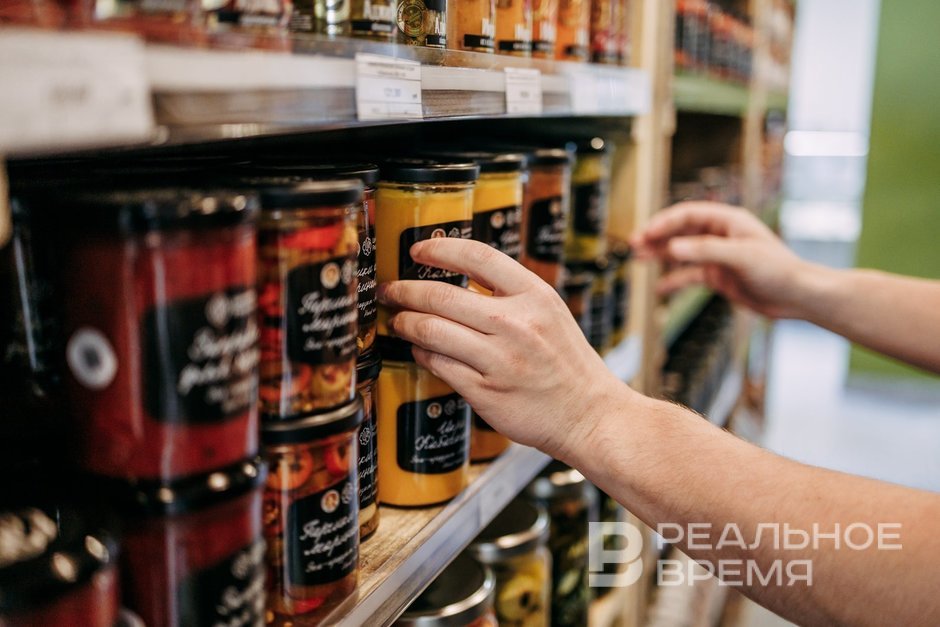
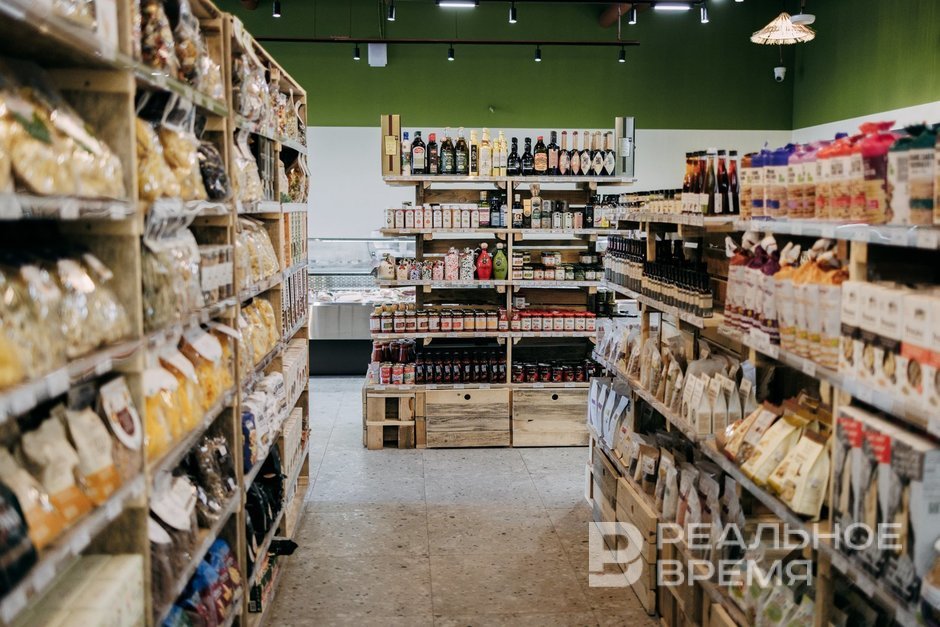
— Very much, let us go in order. The amount of investment depends on the format of the store and the square footage. The premises for my first store with an area of 73 square meters were with finished finishing; I only repainted the walls and purchased equipment: some used, some new. The opening of that store cost me about 5 million rubles. The store on Sibgat Hakim cost approximately 15—17 million. Here the area is 200 square meters and rough finishing. The main thing in the expenses is equipment and repairs. Freezer chambers, refrigerated cubic display cases — all this is very expensive. The equipment is Russian; one standing cubic freezer 2.5 meters long from a Moscow region brand costs about 500 thousand rubles. If we consider current expenses, the most expensive is rent, then come salaries and the purchase of goods.
If I were starting today over, I would definitely not do expensive repairs and would not immediately buy expensive equipment. After all, you never guess whether the business will go or not, whether a particular location will be profitable. One can calculate the traffic, the target audience, but no one will tell you for sure. To beginning entrepreneurs I would advise joining some community of entrepreneurs where one can get competent advice. It is better to learn from others' mistakes than from one's own.
— You have a lot of imported goods. How, under sanctions, are the supply channels built?
— I work only through official distributors, of which, I note, there are not so many now. All these goods have certificates. If we consider exclusive positions, only about three or four intermediaries can bring them. Now, of course, there are interruptions with supplies, or the needed goods can no longer be brought at all. That means you will not have this on your shelf. In this case one has to refuse and look for another. I sell what is in stock. As for prices, they are not stable, but I have not noticed a strong jump. Constantly some product becomes more expensive, but by a small amount.
“You want to sell village eggs, but no one has documents”
— You put the emphasis on farm products. How do you select the assortment?
— The first marker is myself. I try the product; if I like its taste, if I am sure of its quality, if the packaging is worthy — that means the goods will appear on the shelves. At the moment I work with more than twenty Tatarstan producers from the most diverse districts.
At first I wanted to develop precisely the village product and brought milk and tvorog. I tried to do this for about a month and a half to two months, but they were taken very poorly. Maybe people were confused by the absence of labeling. Then I switched to the Sernur cheese factory. But people also treated this product skeptically, maybe because it had already gone into “Pyaterochka” and “Magnit.” Only after this did I find for myself the Kaibitsy SL-milk.
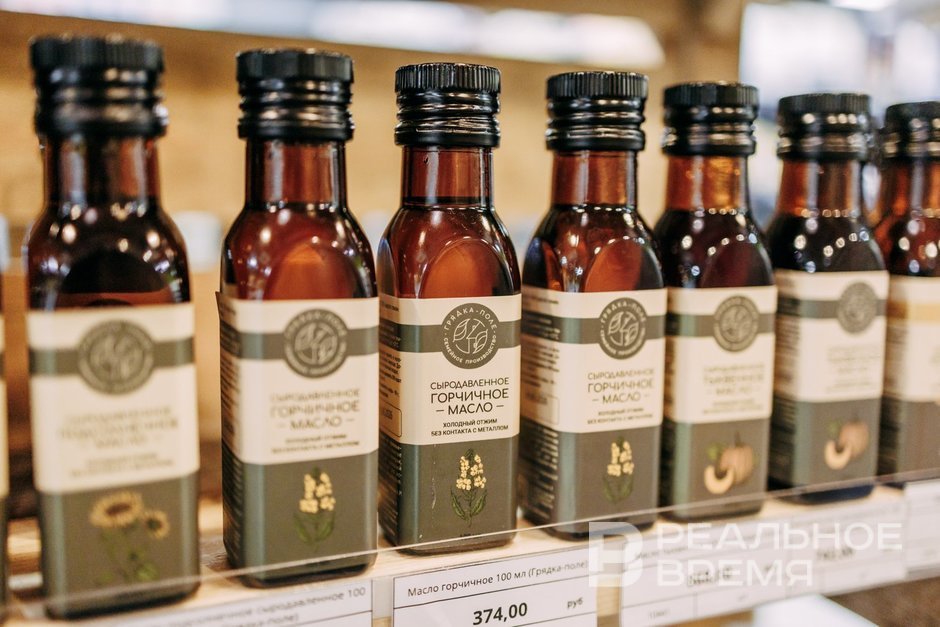
There was also an unsuccessful experience with village eggs. Here the situation is such: you want to sell village eggs, but no one has documents. They are not issued. And it is not profitable for the farmsteads themselves. If it is a small farm with 150—200 hens that lay 200—300 eggs a week, then it is easier for it to give them away by hand than to pass certification, obtain documents, pay taxes. It is easier for them to build up their own client base and that is it. And if one scales it — there are very many difficulties. Many farmers complain that it is hard to obtain documents. I would like the processes of obtaining certificates and the corresponding documents to be simplified precisely for small farms. The creation of cooperatives, where private subsidiary plots could unite and jointly engage in regulating the sale of products, would help.
— How do you find producers of products?
— Now I learn about producers only through personal contacts or by chance — you meet someone yourself, someone introduces you, you learn about someone through social networks or through exhibitions. For example, about a year ago, last summer, we were invited to Rybno-Slobodsky district, where the head, on his own initiative, gathered farmers. There I met the company “Koni.”
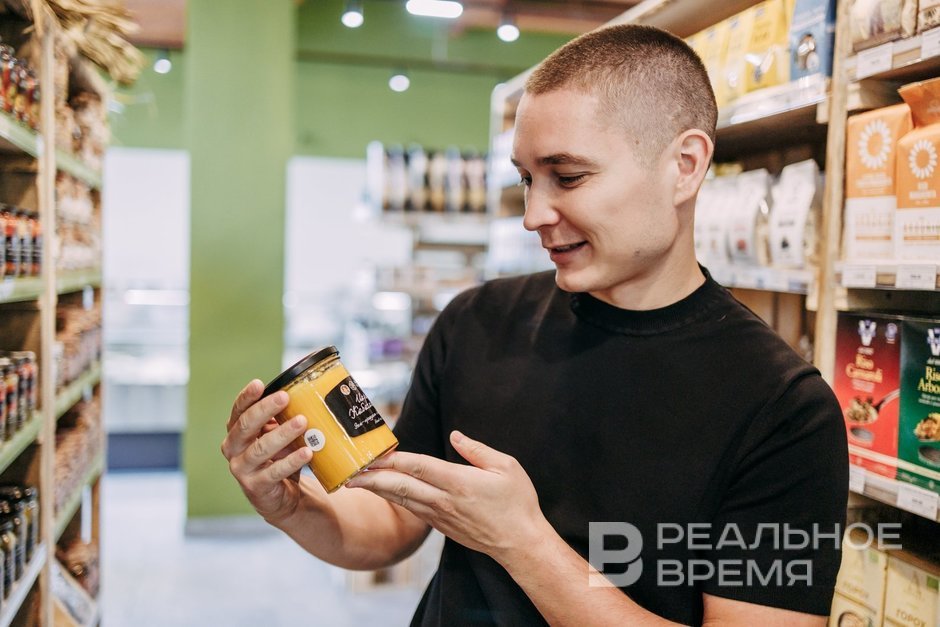
Unfortunately, there is no clearly established system. There is no such platform where information about all companies that produce food products in Tatarstan would be collected.
“It is convenient with small brands — they can immediately understand where and what went wrong”
— Even being immersed in this topic, I do not fully know what productions there are and where across the republic. It would be good to hold some farm exhibitions more often, like Open Space Market. Why not come up with something similar for the farmers of Tatarstan, who could come there and present their products? As far as I know, there is no such thing.
For niche stores like ours, it is very convenient to work directly with the producers themselves. Take, for example, the production of semi-finished products “Tatferma” — they have hand molding; I myself was at their production and became convinced of the quality. There was a case: “regulars” — a family — often bought chicken Kiev. Once they came to us again, but already with feedback. They say, we took the cutlets from you, but they were not as tasty as before. We immediately called the manager. From the next delivery we specially called these regulars, gave them a new portion of cutlets; they tried them and said that, yes, this is the taste that was originally. It is very convenient to work with such small brands — they can immediately understand where and what went wrong and fix it.
— Can our producers make the same delicacies as foreign ones?
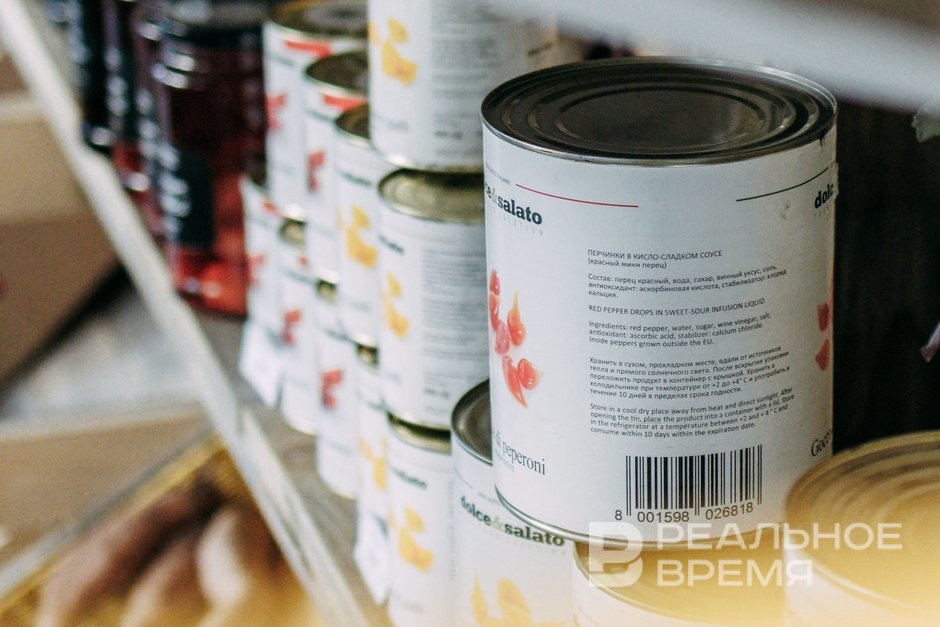
— It is hard to compare European and local. In Spain they do not make our horse meat, and here we do not make that very jamon. They differ greatly. But there are positions where ours are no worse. For example, our local burrata is no different from the Italian, and will even probably be better. On the whole, if we speak about our soft cheeses, they have reached a high level. If we speak about aged ones — probably not; after all, these technologies are still beyond our power.
— Which goods are the most popular?
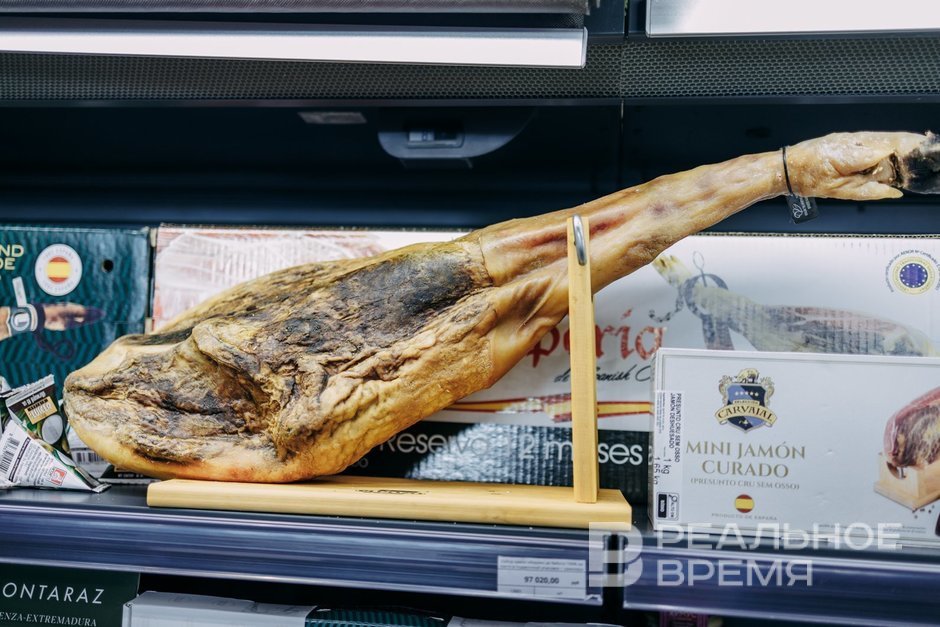
— The leaders of sales are still imported goods — olives, black olives, oils, groceries. Exclusive — all that which is not on the shelves of mass-market. The most expensive position is Spanish jamon costing almost 100 thousand rubles.
— How do you plan to develop further?
— We would like to expand, open stores in new districts, cover the whole city evenly. Once again I would like to try to open an eco-market in the center, but this time in the zone of residential complexes. Even if consumer demand falls and the basket becomes more expensive, the demand for food products will always remain.
The trend for a natural product will also not go anywhere and will only grow, and connoisseurs of delicacies will not stop appreciating them.