“The Loneliness of Sonia and Sunny” — Kiran Desai's first novel in almost twenty years
The Indian-American writer has written a book about “world bastards” and global loneliness

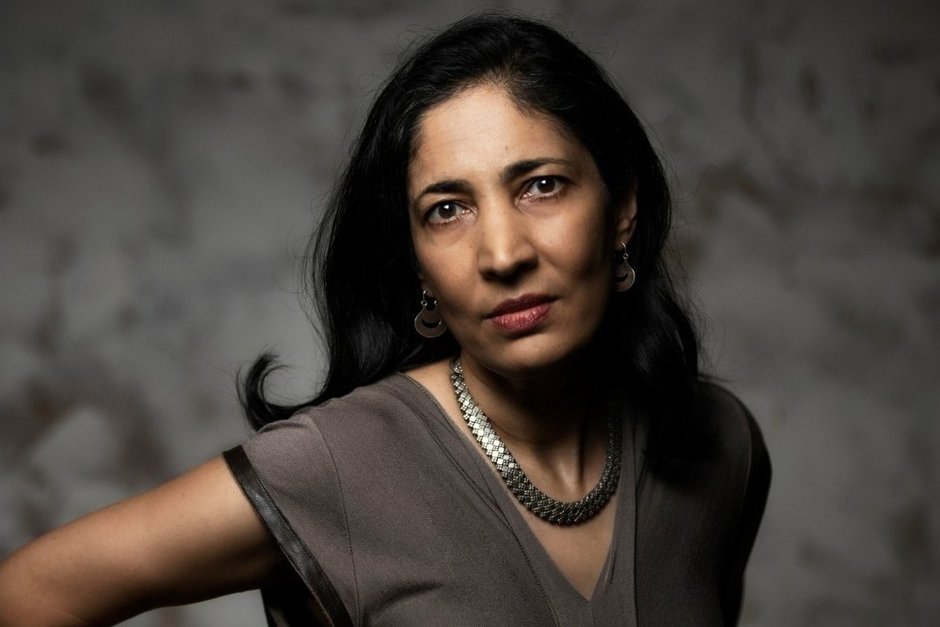
In 2025, the Indian-American writer Kiran Desai published the novel “The Loneliness of Sonia and Sunny.” This is her first work after 19 years. Her previous book was published in 2006 and immediately received the Booker Prize. The new novel was shortlisted for the 2025 Booker. In September 2026, it is being published in Russian by the Corpus publishing house. The literary reviewer of “Real Time” Ekaterina Petrova explains why Kiran Desai took so long to write “The Loneliness of Sonia and Sunny” and how a story about romantic love grew into a novel about global loneliness.
Nineteen years before the book: how Desai wrote the new novel
Kiran Desai began writing back in her youth, following the example of her mother, the writer Anita Desai. In 1997, Kiran's story was included in an anthology of Indian literature that Salman Rushdie prepared for The New Yorker magazine. Already a year later, Desai published her debut novel “Hullabaloo in the Guava Orchard.” The story of the young man Sampath Chawla, who climbs a guava tree and unexpectedly becomes a celebrity, brought the author the Betty Trask Prize.
The writer's second novel brought her to the world level. “The Inheritance of Loss” was published in 2006 and received the Booker Prize. At the center of Desai's book she placed several stories that connect India and the USA. In Kalimpong, judge Jemubhai Patel lives with his granddaughter Sai, a cook and a dog, and Sai falls in love with Gyan, a Nepalese mathematics teacher who joins the independence movement. In parallel, the cook's son Biju lives illegally in New York and tries to find a better life. The novel also received the National Book Critics Circle Award and the Crossword Book Award, and its translation was published in more than 40 languages.
After “The Inheritance of Loss," Desai did not stop writing, but the next book appeared only 19 years later. All this time the writer was working on “The Loneliness of Sonia and Sunny.” She wanted to create a “globalized love story” and show love and loneliness as “two sides of the same coin.” Gradually the idea expanded: Desai included class and racial divides, distrust between nations and the disappearance of a whole past world.
— On the surface it is a simple, unresolved love, but beneath it is loneliness passing through geography and history, Desai said in an interview with Telegraph India.

The scale of the idea directly influenced the work on the book. “I work thematically, ideas come first, plot — much later," the writer said. At some point the manuscript reached 5 thousand pages, and Desai rewrote the text for years, deleting large fragments and leaving only those that, in her words, “sparkled with life.” She did not consider this period a literary pause. “I cannot not write, otherwise I will disappear," Kiran Desai explained her approach. In 2025, “The Loneliness of Sonia and Sunny” was published 19 years after the previous novel and was shortlisted for the Booker Prize.
Two solitudes: Sonia and Sunny between love and two countries
Sonia Shah and Sunny Bhatia meet for the first time, having already managed to live in different worlds and not finding their place in them. The action of the novel covers 1996—2002 and moves the heroes between India and the USA, as well as Europe and Mexico. Sonia graduates from college in Vermont and moves to New York to the artist Ilan, who is much older than her. The relationship quickly turns into a destructive dependency, and Sonia returns broken to her family in India.
The image of the main heroine is largely based on Desai's own experience. She studied at Bennington College in Vermont (USA) and often stayed there alone during vacations, since her mother, the writer Anita Desai, taught for only one semester and then returned to India. Kiran Desai describes this time as a period of “exquisite, artistic loneliness.” On the one hand, it was a real homesickness and longing for loved ones, aggravated by the difficulties of international telephone communication of those years. On the other — it was precisely in this silence and solitude that she understood that she wanted to become a writer, and realized that loneliness is necessary for creativity.
Sunny is from Delhi, works as a night editor at the Associated Press in New York. He left India to escape from his domineering mother and the criminality around his family. He has an American girlfriend Ulla, but he hides this relationship from his relatives. Sonia and Sunny meet by chance on a night train in India. From this meeting their love story begins.
But closeness does not cancel loneliness. Sonia, back in Vermont, experiences it as homesickness and a sense of someone else's life. Her relationship with Ilan gives no support. She becomes his muse and gradually loses herself. Sunny also feels loneliness even next to Ulla. In New York he is torn between American life and Indian identity. He feels like a liar and a ghost. Sonia and Sunny recognize in each other the experience of a person who does not feel fully their own in any country.

Desai shows an immigrant who lives between two cultures and tries to understand where his place is. Sunny gets a green card, but it does not give inner confidence. And India does not let him go. He becomes a citizen of two worlds and tries to find meaning in his separation from his roots.
Sonia also finds herself between India and America. She feels the pressure of the necessity to represent a country that she never fully perceived as her own. Desai calls such people “world bastards”: with their head in one country, with their body in another. Cultural, racial and class differences intensify this state. The heroes do not always understand that they are where they should be.
Family ties also shape the heroes' lives and their idea of closeness. Sonia's grandparents once tried to arrange her marriage to Sunny, and family expectations continue to influence their relationship years later. Sunny's mother, Babita, simultaneously loves her son and rigidly controls him, so he leaves home. The stories of parents and older generations determine the fates of the younger ones. Desai connects this theme with her family history and her experience of living far from India. She said that she experienced “all these different kinds of loneliness.”
The vicissitudes of “orientalist nonsense”
Sonia and Sunny turn out to be strangers in two cultural spaces at once. In India they feel guilt for economic privileges and a Western education, and in the USA they encounter the shame of a person from the third world. Sonia feels the sting of the exoticization of her homeland, which she never fully understood, and the pressure of the necessity to represent a country to which she never fully belonged. Sunny has a similar situation.
— He has been focused on the West for so long that he understands his homeland less than people from the West, and therefore is he not doomed to misunderstand everything — East and West, the countries of the Old World and the developing ones, himself and Sonia?
The cultural gap in the novel is closely connected with racism and class. Desai shows the Indian elite, which simultaneously takes pride in its position and strives to belong to the Western world. Representatives of the Indian elite experience enormous pride in belonging to their class, which is based on racism, as well as self-abasement, the desire to desperately belong to those whom you consider aesthetically better, safer, higher. Babita, Sunny's mother, expresses this system of views especially clearly. She rejects her son's relationship with Sonia, speaks negatively about non-white people and treats England as her destined homeland.
Class hierarchy also manifests itself in everyday life. Dadaji, Sonia's grandfather, gives expired vitamins to the servant, because “the pills are quite good for another year or two.” Babita believes that she is doing the servants a favor by providing them with housing and food, and also speaks disparagingly about the darker skin color of people who are lower on the social ladder.
Against this background, the novel also argues with orientalism itself. Ilan, a white European artist and descendant of colonizers, demands that Sonia not write “orientalist nonsense” and not create a stereotypical image of India that the Western reader will take for reality. Sonia indeed begins with a story about a boy who lives like a monkey and whom people take for a hermit. Ilan ridicules this text. Sunny encounters the same view in his relationship with Ulla. He has to explain to her that one cannot call all South Asians “chatty” and “bullying” or address him as “hot samosa.”
At the same time, Western critics reproached Desai for the fact that, while ironizing orientalism, she recreates and supports the Western stereotypical view of India. Reviewers noted the images of “peacocks with lush tails” and “pink gardens of nine varieties blooming in winter," which resemble a tour guide's view of exotic India. Indeed, Sunny and other heroes formulate a rigid distinction between East and West. Sunny believes that “Indians do not know how to leave or be left.” And another character asserts:
— Western psychology cannot handle the Indian family. We are too slippery, we change shape, we do not distinguish truth from lies. A lie is the truth, and the truth is a lie, you cannot catch us.
Besides this, Sunny's interracial relationship with Ulla and Sonia's with Ilan are inevitably doomed to fail. Ilan appropriates Sonia's amulet with the image of an eyeless deity and uses it in his art. He, like a vampire, sucks out someone else's loneliness, turning it into material for his creativity. Sunny returns the amulet to Sonia, and the heroes in the end turn to India and to “their roots.”
For some reason, in modern society people, and now also literary characters, are required to have mandatory certainty in global questions, not allowing an ambivalent attitude. One cannot doubt and experience the pressure of cultures: the Western values of the country in which you live, and at the same time the homeland with its age-old traditions, colonial past and attempts to build a new identity in a globalized world. And it is precisely in this contradictory complexity of the world order and the human psyche that the strength of the whole novel lies. One can choose an ambivalent position, one can feel shame for belonging to a certain class and at the same time pride for it. One can, because only such a world is interesting and bright, unlike the division into white and black, red and blue, rich and poor, kind and cruel. It is on this ambivalence that all of “The Loneliness of Sonia and Sunny” is built.
Publisher: Corpus
Translation from English: Evelina Melenevskaya
Number of pages: 720
Year: 2026
Age restriction: 18+
Ekaterina Petrova — literary reviewer of the online newspaper “Real Time," host of the Telegram channel «Булочки с маком».