Daniel Marinov second in team, third in individual: results of the European Gymnastics Championships
Junior from Zelenodolsk Radmir Musaev became European champion
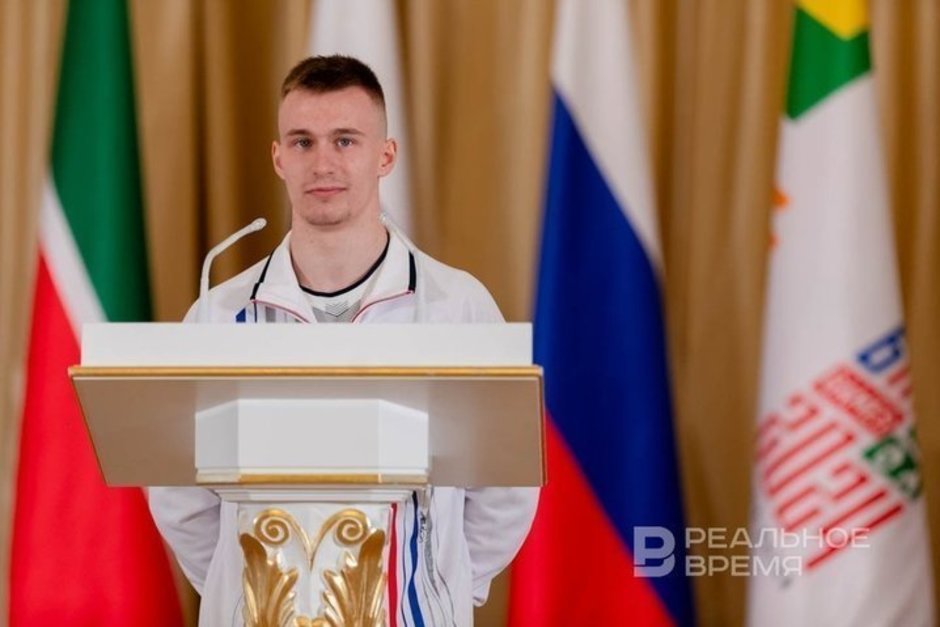
The European Artistic Gymnastics Championships, held consecutively for junior women and women, junior men and men, have concluded in Zagreb, the capital of Croatia. Two representatives from Tatarstan competed at the event. Kazan's Daniel Marinov won two medals among adults, while junior Radmir Musaev from Zelenodolsk won four, including a gold. For more details, see the article by Realnoe Vremya.
A thousandth of a point gap — the price of gold medals
A certain paradox of artistic gymnastics was demonstrated by the results of the junior competitions. They were won by Russian Daniil Smirnov, who also led after the qualification. Zelenodolsk's Radmir Musaev was in second place, but after the final, he lost the silver step of the podium to Ukrainian Volodymyr Holovin. Bronze in the all-around complemented his medal collection, which also included silver in the team event. There, our athletes lost to the English, even though their best performer did not even make the top eight in the all-around. But team medals were awarded based on qualification results, and considering the performances of the three gymnasts, he frankly underperformed in the Russian team.
However, in the individual events, Musaev truly excelled. Gold on the rings, sharing a silver medal with English junior Zackain Fawzi-McCaffrey, and overall, the Zelenodolsk native won one gold, two silvers, and a bronze in the all-around.
Incidentally, his teammate Daniil Smirnov beat Ukrainian Volodymyr Holovin by one thousandth of a point, which cannot be attributed to any specific element. A flutter of eyelashes — perhaps... A rare situation, which occurred for the second time at these competitions, as the day before, Ilya Kovtun of Croatia won the all-around gold, beating Russian Arseny Dukhno by a thousandth of a point. By the way, Smirnov, like his slightly older teammate Dukhno, is also confidently knocking on the door of the national team, having won the pommel horse at the Russian Championships this year.
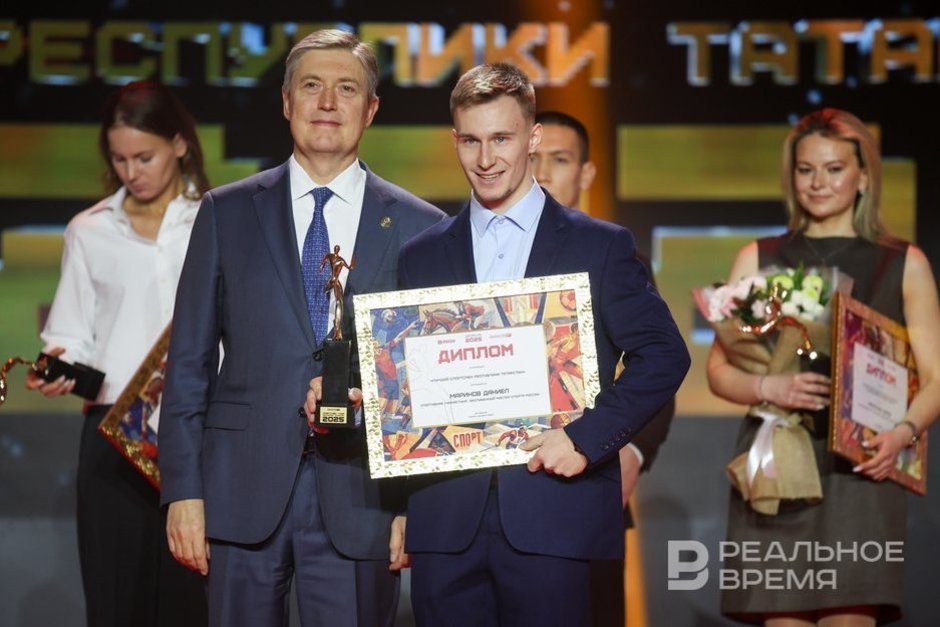
Marinov third in the all-around
Kazan's Daniel Marinov won a bronze medal in the all-around, finally beginning to harvest medals from international competitions. He is one of the few who connects the current generation with the previous one, which won the team gold at the Tokyo Olympics. Ablyazin, Belyavsky, Dalaloyan, Nagorny — these were names in world artistic gymnastics. Marinov made a name for himself at last year's individual World Championships, where there were no team events, winning bronze on the parallel bars. But by that time, he had already been surpassed at last year's national championships by Arseny Dukhno, who was also higher in the all-around standings.
Marinov could only add a medal in the team events, as he did not qualify for any individual apparatus finals. On the parallel bars, where he had a medal, he was only 28th in qualification. And he was the “third wheel” twice on floor exercise and vault. But in the team event, our athletes began to make mistakes on every apparatus. Savely Siedin fell off the pommel horse. Daniel Marinov made errors on the rings. Mukhamadjon Yakubov made a mistake on vault. Meanwhile, the English made only one mistake, when Courtney Tulloch had a poor parallel bars routine. Moreover, the English came without Jake Jarman and Luke Whitehouse, but Joe Fraser and Harry Hepworth carried the team to first place. Hepworth's floor exercise was an exclamation mark on the entire championship.
Ukraine could have been competitive, having won the team all-around at the 2024 European Championships. But since then, Vernyaev and Radivilov have retired, Kovtun moved to the Croatian team, Radomir Stelmakh to Germany, native Ukrainian Artem Dolgopyat to the Israeli team, Ilya Zaika strengthened the Russian team, and the new team can only be formed with the help of the current juniors, if they do not leave for other teams, as Nikolai Kuksenkov, Petro Pakhnyuk, and Oleg Stepko did before.
Bravo, Melnikova! Triumph of the Russian gymnasts
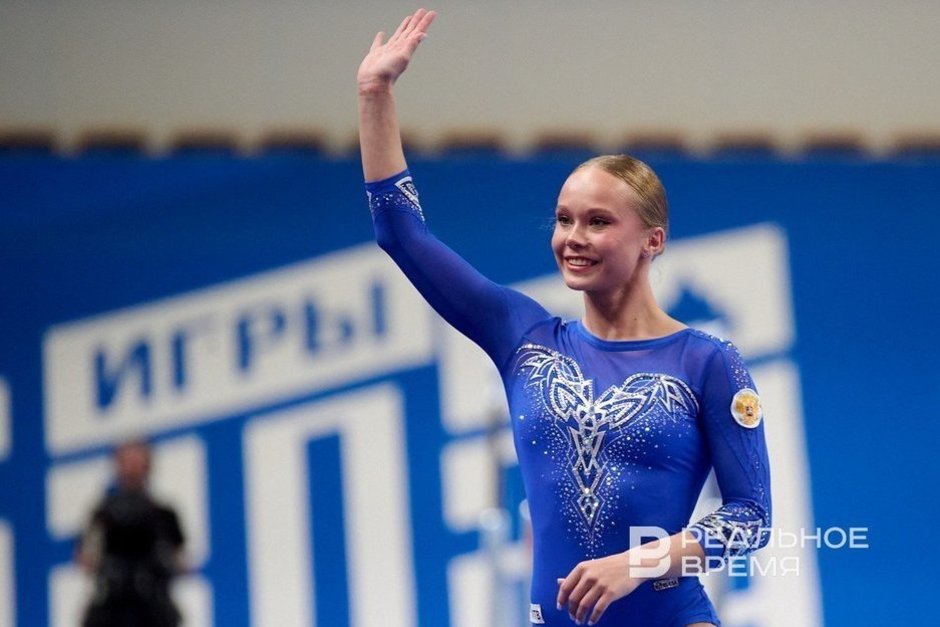
Can Mukhamadjon Yakubov's decisive vault error be explained by the stress caused by the delay in his Croatian visa? In another situation, we wouldn't do that, if not for the fact that the women's team's golden performance now stands as a silent reproach to the men. Olympic champion Victoria Listunova was not allowed to start at all. Anna Kalmykova and Angelina Melnikova arrived just a day and a half before the competition. In the end, they competed as a trio, along with Lyudmila Roshchina, with no room for error. Melnikova later also won the all-around, leaving no doubt that at 26, she is currently the best in Europe.
Strangely enough, by the middle of the year, since the partial return of Russians to the international arena, we have the least reason to complain about biased judging. This was a concern after the Olympic starts of figure skaters Petr Gumennik and Adeliya Petrosyan, partly because judges are used to looking at rankings when assigning scores. And there are none, since Russian athletes missed an entire Olympic cycle, including junior and senior events. But at last year's individual World Championships, only Marinov made a name for himself, Melnikova confirmed her status as the queen of artistic gymnastics, and Roshchina established herself as her closest successor.
It's a pity that the men's team has no one left from the old guard who could reliably cover at least one apparatus, but more importantly, who would have international experience and be a team leader, like Swiss Noah Seifert, who carried his team, which lacks stars, to bronze medals. There was no leader, like Alexei Nemov and Nikita Nagorny, Svetlana Khorkina and Aliya Mustafina once were.
A colossal decline in rhythmic gymnastics
The second half of summer was rich in major sporting events, mostly in the form of championships in numerous summer sports. Following the European Fencing Championships, the World and European Championships in both objective and subjective sports took place at almost the same time. Among the objective sports are swimming and athletics, where Russian athletes are still not allowed. Among the subjective, judged sports are both types of gymnastics — rhythmic and artistic.
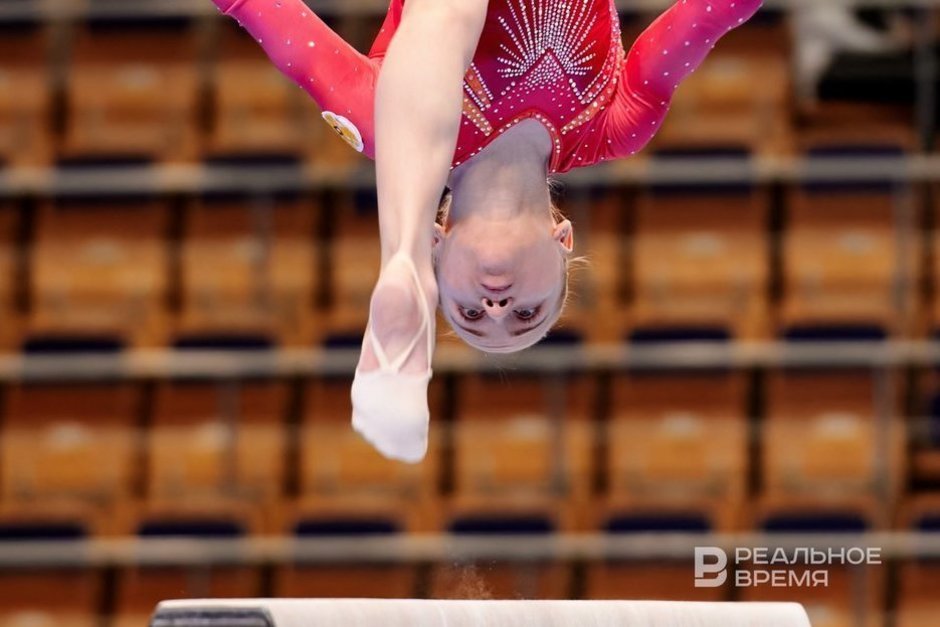
Assessing their results, it should be noted that rhythmic gymnastics was extremely disappointing. A sport considered practically national, partly because the Soviet Union was the initiator of its inclusion in the Olympic program. And only at the Olympic debut in Los Angeles in 1984, as well as at the 1975 World Championships, our rhythmic gymnasts were left without medals due to non-participation. If we talk about competitions with the participation of our athletes, then our girls remained without medals in the all-around almost 40 years ago — at the 1987 World Championships, when the top three were representatives of Bulgaria.
Now, in the all-around, the best Russian, Maria Borisova, was outperformed by Germany's Daria Varfolomeeva, as well as representatives of Bulgaria and Italy; moreover, the Russians have no gold medals in apparatus finals, and this is undoubtedly a failure. On the one hand, it was predictable; for example, the national champion in men's rhythmic gymnastics, Bulat Sungatullin, predicted serious problems for our rhythmic gymnasts upon their return in an interview with Realnoe Vremya. First, comparing the level of routines performed by Russian athletes at domestic competitions with foreign competitors at international ones. Second, remembering that ill-wishers would want to blame Russia's problems on a “doping” story. And subjective, judged sports are exactly where our athletes can be shortchanged.
But overall, analyzing the performances of gymnasts, rhythmic gymnasts, divers, and synchronized swimmers, it can be noted that at the level of European events, there have been no serious complaints from our side so far.
All sports roads led to Croatia
The Croatian capital of Zagreb became a center of attention for sports fans in the middle of summer. First, two consecutive World Championships in water polo for athletes under 16 were held there. The Russian girls' team took third place, while the boys finished fifth. And these are the first (!) team sports competitions with the participation of Russian national teams competing for medals. Recall that in the spring, the men's and women's water polo teams played in the World League, and the women even finished fourth, but the World League is an important but not entirely official event.
The boys beat Greece and Montenegro during the tournament but, alas, could not finish the quarterfinal against the USA, in which they led 8:6 at the start of the fourth period. The only representative of Tatarstan in the team was Said Khabibullin.
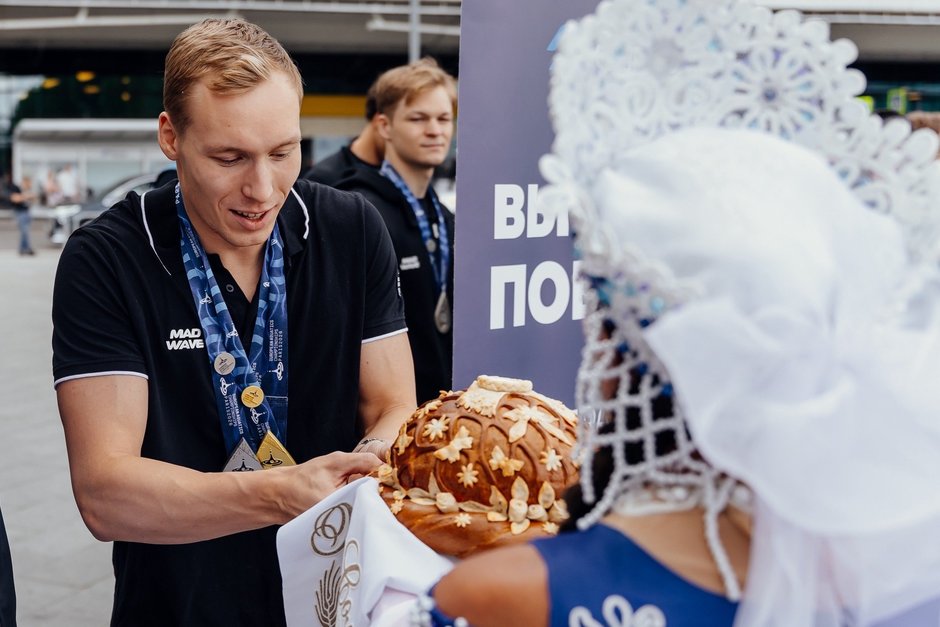
By the way, at the end of August, Croatia will again host a top junior tournament — the World Junior Aquatics Championships. And we note that all competitions are proceeding normally, with starts and award ceremonies without any incidents or demonstrations. That is partly why they remain outside the attention of the general public. The events ran non-stop: the strongest synchronized swimmers competed at the European Championships in Paris, then started at the Spartakiad of the Peoples of Russia, and the juniors went to Rijeka, Croatia, for the World Championships. The swimmers swam in Paris and immediately went to the Spartakiad of the Peoples of Russia in Yekaterinburg, which welcomed the champions with bread and salt. There is a photo of Tatarstan's Andrey Minakov breaking off a piece of the loaf, symbolizing that Russia, almost everywhere except the long-suffering athletics, has returned to sharing the sporting pie.