Pavel Muyakin: “I told Schleicher to rest, but he has the Spartakiad ahead”
Interview with the coaches of the Tatarstan diving team following the European Championships
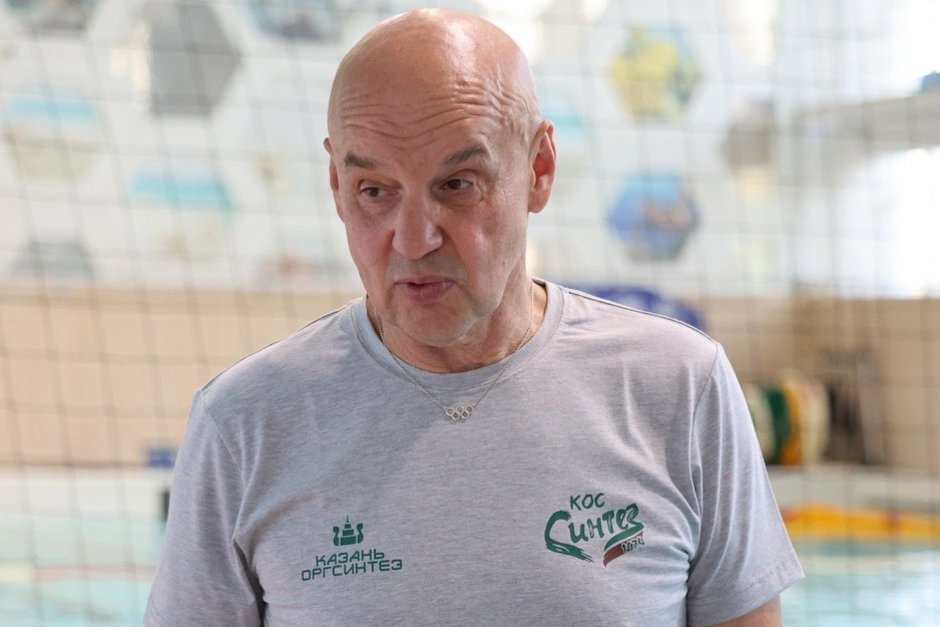
The European Aquatics Championships, which concluded in Paris, will set the vector for the further performances of its participants. The swimmers will continue their competition at the Russian Spartakiad — the event will take place on August 20–21 in Yekaterinburg. Diving competitions will be held there from September 25 to 28. The coaches of the Tatarstan national team, Svetlana Moiseeva and Pavel Muyakin, spoke to Realnoe Vremya about the performance of our athletes in Paris.
“Schleicher and Ternovoy have not yet reached their maximum”
— Tell us, what effort did it take for Nikita Schleicher to win silver and Ruslan Ternovoy to win gold?
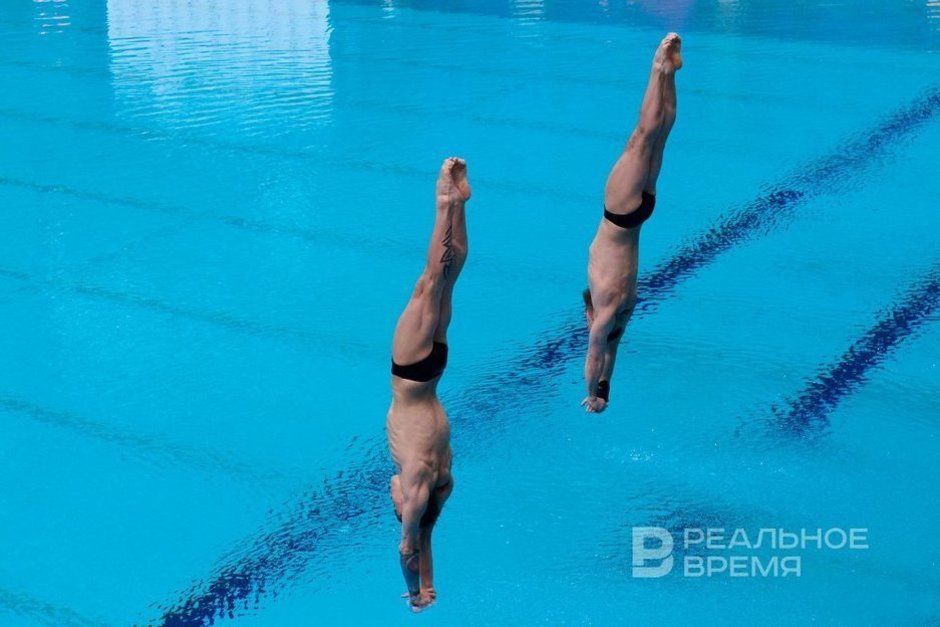
Pavel Muyakin: Regarding Nikita's performance, I'd like to comment twice. His performance on the 3m springboard looks very commendable, as he and Evgeny Kuznetsov delivered their best performance to date. Kuznetsov deserves immense gratitude for being able to recover from a serious injury, having a short training camp at our base in Kazan before the European Championships. And on sheer willpower, they dove to silver, losing only to a very strong German duo. They could only compete with them by showing their absolute best.
As for Nikita's start with Ruslan Ternovoy on the platform, I would say they have not yet reached their maximum there. I am confident that in their best shape, the guys could add another 20 points to their total score, and with those points, they could contend for an Olympic medal in Los Angeles. Understandably, this is our main joint goal, for which the entire diving community in Tatarstan is working: both in terms of preserving existing potential and certain contributing factors, even such as his hyper-focus on achieving results. After the European Championships, I advised Schleicher: “Rest, don't train. Try to get diving out of your head for a while.” He replied: “I can't, I have to prepare for the Russian Spartakiad.”
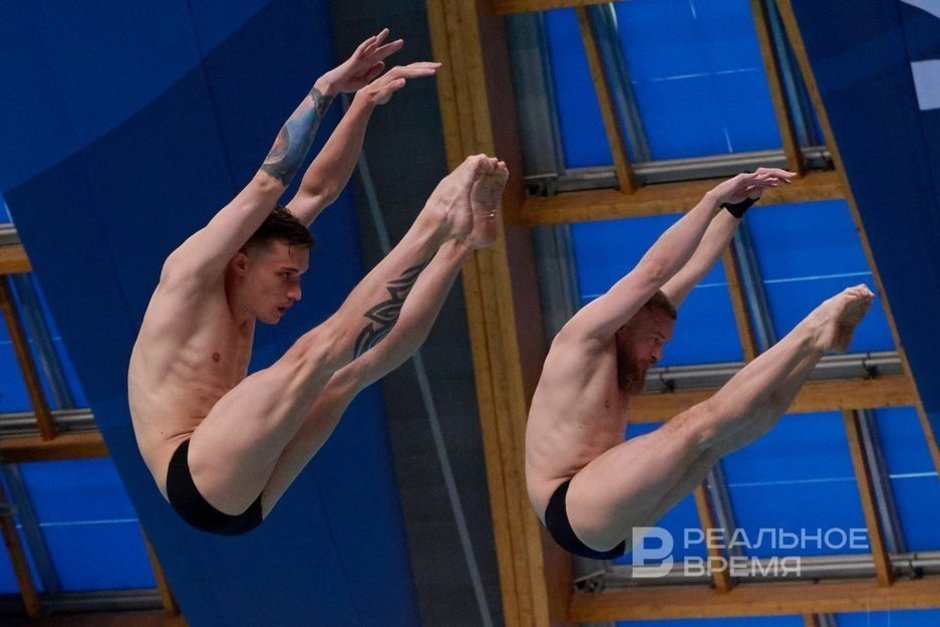
Svetlana Moiseeva: Schleicher and Ternovoy were initially contenders for gold in competition with the Germans, British, and Ukrainians. They took second place at the World Championships, ultimately losing to the Chinese by only one and a half points. The men's platform has traditionally been a strong event in Russian diving. At the same time, Nikita's championship duo with Belevtsev, who won the national championship in Kazan, is also competitive; they have been European champions, and their program is solid, which could have been strengthened by switching to “twists," but the guys had not dived together for two and a half years.
Now the national team has good young boys, but they are still children. For girls, it's simpler; they achieve results earlier, but for boys, you have to wait until they are 20 or more to reach their maximum potential. And even then, with a difference: on the platform, boys “mature” slightly earlier, and on the springboard, later. This includes the specifics of the dives, since from the platform, a person simply jumps, while on the springboard, he must push through with his muscle mass to create the necessary amplitude during takeoff.
On international competition
— How does the level of international competition affect the training process?
Svetlana Moiseeva: If we talk about Europe, the competitive schools now are England, Germany, Italy, Ukraine, and us. Previously, the French had good divers, but not anymore.
On the world level, the USA, Australia, and Mexico are also competitive; they have always been strong. It's just that somewhere around 2008, when China hosted the home Olympics, winning seven gold medals and losing only one to Australian Matthew Mitcham, Chinese coaches began to leave to work in other countries. Including Mexico, where one Chinese coach went. As a result, there was a split in the coaching staff, but on the other hand, the level of competition among the staff members increased, leading to a positive leap in the results of their athletes.
Plus, Mexico always had support in the technical committees of the international federation, as their compatriot Jesús Mena lobbied for the interests of his country's representatives. In particular, this allowed their duo Ivan García and Germán Sánchez to win silver in synchronized platform diving at the 2012 London Olympics. On the springboard, their female diver Laura Sánchez won bronze behind two Chinese women, barely ahead of Italian Tania Cagnotto. At that time, the Europeans analyzed the Olympic results, as Europeans finished fourth in six of the eight events, including our Viktor Minibaev, losing to two Chinese, which is understandable, and a representative from another continent. This was explained by the work of the judges and the technical committee above them, which worked on selecting “right” judges.
Then Mena, who held the post of Minister of Sports in his country, was removed from that position, and the sport fell back on the international stage so much that the country could not even host the World Junior Championships. But Mena returned to a high-ranking position in the international federation, the same technical committee. At home, the Ministry of Sports was again headed by a former diver, as was the local Olympic Committee, and the sport returned to leading positions. If in China diving is one of the leading sports in the country, then in Mexico it is the main one.
I also consult our athletes — Kachanov and Myalin, who changed their sports citizenship and now compete for the Uzbekistan national team. Regarding the Kachanovs, by the way, interestingly, there are five boys in the family, four of them are already divers. The fifth is just starting, although his surname is not Kachanov but another, but he has also started training. So the two “Uzbeks," Kachanov and Myalin, took second place at the Asian Team Championships behind the unbeatable Chinese. Overall, the level on the continent has now dropped for previously competitive Malaysians, for example, while the others — Japanese, Kazakhs, Indians, Koreans — are relatively weak. I mean South Koreans, since the North Koreans behave mysteriously and are only seen at major competitions.
On the development of diving in Russia
— What key steps are currently being taken to develop diving in Russia?
Pavel Muyakin: As for Russia, we also have few development centers. You can count them on your fingers. Historically, Moscow, Penza, Elektrostal, and now Kazan. You can also name regions that produce results, for example, one region was just mentioned, but people came there from Buzuluk, Volgograd, and Chelyabinsk.
At the same time, my native Stavropol is kept afloat by two enthusiasts. One of them is Lena Guslyannikova, married name Gaivoronskaya (continuator of the dynasty founded by her father Mikhail Guslyannikov, further proof that in diving, one family can be responsible for the development of the entire sport — author's note). A guy also helps them with acrobatics, and that is the entire diving scene in Stavropol.
We opened a department in Krasnodar. Initially, Viktor Minibaev was sent there, but it didn't work out. Then Yuri Isaev went to work, and he made it work. Overall, there are many cities with pools where there is no diving school, never was, and it is unknown who will go there to work.
There was an order to invite strong athletes to Kazan. The first was Maria Polyakova, who moved here from Moscow. Previously, she worked with Raisa Galperina. And she made it to the Olympic final in Tokyo.
Next, coach Dmitry Shlykov moved here from Buzuluk, then worked in Astrakhan, but it was difficult there, and the Ministry of Sports of Tatarstan accommodated him. They are the same age as Nikita Schleicher, and they developed a good connection. The next was the invitation of Gennady Fokin from Voronezh. Local youth are growing up alongside them. But Alexander Belevtsev moved to Krasnodar; his sister lives there. Her husband, an officer, is serving in the special military operation, and Sasha has four nephews, and his family needs help.
On diving in Kazan
— How is the sport developing in our region?
Svetlana Moiseeva: We all live and work here as a coaching staff, like one big family. In principle, that's how it is. Because the Kolesnikovs are Nikita's parents. Dmitry Shlykov is Nikita's coach. Lera Kravtsova came here to study, and as a result, she grew into a coach. I don't know where else you can find such an attitude toward each other and to the sport as a whole.
There are already the first swallows. At the June European Junior Championships, local product Egor Dmitriev competed, ultimately finishing fourth in platform diving.
Pavel Muyakin: When it comes to inviting young athletes to the region... When a boy turns into a man, a person “breaks," and it's not just about the voice. Sasha Belevtsev, as a child, even jumped better than Nikita's level. He had a line, entries into the water were sharper, but over time, Schleicher began to surpass him. Otherwise, when a child spins pirouettes and enters the water without splashes, these advantages disappear with age, as he simply gains muscle mass, changing his body structure. And then the judges' task is colossal — to compare the level of the dive between a boy and a diver of Nikita Schleicher's level.
Regarding the European Championships, I would like to add that Russian champion Gennady Fokin, who qualified for the 1m springboard, could have also competed for Tatarstan. But he was replaced by Grigory Ivanov, who ultimately finished 10th.
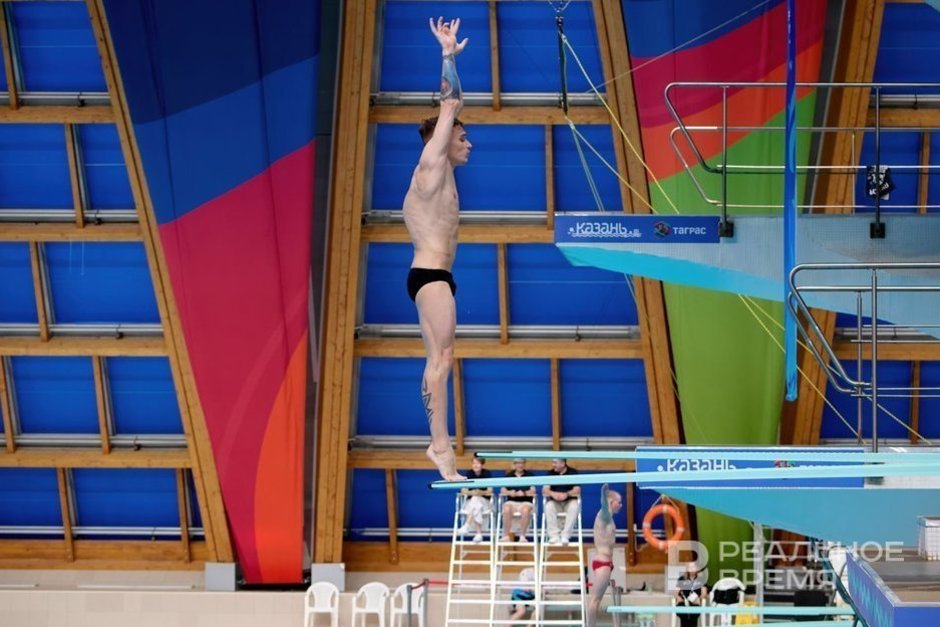
On the other hand, I am happy for our unexpected debutant, Pavel Istomin, who debuted in high diving. A student of the Olympic Reserve School, training at the Kazan Aquatics Palace under Igor Semashko, he started in Paris in a discipline that is rapidly developing and has prospects of being included in the 2032 Olympic program.
Svetlana Moiseeva: The goal has now been set to host a joint European Aquatics Championships in Kazan in 2028, a pre-Olympic event, before which our divers will have to miss the 2027 European Championships. The Poles initially refused to host us, and in my forecasts, they are not ready to come to us, just like the Baltics, and the Scandinavians are also in question.