451 degrees Fahrenheit on Wildberries: Russia's book market on the brink of irreversible losses
Industry representatives estimated the damage from attacks on marketplace warehouses: over 15 million burned books worth 6 billion rubles
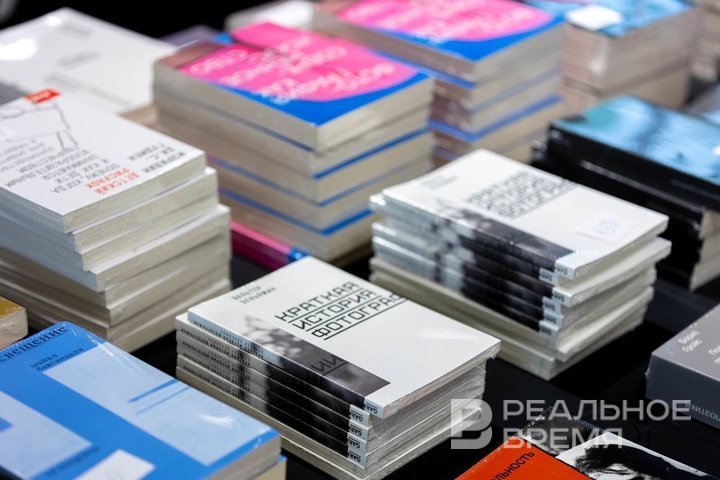
At the Moscow International Book Fair (MIBF), an industry conference was held where participants summed up the results of the first half of 2026 and discussed the industry's problems following drone attacks on marketplace warehouses. The literary critic of Realnoe Vremya, Ekaterina Petrova, tells how dependence on marketplaces has affected the entire industry, what the damage has been, and why this year will end with negative indicators.
The book market is moving toward a pessimistic scenario
As recently as summer, the book market expected to end 2026 with growth. After the attacks on Wildberries and Ozon warehouses, forecasts had to be revised. According to the Ministry of Digital Development, by mid-August, over 15 million books had been damaged. The ministry estimates the industry's losses at approximately 6 billion rubles. “This is an unprecedented loss of a huge amount of funds due to millions of books being burned," said Vladimir Grigoriev, Director of the Department of State Support for Periodical Press and the Book Industry at the Ministry of Digital Development.
The figure of 15 million copies looks particularly large against the annual forecast. After the first half of the year, publishers expected to sell 241 million books in 2026. If we compare the destroyed stock with this volume, it accounts for about 6.2%. Before the attacks, Evgeny Kapiev, CEO of Eksmo, had cited an optimistic scenario: 241 million copies sold and 122 billion rubles. Based on the first half of the year, there were grounds for such a forecast. “The first half of the year was very good. If we talk about Eksmo, we had growth of more than 7% in copies," Kapiev noted.
Now, in his assessment, the market will no longer achieve this scenario. The baseline forecast is shifting toward a pessimistic one: 209 million copies and about 105 billion rubles. The difference from the initial estimate is 32 million books, or 13.3%. The market could lose 17 billion rubles, or 13.9% of the previous forecast. The book market has not seen such a decline in units over the past six years. Kapiev believes that 209 million copies could be the lowest sales volume for this period. In monetary terms, the decline will be smaller due to rising book prices, but it will still change the year's outcome.

The warehouse losses create another problem: the market cannot quickly replenish the entire destroyed assortment. This is especially true for books printed in China. The production cycle there takes three to six months, so publishers will only be able to restore part of their print runs by early 2027.
The impact is already extending beyond publishers. Kapiev says wholesalers are coming for payment deferrals because their own goods were also burned. “The crisis of our partners will catch up with us," he said. If companies lack money for settlements, publishers receive less working capital and at the same time must find money for new print runs.
Marketplaces are restructuring book logistics
Book retail has a paradoxical risk: its main competitor has simultaneously become its most important sales channel. At the end of 2025, marketplaces accounted for 58% of the commercial book market, and for 2026, the industry expected to increase this share to 60%. Bookstores accounted for just under 30%. Five years ago, the picture was reversed: before the pandemic, stores accounted for about 70% of sales. Now this imbalance creates problems not only for retail but for the entire market. “In such an imbalance, one cannot speak of any market stability," said Svetlana Zorina, President of the Association of Book Distributors (ASKR).
The beginning of 2026 added another problem for retail. According to Evgeny Kapiev, bookstores have experienced many closures. At the same time, the stores themselves actively use marketplaces, especially in the regions. Through them, they sell part of the assortment that is difficult to present in small retail outlets. Therefore, the warehouse attacks affected not only publishers and platforms. “Everyone suffered: publishers, bookstores, and wholesalers," Zorina noted.
Marketplaces are now trying to simultaneously maintain sales and reduce the concentration of goods in their own warehouses. “We are working, we continue to work, we sell books and are not going to stop selling books," stated Alexey Kuzmenko, head of the book category at Wildberries. At the same time, the platform is changing its model of interaction with publishers.
Previously, about 75% of Wildberries' work with partners was done through FBO. Under this scheme, the publisher sends the goods to the marketplace warehouse in advance. The platform stores the books, assembles orders, and passes them to buyers. Now Wildberries is making a strategic bet on FBS: the publisher stores the books themselves, assembles and labels the order after purchase, and then transfers it to the marketplace for delivery. This scheme requires the publisher to have its own warehouse and logistics infrastructure.
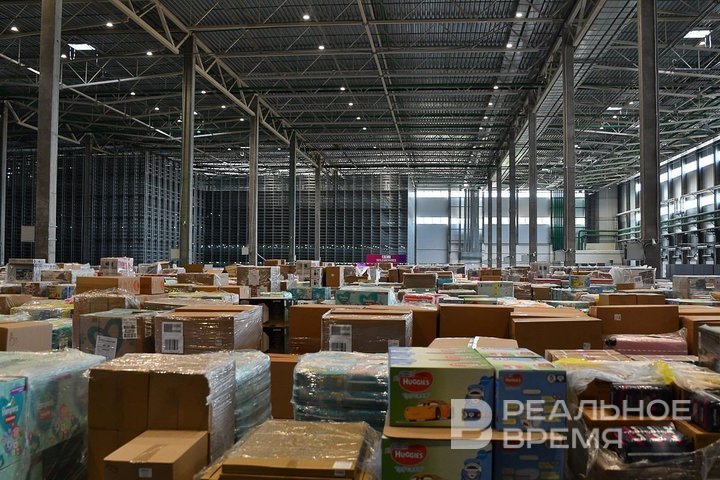
For many companies, the transition has proven difficult. Publishers have to reconfigure warehouses, change logistics, and hire staff. Wildberries, for its part, is expanding its pickup points and partner fulfillment centers. In the future, the publisher will be able to assemble an FBS order, bring it, and the marketplace itself will carry out further fulfillment. “It's also tough for partners, because not everyone, unfortunately, is good at working with FBS," Kuzmenko said.
At the same time, FBO is not disappearing completely. Wildberries is retaining warehouses and changing the distribution of flows: the seller can ship goods to a sorting center, after which the platform itself will direct it through the warehouse network. The company is also developing FBO in CIS countries. In the Republic of Belarus, the first phase of a large warehouse has already been launched, and Wildberries then plans to open another one. Kuzmenko explains this as a desire to place inventory where risks are lower.
Ozon has chosen a more cautious tactic. The company currently does not recommend that partners load FBO inventory for more than 30 days. This limits the amount of potential losses but simultaneously reduces available goods in warehouses. Irina Likhonkina, head of the Books and Home Goods category at Ozon, says that FBS cannot yet fully replace the previous volume of FBO sales. “The FBS scheme, of course, cannot quickly take over the entire FBO history," Likhonkina noted.
Another measure has been added to the logistical restructuring — insurance. Previously, Wildberries did not insure goods. Now the company has launched storage and order insurance. The coverage includes drone and terrorism risks and applies from the moment goods are transferred to the marketplace via FBO or FBS until the buyer redeems them.
Books need money
The burned books may be only the first part of the problem. Evgeny Kapiev believes the losses are much higher than Grigoriev stated and are approaching 20 million copies. Further, the market risks facing a shortage of certain items, a lack of money for new print runs, and rising logistics costs. “Irreversible consequences for the Russian book market are possible if anti-crisis measures are not taken," Kapiev stated.
The situation is complicated by settlements with marketplaces. Publishers have faced increased payments, documentation problems, and write-offs for storing unavailable goods. At the same time, they need to reprint the destroyed print runs. If marketplaces increase payment terms, the publisher receives less working capital precisely when it needs money to produce new books. Kapiev does not rule out a shortage of certain items.
The problem will manifest itself particularly harshly in the season that has already begun. The autumn months bring demand for educational literature and gift books. Publishers need to quickly restore inventory, but they may not have enough free cash for this. Therefore, the industry is proposing not to wait until problems turn into shortages, but to support working capital immediately.
One of the measures Kapiev mentions is subsidized lending to replenish working capital. Such a mechanism would allow faster printing of books destroyed by drone attacks. “It is extremely important to have working capital for the season in order to print the same educational literature and gift books, and often these funds are not available," said the head of Eksmo.

But the list of proposals is not limited to loans. Publishers are proposing to reduce VAT on books to at least 5%. Another request concerns destroyed goods: the Russian Book Union (RBS) proposes to prohibit the restoration of VAT on physically destroyed books so that companies do not bear the tax burden for lost goods. The Ministry of Digital Development is also discussing a VAT reduction. According to Vladimir Grigoriev, the ministry, together with market participants, is working on a rate of 5% for at least one year. According to the ministry's calculations, such a measure could compensate the industry for the losses of the last two months. In addition, the ministry has sent proposals to the government to restore benefits for small and medium-sized book trade enterprises.
So far, government measures do not cover the full scale of the problem. Grigoriev directly says that the current solutions repeat the approach applied after the pandemic, and it is not a fact that they will be able to compensate for current losses. Kapiev believes that tax deferrals will also only help a small number of players. Therefore, the industry wants to first get an accurate picture of the damage. After the MIBF, ASKR and RBS will resume monitoring. Zorina urges publishers, stores, and other market participants to promptly provide data.
For the market, this monitoring will become the basis for further negotiations with the state. According to Zorina, the more accurately the industry shows its losses, the more specifically it can formulate its request: money for new print runs, reducing the tax burden, access to working capital loans, and separate measures for small companies.
Ekaterina Petrova — literary critic for the online newspaper Realnoe Vremya, host of the Telegram channel «Булочки с маком».