What to read: school bureaucracy, bullying, and tapes from the past
Realnoe Vremya has selected five books about school

On one hand, school is a place where children acquire basic knowledge. On the other, it is a space for communication and so-called socialization. But often the latter becomes a traumatic experience for children, about which many books have been written. The literary critic of Realnoe Vremya, Ekaterina Petrova, has selected five works in which school is depicted without idealization, from both the students' and teachers' perspectives.
Jay Asher. “Thirteen Reasons Why," Mainstream (18+)

The plot of Jay Asher's young adult novel revolves around schoolgirl Hannah Baker and the thirteen reasons that, in her view, led to her suicide. Hannah speaks about rumors, bullying, betrayals, and the indifference of those around her, from which her feeling of hopelessness gradually emerges. The story begins when Hannah's classmate Clay Jensen receives a package containing seven audio cassettes. On them is recorded the voice of Hannah, who died two weeks earlier. She leaves Clay instructions to listen to the recordings, find out what place he occupies in this story, and then pass the tapes to the next person on the list. Clay turns out to be the ninth recipient and gradually learns that his guilt is tied to inaction: he saw that something was happening to Hannah but did not intervene.
The book is built on the alternation of Hannah's narration with Clay's reactions and memories. Seven cassettes turn reading into a sequential investigation: each new name adds a detail to the overall picture of school life. At the same time, these are events that individually may seem insignificant but carry a very different weight for another person.
This book was Asher's first young adult novel. It took him three years to write, and the manuscript was only accepted after twelve rejections, on the thirteenth attempt. The idea for the novel arose under the influence of the story of a close relative of the author who had survived a suicide attempt. Later, the novel gained widespread recognition, became a bestseller, and was adapted into a Netflix series.
Bel Kaufman. “Up the Down Staircase," Belaya Vorona (16+)

“Up the Down Staircase” is a novel about school that grew from a three-page story and became one of the most famous American literary works about pedagogy. First published in 1965, it stayed on bestseller lists for 64 weeks, was adapted into a film in 1967, and sold over six million copies.
The main character, a young English literature teacher Sylvia Barrett, comes to work in a huge New York school. The woman hopes to interest teenagers in literature but instead faces overcrowded classes, low student preparation levels, the indifference of some colleagues, and a system where meaningless instructions and memos sometimes take up more time than the learning process. Sylvia learns to work in this reality and gradually understands that she can be truly needed by her students here. Apart from the beginning and the end, the story is composed of letters, memos, circulars, student essays, notes from the trash can, and other school documents. The reader literally assembles the life of the school from its paper flow. The title, incidentally, also grew out of bureaucratic absurdity: in one disciplinary notice, a student was detained for going “up the down staircase.”
The novel is based on Bel Kaufman's own experience. She taught in New York public schools for about 30 years. Hence its texture — the problems of difficult teenagers, lack of resources, school bureaucracy, and the teacher's attempts to see a specific person behind the general mass of the class.
Yulia Kupor. “Celestial Body," Alpina. Proza (18+)
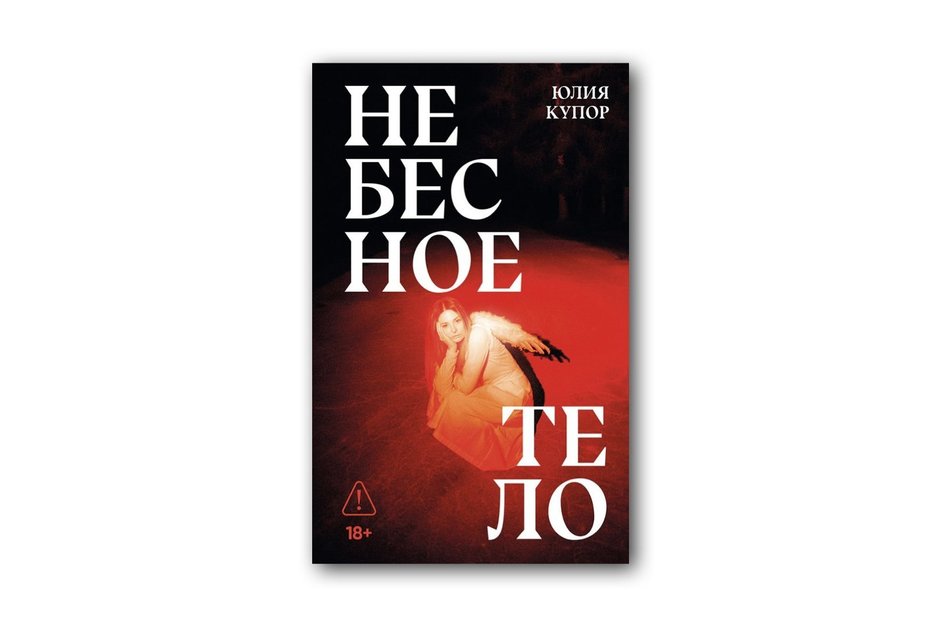
This is a novel about school bullying and the consequences of decisions made in adolescence. At the center of the plot are former classmates who gather years later for a memorial evening for Anya Krasun, a deceased school star. The meeting brings them back to the late 2000s; old grievances, secrets, parental lies, and the story of the bullying, which each participant remembers differently, resurface. At the same time, the main character, Lera, has been hiding an unusual ability from those around her for ten years — she can fly. At school, she was one of the few who did not participate in the bullying of Anya and understood that it could all end in tragedy. Now she has to re-examine what happened then and her own responsibility for what occurred. According to Yulia Kupor's concept, the heroine is lifted above the ground by her emotions. Therefore, the ability does not make her either free or happy.
The story in the novel is fictional, although the school is largely based on the one Kupor herself attended. The writer consciously transferred the experience of her generation to the late 2000s — a time when the internet was already part of life, and social media amplified the feeling of impunity. “Celestial Body” is an attempt to talk about bullying without the usual division into victims and villains and to show that responsibility arises not only for those who directly participate in the bullying.
Stephen Chbosky. “The Perks of Being a Wallflower," Azbuka (18+)
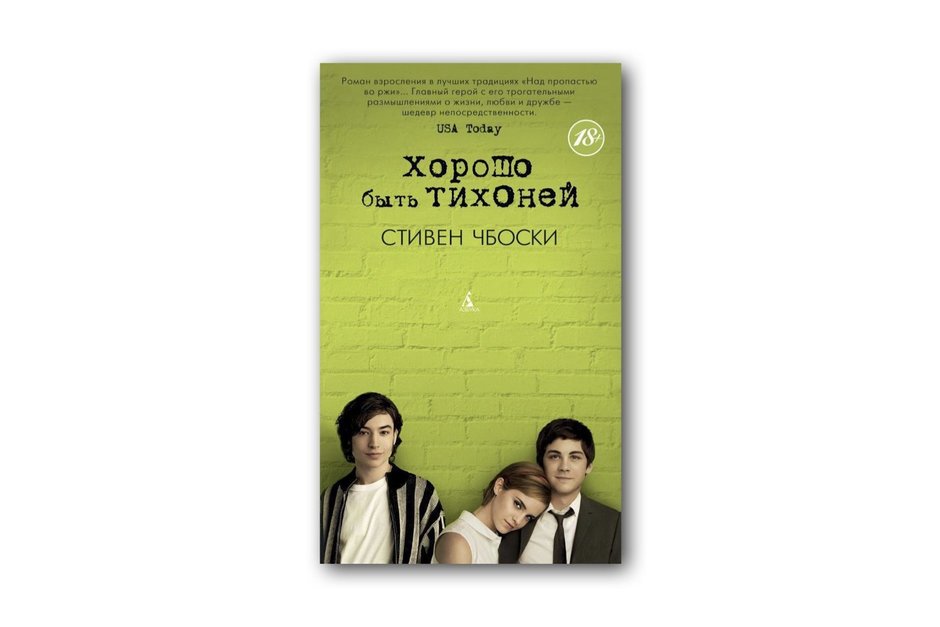
Charlie starts his first year of high school after a difficult period: his best friend committed suicide, and Charlie himself had a nervous breakdown. He writes letters to an unknown recipient and gradually talks about school, family, first relationships, and attempts to understand himself. In his new life, he is helped by upperclassmen Sam and Patrick, who accept him into their group. Together they go to parties and performances of The Rocky Horror Picture Show, listen to music, read books, and discuss what is happening to them. At the same time, behind the external life of the teenage group lies Charlie's traumatic experience, which gradually surfaces.
The novel was first published in the US on February 1, 1999. It took Chbosky about five years to write and revise the book. The material is largely connected to the author's personal experience: Charlie is partially based on Chbosky himself, and the novel includes his memories of life in Pittsburgh. The writer shows teenage experience from the inside. Charlie records what is happening, so the reader sees how his perception and state change. The text incorporates numerous references to books, music, and films — from “To Kill a Mockingbird” and “The Catcher in the Rye” to The Smiths and Nirvana. The novel became one of the most notable books about teenage experience and, at the same time, was regularly censored in American schools due to its themes of sex, drugs, and suicide.
Vladimir Zheleznikov. “Scarecrow," MIF (12+)
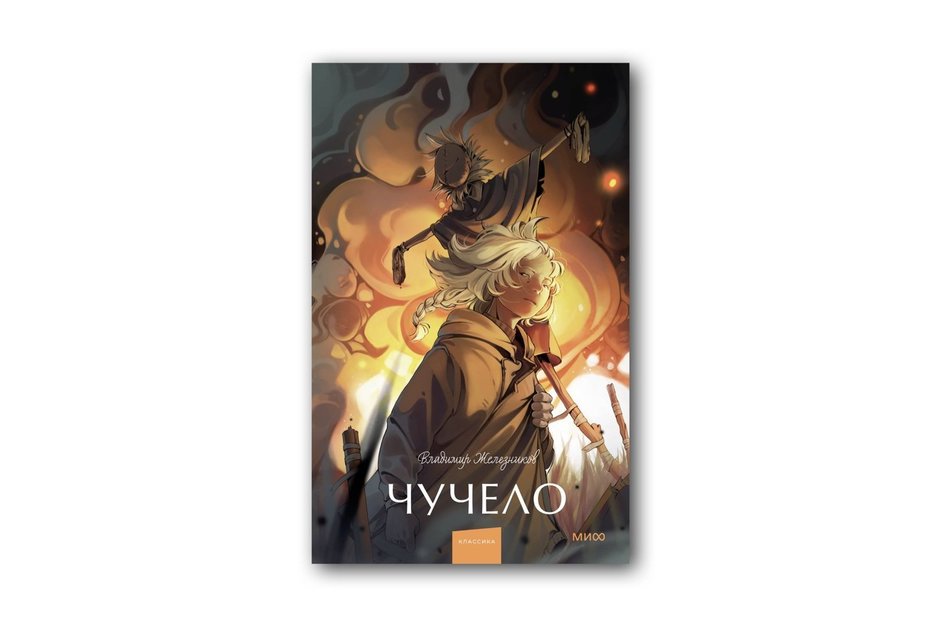
“Scarecrow” is a 1981 novella about school bullying, childhood cruelty, and the choice between personal gain and justice. Sixth-grader Lena Bessoltseva comes to a new class and almost immediately becomes the object of ridicule. When she takes the blame for her classmate Dima Somov, whom she loves, the bullying intensifies: the children declare a boycott on her and give her the nickname “Scarecrow.” At the head of the class is Iron Button; some children support the bullying, others join out of fear of becoming outcasts themselves, and the adults notice what is happening too late. Zheleznikov shows not only the victim and the aggressors but also the very structure of the group: leaders, followers, those who are afraid to object, and those who remain silent. At the same time, Lena is not an ideal hero but an ordinary awkward girl who turns out to be capable of withstanding the pressure of the majority.
Zheleznikov heard about a similar case from his niece: a schoolgirl in Nizhny Novgorod took someone else's blame and hid from her family for several weeks that she was being bullied. The writer first turned this story into a screenplay, but Goskino rejected the project: the cruelty of Soviet schoolchildren was considered unacceptable for the screen. Then Zheleznikov reworked the script into a novella. In 1981, it was published in the magazine “Pioneer” under the title “Just a Few Days," and then released as a separate book.
Ekaterina Petrova — literary critic for the online newspaper Realnoe Vremya, host of the Telegram channel «Булочки с маком».