Glass time, glass country
“The Last Pomegranate Tree” by Bakhtiyar Ali — a rare translation of a contemporary Kurdish author from Iraq into Russian
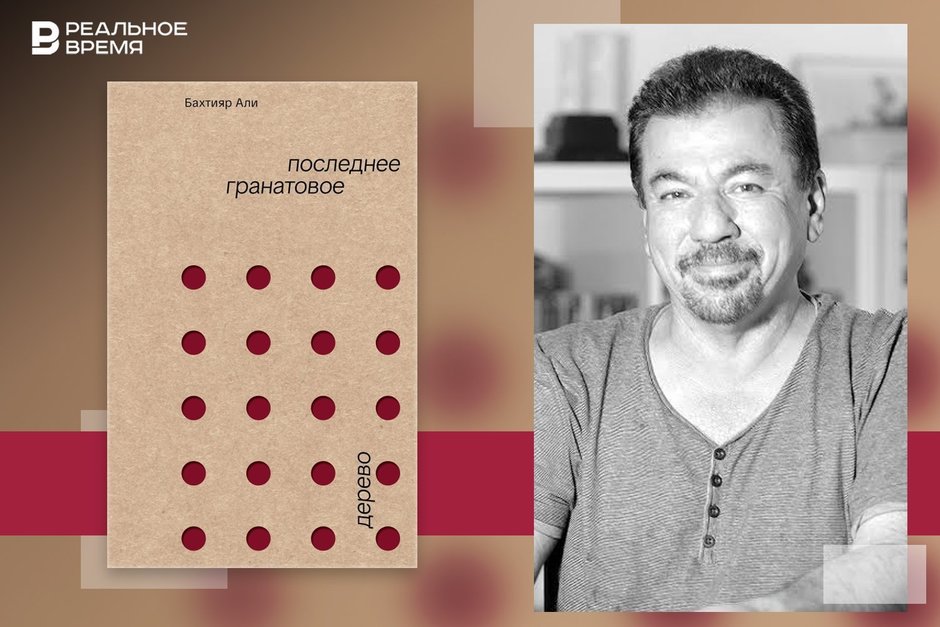
What remains of a person if he has spent 21 years in prison, and upon returning, discovers that his former world no longer exists? “The Last Pomegranate Tree” by Bakhtiyar Ali is a novel about a war that continues even after the fighting ends. At the same time, Ali speaks about it in the language of parable, making the fantastic a way to more accurately show the absurdity and trauma of historical reality. The literary critic of Realnoe Vremya, Ekaterina Petrova, tells how myth in this book becomes a way to preserve the history of a people.
Between homeland and exile
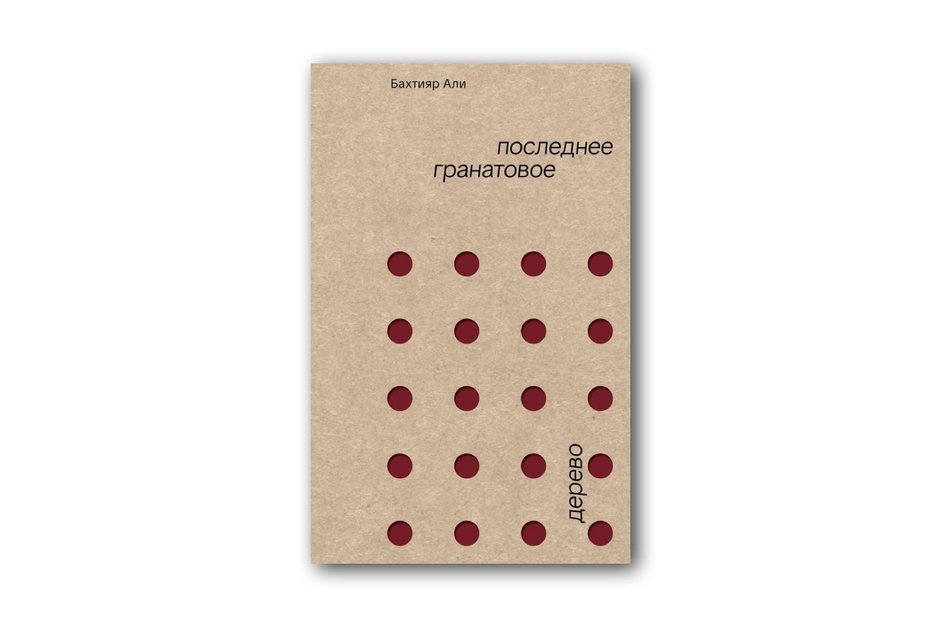
What if a book about war begins as a fairy tale? What if a man, after 21 years of imprisonment, emerges into a changed world where he himself has almost ceased to exist? This is how “The Last Pomegranate Tree” by Bakhtiyar Ali begins. Muzafar-i Subhdam, a Kurdish Peshmerga fighter, spent 21 years in solitary confinement in the desert. He dreamed of his son Saryas-i Subhdam, whom he had seen as an infant, and after his release, set out to find him. His journey takes him through Kurdistan after the fall of Saddam Hussein and during the Kurdish civil war.
“The Last Pomegranate Tree” opens up a little-known literary territory for the Russian-speaking reader. Ali wrote the novel in Sorani — the Central Kurdish language. The book was first published in 2002, and by the time of the Russian edition, it had already been translated into Arabic, Persian, Turkish, English, German, Italian, and French. Russian became the novel's eighth foreign language.
For a long time, the Kurdish novel was not associated with any one nation-state. Researcher Hashem Ahmadzadeh notes that the concept of the “Kurdish novel” unites literature written in the Kurdish language, despite different dialects and writing systems. Along with Muzafar's story, the reader gains access to the literature of a people whose cultural history does not fit within the borders of a single state.
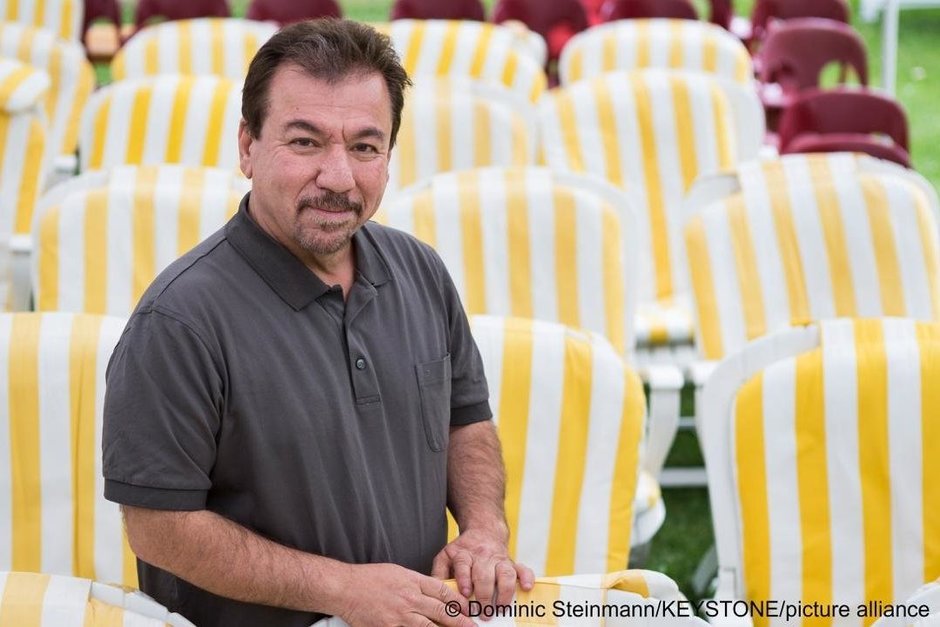
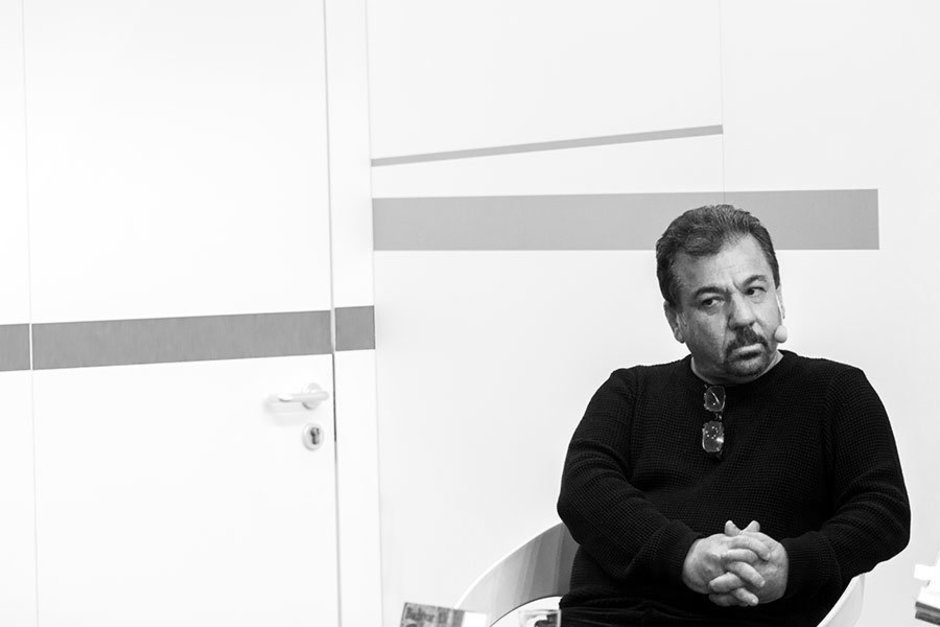
Bakhtiyar Ali belongs to a generation of Kurdish writers for whom literature grew directly out of political experience. He was born in Sulaymaniyah in 1966 and was wounded in 1983 during a student demonstration against the Ba'ath Party. After that, Ali left the geology faculty and decided to devote himself to literature.
— Understanding people is far more interesting than understanding stones, — the writer said in an interview with The National.
After the 1991 uprising, Ali gained relative creative freedom, published a collection of poetry, and founded the philosophical magazine “Azadi” (“Freedom”). But the calm period quickly ended. In 1994, a civil war broke out in northern Iraq between Kurdish parties. Due to his journalistic and literary activities, Ali and his colleagues began to be threatened, and the writer left the country. Since the mid-1990s, he has lived in Germany, currently in Cologne.
At the same time, the geographical distance did not cut Ali off from Kurdistan. In an interview with Qantara, he says that memory can torment a person and even make them ill. Writing helps him “depersonalize” his own memories and perceive them as a shared experience of an entire generation. Thematically, Ali continues to remain in the East and in Kurdistan, not only because the region provides him with powerful material, but also because of the people who live there under the threat of extremism and political hatred.
This connection between memory and literature explains much in “The Last Pomegranate Tree.” Ali takes concrete historical experience and turns it into a story of several generations. The memory of one character constantly goes beyond the personal. Hence Muzafar's journey and the fusion of harsh history with myth. The writer himself says:
— I write to break through the boundaries of reality. I write to free the meaning of freedom from political illusions.
For Ali, freedom is not at all reducible to a political slogan. He speaks of art as a form of escape that allows one to reconsider the familiar order of the world and free oneself from the nationalistic division of people. In another response, he calls art a peaceful form of resistance and salvation. It helps to restore what has been suppressed and preserve the ability to resist without spreading fear and violence. But Bakhtiyar Ali is hard to call only a political writer. His books speak about politics through broken human connections.
The writer sees literature's task as reflecting this tragedy and creating a different type of relationship between people. Ali's own biography is similarly structured: first conflict with authority, then literature, then exile, and following it, a return to his native land through language and memory. His scale is also confirmed by international recognition. Ali has written nearly forty books, including twelve novels, collections of essays, and poetry. In 2017, he received the German Nelly Sachs Prize and became the first author writing in a non-European language to be awarded this honor. In 2024, he received the Hilde Domin Prize for literature in exile. But Ali himself does not seek to place himself in any literary hierarchy.
— I would like to be a separate, distant island on a large map, — he says.
Ali admits that he cannot precisely define his own place in contemporary Kurdish literature, but he knows that his style and understanding of literature's role differ noticeably from other writers.
A novel about what war does to time
“The Last Pomegranate Tree” begins as a story of a search. Muzafar-i Subhdam is released and tries to find his son Saryas. But it quickly becomes clear that this is not a novel about a father-son reunion, nor even a historical novel about Kurdistan. Ali uses this seemingly simple premise to ask a much more complex question: what happens to human identity when war and political violence tear apart the connection between past and present?
Muzafar spent so much time in prison that his own life practically stopped for him. He emerges from imprisonment, but freedom turns out to be relative. The world he returns to is no longer the one he left. His memories turned to sand year after year, and his only stable support remained his son. Therefore, the search for Saryas is also a search for lost time, his own youth, and himself — the person Muzafar was before imprisonment.
And here Ali makes an important plot move. Saryas turns out not to be unique. Several characters bear the same name, and the familiar formula of “one name — one person — one biography” ceases to work. A name no longer guarantees identity, and a human story turns out to be assembled from others' memories and coincidences. In conditions of war, this is particularly significant. Violence destroys people, and also the context in which one can understand who these people were. A person becomes missing, dead, replaced, confused. He becomes one of many.
The novel is structured as a chain of stories within a story. Muzafar recounts his search, and his story gradually reveals the fates of other people. Memories return; one story gives birth to another, and personal biography disintegrates into many voices. One of the central characters in this system is Muhammad-i Dilshusha, which means Muhammad Glass Heart. He is Saryas's friend. His literal glass heart seems like a fantastic detail, but in the novel's logic, glass acquires a much more capacious image.
Glass is above all fragility. Ali's children grow up in a world where human life can be destroyed as easily as a glass object. But at the same time, glass is transparency. A person sees what is happening, yet cannot protect themselves from it. Finally, glass is associated with the distortion of reality. It allows one to look at the world but at the same time changes its contours. Therefore, the story of the “glass boys” living in “glass time” and a “glass country” sounds like a definition of a generation whose life from the very beginning is fragile and unreliable.
Fragility is especially evident in the children's stories. Saryas is among those whose childhood was destroyed by the Anfal campaign — the punitive military operation of Saddam Hussein's regime against the Kurdish population in northern Iraq, conducted from 1986 to 1989. Another important episode of the novel is connected with children affected by bombings and mines. In the hospital, they lie like mutilated bodies of war, people whose possible lives were replaced by what war left behind. One of the boys, Black Star, is no longer able to express emotions with his face, yet preserves an inner joy that even fire could not destroy.
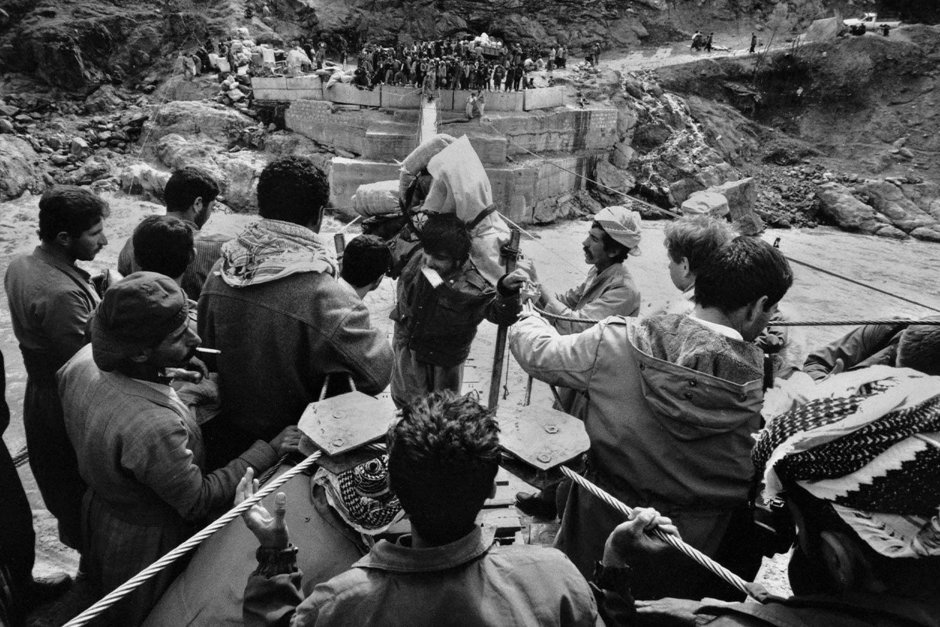
From this arises one of the novel's most powerful themes — the gap between what life could have been and what history made it. War in Ali brings death, destroys cities, and separates families. But it also creates a chasm between two versions of reality: life before the catastrophe and life after it. The result is a rupture after which there is no normal transition between former and current life.
For this, the writer turns to magical realism. His fantastic episodes allow him to approach reality. The book features a flood, a glass heart, mysterious women, legends of a blind boy, and a tree that can heal. But the novel's world remains completely material. It contains poverty, political violence, destroyed villages, refugees, and children maimed by war. The fantastic arises within reality as a natural form of consciousness of people whose lives have become like a dream, or rather, a nightmare.
Incidentally, the search for the last pomegranate tree begins precisely at the moment of historical catastrophe. Saryas, Muhammad, and the blind boy set out for the tree when “reality” literally plunges into violence. The tree is located on the border of two worlds — reality and dream, finitude and infinity. And this is perhaps the central metaphor of the novel. When historical reality becomes unbearable, imagination creates a space in which a person can still remain human.
At the same time, the pomegranate tree should not be understood simply as a magical object. Its meaning is connected with memory and fatherhood, the future and hope. Muhammad articulates this almost as a moral law: a true father plants a tree not only for his own child but for all the children who will come after him. The tree is like the opposite of war. War takes away the future from children, while the tree, on the contrary, exists for those who are not yet born. It connects the dead and the living with future generations.
Muzafar is looking for a son he lost in the past, but in fact, he is trying to find a possibility for the future. Saryas is proof that once, outside of war, Muzafar had a life. Here, the novel gradually turns the family plot into a conversation about continuity: what can pass from father to son if history constantly destroys connections between generations?
Ali's answer is connected with storytelling as such. His characters' stories resemble streams that, in the end, flow into the sea of other stories. If one storyteller dies, another must replace him. Storytelling is a way of preserving collective memory. State history records wars, conflicts, borders, and political decisions. The history Ali tells preserves something else: children, the dead, love, betrayal, promises, and fear. Myth and folklore also serve as archives here. They hold the emotional truth of the past where official history might leave only a dry chronicle.
And yet “The Last Pomegranate Tree” does not offer a simple comforting formula. Love does not save from historical trauma. His characters love, befriend, sacrifice themselves, and still die, lose each other, and become entangled in violence. Love does not cancel history. But it is precisely human connections and the ability to continue the story that turn out to be what opposes its destructive force.
Ali's novel is a book about why war does not end with the cessation of hostilities. For Muzafar, 21 years of imprisonment continue even after liberation. For children, war continues in their bodies. For Saryas, it continues in the memory of a destroyed village. For an entire generation, it continues in the impossibility of returning to a life that no longer exists. And yet, in this world, the pomegranate tree remains — an image of life that can continue after death, a memory that can outlive a person, and a story that can be passed on.
Publisher: NoAge
Translation from English: Alexandra Glebovskaya
Number of pages: 384
Year: 2026
Age rating: 18+
Ekaterina Petrova — literary critic for the online newspaper Realnoe Vremya, host of the Telegram channel «Булочки с маком».