30 years of “A Game of Thrones”: how one novel turned into a major subculture
Book of the week — George R.R. Martin's novel “A Game of Thrones”
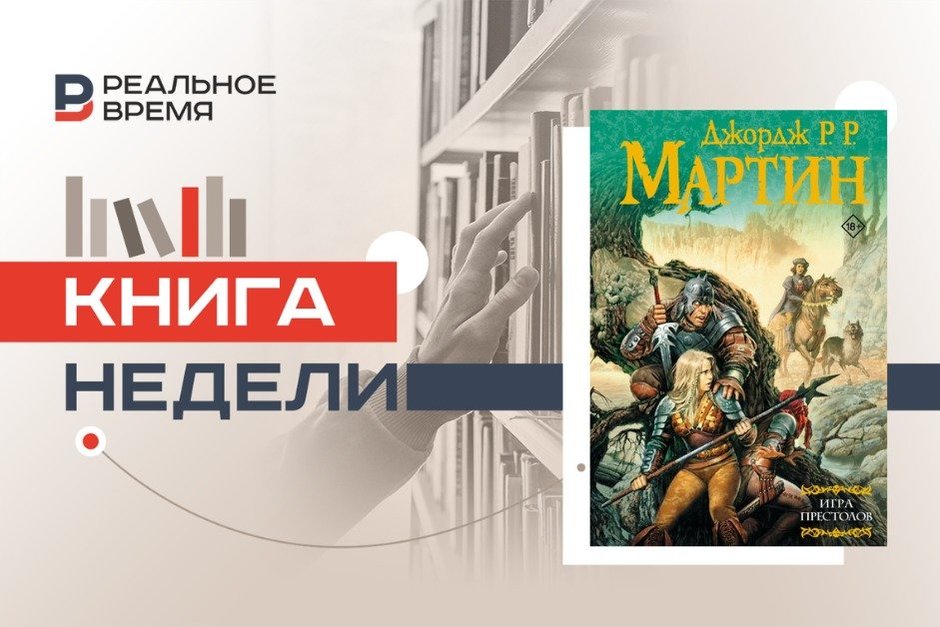
This week, on August 6, marked 30 years since the publication of “A Game of Thrones.” Today, the story of the Seven Kingdoms is impossible to imagine as just one novel. The “A Song of Ice and Fire” cycle has grown into an HBO television series, an international fan community, board games, tourist routes in Dubrovnik and Iceland, and a large body of academic research. But at the time of its release, there was no cultural brand. There was only writer George R.R. Martin and a big fantasy hardcover with silver embossing. This book changed the mass audience's perception of modern epic fantasy. The literary critic of Realnoe Vremya, Ekaterina Petrova, tells how a work of fiction consistently changed its own scale and grew a mythology that people continue to interpret and expand.
A game without guarantees: why Martin's world ceased to be “fairy-tale”
George R.R. Martin changed the rules of old fantasy. The writer returned to literature from Hollywood because the format of television scripts constrained his imagination.
— When I returned to prose in the 90s, I said: I'll do something as big as I want. I can have all the special effects I want. Hundreds of characters. Giant battle scenes, — he recalled.
Taking the foundation laid by Tolkien, he placed familiar elements (kingdoms and knights, dynasties and ancient evil) into a much more complex social system. At the same time, the author categorically refused direct opposition.
— I revere Tolkien; he is the father of all modern fantasy, and my world would never have existed if he hadn't come first! Nevertheless, I am not Tolkien, and I do things differently, — Martin said in an interview with TIME.
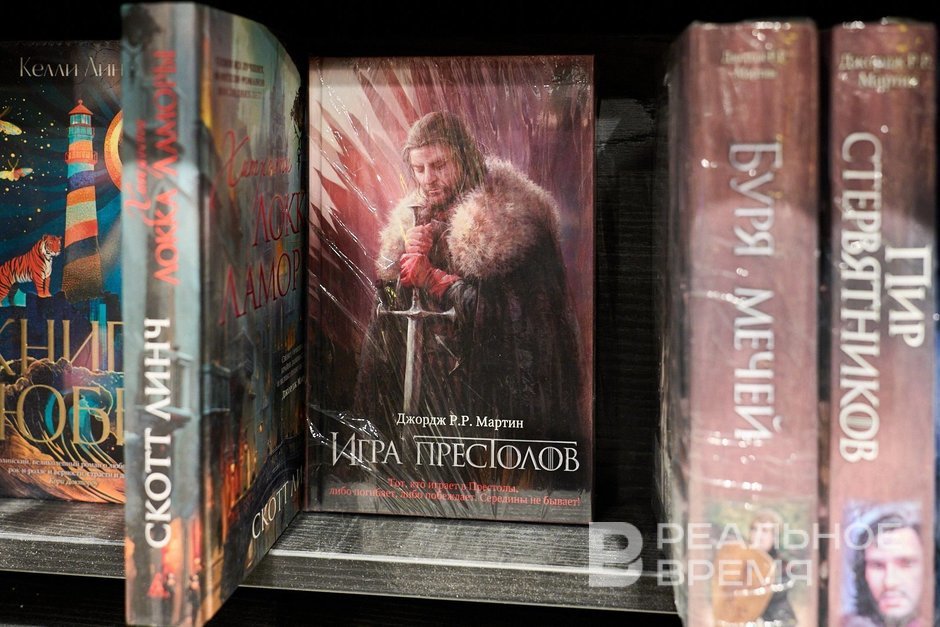
The second key to the world of Westeros was history. The author drew on the Wars of the Roses, the Hundred Years' War, and the Crusades to create a convincing artistic model of the past.
This world makes a dangerous pact with the reader from the very first pages: here, no one is protected from the author's arbitrariness. Classic epic fantasy is usually built around a hero whose fate gradually becomes the fate of the entire world. With Martin, it's the opposite: the world turns out to be more important than the hero. His characters know far from everything, make mistakes, make wrong decisions, and die. The execution of Eddard Stark is the clearest proof of the collapse of the moral authority who was used to acting straightforwardly, finding himself inside a system of political intrigue.
At the same time, deeply ambivalent characters like Jaime Lannister exist alongside him. At the beginning of the story, he appears as an incestuous child-killer who pushed Bran Stark from the tower. But as the plot develops, the hero reveals another side — through his attachment to his sister and his chivalrous attitude toward Brienne of Tarth. The narrative perspective itself is constantly fragmented. The reader has to piece together the overall picture from multiple points of view. This includes Arya's naive perspective, Daenerys's attempt to understand who she should be as a ruler on the very edge of the world she knows.
Politics becomes the main engine of the plot. Martin shows people within a complex system of power in which no single player manages to gather enough resources to finally subjugate the others. Magic exists somewhere on the periphery, but for most of the first novel, the reader is in a world of inheritance, diplomacy, marriage alliances, and betrayals. Here, those who can adapt survive, while rigid moralists like Stannis Baratheon or Robb Stark are defeated. Fantasy turns into a story of the struggle for hegemony, where Cersei's formula sounds extremely cynical:
— Whoever plays the game of thrones either dies or wins. There is no middle ground.
Violence in this universe also ceases to be part of a heroic adventure and becomes an instrument of power. Martin himself insisted on this approach:
— Even the most fanciful fantasy universe must reflect the realities of the world. If you decide to write about war, write the truth. And the truth is that people die, and not always beautifully, and sometimes horribly, and good people die too.
The execution scene of Rodrik Cassel conveys this logic particularly well. Theon Greyjoy has never beheaded a man before and tries to do it with an ordinary battle sword. On the first try, nothing works, and he only succeeds after a kick. The episode is impressive precisely because it lacks the usual genre heroism. Death turns out to be physically difficult and terrifying. Martin does not hide the vulnerability of the human body; he shows sexual violence and the consequences of war without embellishment. He places the reader in a world where the body is protected neither by the armor of the genre nor by moral rules.
The secret history of success: the saga's journey from the bookshelf to millions of screens
The premiere of the HBO series in 2011 looked like the birth of a global obsession. But in fact, the cultural explosion had been brewing for almost a decade and a half. By the time the show launched, the “A Song of Ice and Fire” cycle had already sold more than 15 million copies worldwide. George Martin himself explained this growth by a quite prosaic mechanism — reader recommendations:
— It was my readers who made the series as successful as it became. It all started with ordinary conversations; friends recommended the book to friends, and they to their friends' friends...
This is one of the main paradoxes of “A Game of Thrones'" success. By the time the series aired, there was already an active and highly engaged community of readers. But it did not emerge instantly. Martin's path to a large audience began with rather modest book tours that sometimes ended almost comically. In his blog, the writer recalled:
— The crowds never reached a hundred people, and in St. Louis, I set a personal anti-record: minus four visitors — I literally drove four customers out of the bookstore.
The writer's wife, Parris McBride, said that in the same year, four hundred people came to a meeting with Martin in Kentucky, but just a few weeks later, in another city, not a single listener showed up. The future phenomenon was built gradually, through the accumulation of trust, when “one reader brings another.” By 2011, the scale had changed radically. Martin's autograph sessions already had queues of two thousand people.
Long before the series appeared, readers began to explore and systematize Westeros in detail. They drew maps, compiled genealogies, constructed timelines, and searched for connections between dozens of characters. The administrator of the largest fan resource, Westeros.org, Elio Garcia, spent 35 hours a month systematizing knowledge of Martin's universe. Gradually, his understanding of the fantasy world's structure became so deep that even the series' creators turned to him for consultation. And George Martin said:
— Sometimes I write something and send him a letter: 'Have I mentioned this before?' And he immediately replies: 'Yes, on page seventeen of the fourth book.'
By the time of the series premiere, a full-fledged fan infrastructure had already developed around the books. Mailing lists already existed, conferences were held, specialized websites were online, and users were creating a huge array of theories. HBO inherited a community that had already independently studied and largely appropriated Martin's world. All the series had to do was what book culture could not do: bring this already formed system to a mass audience.
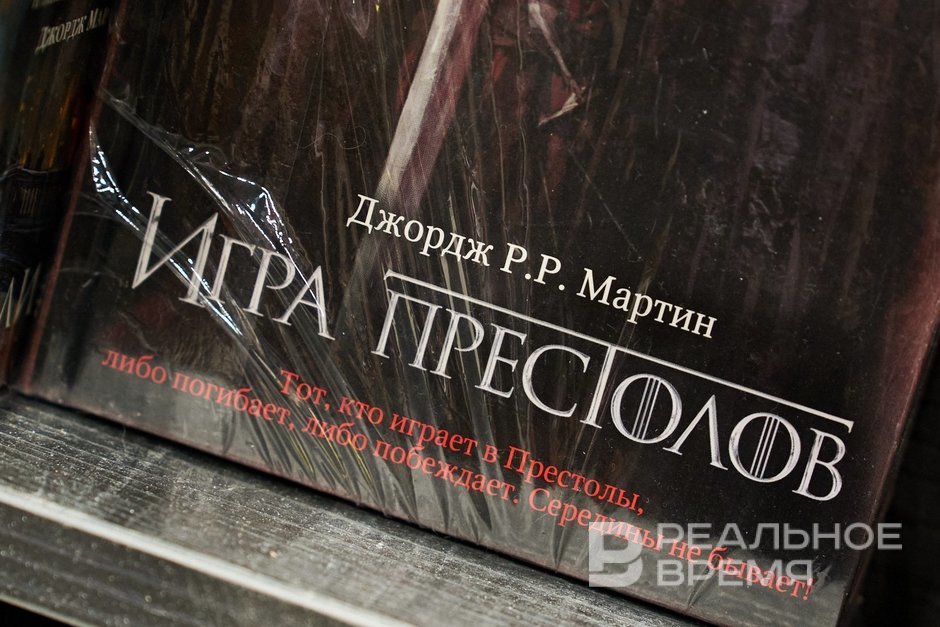
But discussion of the books was not the only thing. Fans gradually began to create their own version of the world. On platforms like FanFiction.net, thousands of alternative plots appeared: from filling gaps in the canon to transferring characters to the modern world. According to surveys, the main motivations of fanfiction authors were “entertainment” and “the desire to explore new paths and theories.” Readers gradually turned into co-authors of meaning. They created maps and genealogical trees, recorded video essays, sewed costumes, and invented their own interpretations of events. Reading turned into a form of collective creativity.
At the same time, Martin consistently opposed fanfiction, appealing more to emotions than to copyright theory. He called his characters “children” and did not want anyone to “manipulate them and play with them.” But the more real Westeros became for readers, the more they sought to challenge every detail of the author's world.
— People analyze the books, damn it, line by line — if I make a mistake anywhere, I'll be crucified immediately," the writer lamented.
The wait for new novels also eventually became an independent part of fan culture. On forums, fans followed every update, calculated how long Martin was taking to write the next book, and increasingly demanded a continuation. Neil Gaiman responded to these claims harshly and succinctly: “George Martin is not your bitch.” The writer himself later formulated his attitude to the new internet fan environment:
— The internet is toxic in a way that old fanzines never were.
HBO did not create this world from scratch. It scaled up what Martin and his readers had managed to build long before the premiere. David Benioff and D.B. Weiss entered the industry with material that had recently been considered almost impossible for television adaptation. Martin himself left Hollywood in 1994 precisely because producers could not imagine combining “horses and Stonehenge” in one project. HBO, which had already made a name for itself with complex adult dramas like “The Sopranos," turned out to be a platform capable of accommodating both multi-layered politics, brutality, and dozens of plotlines.
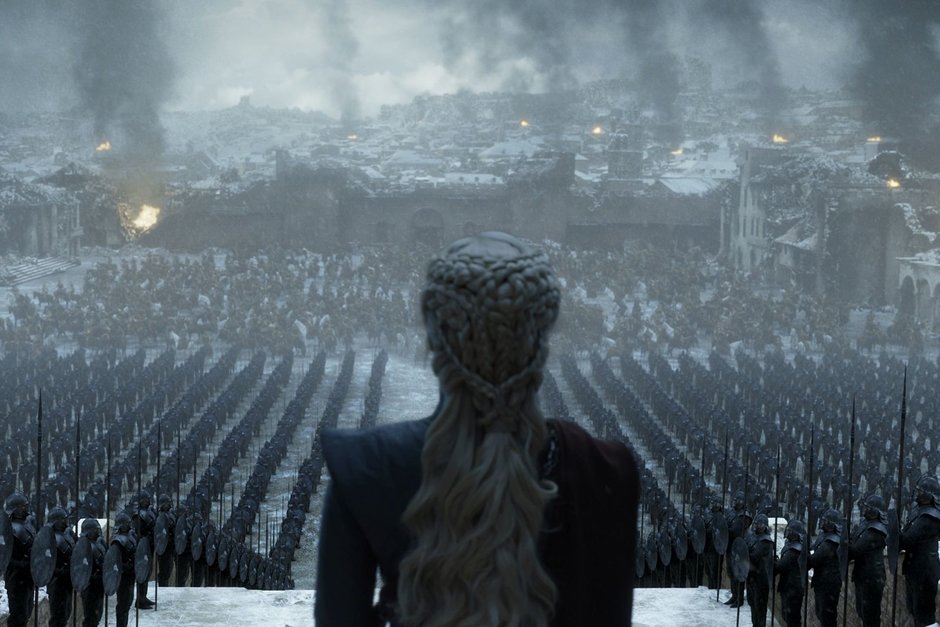
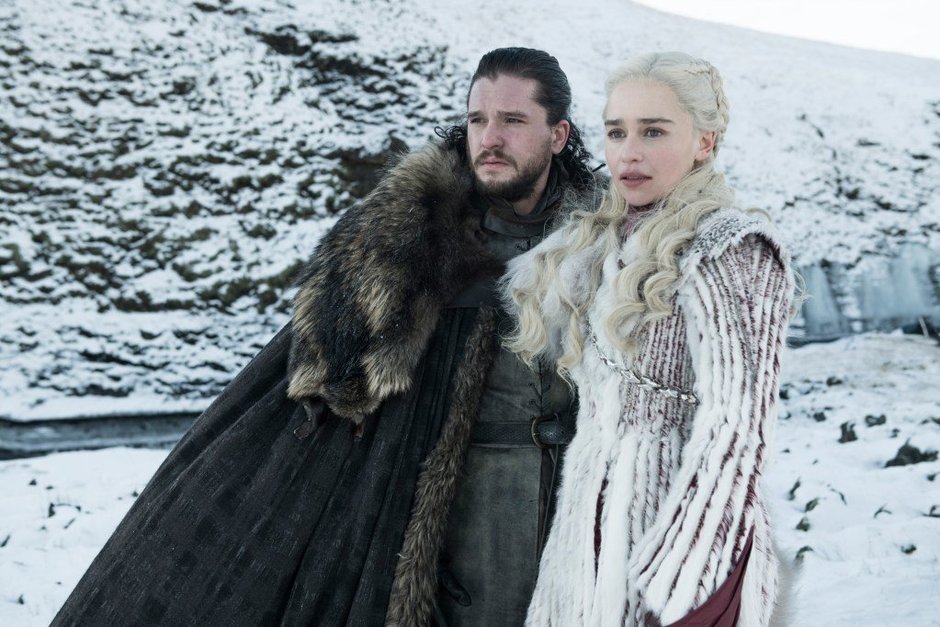
Television added to the book universe what even the most detailed book cannot provide: actors' faces, Ramin Djawadi's music, the recognizable landscapes of Dubrovnik and Iceland, and, most importantly, a common viewing rhythm. Now Westeros existed not only in the imagination of individual readers. Millions of people around the world watched the same story simultaneously every week and discussed it immediately.
Dragons in the laboratory: why scientists took on Martin
In August 2017, one and a half thousand people filled Nevsky Prospekt and turned onto Sadovaya Street in St. Petersburg. The most persistent queued from ten the previous evening and played cards all night to get George Martin's autograph. By this time, “Game of Thrones” had long ceased to be a story only for fans of book fantasy and geek culture.
Martin himself, summing up the two decades since the first book in 2016, noted the scale of the changes: the novels firmly occupied the top positions on bestseller lists, and the HBO series was breaking records in ratings, piracy, and the number of Emmys. A whole industry grew up around the franchise. These are board games, figurines, slot machines, cosplay, graphic novels, translations into more than forty languages. “Winter is Coming," the Iron Throne, and other images from Westeros gradually went beyond the plot and turned into a recognizable cultural code. They began to be used in advertising, political rhetoric, and everyday speech.
But the influence of “Game of Thrones” turned out to be noticeable not only in popular culture. Westeros also began to change real geography. Researchers have described a phenomenon called “adaptation-induced tourism.” Filming in Northern Ireland, Iceland, and Croatia attracted a noticeable flow of travelers, and local communities had to adapt to the new tourist reality. For the entertainment industry, the effect was no less important. “Game of Thrones” proved in practice that expensive, dark, and complex fantasy could go far beyond the genre audience and become a mass spectacle.
The success of “Game of Thrones” broke the stereotype of the genre's niche nature and cleared the way for projects like “The Witcher” and “The Lord of the Rings," turning television into the main showcase for adult fantasy epics.
At the next turn, Westeros became a legitimate academic object. Time magazine reported in 2017 that Harvard was launching a course in medieval studies based on the series, and Boston College was launching a seminar for master's students. At the same time, the Martin Studies International Network was formed, which announced a presentation at a specialized conference in Hertfordshire.
Medievalists quickly noticed: after “The Lord of the Rings," it is difficult to recall another fantasy text that attracted so much attention to the Middle Ages and the humanities. Shiloh Carroll, in the book “Medievalism in 'A Song of Ice and Fire' and 'Game of Thrones,'" examines how Martin works with chivalric romance, gender, sexuality, and postcolonial motifs. His approach to historical authenticity is also important. The feeling of authenticity in the world of Westeros turns out to be an independent artistic device.
Then methods usually applied to the study of real social systems came into play. A group of researchers led by Thomas Gessey-Jones used network analysis and found that the structure of interactions between characters in the novels is surprisingly stable and largely resembles real social networks. Even the intervals between significant deaths follow a power-law distribution — the same type of pattern found in many non-military events in the real world.
Other researchers went even further and quantitatively compared the character networks in the books, comics, and series. It turned out that despite the radical reduction in the number of characters in the television version, the main topological characteristics of the networks are preserved. In other words, even after large-scale reworking of the source material, the adaptation continues to reproduce the complex relationship structure laid down by Martin.
Other researchers compared not only the book structure but also its versions in different media — comics and the series. Despite the fact that the television adaptation significantly reduces the number of characters, the main topological characteristics of the networks remain similar. In other words, even after serious reworking of the source material, the series retains the complex architecture of relationships that Martin built into the novels.
At the same time, “Game of Thrones” began to be read as a reflection of quite real social anxieties. According to Axel Horn and Oleg Kildyushov, the series becomes a form of cultural processing of the experience of social and political upheavals in Western societies. The struggle for power in a world without a reliable moral center conveys a sense of loss of control and general cultural pessimism.
The HBO series ended in 2019, but with the final credits, the story of Westeros did not end. Fan theories continue to multiply, researchers still turn to the books and the series, new projects expand the screen universe, and the images and symbols of Westeros have long lived their own lives.
Martin himself, looking back at the first two decades of this story, admitted that he could not have imagined where the road that began with one book would ultimately lead.
Publisher: AST
Translation from English: Yuri Sokolov
Number of pages: 784
Year: 2026
Age rating: 18+
Ekaterina Petrova — literary critic for the online newspaper Realnoe Vremya, host of the Telegram channel «Булочки с маком».