Vladimir Dyadyun: “My first home is Omsk, my second is Kazan”
Interview with the former Rubin forward about the star period of the Kazan club
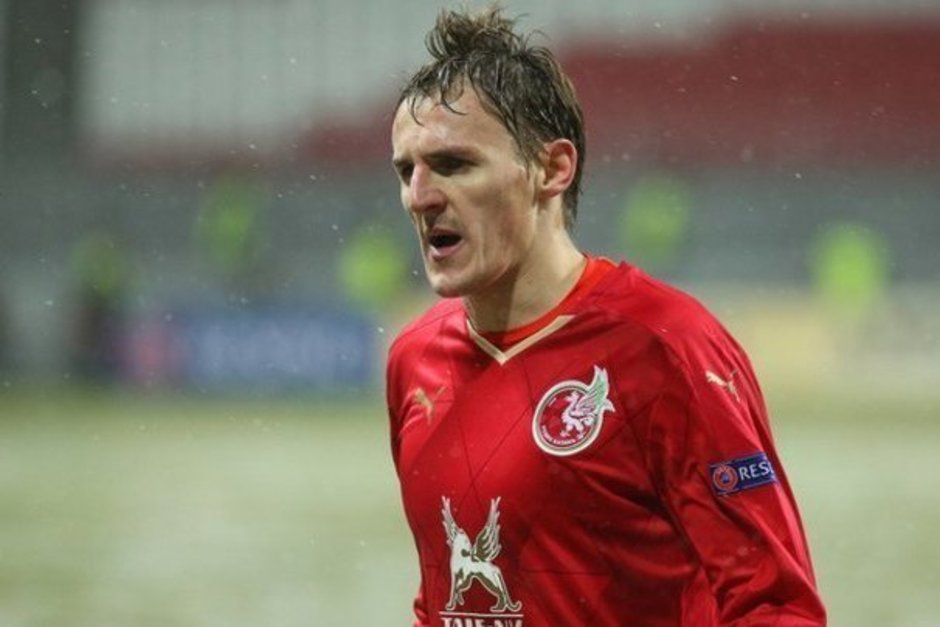
Russian footballer and forward Vladimir Dyadyun played for Rubin in two stints. First, he was with the team under contract from 2007 to 2013. During this time, he went on loan, returned to the club, and played a second period from 2014 to 2017. Then he played for Rostov again, from where he moved to Baltika. In an interview with Realnoe Vremya, Dyadyun told how the Kazan team changed over ten years, where he came as a junior, a Russian Cup winner, and a UEFA Cup quarterfinalist.
“Some of the foreign players did not fight for the club”
— Vladimir, how did you end up in Kazan?
— I am Siberian, originally from Omsk. And with our team, which was called Molniya, we made it to the final tournament of the Russian Youth Championship. There, among representatives of big clubs like CSKA and Spartak, we performed well. After the tournament, Yuri Anvarovich Utkulbaev, who knew our coach Vladimir Anatolyevich Shcherbak, invited me and four other Molniya players for a trial at Rubin. In the fall of 2004, I came to Kazan for a trial for the first time. After that, in January 2005, I was already invited to a training camp, the only one of the five Omsk players.
— Did you go to the training camp with the youth team?
— At that time, there was a reserve squad, which included 9–10 players from the main squad and young players trying to break into the first team. I arrived there as a 16-year-old, while some guys were already 25. They told me: we'll sign you, we'll see, if it works out — you'll play for the reserves, if not — for the Rubin youth team. It worked out, and I started playing for the reserves.
— Your debut for the Rubin main squad came in 2007...
— Yes, that was a bad year for Rubin, but it became a turning point for the team and for the young players who saved the situation at the end of the season, including me. In 2007, I trained with the main squad. There were many expensive foreign players on whom they were relying. Frankly speaking, some of them did not fight for the club. They didn't care; they acted like hired workers who got good money and just spent time in Kazan. And there was no result, despite all the efforts of Kurban Bekievich and the coaching staff. Against this background, we, the young guys who performed well in the reserves, were brought up to the main team — we trained with them. Balyaykin, Golyatkin, Kireev, Yarkin, me, and other guys. Everything mattered to us. We grew up at Rubin, saw how the base was built, and were ready to fight for the club. Bekievich probably understood this and relied on us, the reserves, whom not everyone even knew by name.
“For me, 2007 was a fateful year”
— Do you remember your first match in the main squad?
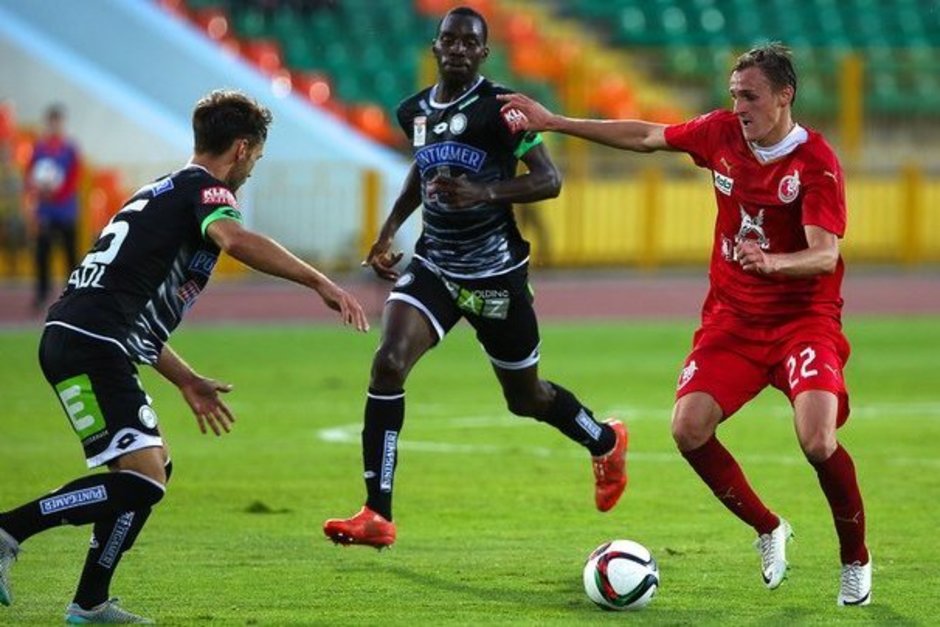
— Yes, I came on as a substitute five minutes before the end of the game against Moscow. But what I remember most about 2007 is that we managed to keep the team in the Premier League. There is a specific story. At the end of the championship, we played against Kuban, who were in second-to-last place and were only three points behind Rubin. In fact, it was a match to stay in the Premier League, because after that we had to play against Dynamo and CSKA, where it would be very difficult to get points. Shortly before the match against Kuban, club president Alexander Petrovich Gusev came to the base. A meeting of the entire team was held, where we were clearly told that we could not lose, as Rubin could end up in the relegation zone. We, the young guys who played for the reserves, were also at the meeting, but naturally thought that the “stars” who were brought in for that purpose would solve the problem.
The day before, we played a match for the reserves; I was substituted at halftime: “Get ready, tomorrow you're on the bench for the main team.” The next day, I wake up at the base, pack my bag, and say to the guys (and we lived 5–6 to a room): “I'll go, I'll help Rubin stay in the Premier League.” At the same time, I didn't even think they would put me in such an important match. We lose the first half 0–1. At halftime, they say: “Dyadyun, warm up.” My eyes were like saucers; I started warming up actively. I came out in the second half. First, I intercepted the ball, made a pass, we equalized. And then, at 1–2, I scored a goal, and we drew 2–2. I already played the remaining matches against Dynamo and CSKA in the starting lineup.
That's why 2007 was such a fateful year for me. I was a no-name, a kid who just lived for football, waited for his chance, and when it came, helped the team stay in the Premier League. And the next year was a championship year for Rubin.
— You touched on the topic of team building. Can we say that the approach to it changed in 2008 and that this was an important moment in Rubin's transformation?
— I think so. In 2007, many players, mostly foreigners, did not do their work properly and had a mediocre attitude toward the training process. In 2008, everything changed in this regard; I felt it from within the team. Good players were selected who did not put their interests above the team's. It seems to me that after 2007, such players no longer survived in Rubin; if they did appear, they were immediately put in their place. Although famous players came in 2008, they were adapted to the collective intelligence. I recall Lobanovsky's words: “You don't need a team of stars, you need a star team.” So that everyone works as one. In Rubin of those years, that's how it was; I felt it. And when I played for other teams, I felt the difference.
— You ended up at another team in 2008, when you went on loan to Rostov. Under what circumstances did that happen?
— In 2007, Kurban Bekievich saw that I could be counted on. I went through all the winter training camps with the main team in 2008, participated in friendly matches, and scored a lot. Top players started to arrive: Karadeniz, Ansaldi, Semak... At the very end of the training camp, during an intra-squad game, I got injured, tearing my ankle ligaments. It was very frustrating. I was playing in the starting lineup, already thinking about the first match of the season against Lokomotiv — and then this... I got injured and missed the start of the season. By that time, experienced Savo Milosevic had been brought in, and I, a young player, went on loan to Rostov, whom I helped return to the Premier League.
It so happened that on Sergei Semak's birthday, I was sitting in tears on the second floor of the hotel with an ice pack on my leg, unable to go down to the celebration. And Sergei came with a cake. I said: I'll tell my children that Semak brought me a cake; he replied: “No, I'll tell them that I brought Dyadyun a cake on my own birthday.” What a human being he was! And what a squad was assembled in 2008! I went through the training camp with them and saw the team, how it was created, and what kind of people were there, personalities who put the team's interests above their own. This example with Semak is telling. He was already a legend then, but despite his status, he brought a cake to a young injured player.
“Dyadyun, why aren't you running, have you become a star?”
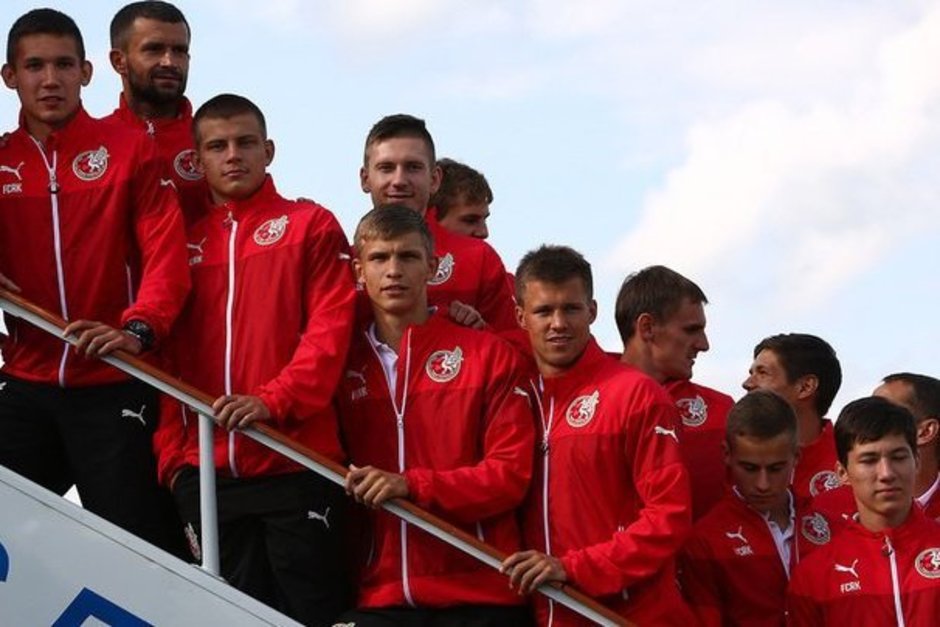
And a star team was assembled in Kazan. Already at the beginning of 2008, it was evident. I felt it again in 2011, when I started playing for Rubin again. Ryzhikov, Sharonov, Navas, Eremenko, Natcho... The squad had partially changed, but the idea remained the same; no one put their personal interests above the team's. And no one could lower their standards. Against this background, others also progressed. The example of Christian Noboa: he had been playing for Rubin since 2007. He arrived young and grew stronger in Kazan. Noboa was always good with the ball, but at Rubin, he reached an even higher level. Bekievich taught him to roll, to work hard. He brought out additional reserves in him and made him believe in himself. Christian rose to a new level, such that Manchester City was interested in him.
— You are among the Rubin players who became winners of the 2010 Commonwealth Cup.
— Yes, in the early post-Soviet times, this tournament was popular; Spartak Moscow and Dynamo Kyiv played there. Later, interest in it waned. In the winter of 2010, we went there as Russian champions. Rubin's squad was mostly young, led by Yuri Anvarovich Utkulbaev. We won the Commonwealth Cup, beating the Kazakh champion Aktobe in the final. For Rubin of those years, this success was probably not as significant, since by then there were already two championships, but we were very pleased that we managed to win another trophy for the club. I recall that upon arrival in Kazan, the management met us at the airport. We walk out with the cup, and Kurban Bekievich Berdyev says to me: “Volodya, your walk has changed.”
— So you wouldn't get too big-headed?
— Yes, Bekievich didn't allow that. I played for the Russian youth national team, and we qualified for the European Championship from the “group of death," beating the English and the Dutch.
I return to Rubin, train with the main team — and Berdyev: “Dyadyun, why aren't you running, have you become a star? You still have to work and work.” Bekievich always tried to put the player back on the right track.
— When did you start playing for Rubin's main squad again?
— I spent the 2010 season on loan at Spartak Nalchik. That was a successful period; the team had a number of bright victories, and I scored ten goals. I played all the championship matches for Spartak, except two against Rubin, as stipulated in the loan terms.
After that, I returned to Kazan, which by then had already become my hometown. I started in Omsk, but from the age of 16, everything was taught to me at Rubin. So I can say that I am a product of the Omsk-Kazan school.
“Kafanov cleared the road for Rubin's bus to the Champions League match”
— Do you remember your Champions League debut?
— The goal against Dynamo Kyiv was a landmark event for me. As a child, I watched Champions League matches in Omsk late at night due to the time difference and rooted for Dynamo Kyiv. Andriy Shevchenko, Serhiy Rebrov, and Oleksandr Shovkovsky in goal were my favorite players. I managed to cross paths with Rebrov at Rubin, and I got to play against Shevchenko and Shovkovsky. We played the first game against Dynamo away and won, and the second at home. As I remember now, we leave the base in Sotsgorod for the match and get stuck in a huge traffic jam. All traffic just stopped; no escort could help. Vitalievich (Kafanov) got out of the bus to clear the way for us: “Let us through, let us through, we need to get to the game.” That is, we were late for a Champions League match. Everything at Rubin was scheduled precisely, and here, it seemed, things immediately went off plan.
We arrive, quickly change, warm up, go out, win, and advance, calmly.
For me, of course, such a match was very significant; I was burning with desire. Because the Champions League was a childhood dream. I wanted to experience it myself, to hear the anthem while on the field. I used to watch matches with Shevchenko and Shovkovsky on TV, and here I played against them and even scored.
And all this happened in front of our fans in Kazan at the Central Stadium. For me, this arena represents Rubin of those years. When you go out, look at the panorama of the Kremlin, at the stands with fans — it's an unforgettable feeling.
— After the victory over Kyiv, it seemed that Lyon would also be passed...
— I remember that match well. Third minute. During a corner kick, Roman Sharonov and I could switch; he comes up: “Dya, run ahead, and I'll block.” So I ran, stuck my foot out, and scored against Hugo Lloris, the future world champion (in 2018, Lloris was the captain and starting goalkeeper of the French national team at the World Cup in Russia, where they won gold — editor's note). We took a 1–0 lead at the very start of the game, and then we conceded uncharacteristic goals and lost 1–3.
In the return match in Kazan, we again took the lead, and one more goal would have been enough for us to advance to the group stage, but we conceded at the end. It's a pity; there were prerequisites to qualify for the Champions League.
“Eremenko's magnificent goal brought us and our fans the Cup”
— In 2012, Rubin won the Russian Cup.
— At that time, Rubin was missing just one trophy to collect the entire set in Russia. There were already victories in the championship and the Super Cup, but no Russian Cup. Moreover, we started our journey in the Round of 16 in Yekaterinburg and played the final there almost a year later. The path was difficult. We played the first match at the old Uralmash stadium against Ural from the First League. It was a very tense match, and we barely got through on penalties. And in the final, Roman Eremenko's magnificent goal brought us and our fans the victory, as many of them traveled to Yekaterinburg to support Rubin.
— And some time later, you scored a goal in the winning Super Cup match against Zenit.
— Yes, in July in Samara. That was the first match of the season. During the training camp, I thought I would be on the bench or not play at all. But Bekievich somehow understood, felt it, and put me in the starting lineup. We played against Spalletti's Zenit, a very strong squad. It was terribly hot, almost 35 degrees. I went out, played very well, and scored. And this is Berdyev's merit. How did he know that I would succeed and risked putting me in? After that, we celebrated with our fans; it was great to start the season with a Super Cup victory.
— Let's recall the 2012/13 Europa League — Rubin's most successful European campaign. Matches against Levante, to whom you scored, Atlético Madrid, and Chelsea.
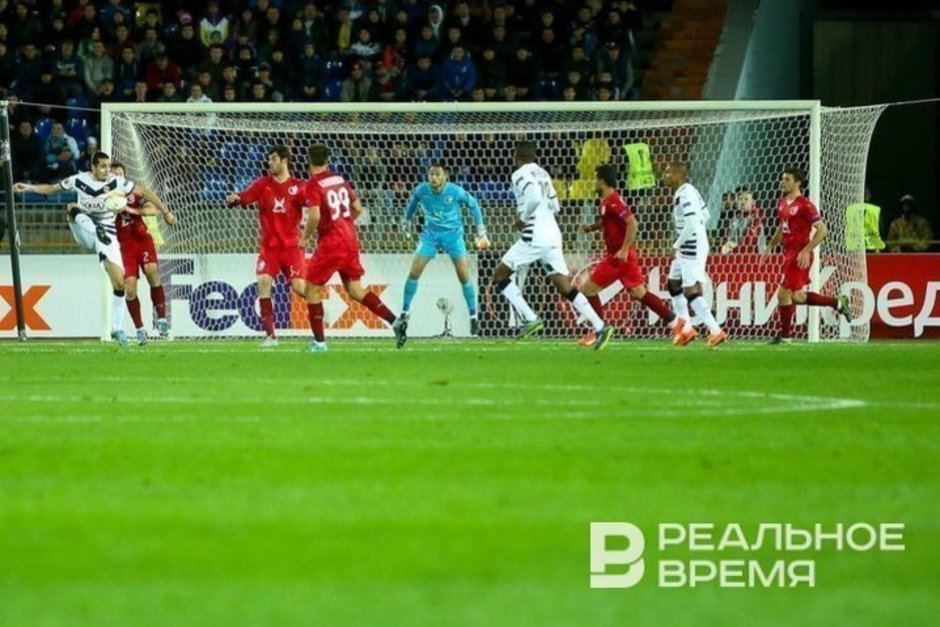
— In the match against Levante, there was an interesting situation. We scored in extra time, and this goal would take Rubin to the next stage. But if the opponent equalized, they would advance, as the away goals rule applied. Therefore, it was important for us not to concede, to keep the ball, and to waste time. And then, a corner at our goal. Ryzhikov caught the ball. Our players are on the field, Bekievich is on the sidelines, everyone is shouting: “Calm down, calm down!” But Sergei saw that I had rushed forward; some energy between us worked, and he threw it with his hand, resulting in a goal pass.
“Ryzhik, thank you for believing in me!”
This was potentially a risky move; if I hadn't gotten that ball, the attack would have gone back to our goal, and almost all of Levante's players were still in Rubin's penalty area. But Ryzhikov believed in me then, and I ran to the goal — and scored. After that, I thanked Sergei, raising my palms up: “Ryzhik, thank you for believing in me!”
Recalling the other matches of that Europa League, of course, it was something special. What teams we faced, real star teams! Atlético Madrid was the reigning Europa League winner at the time, and Chelsea was the next one.
— Everyone remembers the away match against Atlético and that legendary run by Orbáiz at the end...
— You probably remember Vasily Utkin's phrase: “Godín, you will never be Dyadyun.” Then I headed the ball to Eremenko, and Atlético defender Diego Godín couldn't stop him from making an assist to Orbáiz. And the task was to move the play away from Rubin's goal to catch our breath because we were being run ragged.
The Spaniards were in such great form, and playing against them was very difficult. Atlético is a machine-like team, balanced in all lines. They concede very few, and scoring two goals away from home is worth a lot. Especially since we were playing with a man down after Roman Sharonov's red card.
— The matches against Chelsea were also memorable.
— Also a very strong team. I have a story related to the match against Chelsea. We met them at the legendary Stamford Bridge. This was another childhood dream of mine. I started that game, and we played well. In one episode, during a cross into the penalty area, I jumped and received an elbow to the face from London defender David Luiz. The referee ignored the episode, didn't notice, even though my face was bleeding. It was a clear penalty, but, unfortunately, there were no video reviews at that time. Even David Luiz himself didn't deny the foul. After the game, he came to our dressing room, called me out, and apologized for the incident.
— What, in your opinion, was the secret of Rubin's success in those years?
— I think Rubin's success was order. Rubin's victories were the result of the entire club's work. The team is not just eleven men on the field; it's a large number of people at Rubin, from the board of trustees and administration to the base staff. The coaching staff, club personnel, base workers, press service, translators, kitchen cooks, drivers, security — it felt like everyone cared about the common cause.
This is largely the merit of Kurban Bekievich and his assistants, where each was a true fighting unit. Bekievich said: “We, the coaches and administration, are the service staff for the footballers. We serve you, dress you, feed you, train you, so that you go out and show results.” A huge thank you to them for what they did, for the wonderful atmosphere inside the club, where there were no indifferent people! And when you went out on the field, you knew you were playing for a common cause.