Escape to silence: how memoirs of withdrawal from civilization became a main 21st-century nonfiction genre
From Thoreau's “Walden” to Hutchison's “The Cabin”: Why books about life in the forest have transformed into therapy for the reader
The 21st-century urbanite is almost never alone. The computer screen glows even at night, messengers demand an immediate response, work smoothly encroaches on weekends, and the news never ends for a minute. Against this backdrop, books about escaping to the forest, the mountains, or a distant trail have ceased to be a niche “nature literature.” They have become a way to temporarily step out of the system. The reader seeks in them the opportunity to once again feel silence and their own body. Realnoe Vremya's literary critic Ekaterina Petrova tells us what drove writers to move away from civilization and write books about it.
Why we dream of going into the forest again
Researchers from Science Advances link readers' demand for books about withdrawing from civilization to urbanization, rising anxiety, social isolation, and reduced contact with nature. Scientists argue that the modern lifestyle increasingly deprives people of regular experience interacting with the natural environment, while nature itself affects mental state, stress levels, and a sense of life's meaning.
Consequently, memoirs of long hiking trails and voluntary solitude have become almost a form of psychological compensation. Their heroes leave the urban world not because they hate people, but because they are trying to “reassemble themselves.” Even Henry David Thoreau, in “Walden," explained his retreat to the woods not as a romantic longing for the wild, but as a desire “to live deliberately” and “to front only the essential facts of life.”
But the very idea of salvation through nature appeared long before modern memoirs and autofiction. It was shaped by 18th-century European philosophy, above all Jean-Jacques Rousseau. He believed that civilization destroys man's natural freedom, turning his life into competition and dependence on the opinions of others.
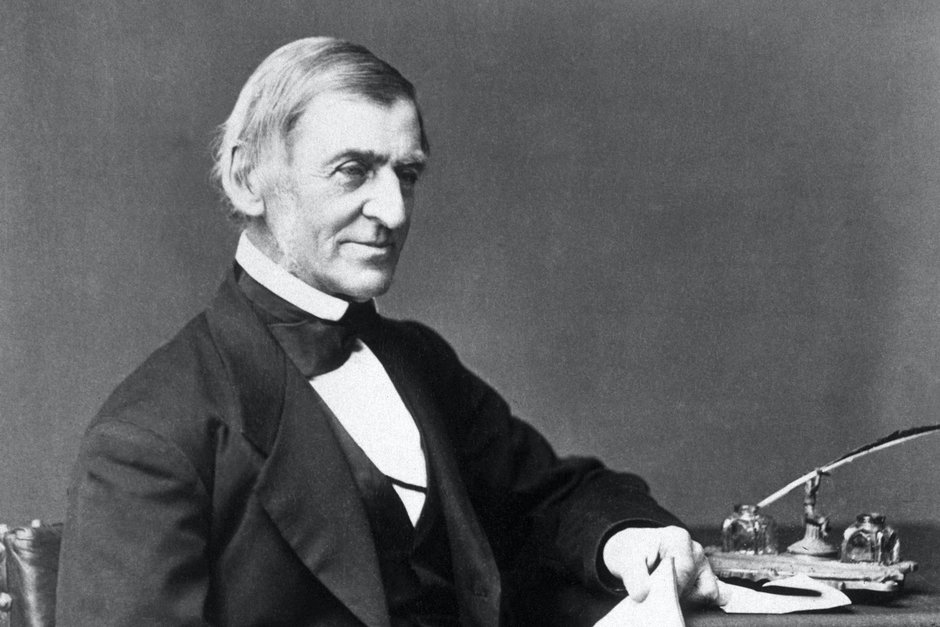
Later, the Romantics transformed this idea into a cultural myth. They contrastedthe rational city with “living” nature — a space of solitude and inner freedom. Romanticism rejected the cult of reason and order, and instead exalted subjective experience and the beauty of wild landscapes. It was then that the forest and mountains became a place for the hero's inner rebirth. The Romantic hero left society in search of authenticity. This gave rise to a new cultural figure — the loner who seeks truth away from the crowd. In the 19th century, this idea definitively merged with the aesthetics of solitude. Solitude began to be perceived not as a punishment, but as a form of freedom and a way to hear one's own voice.
This genre was developed especially strongly in American literature. Several cultural myths coincided there: the frontier, the cult of independence, the belief in the self-made man, and a special attitude toward the wild as a space of moral experience. The American tradition gradually transformed the forest from a threat into a symbol of freedom and spiritual renewal. This line was continued by Ralph Waldo Emerson and Henry David Thoreau. Emerson, in his essay “Self-Reliance” (1841), urged people to abandon conformity and trust their own inner voice. Thoreau took the next step: he turned solitude into a practical experiment. In 1845, he settled at Walden Pond and attempted to prove that a person can live more simply and not depend on society.
Literary scholar Lawrence Buell, in “The Environmental Imagination” (1995), called “Walden” a key text — a book that for the first time made nature a full participant in the narrative, rather than a backdrop for human experiences. From that moment, literature about withdrawing from civilization began to develop as a distinct genre. It combined the philosophical diary, travel notes, confessional memoirs, and cultural criticism. And almost all contemporary books — from Cheryl Strayed's “Wild” to Patrick Hutchison's “The Cabin” — continue, in one way or another, the conversation that Thoreau began at his little house in the woods.
Henry David Thoreau and the birth of the philosophy of simple living

In the summer of 1845, Henry David Thoreau went to Walden Pond near Concord and built a small house there, about three by four and a half meters, on land belonging to Ralph Waldo Emerson. Thoreau lived by the water for two years, two months, and two days, growing vegetables, calculating the cost of boards and nails, walking in the forest, writing, and observing the changing seasons. In “Walden," he itemized the cost of the house ($28.125) and specifically noted that most people do not even know how much their housing actually costs.
Thoreau viewed life at the pond as an experiment. He wanted, in his words, “to live deliberately," so as not to one day discover that he had never truly lived. From this grew his philosophy of simplicity: “Simplify, simplify.” Thoreau removed everything superfluous from his life (debts, possessions, meaningless busyness) and tested how much a person actually needs to exist. He wrote that “the mass of men lead lives of quiet desperation," and that the industrial world turns man into “a tool.”
At the same time, Thoreau did not become a hermit in the literal sense. He regularly went into town, received guests, read classical authors, argued about politics, and even went to jail for refusing to pay a tax to a state that supported slavery. His retreat to the pond was a philosophical protest against industrialization, automatism, and consumerism. Thoreau deliberately slowed down his life: he watched the ice on the pond, recorded the dates of snowmelt, measured the depth of the water, observed animals, and considered such attention to the world more important than chasing money.
If a man does not keep pace with his companions, perhaps it is because he hears a different drummer.
From philosophy to trauma
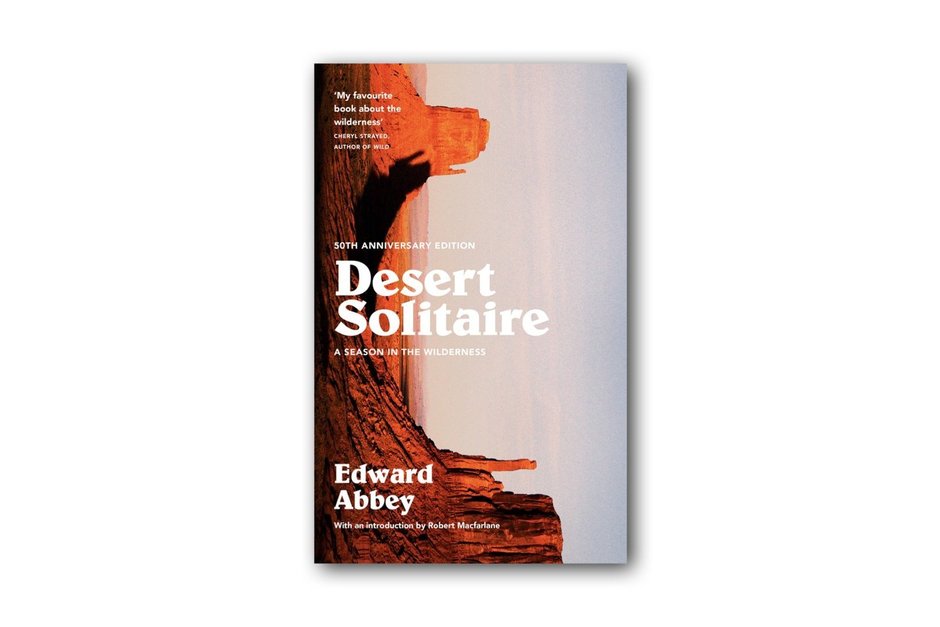
In the mid-20th century, books about withdrawing from civilization ceased to speak only of nature and freedom. Authors began to write about inner fracture. Edward Abbey, in “Desert Solitaire” (1968), still held onto the tradition of Thoreau and the philosophical essay, but already shifted the center of gravity toward personal experience. Abbey lived alone in a trailer among the rocks of Arches National Park, maintained dirt roads, sold entrance tickets to tourists, and simultaneously jotted down notes about the fear and fatigue of urban life.
Abbey did not hide his anger. He called modern culture “the noise, the dirt, the confusion” of the “cultural apparatus” that he wanted to escape in order to confront “the bare bones of existence.” In the book, he described not only canyons and animals, but also a tourist's corpse in the desert, difficult rescue operations, his own contradictions, and his hatred of industrial tourism. He showed even the desert not as a romantic refuge, but as a “harsh, clear, and inhumane” environment. By the end of the century, this tone became dominant for the genre.

This is especially clear in Jon Krakauer's “Into the Wild” (1996). The protagonist, Chris McCandless, was no longer searching for abstract harmony with nature. After university, he cut ties with his family, donated $24,500 to Oxfam, and drove through western states toward Alaska. Chris changed his name to Alexander Supertramp, lived on odd jobs, and consciously rejected possessions and comfort.
McCandless wrote that he wanted to “revolutionize my life and move into a wholly new realm of experience.” Krakauer constantly links this escape to an identity crisis and the conflict between man and society. Unlike the heroes of the 19th century, McCandless was not fleeing toward truth, but away from his own life. Even his final notes read like a medical survival diary: “Extremely weak. Fault of potato seeds.”
This shift was heavily influenced by the counterculture of the 1960s–70s. Abbey openly attacked automobile tourism, urban growth, and the belief in infinite development. He wrote that industrial society is building a “synthetic prison” for itself and gradually isolating man from the earth. In another episode, he lists everything he hates about modern life: meaningless work, advertising, cars, televisions, and “ugly cities.”
Such ideas coincided with the rise of the environmental movement and a fashion for anti-urbanism. Krakauer already described the consequences of this cultural wave. McCandless read Thoreau and Jack London, rejected the middle-class career script, and tried to live with almost no possessions.
“Wild”: How a hike became therapy

After her mother's death, Cheryl Strayed quickly destroyed almost everything her life had been built upon. She lost her main anchor, divorced her husband, began cheating, taking drugs, and, in her words, reached a point where she no longer recognized herself. Her mother died of lung cancer when Strayed was twenty-two.
Nothing could bring my mother back. Nothing could return me to her at the moment she died. It broke me. It tore me apart. It completely crushed me.
Later she would write that the desire to return to the past turned into a “wildness” from which she had to find her own way out. It was at that moment that Strayed bought a guide to the Pacific Crest Trail and decided to hike over a thousand miles alone, to reassemble herself. The hike became almost a ritual for her: she carried a backpack nicknamed “Monster," learned to survive without the usual comforts, and gradually cut herself off from her former life.
I walked and walked until walking became unbearable, until I felt I could not take another step.
On the trail, the social roles of daughter, wife, waitress disappeared. Only the movement forward remained. Strayed connected nature with recovery: civilization allowed her to hide in drugs and casual affairs, while the trail forced her to face fear and pain without intermediaries.
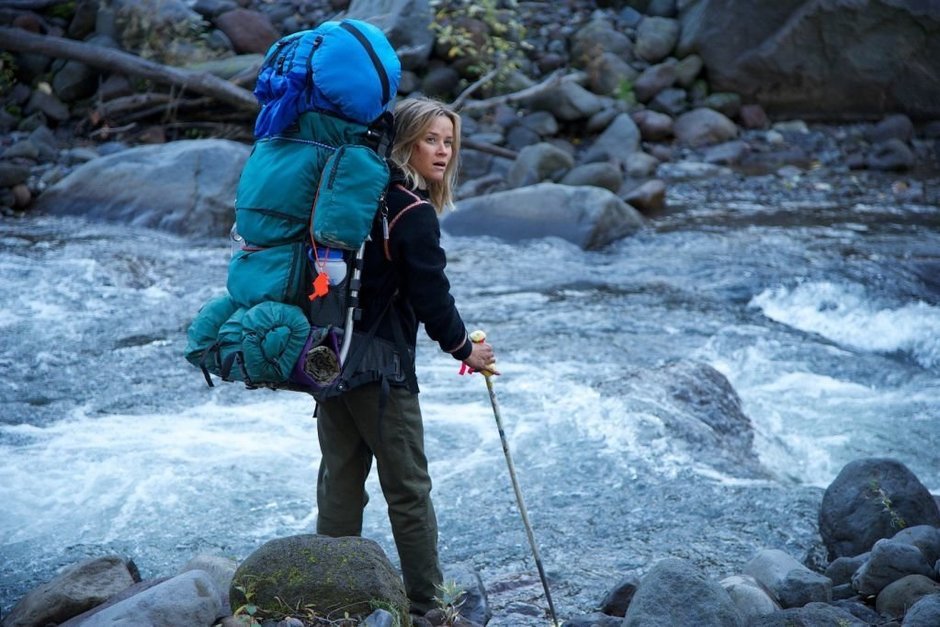
This raw directness made “Wild” a global bestseller. Strayed did not turn suffering into a beautiful legend or play the survivor heroine. She described fatigue, dirt, loneliness, panic thoughts, and feelings of disintegration in detail.
I felt like I was falling apart inside, like the petals of a faded flower in the wind.
Strayed combined physical ordeal with a confessional tone and, in effect, turned hiking into a form of psychotherapy. The female perspective also played an important role: Cheryl wrote about the fear of violence, how society perceives a woman hiking alone, and that men in such stories usually gain the status of freedom seekers, while women gain the status of irresponsible runaways.
After the book's release, interest in the trail Strayed walked and in personal stories of long-distance hikes surged. A huge female readership community formed around “Wild," and the genre itself emerged from the niche of survival literature and became a mass-market story of recovery after personal catastrophe.
“The Salt Path”: Homelessness and exile

Raynor Winn's journey began with the knock of bailiffs at the door. She and her husband Moth lost their home and farm in Wales after a legal dispute, and a few days later doctors diagnosed Moth with corticobasal degeneration, a rare incurable neurodegenerative disease. The couple had only enough money for instant noodles. With such belongings, they set out on a 630-mile trail along the coast of England.
Winn writes that the path then seemed “the best response to the bailiffs' knock.” They carried cheap backpacks, pitched their tent in the rain, slept on beaches and cliffs, and Moth could barely put on his jacket without help in the early days. Gradually, the road transformed despair into rhythm: “each step became a small success that led to the next.” Winn and her husband walked along the sea because their former life had pushed them out. They were not seeking freedom; they were trying to survive without a home, a job, or any certainty about the future. The book constantly holds two lines together: the beauty of the coast and everyday vulnerability. One day the heroes watch seals off the Cornwall coast; the next, they cannot afford a pasty in a harbor village or search for an ATM to withdraw their last money.
The author combined the story of homelessness with a very British theme of dignity. The heroes almost never complain and keep walking, even when a storm washes away their tent and Moth's illness saps his strength. “Keep putting one foot in front of the other” — this is how the jury of the Costa Prize described the book's central message. In this movement, Winn found a form of hope: the path does not solve their problems, but it provides an anchor in life.
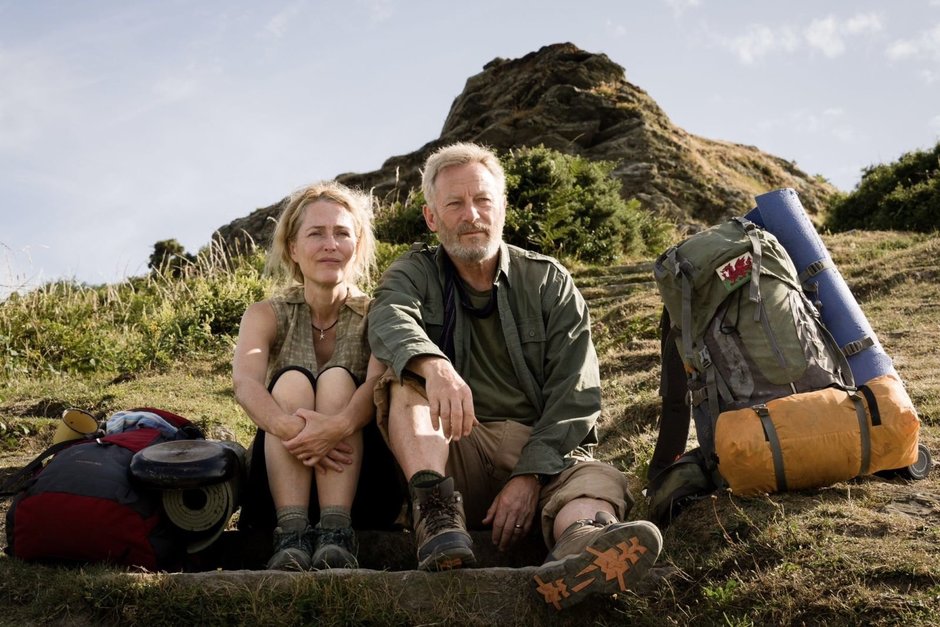
Millions of readers recognized their own fear of sudden loss of home and health in this story. The book sold over two million copies, was adapted into a film starring Gillian Anderson and Jason Isaacs, and the trail itself began to be increasingly called “The Salt Path” after the book's title. After the film's release, local authorities even hoped to bring tourists back to Devon and Cornwall through interest in the trail.
But with popularity came controversy over the veracity of these memoirs. In 2025, The Observer questioned the circumstances of the loss of their home and the severity of Moth's diagnosis. Winn rejected the allegations and stated that she was defending “an honest account” of her life. The scandal quickly spread beyond one book and raised again the question that always haunts confessional literature: where is the line between fact and false memories? For many readers, the answer was simple. Even critics of the book admitted that the story worked primarily as an emotional truth about fear, fatigue, and the attempt to hold onto oneself when one's familiar life has already collapsed.
“In the Forests of Siberia”: A Frenchman on Lake Baikal
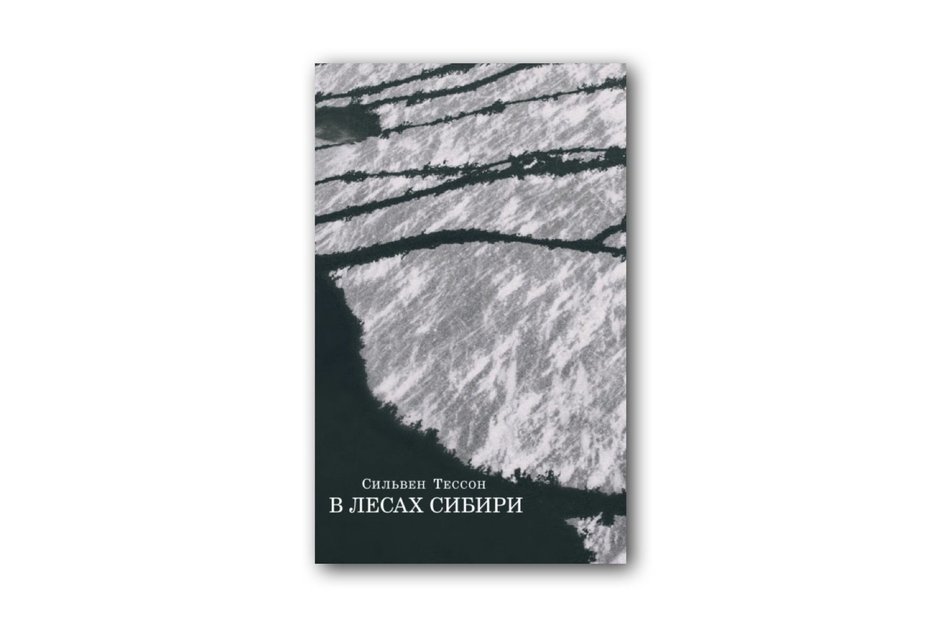
Sylvain Tesson came to Lake Baikal not for a test or a new version of himself. By that time, the Frenchman had already traveled half the world: crossed the Himalayas on foot, traveled on horseback through Central Asia, and gone on expeditions to Pakistan and Afghanistan. He grew up in the family of journalist Philippe Tesson, studied geopolitics, and had long occupied a place in the European tradition of the intellectual travelogue, where the journey becomes a form of reflection.
In his book “In the Forests of Siberia," Tesson described six months of solitude in a cabin on the northwestern shore of Lake Baikal, fifty kilometers from Irkutsk. He settled there in the winter of 2010 with an axe, a fishing rod, boxes of books, and a simple rule of happiness: a window overlooking Baikal, a table next to the window. Tesson hardly explores Siberia as a territory. He describes the narrow circle around the cabin: chopping wood, walking on the ice, fishing, reading Joseph Conrad, Jean-Jacques Rousseau, and Daniel Defoe, recording the amount of vodka consumed, and trying to understand whether he has an inner life.
The American tradition of escape-from-civilization books usually promises human renewal through nature. Tesson has a different task. He does not build a survival system or offer a recipe for freedom. He is interested in contemplation, intellectual solitude, and gradually fading from the general noise.
In Paris, I was never interested in my inner state. I believed that life was not given to register the finest movements of the soul. Here, in total silence, I have the time to feel all the diversity of what is happening inside me.
Even nature he perceives not as therapy, but as a space for silence and rejection of the modern world. Tesson is irritated by hunters' cars, helicopters, loud music, and newspapers, and he calls books his protection. His solitude does not look like suffering. On the contrary, he turns it into a luxury available to a person who has managed to break out of the constant flow of people, news, and conversations.
“The Cabin”: Escape from the office into the woods

Henry David Thoreau went to Walden Pond as a philosopher, Kerouac sought freedom on the road, and Patrick Hutchison comes to the forest after a workday filled with Twitter and corporate newsletters. At the beginning of “The Cabin," he describes a typical office worker's evening: phone in hand and endless switching between social media and television. Hutchison worked as a copywriter in Seattle and felt that he wasn't living, but stagnating.
In 2013, he found a dilapidated cabin without water or electricity for $7,500. The cabin stood in the forests of the Cascade Mountains, on the left side of Hope Road. The floors were warped, the roof leaked, mice and spiders lived inside, and burned-out trailers surrounded it. But it was this place that Hutchison called his refuge. He went there with friends on weekends, built a deck, a toilet, and a stove, learned to work with tools, and gradually changed his own life. Sometimes Hutchison felt that he and the cabin were repairing each other simultaneously.
We just wanted to play with metal and wood, pull the drill trigger, and saw boards.
The book quickly became popular because Hutchison described not a heroic escape from society, but a very recognizable fatigue of the digital age. He didn't know how to build, constantly made mistakes, and threw boards into the forest in anger. While building a new cabin, he and his friends worked sixteen hours a day, argued over crookedly cut beams, hauled concrete through snow, and wrote copy in the evenings to keep from running out of money. Their project kept falling apart: deadlines were missed, and the budget went into the red. But it was this mixture of humor and periodic failures that made “The Cabin” an important book for millennials.
Hutchison writes that they were tired of office dreariness, fluorescent lights, empty conversations, and aimless weekends. In the forest, he seeks not complete disappearance, but a temporary space without algorithms and notifications. He needs the cabin as a place where he can once again feel the tangible result of labor: start a fire, build a staircase, hammer a nail, chop wood. It is these actions that restore a sense of meaning.
This is the main paradox of the genre. Most readers do not actually want to move to the forest, live without a shower, and carry water from the river. But books like “The Cabin” give the feeling that an exit exists. The contemporary reader recognizes their own burnout in these stories: the meaningless stream of emails and messages, the constant information noise, the feeling of fatigue from screens and office routine. And memoirs of escape from civilization have integrated perfectly into the culture of mindfulness and the slow living philosophy.
Ekaterina Petrova — literary critic for the online newspaper Realnoe Vremya, host of the Telegram channel «Булочки с маком».