Sergey Tarasov: “For me, the invitation to Kazan is a new challenge”
The new head coach of the bandy club Ak Bars-Raketa — about his coaching path, an era of change, and team building
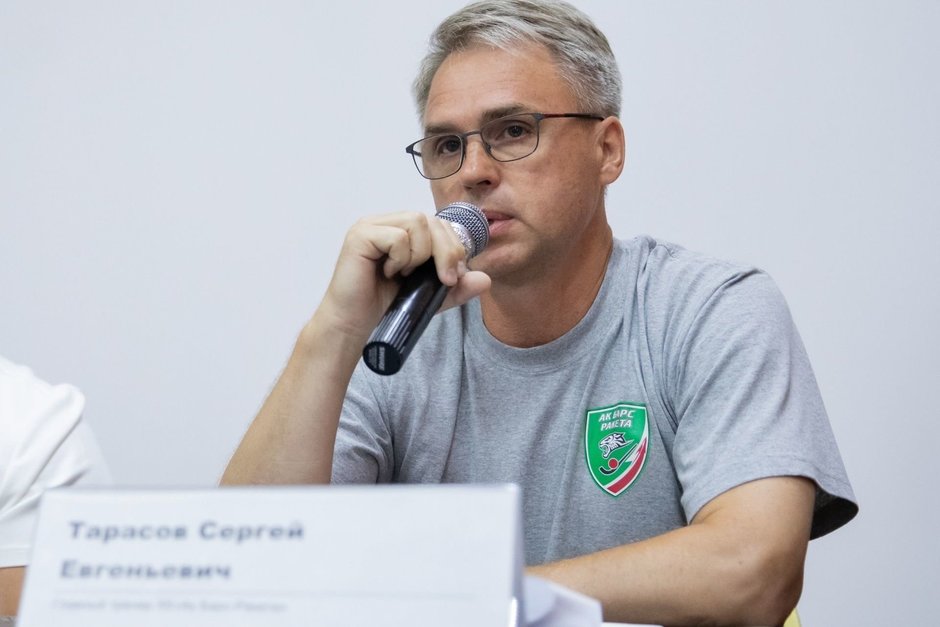
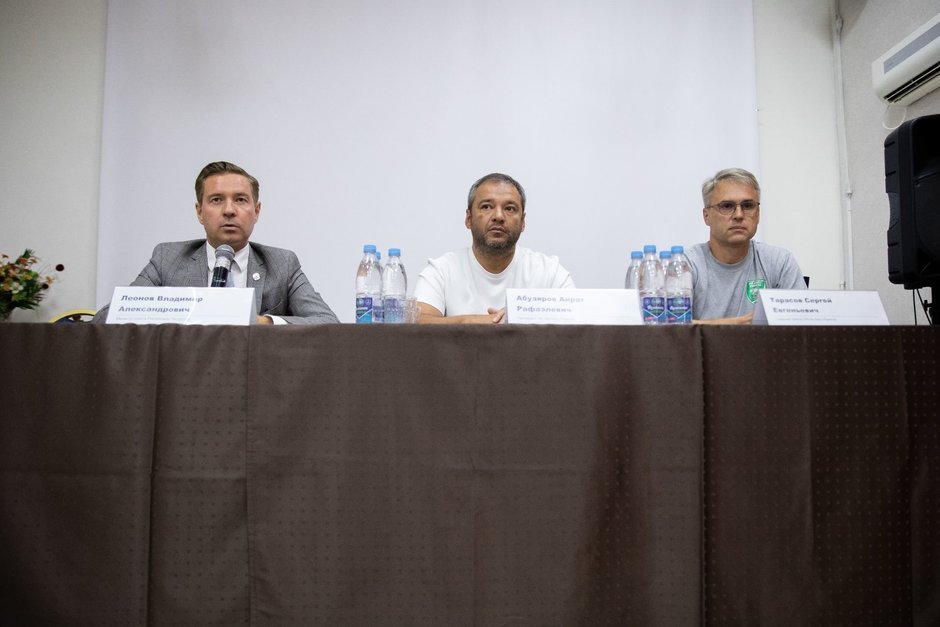
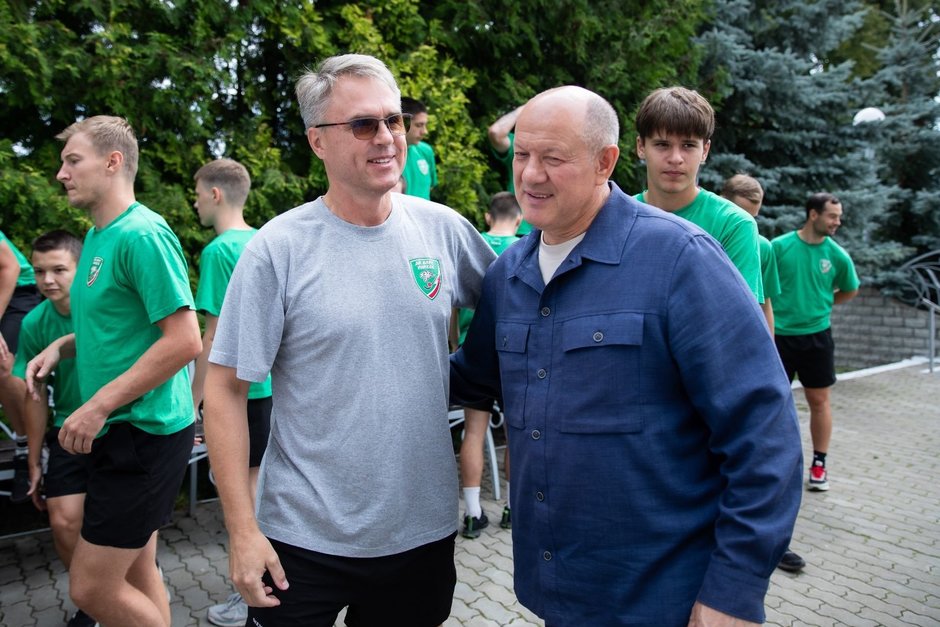
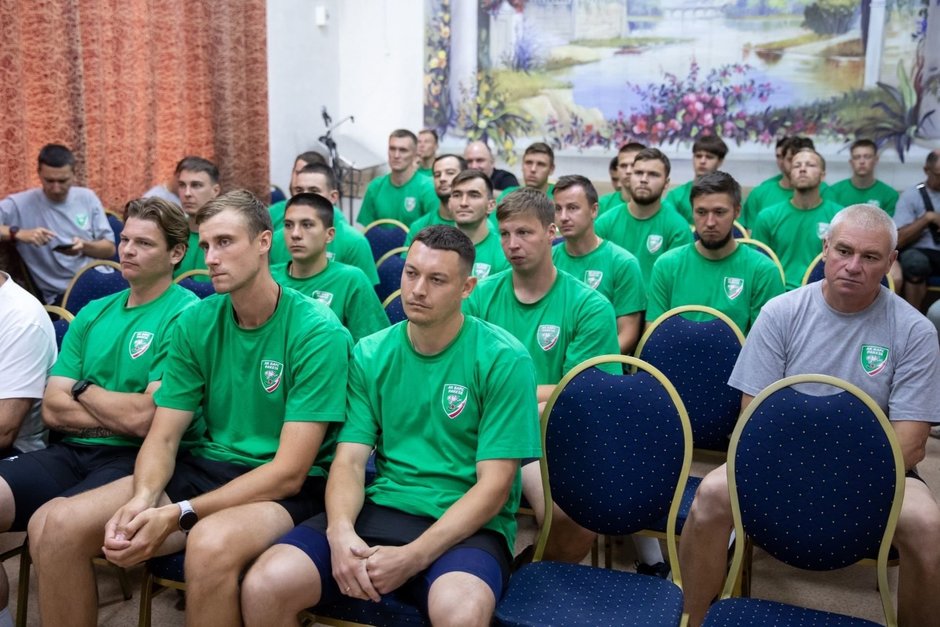
The newly introduced head coach of Kazan's bandy team Ak Bars-Raketa, Sergey Tarasov, accepted the invitation to the city not just as a new position but as a professional challenge. His sporting journey began in the small town of Topki, where the city-forming enterprise supported the local bandy school. In an interview with Realnoe Vremya, Tarasov recalls the Soviet era, his years with the Kazakhstan national team, and the difficult times when sport was kept alive by enthusiasm and sponsor support. Today, he faces a challenging task — to form a competitive roster for the Kazan bandy club amid a delayed transfer campaign and a limited player market.
“In my hometown of Topki, there was a city-forming enterprise that maintained the bandy infrastructure”
— Sergey Evgenievich, you were born in 1973 and managed to play in the USSR championship. Reference books indicate that you scored your first goal in a match against Severonikel from Monchegorsk. Monchegorsk is in the Arctic. Do you remember that match — perhaps you even played under the northern lights?
— My invitation to Kuzbass came in 1989, when, as history later showed, the Soviet Union was already on the brink of collapse, but I managed to play two seasons in the USSR championships. As for the match in Monchegorsk, I don't remember it in detail; after all, so much time has passed. Perhaps at the time it was a vivid event, but it faded from memory over time.
Topki (with the stress on the last syllable), my hometown, is located 30 kilometers from Kemerovo. To some extent, it's a similar settlement to Derbyshki, but here they are part of Kazan, while Topki remains a satellite city. The city-forming enterprise there was a cement plant; earlier there was also a large mechanical plant, but over time almost nothing remains of it. The population is about 35,000 people, and the social infrastructure was maintained on its balance sheet, including our bandy school called Tsementnik. Two coaches worked very successfully within its structure, including my mentor Gennady Ivanovich Shchukin.
Among their graduates are Alexey Myasoyedov (he played in Kazan in the 2000s — author's note), Ruslan Tremaskin, who still plays today. All of this still functions, although the condition of the school and the stadium, to put it mildly, is poor, and much of it is held together by the enthusiasm of coach Sergey Andreevich Khlystov. There is a stadium with natural grass, where football is played in summer, and in winter the ice is flooded — time for bandy. Therefore, we produced not only bandy players but also Kuzbass footballer Sergey Rogalevsky.
“Ice hockey was not popular in our region. That's the south of Kuzbass — Novokuznetsk, Prokopyevsk”
— Being 30 km from a city where bandy with a top-league team and football with a first-league team both flourished — both called Kuzbass — weren't you drawn to the more popular football, with the great striker Vitaly Razdaev and the fame of the only team that beat Spartak twice in the first league in the 1977 season?
— For me, bandy was more promising, especially since football specifically developed at another stadium, Lokomotiv, while at Tsementnik, football was a discipline that helped develop certain qualities in bandy players. Anticipating your question about ice hockey, I'll explain that for the Kemerovo region, these sports developed more in the southern part — Novokuznetsk, Prokopyevsk, whose teams rose to the first league level. As for Topki, and even Kemerovo, we essentially had no ice hockey at a proper level. In Topki, not at all, and in Kemerovo, not at a high level. As for bandy, in Soviet times, our region had about six teams representing different youth schools, and only when transitioning to another level — the national junior championship — the best players from these schools were combined into one team under the auspices of the Kuzbass senior team. We, by the way, played with Sergey Gubarev (who also played in Kazan) through 1973, and then we moved together to Kuzbass.
Regarding Kemerovo, I think my compatriots divided their loyalties between both sports until the football team Kuzbass fell apart. By the way, despite the same name, they were supported by two different structures. Bandy was helped by a coal industry enterprise, and football by the Kemerovo Azot plant — a chemical industry enterprise.
— In the first Kuzbass squad you joined at 17, future “rocketmen” Vladislav Nuzhny and Sergey Naumov were already playing, as well as Sergey Myaus, Valery Privalov, Nikolay Usoltsev — people of a considerable age for hockey, and a young lad from a settlement joined them. How did the veterans receive you?
— For the veterans, when fresh blood appears in the team, it's important that he shows a desire to play hockey. And we had that desire; we had plenty of ambition, plus we were quite well-prepared for newcomers. And I can thank Nikolay Usoltsev, who, being a forward, shared his experience of playing our position with me, as well as Valery Privalov. Moreover, they differed in character, as if Usoltsev could be called a good cop, and Privalov...
— A bad cop?
— Yes, one motivated by pushing you, while the other advised and supported. The other veterans — Sergey Myaus, Valery Tarakanov — were also quite positive towards the newcomers, seeing that we had a desire to prove ourselves.
“We had a player-coach, Sergey Likhachev”
— Who was the head coach at the time of your debut?
— We had a player-coach, Sergey Likhachev, a fairly rare situation in Soviet sports.
— Well, you certainly didn't need demanding veterans when Likhachev alone would have sufficed, especially with his coaching authority.
— It's understandable that, being young players, we still had a respectful attitude towards Likhachev, but in communication between the veterans, who had recently played with him on equal terms, the conversation was freer. Still, the necessary subordination was maintained in communication with Sergey Evgenievich (we share the same first name and patronymic). But you have to understand that he had high demands on his own game in order to be able to demand from his players as well. Then we must remember that the country collapsed, the opportunity arose to go play in Scandinavia, and the roster changed very quickly, as veterans left to finish their careers, and young players took their places.
“Playing for the Kazakhstan national team, I fulfilled my desire to play in the World Championship”
— By taking over the Kazan team, you reunited here with a teammate from the Kazakhstan national team — its former goalkeeper Alexander Kosynchuk. Together you won bronze at the 2005 World Championship, which was held in Kazan. How did you end up on the Kazakhstan national team?
— Since I didn't manage to secure a place in the main Russian national team, where I was called up, I responded to Alexander Ionkin's offer. Thus, I fulfilled my desire to play in the World Championship, where we initially lost to Finland in the bronze medal match, but in Kazan we managed to beat them and take third place. We approached the Kazan World Championship with a roster that had been forming for several years, was well-coordinated, and it turned out that we managed to win the decisive match for us.
Regarding organizational matters, I'll say that we gathered already at the World Championship venue, played it, and then dispersed to our respective clubs. We didn't have trips to Kazakhstan for training camps, except for occasional friendlies.
— How could you not have been to Medeo?
— We did play at Medeo; don't forget that I witnessed the USSR championship, in which Dynamo Alma-Ata successfully competed. Later, we had the opportunity to play the first stage of the USSR Cup there, which was always held at Medeo, because it took place in mid-autumn, when nowhere else in the country could play bandy because there was no ice anywhere. Only Medeo and the indoor Olympic Stadium, which appeared in Moscow, and at first playing there was simply magnificent. There, too, we got the opportunity not to depend on the whims of the weather, to demonstrate more dynamic hockey. Playing on an open rink is good because it has its own atmosphere, until snow or gusts of wind start to interfere. On the other hand, I remember how we came to training as children, and the snow-clearing machine broke down — we took scrapers, cleared the ice, warmed up, so to speak, and trained with pleasure.
But progress moves forward, and we must understand that the future of bandy lies in indoor rinks.
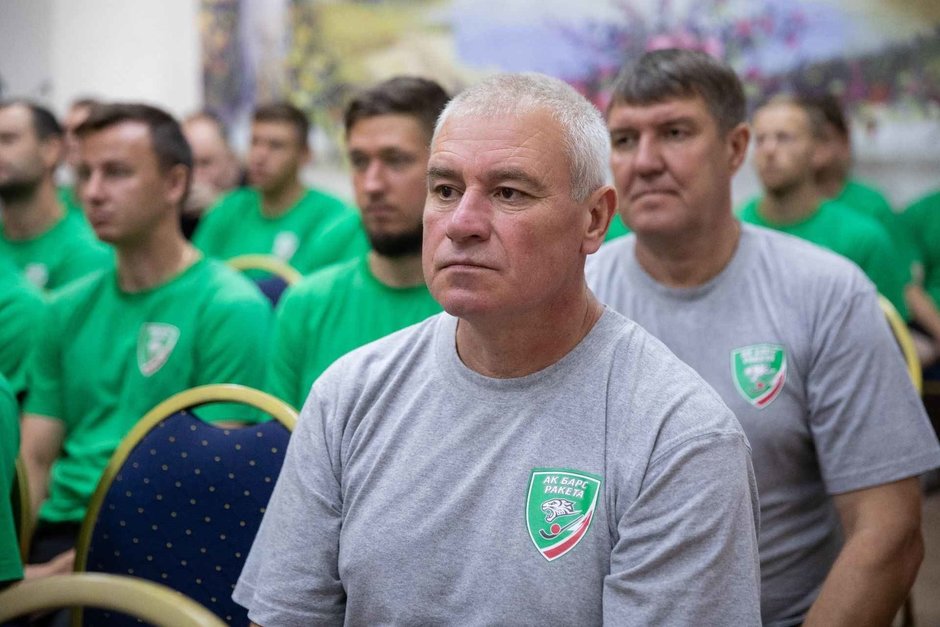
“Coming to Kazan, we played at both Raketa and Zvezda”
— Having come to Kazan for a longer period than just 1–2 matches, you could have seen our city.
— For us, little changed compared to our visits during the national championship, because the main time was taken up by the games themselves, recovery after them, coaches' analysis of matches, and preparation for the next game. Therefore, we didn't form additional impressions of the city, which we visited at different times, both at Raketa and Zvezda, the stadium of the now-defunct artillery school.
— Your son, also a hockey player, was born in 1993, when you were only 20. Had you already settled in Kemerovo by then, or did you continue to live in Topki?
— In Kemerovo. I had been living there since 1989, when I joined the Kemerovo region youth team. At that time, I was offered to enter the local mechanical-technological technical school after the eighth grade. This allowed me to move into a local dormitory. After moving to the Kuzbass senior team, I got the opportunity to live at the team base, where adult players were gathered the day before the next home match. I was given a room there and moved to the base. After graduating from the technical school, I received a working profession as a mechanical technician for repairing food industry equipment. Moreover, we did internships at such enterprises, and at the time I really enjoyed practicing at a confectionery factory. I visited a local special workshop that produced candies that for some reason did not appear in free trade. I have never tasted more delicious candies. Unforgettable sensations. At the same factory, I saw chocolate right in barrels, which could be taken in chunks and eaten on the spot. Taking it out, of course, was not allowed.
“Transfer work began with a great delay”
— Was there any temptation to go work at such an enterprise when the country collapsed and the economy introduced us to terms like inflation and barter?
— No, somehow we managed to survive the most difficult times, although during one offseason, my teammates and I mixed concrete at some enterprise, because the coaches had arranged for us to be paid for that work. We must give them credit that the coaches of those years managed to build relationships with sponsors who could support bandy, and they found funds to maintain the team. And this helped to build a team with visiting players, joining them with local youth, thereby elevating the team to the level of the strongest in the country.
— In Soviet times, many children had a board game — a board with holes into which you had to roll balls. It featured the teams Vodnik and Vympel. I wonder why these names?
— I understand your question, because I've seen that game. Indeed, why Vodnik from Arkhangelsk and, at that time, Vympel from Kaliningrad, now renamed Korolev? Apparently, the developer of this game was looking for neutral team names, so as not to have Dynamo, for example, or a long name. Thus, they immortalized these teams in the memory of Soviet schoolchildren and popularized bandy itself.
— What attracted you to the move to Kazan, and how do you assess the current roster?
— For me, the invitation is a new professional challenge, and I took it exclusively positively. As for the roster, the situation is difficult. After the end of the previous championship, the club faced serious financial difficulties. I am grateful to the leadership of the Republic of Tatarstan that the problems were quickly resolved, but the transfer work began with a great delay. The market was practically empty: many players had already decided on new teams. We had to negotiate with those players who remained free. It is too early to assess the current team — we are in negotiations with several more players. As soon as the team is fully staffed, we will draw the first conclusions about the selection.