“Roboticization hindered by fear, not money” — what stops Russian factories from adopting new tech
How to overcome internal resistance to change, discussed by the CEO of Proteiros
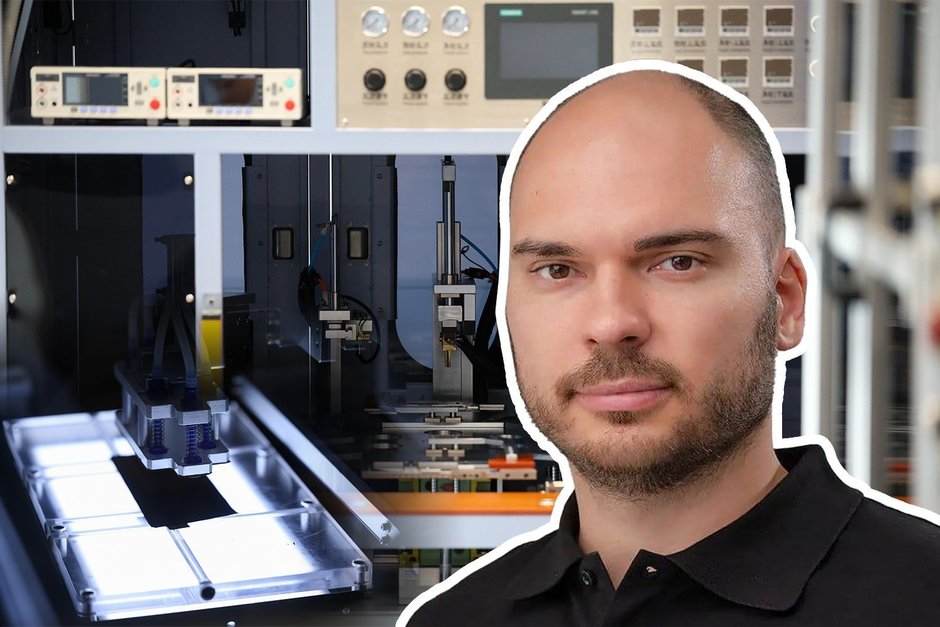
In March, a study was published based on interviews with leaders of 23 corporations from various industries. Many unexpected findings emerged. For instance, the main barrier to implementing new technologies is not money at all. We spoke with Arseny Grushelevsky, CEO of Proteiros, about what this means for industry.
— Arseny, the RBC study shows the main barrier is internal resistance to change. Do you encounter this?
— Constantly. You go to a factory, you see a section where people are doing heavy, monotonous manual labor. You suggest looking into whether it could be automated, and you hear: “This is how we've always done it," “What if it doesn't work?”, “What if people don't accept it?” And it's not just the workers. Managers also resist — they fear their area of responsibility will shrink, they fear taking responsibility for implementation because if something doesn't work, it could affect their career.
Importantly, the study confirms that money isn't the main issue. “Lack of funding” is at the bottom of the list of barriers. So the problem isn't the budget; it's the resolve. People are simply afraid to start.
— What about other barriers on the list, like high cost, complexity of technology selection, and uncertainty of return on investment?
— They don't surprise me. But I see them not as “objective obstacles” but as symptoms of the same disease — a lack of information. Businesses simply don't know: what will it actually cost, which technology is right for their task, will the investment pay off? And faced with this uncertainty, they decide not to get involved.
However, if you look closely, these fears are often exaggerated. In our practice, there are examples where automating a specific “bottleneck” turned out to be cheaper than initially estimated and paid off faster than expected.
A characteristic case is a machine-building enterprise where quality control of parts was performed manually using calipers and micrometers. The inspectors physically couldn't check the entire flow, so some defective products reached customers, leading to complaints and fines.
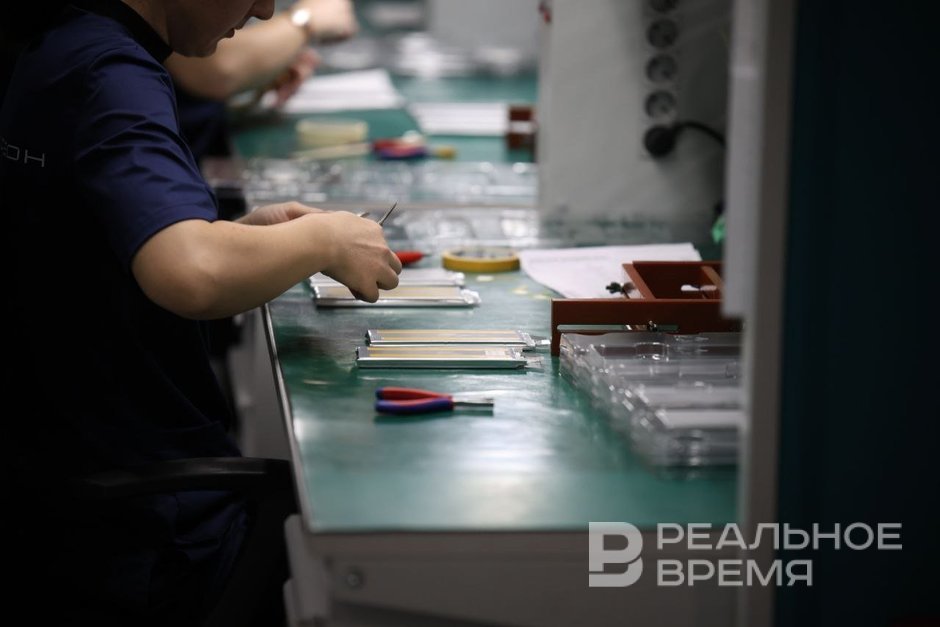
The owner hesitated for a long time, convinced that a machine vision system with automatic measurement would be astronomically expensive and require complex integration, shutting down the workshop for months. In reality, we integrated a compact module with cameras and a laser scanner directly into the existing production cell in three weeks, without stopping the main process. The cost was comparable to the annual salary of two inspectors. Within six months, the number of complaints decreased by 78%, and the freed-up employees moved to more skilled operations. The investment paid back in 11 months — almost twice as fast as originally forecast.
— The study also shows that incentives for investment are offensive — companies want to take a leadership position; they are spurred on by competition. Does this align with your observations?
— Yes, and that's an important signal. People invest in technology not because they are forced to, but because they want to be first. The technological leader achieves lower production costs, stable quality, and the ability to respond quickly. In a contracting market, this becomes a critical advantage.
One of our clients, a manufacturer of furniture components, came with a request: “I don't want to catch up to my competitors — I want them to be catching up to me in two years.” He understood he needed new approaches but didn't know where to start. The audit revealed that the equipment was modern, but the flow between operations depended on people and spreadsheets. Workpieces were moved manually, changeover took 40-50 minutes, and the scheduler was constantly putting out fires. The problem wasn't the machines; it was the flow organization. We took a phased approach: automated inter-operational logistics integrated with an MES (Manufacturing Execution System), implemented quick changeover on key machines, and introduced automatic load planning. Within 10 months, order lead time decreased from 18 to 6 days, changeover time dropped to 8 minutes, and production costs fell by 19%. The main commercial result: the client gained entry into federal retail chains (which was previously impossible due to lead times) and increased revenue by 40% in one year without expanding staff. Automation became not a cost item, but a tool for market capture.
— What risks do respondents find most alarming? I mean dependence on foreign equipment and technological obsolescence.
— This is particularly relevant for industry. When a familiar piece of machinery becomes unavailable, and the alternative involves months of waiting and unpredictable prices, many start looking for local solutions. The key question then is: how to avoid making a mistake in your choice? How to know that your investment won't be worthless in two years?
Our approach is to start with a diagnostic audit. It provides answers: what exactly needs to be automated, how it will fit into the existing line, its lifespan, and its payback period. Without this, any discussion of risks remains abstract.
— What advice would you give to companies that want to start but are afraid?
— The RBC study confirms what we see in practice: the main barrier is not money, but fear of change. So my advice is — don't try to automate everything at once. Choose one area — the most problematic, where there's the most manual labor or the highest defect rate. Bring in engineers, conduct a diagnostic. Get the numbers. Then decide. Often, the investment isn't that large, and the payback is faster than expected.

— Thank you for the interview.