Shurale as a rebellious teenager
Premiere at Ekiyat: Ilgiz Zainiev looks at the mythological hero as a father
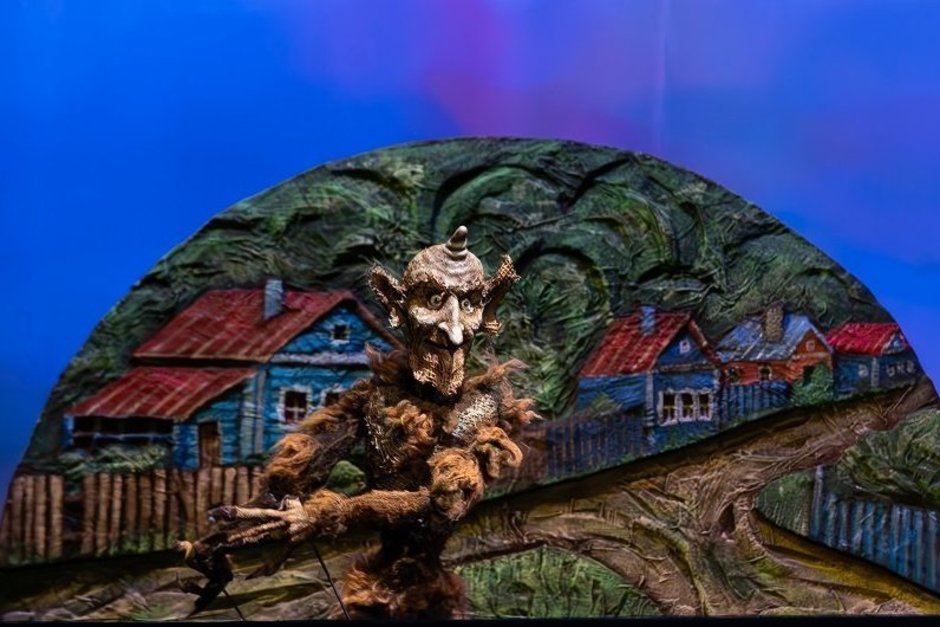
Last week in Kazan was “Shurale” week — the main Tatar mythological hero was featured in cinema, opera, and puppet theater. For Ilgiz Zainiev, this production is his fourth this season, following “Su Anasy” (Water Mother), “The Old Man from the Village of Aldermesh," and “The Lover.” What a range of genres! Realnoe Vremya reports on the details of the premiere of “Shurale” at the Ekiyat Puppet Theater.
A hero open to interpretation
The Ekiyat Puppet Theater began its season with a fairy tale based on Tukay, presenting “Su Anasy” (Water Mother) (5+). It's important to recall that Ilgiz Zainiev was the one who initiated the effort to protect mythological characters from “patent trolls” when National Toys LLC, which had trademarked Shurale, Su Anasy, and Kamyr Batyr, sent a pre-trial claim to Ekiyat. Zainiev, as a deputy, spoke about this at a meeting of the Tatarstan State Council's Committee on Education, Culture, Science, and National Issues. Eventually, after a series of legal actions, the characters were “freed," and the Minister of Culture of Tatarstan, Irada Ayupova, held a Shurale toy while speaking at the Federation Council.
Zainiev had previously staged an experimental version of “Shurale” titled “Shurale: A New Fantasy," based on Farid Yarullin's ballet, which he combined with puppet action.
The new production is much more traditional. However, like with “Water Mother," Zainiev's adaptation provides the forest spirit with a more detailed background and family. This makes sense: although Tukay's poem is a classic, it doesn't have much action; a significant part of the text is essentially a lyrical digression, and all the events fit into a few dozen lines.
The performance begins with scenes of a village — artist Ekaterina Spiridonova made the house drawings three-dimensional, and in the foreground placed an equally beautiful piece of decorative art symbolizing the dark forest. Her characters also turned out lively, especially compared to the rather flat characters in “Water Mother.”
The performance features lively music based on piano passages — Iljas Kamalov is responsible for this. It's heartening that the head of the Composers' Union of Tatarstan finds time for creativity. The lyrics for the songs were traditionally written by Rezeda Gubaeva; they are openly pop-oriented, contemporary, one might say.
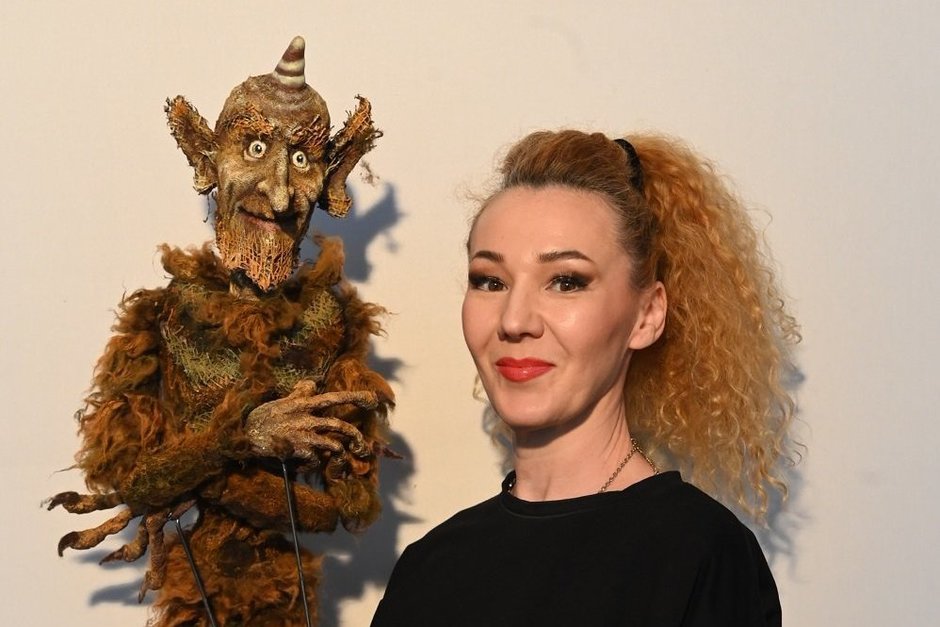
— This is not a simple character. Shurale is a mythical figure, so while creating the image, I tried to find Shurale's specific voice, speech characteristics, howling, characteristic movements, and plasticity, — noted Albina Shagalieva in pre-premiere promotion.
Only us and the horse
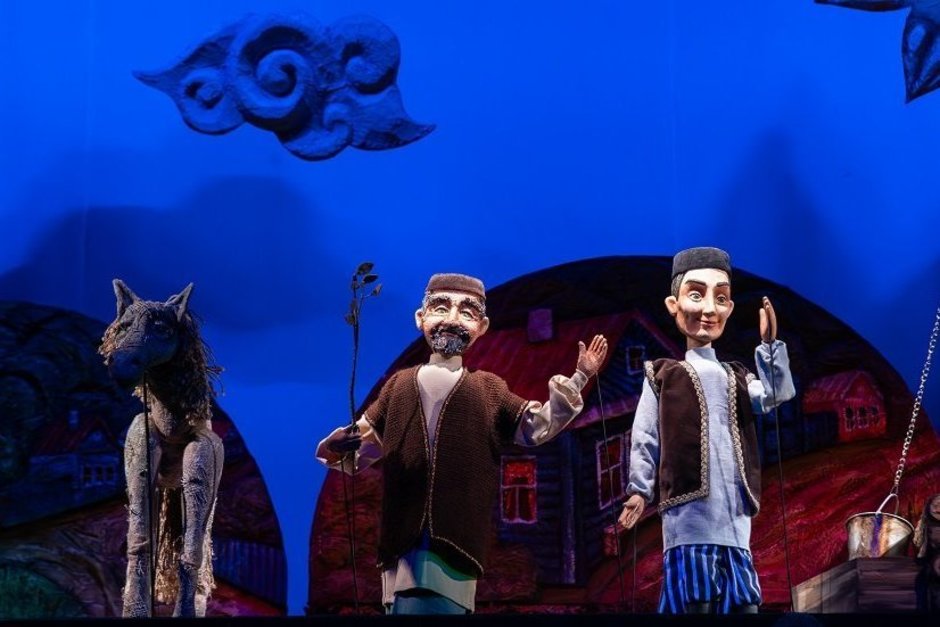
So, a Dzhigit (spelled exactly as Җегет, a glove puppet operated by Niyaz Sadykov) arrives in the village from distant lands after working away. He is a so-called “zimagur," a seasonal worker. As in any other Zainiev fairy tale at Ekiyat, a cat roams around the village, as does a talking Horse (Yuri Chukitev), who at one point steals the show from the main character. We readily accept that any creature can talk in a fairy tale. The Horse is clearly a relative, if not a friend, of Shrek's Donkey — overly mobile and talkative.
It turns out that the village is being terrorized by Shurale (Albina Shagalieva), who rides horses, by the way. This is confirmed by Babai (Rishat Gizdatullin / Mars Gaifullin), who has brought a herd of sheep to the village. The fussy animals add dynamics to the action, and Babai reports that there are several Shurales living in the forest.
A singing girl, Zaituna (Yazilya Sattarova / Lyaysan Minnahmetova), also suggests going into the forest. All that remains is to convince the Horse (“Goodbye, village!”).
And so they reach the forest. Here, the sheep are replaced by well-read hedgehogs, who chorus-quote “Par At” (A Pair of Horses) and “Kitmibez” (We Will Not Leave), bringing particular joy to the journalists.
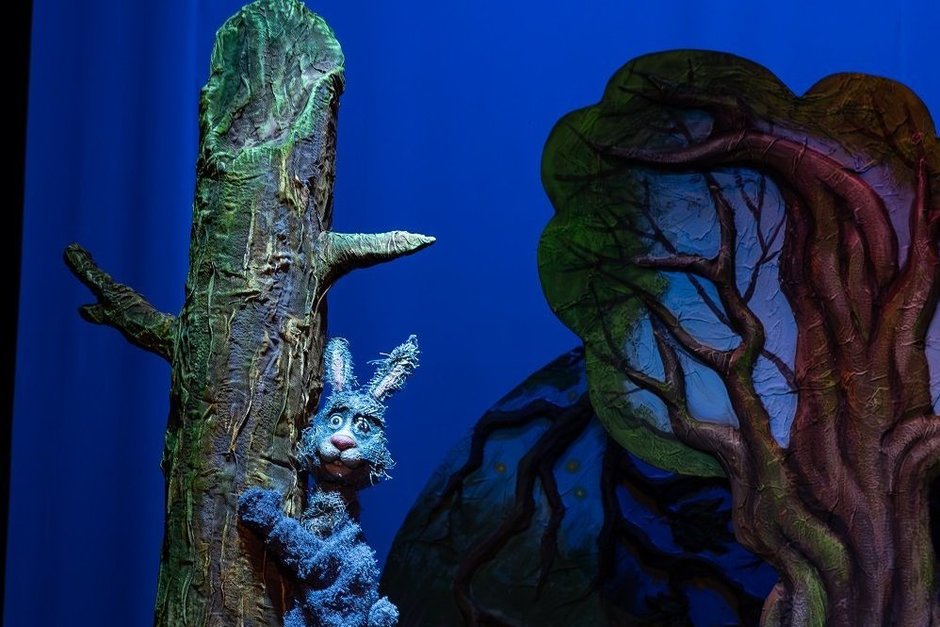
The piano speeds up — a hare (Fanzilya Sabirova / Ruzilya Nurieva) is running; mushrooms fly to the side (Zainiev always manages to pull off such special effects well). How to calm down Shurale, with his burning eyes? Of course, read him “The Child and the Butterfly.” “Whenever I hear Tukay, my heart stops," says Shurale.
This forest spirit is a teenager. A bully. He likes to catch various creatures and tickle them, which is symbolized by a forest of hands.
Who can discipline such a one? Only adults. For example, a slightly scruffy but stern Bear (Mars Gaifullin / Milyausha Faizrakhmanova), who is the same age as Shurale's father, engages him in battle — here the director uses the cinematic technique of slow motion.
Listen to your elders
It turns out that Shurale can not only tickle with his fingers but also heal. Proof of this is the activity of the “righteous” Shurale-father (again Yuri Chukitev) and Shurale-mother (Gulnur Gabdrakhmanova / Ramziya Faizullina). At the same time, the father disciplines his son not only with words but also with beatings, while the mother is always ready to protect him. In short, even though the family is fairy-tale, it is quite realistic. Some might find the behavior of the elders in this production too harsh, but that's the nature of mythical heroes...
Thus, the incident where the youth gets his finger pinched in a log becomes a lesson for the younger Shurale. The elders are in no hurry to free him until he fully realizes his mistakes.
As a happy ending, the village celebrates Sabantuy, though not everyone participates; the villagers come out to wrestle, run, and jump — apparently not believing that Shurale has gone for good.
— Previously, we organized Sabantuy ourselves; we went on stage, wrestled, danced, sang, — Chukitev recalled of previous productions.
But everything ends well, and the children learn the moral — it's bad to be a bully; there is always someone stronger. We should add that you can get acquainted with other interpretations of this fairy-tale character in the foyer, at the exhibition “The Magical World of Shurale.”