Three floors, 68 workshops, great growth potential
Center of unique mastery opens in Kazan
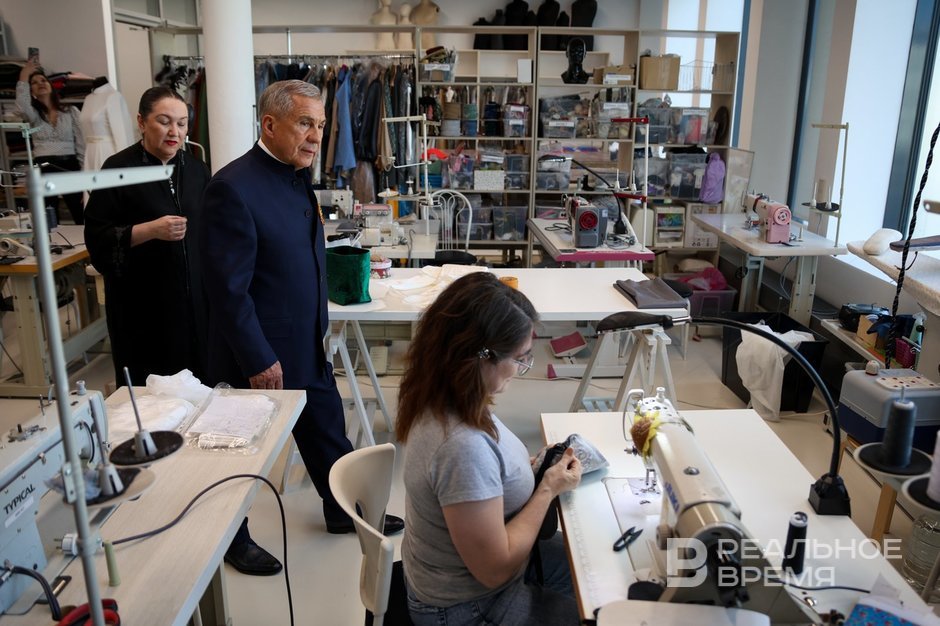
The Central Universal Store (TSUM) has reopened in Kazan, now as the Center of Unique Mastery: three floors, 68 workshops, and government organizations. As with the National Library and the Kamal Theater, the opening does not yet mean the Center is operating at full capacity — fine-tuning is underway, and residents note that contracts with them have not yet been signed. But one hopes that, like other large-scale projects in recent years, the new TSUM will become a true “third place.” Realnoe Vremya reports on what will make the center attractive to residents of Tatarstan.
How Soviet modernism became a bastion of Folk Arts
Rais of Tatarstan Rustam Minnikhanov announced the idea of turning TSUM into a center for artisans in 2023. The department store, opened in 1977, closed in 2022. 5.3 billion rubles were invested in the new project. Minnikhanov had already toured it in early spring; the opening was planned for April 26, but builders were given a three-day grace period.
The venue is managed by the Autonomous Non-profit Organization “Center for the Development of Creative Industries of the Republic of Tatarstan.” Its Director General is Ranko Tepavčević, who previously represented the Autonomous Non-profit Organization “Directorate for Sports and Social Projects” and worked on the Universiade, WorldSkills, the FIFA World Cup, and the BRICS Summit, but nothing related to folk arts and crafts.
Fans of Soviet modernism can rest easy — aside from light ethnic touches, the ribbed facade of TSUM remains an example of Soviet modernism. Meanwhile, part of the territory still resembles a construction site. The convention and office center is still being finished; it is scheduled to open in mid-May. However, the entrance from Moskovskaya Street is already open, and the parking lot is full of cars.
Access to TSUM was granted at three in the afternoon, following a visit by Minnikhanov and other honorary guests, who were greeted with a theatrical prologue, “City of Masters," and a performance by the children's Tatar theater studio “Apush.”
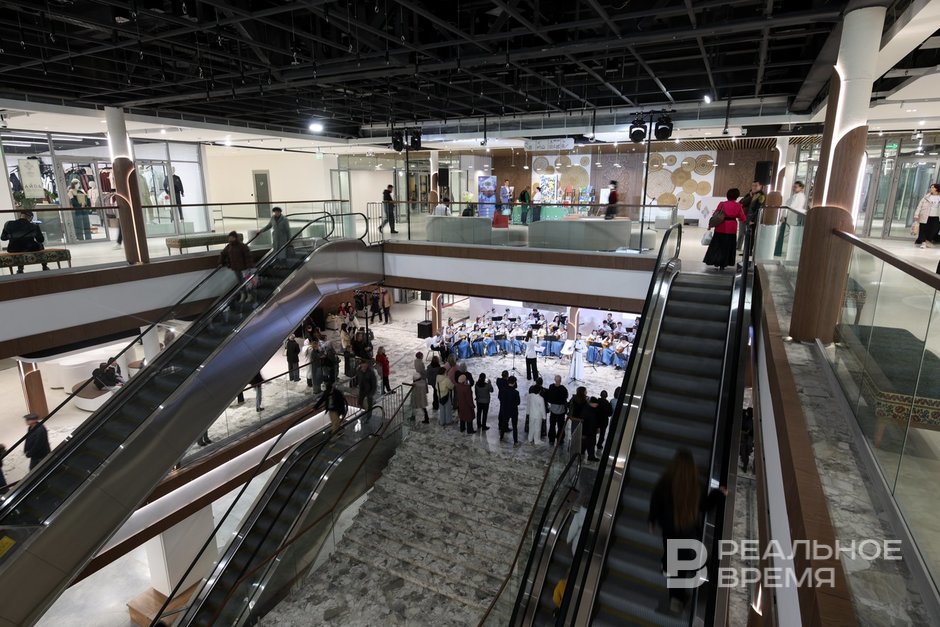
There is no crowd yet — the public is actively gathering near the escalator, where the celebration program is taking place: students from the Institute of Culture singing, a children's orchestra of folk instruments playing, and poetry being recited.
Eat, dress up, play
A large restaurant occupies a significant area on the first floor, featuring an eye-catching chandelier in the shape of an inverted bowl and walls decorated with traditional window frames. Journalists were treated to pancakes, and the restaurant promised to open on May 9.
Yet not all of TSUM is so lavishly decorated; it mainly consists of glass boxes, where the decor depends on the imagination of the residents. And their imagination varies — some places look like boring offices, while others are so colorful that you immediately want to enter. For example, to see the clothing of the brand Luci, the souvenirs of Bikamatur, or to appreciate how elegantly Diana Safarova's “Sakhtian” invites you to try on ichigi (traditional embroidered boots) for 75,000 rubles, named after the master “Aigul.”
It is worth recalling that initially the center was discussed as a single large space; here each box has its own number and doors. Almost all residents immediately begin unscrewing the door closers to be open to visitors.
Not everything is open, but it is functioning — so, for example, one can be surprised to find an empty cinema hall showing a tribute concert to Ilham Shakirov. There is also a children's play area, but children cannot yet be left there in the care of attendants.
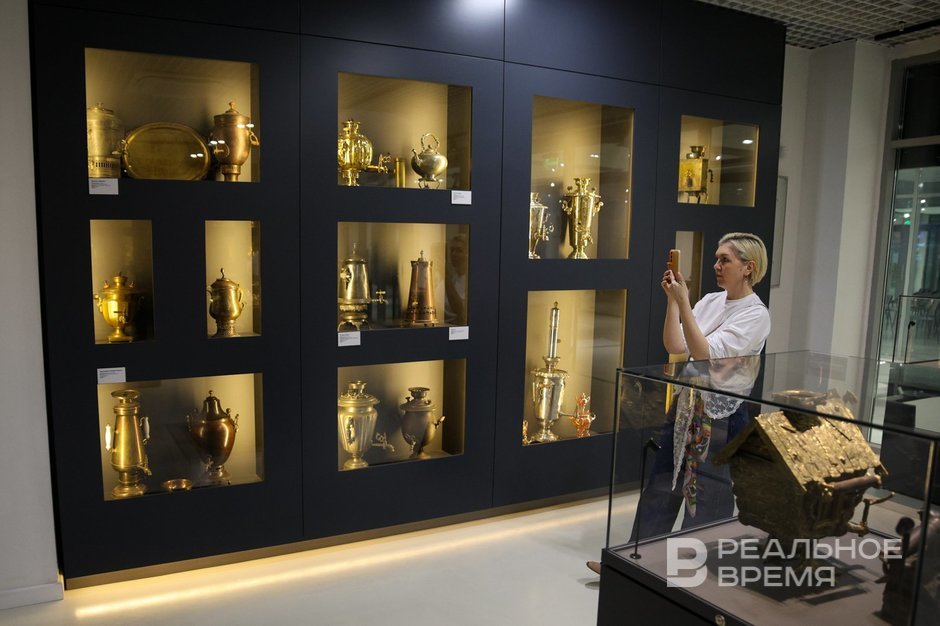
Not everything in TSUM is workshops and shops. An exhibition of paintings by Anvar Sayfutdinov and Guzel Khaibullova is also on display. Of particular interest is the collection of samovars (and not only) of Rustem Akhmedzyanov. Between conversations with guests, he manages to say that he lives nearby, has not exhibited everything, and plans to sell the excess from his collection of 600 samovars.
From nine to nine
TSUM features 18 directions — potters, ceramists, jewelers, and so on. Almost all the boxes are arranged similarly: a showroom, then small storage compartments, and then a hall where some place sewing machines and others intend to hold events. For instance, musical instrument maker Fanil Vildanov says they plan to teach hang drum playing and show films.
Conducting various activities is a requirement of the landlord; moreover, residents are exempt from rent for three years. Additionally, the workshop doors must be open from nine in the morning until nine in the evening, so some artisans hire administrators. Some intend to be at the site themselves — naturally, who better than the owner to tell and sell the product? However, some residents find it difficult to give exact details about the terms of cooperation — they moved into TSUM two days ago, and contracts with them have not yet been signed.
Sometimes the workshops are grouped thematically — for example, calligraphers Gulnaz Ismagilova and Rustem Shamsutov became neighbors (the latter jokes that he will be here constantly, but will only create at night). Others, such as those working with rare musical instruments, are scattered in different corners.
The basement floor is mostly empty. Here is the “Khorosh Gus” (Good Goose) canteen: you take a ticket, give it to the employee, and he loads food onto a tray for you. The system is clearly not well coordinated; after waiting 15 minutes for shashlik, it becomes clear that eating quickly will not happen. Also, there is no internet here, so customers constantly run upstairs.
Also located here is the “Tashayak” fair, in which 40 brands participate on various days over two weeks. The rules for them are almost the same as for the residents: they must work from 10 AM to 9 PM.
It is clear that TSUM must indeed become a living organism that responds to visitor requests (for instance, given the number of activities, the center needs not only social media but also a website). Tourists will come and go, but we will constantly visit TSUM — to observe how it changes and grows.