The love story of a dwarf sculptor and an aristocrat who wanted to fly
In 2023, Jean-Baptiste Andrea won the prix Goncourt for his novel “Veiller sur elle” (watch over her). We explore why you should read a book about a sculptor in fascist Italy

The novel “Veiller Sur Elle” (Watch Over Her) by Jean-Baptiste Andrea was published in 2023, became a bestseller in France, and won the Prix Goncourt. Literary columnist Yekaterina Petrova of Realnoe Vremya explains how the book combines a lifelong love story, a discussion of fascism, a narrative about an artist, and the price of talent.
“You'd have to be a god to write a book”
Jean-Baptiste Andrea emerged into literature as if from behind the scenes. He wanted to write from childhood, but his parents did not support this choice. “Writers die in poverty… you'd have to be a god to write a book," Andrea quotes his mother's words. And before turning to prose, he built a career in film.
Jean-Baptiste Andrea was born in Saint-Germain-en-Laye, grew up in Cannes, studied at the Institut Stanislas, then graduated from Sciences Po and ESCP. In 1996, he began writing screenplays and directing films. “I love telling stories… I love cinema, so I decided to write and direct," Jean-Baptiste Andrea explained his choice. He directed and wrote several films, including “Dead End” (2003) with Fabrice Canepa and “The Whole Shebang” (2006) with David Schwimmer, worked on “Hellphone” (2007) and “The Brotherhood of Tears” (2013). But over time, he became disillusioned with the industry and returned to the idea of a book, one he had been nurturing since the age of nine.
At 46, Jean-Baptiste Andrea published his first novel, “My Queen," and immediately won over a dozen literary prizes, despite fourteen rejections from publishers before publication. He wrote quickly. “Like a bottle of champagne whose cork has popped," Andrea described his writing process. His fourth novel, “Veiller Sur Elle," was published in 2023 and won the Prix Goncourt. The writer said he had “struggled his whole life," and that the recognition merely made visible what already existed.

The novel “Veiller Sur Elle” was published in French by L'Iconoclaste and immediately sparked reader interest. Even before the major awards, it had sold nearly 48,000 copies. By the end of 2023, the book had become the bestselling novel in France and one of the bestselling French books, second only to the new Asterix album. Sales continued to grow, exceeding hundreds of thousands of copies, and in the summer of 2024, the publisher announced plans for a film adaptation, together with Maremako and Montebello Productions, founded by Muriel Sauzay and François Ivernel.
In 2023, the novel won the Prix Goncourt after a tense vote. The jury was long divided between Andrea's book and the novel by Éric Reinhardt, and only in the fourteenth round did the deciding vote go to the president, Didier Decoin. Around the same time, the text also received other awards, including the Prix La Talaudière and the Elle Readers' Grand Prix in 2024.
“There is no such thing as an absence of choice”
Andrea begins the story at the end. The action takes place in Italy, where in 1986, sculptor Michelangelo Vitaliani, known to everyone as Mimo, is living out his final days and “watching over her” — his last work, hidden from view. This statue evokes strong and inexplicable reactions in viewers, leaving no one indifferent. From this present tense, the novel moves into the past: Mimo recalls his childhood, his apprenticeship under a talentless and cruel master, and a long life unfolding against the backdrop of 20th-century Italy.
At the center of this story, Andrea places two people who were never meant to meet. Mimo grows up poor, loses his father early, and is burdened with a body that “forgot to grow.” He becomes an apprentice early, enduring humiliation and hard labor. Mimo fights, lives a chaotic life, travels from Florence to Rome and beyond, and eventually becomes a renowned sculptor. His life changes when he meets Viola Orsini — the daughter of an influential aristocratic family, who lives in the same world but follows different rules.
She refuses to accept the constraints imposed by her family and her era. Viola reads banned books, dreams of flying, wants to become a new Marie Curie, and, rumor has it, speaks with the dead and turns into a she-bear. She tries to carve out freedom in a world that reduces a woman's role to marriage and silence. Mimo, for his part, fights for the right to art and pays for it with a confrontation with the politics and power of Fascist Italy. Their connection is sustained by an attraction that doesn't disappear even when circumstances pull them to opposite sides of life.
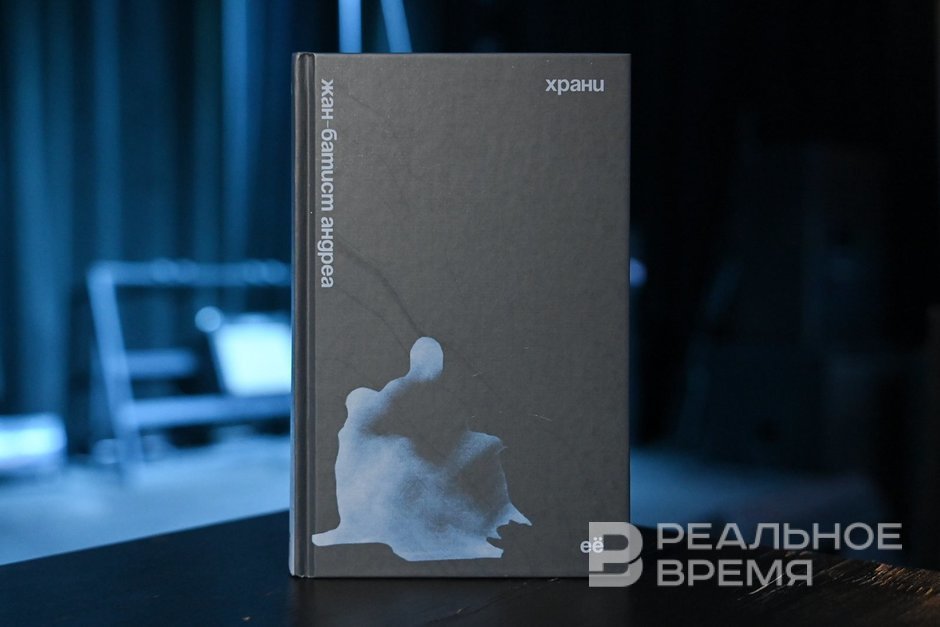
“Watch Over Her” shows not so much a romantic story as a complex form of intimacy. The characters meet, part, and find each other again. They call themselves “cosmic twins," a “symphony” that needs pauses. Mimo and Viola maintain this bond for decades, despite wars, social boundaries, and their own obsessions. The author deliberately moves away from a direct love story, building the narrative as a partnership that withstands ruptures.
But this partnership exists within time, which breaks people. The novel unfolds against the backdrop of the rise of fascism and shows how politics seeps into everyday life and private existence. Andrea says it was important for him to write about resistance to dictatorship, fear, and terror, and to emphasize that “nothing happens by chance” and “there is no such thing as an absence of choice.” He connects the past with the present and reminds us that extremism returns if it goes unnoticed. The history of 20th-century Italy is the milieu that alters the characters' destinies.
“Fear the living”
Within this milieu, Jean-Baptiste Andrea raises the question of the artist's role. Mimo achieves recognition and accepts commissions from the regime, which causes conflict with Viola. The author's position is quite clear: the artist should not directly engage in politics; rather, he should reveal the past so that we do not repeat its mistakes, and speak through his creations. Sculpture in the novel is a means of holding onto time and experience. Mimo learns to give form to what has not yet happened and to extract the hidden from stone. His work connects personal history with the history of his country.
This line intersects with another — a woman's struggle for the right to her own life. Viola refuses the role her family imposes on her and seeks freedom through knowledge, action, and risk. She asks direct questions about violence and rejects conventional explanations: “Why fear the dead… fear the living.” Viola strives to be completely free and does not reduce herself to love or marriage.
Personal traumas shape these characters no less than the historical context. Andrea says that the source of evil lies in childhood, and that traumas suffered then often do not disappear. Mimo's father dies early, his mother sends him to study with a cruel master, and he grows up deprived of love and support. These circumstances influence his choices, his drive for recognition, and his willingness to compromise. Andrea's characters always struggle not only with society but also with themselves.
The text holds the reader's attention through both plot and narrative style. Andrea builds the novel by alternating timelines, forcing the reader to move between past and future as if investigating a mystery. His experience as a screenwriter shows in the way he makes the action visible and immerses the reader in atmosphere as if in a film. The language relies on images and sensations. Smells, light, spatial movement become part of the narration. At the same time, he maintains restraint and precision in describing characters and scenes.
Jean-Baptiste Andrea says his stories should give readers a sense of recognition: “Like us, my characters have dreams, ambitions, and problems.” It is this alignment of the characters' “lifelikeness” with the readers' own experience that sustains interest throughout the book.
Publisher: NoAge
Translation from French: Alla Belyak
Number of pages: 512
Year: 2025
Age rating: 16+
Yekaterina Petrova is a literary columnist for the online newspaper Realnoe Vremya and hosts the Telegram channel «Булочки с маком».