Before Holmes and Poirot: where the first detective story came from
This week's book: Edgar Allan Poe's detective story “The murders in the rue morgue”

A locked room, contradictory clues, and a crime that seems impossible. This is how the history of the first detective story begins. Tomorrow, April 20, marks the 185th anniversary of the publication of Edgar Allan Poe's “The Murders in the Rue Morgue," a text that laid the foundation for a new literary genre and changed the way stories about crimes are told. Literary columnist Yekaterina Petrova of Realnoe Vremya explains how the first detective novel emerged and how the genre was born.
Ancient Egyptian investigations, Chinese judicial prose, and the first amateur detective
Before the appearance of Edgar Allan Poe's story “The Murders in the Rue Morgue," similar plots already existed in literary and cultural history, although the term “detective” itself did not yet exist. In ancient and religious texts, one can find stories where the central element is the discovery of truth through investigation. For example, the ancient Egyptian tale “Truth and Falsehood” (circa 13th century BC) describes the exposure of a false accusation, and in Sophocles' tragedy “Oedipus Rex," the hero systematically identifies the murderer through inquiries and facts. In the biblical story of “Susanna and the Elders," truth is established through the cross-examination of witnesses conducted by Daniel.
Parallel forms developed in different cultural traditions. In the Arabic cycle “One Thousand and One Nights," the story “The Three Apples” is built around a murder investigation entrusted to a vizier under threat of death. Tension builds through a chain of unexpected twists. In Chinese “court case prose” (“gong'an”), the central figure is a judge who handles multiple cases simultaneously, and the criminal is often known in advance. This formed a different type of narrative — the so-called “inverted detective story.” In these texts, official documents, testimonies, and even supernatural elements play important roles.
In European literature of the modern period, elements of detective thinking appear in works of the 18th and early 19th centuries. In Voltaire's philosophical story “Zadig, or Destiny” (1747), the hero draws conclusions from indirect evidence. In Ernst Theodor Amadeus Hoffmann's novella “Mademoiselle de Scudéri” (1819), the heroine establishes the innocence of a suspect in a jeweler's murder, which is sometimes considered the first example of a detective plot. Eugène François Vidocq's “Memoirs” (1828), which described the experiences of a real detective, as well as William Godwin's novel “The Adventures of Caleb Williams” (1794), in which an amateur detective appears, also played an important role in the genre's development.

By the time “The Murders in the Rue Morgue” was written, a significant body of works with investigative elements already existed, but it was in this story that all the components of the detective genre were first combined into a cohesive form.
Vidocq, an orangutan, and a double murder
In 1838, texts titled “Unpublished Pages from the Life of Vidocq, the French Minister of Police” appeared in Burton's Gentleman's Magazine. These were the memoirs of detective François Vidocq, whose authenticity was disputed. Poe was familiar with these publications, and biographers note that the image of Auguste Dupin may have been partially based on Vidocq, as well as on a character with the same name from the same series. In one of the stories from these memoirs, the author described a murder where the victims' necks were slashed. A similar episode appears in Poe's story.
Simultaneously, in this work, the writer developed his own analytical ideas, previously outlined in the text “Maelzel's Chess Player," and also considered the growing public interest in crime news and scientific evidence. A specific incident also played a significant role: in the summer of 1839, an orangutan was shown to the public in Philadelphia's Masonic Hall, arousing genuine interest among viewers. And many literary scholars consider this event the source of the key plot twist in “The Murders in the Rue Morgue.”
Additionally, Poe may have used biological information gained while collaborating with English statesman, diplomat, and poet Thomas Wyatt on “The First Book of Conchology," as well as drawing on the works of French naturalist Georges Cuvier.
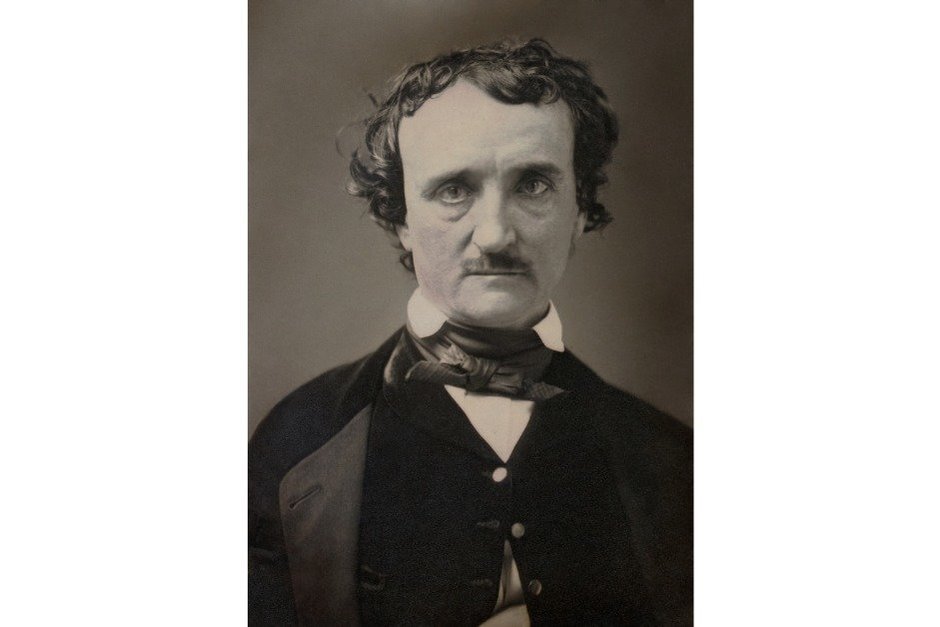
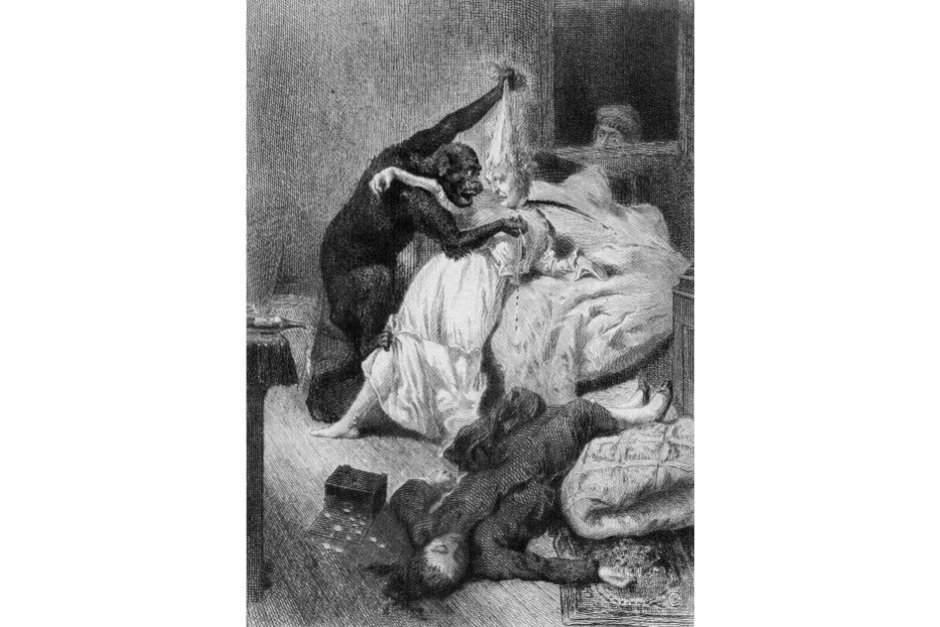
In “The Murders in the Rue Morgue," the reader is introduced to the narrator, Auguste Dupin. He lives in seclusion in Paris, almost completely cut off from the outside world. Dupin possesses exceptional analytical abilities, which he demonstrates in everyday observations. Soon, his attention is drawn to newspaper reports of the mysterious double murder of a widow, Madame L'Espanaye, and her daughter, committed in their home on the Rue Morgue. The crime took place in a room locked from the inside, and the circumstances of death are highly unusual. The bodies are found with severe injuries, the room is almost completely destroyed, and the clues provide no clear answer.
An additional complication for the investigation is the witness testimony. People who heard the screams claim that two voices were heard behind the door, one of them French, while the other no one could identify. There are no clear motives, but there is contradictory evidence. The police arrest Adolphe Le Bon, who had dealings with the victims. However, the case remains unsolved, and this is what prompts Dupin to intervene and begin his own investigation.
Who are you, Mr. Dupin?
Auguste Dupin is fundamentally different from the typical characters of his time. He is neither a policeman nor a professional investigator. He is an amateur analyst who investigates out of interest and a desire to establish the truth. In a letter to Joseph Snodgrass, Edgar Poe wrote that he wanted to use “ingenuity in determining the murderer.” This quality characterizes Dupin's behavior. He does not conduct a traditional investigation but works with already available information obtained from newspapers, turning the investigation into an intellectual exercise.
Furthermore, Poe deliberately sets the action in Paris and makes his hero French, considering the unusual nature of such a narrative for the American audience of his time. The very image of Dupin largely correlates with the author's personality, known for his interest in cryptography and logical puzzles.
The hero's motivation is not related to profit. He takes on the case to test his abilities and to exonerate an innocent person, refusing the offered reward. An important element of the character is his ability to analytically “read” a person. Dupin claims that “for him, there is an open window into the heart of many people," demonstrating his ability to reconstruct the train of another's thoughts based on observations.
Poe's innovation lies in the fact that he was the first to construct the figure of the detective as a central intellectual hero, whose methods become the subject of depiction. Dupin uses what the author calls “ratiocination," combining logical analysis with imagination and even an attempt to place himself in the criminal's position. The key role is played not so much by the correctness of the conclusion as by the accuracy of observation. This principle is already evident in the scene where Dupin reconstructs the narrator's train of thought, building a chain of associations based on his gestures and behavior, which then carries over to the crime investigation.
An important part of the method is working with texts. Dupin extracts information from newspaper reports and scientific publications, specifically from Cuvier's article about orangutans. Poe also emphasizes the importance of oral speech and psychological impact. During the interrogation of the sailor, the latter's reaction is described as physically tangible: “the sailor's face grew purple... he fell upon the chair, trembling violently.” Poe, for the first time in world literature, makes the very process of thinking the subject of narration, showing the investigation as a sequence of observations, comparisons, and conclusions.
The expensive manuscript, stereotypical description, and the “deus ex machina”
Initially, Edgar Poe gave the story the title “Murder in the Rue Trianon” but later changed it, seeking to strengthen the association with the theme of death. The work was first published on April 20, 1841, in Philadelphia's Graham's Magazine, where Poe was working as an editor at the time. He received $56 for the story, significantly more than the fees for his other texts; for example, he was later paid only $9 for “The Raven.”
In 1843, Poe attempted to publish his own works as separate pamphlets following the model of Charles Dickens's publications and issued a single issue of the series “The Prose Romances of Edgar A. Poe," which included this story. The text was revised and contained 52 changes compared to the magazine version. Subsequently, the story was included in collections, including the 1845 edition of “Tales.” The author himself did not participate in the selection of texts.
The story's manuscript has its own history. After publication, it was thrown away, but a printing house employee, J.M. Johnston, picked it up and preserved it. This document survived several fires before being acquired by collector George William Childs and donated to Drexel University, where it remains today.
As early as 1846, the story was translated into French and published in Parisian newspapers without attribution. The translators changed names and details. Only after a lawsuit did Poe's name become known to the French public. In Russian, the story first appeared in 1857 in the March issues of the magazine “Son of the Fatherland” under the title “The Mysterious Murder.”
“The Murders in the Rue Morgue” was criticized even during Edgar Poe's lifetime. The main target of criticism was its apparent realism, behind which researchers discovered numerous
inconsistencies. As literary scholar Burton Pollin showed in his work “Poe's Story 'The Murders in the Rue Morgue': The Twists Unraveled” (1977), the setting, characters, and plot twists turned out to be “absolutely implausible," although due to the narrative's features, they were perceived by the reader as authentic.
Critics also noted that Poe, who had never been to Paris, created a conventional, “cardboard” city, combining real and fictional streets and transferring onto it the features of the Philadelphia he knew, including the architecture of houses and the layout of rooms. The details of the investigation were also discussed: the impossibility of the described entry through the window and lightning rod, contradictory witness testimony, as well as errors in the names and nationalities of the characters.
Poe was also criticized for the implausible behavior of the orangutan and the physical circumstances of the crime, including the use of a razor and the handling of the bodies. Furthermore, later reviewers pointed to a violation of the principle of “fair play” with the reader: the solution is not directly derived from the available facts, and the appearance of the orangutan is perceived as an unexpected and unreachable solution, a so-called “deus ex machina.”
“The root from which a whole literature grew”
Edgar Poe's biographer Jeffrey Myers argued that “The Murders in the Rue Morgue” changed the history of world literature. The text became one of the first examples of the detective genre, where the central place is occupied not by the mystery itself but by its analytical breakdown. It is precisely the emphasis on analysis, rather than on the chain of events, that distinguishes the story from preceding mystery tales. In a letter to Philip Pendleton Cooke, Edgar Allan Poe himself explained the story's success by the fact that it was written “in a new key.” The writer also added that the impression of depth was due more to the “method or appearance of method” than to the actual complexity of construction.
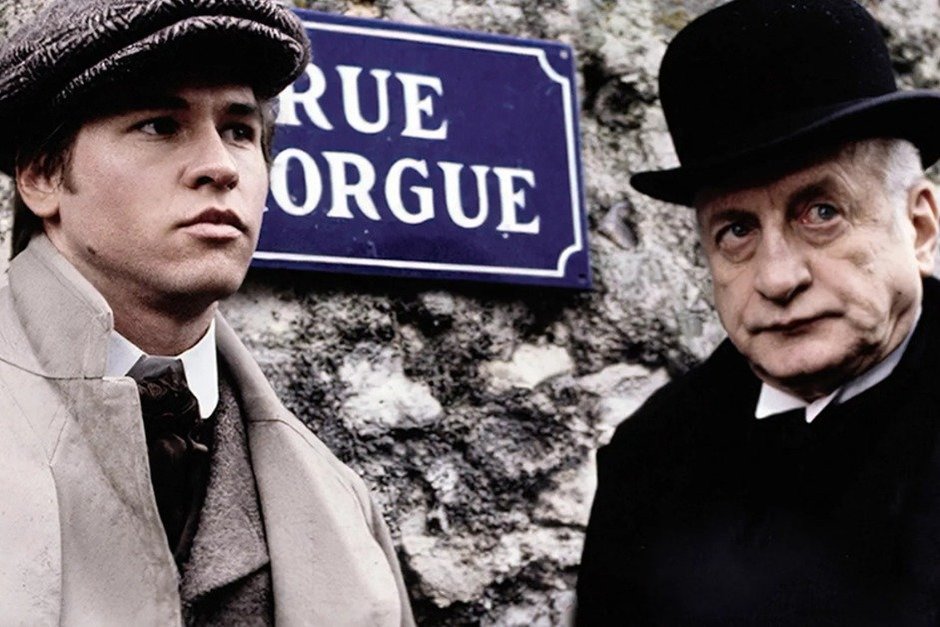
Thanks to this story, enduring elements of the detective genre were established, later reproduced in literature: an eccentric but brilliant detective, his less perceptive companion-narrator, and the police contrasted with them, shown as less effective. Auguste Dupin became a direct prototype for figures such as Sherlock Holmes and Hercule Poirot. Arthur Conan Doyle later wrote that each of Poe's detective stories is “the root from which a whole literature grew.”
Simultaneously, a compositional device was established: first the announcement of the solution, then a step-by-step explanation — a model that became standard. Among the innovations is also the first example of the “locked room mystery," where the crime is committed under the apparent impossibility of entry. And the pinnacle of recognition — the establishment of the Edgar Awards, annually presented by the Mystery Writers of America.
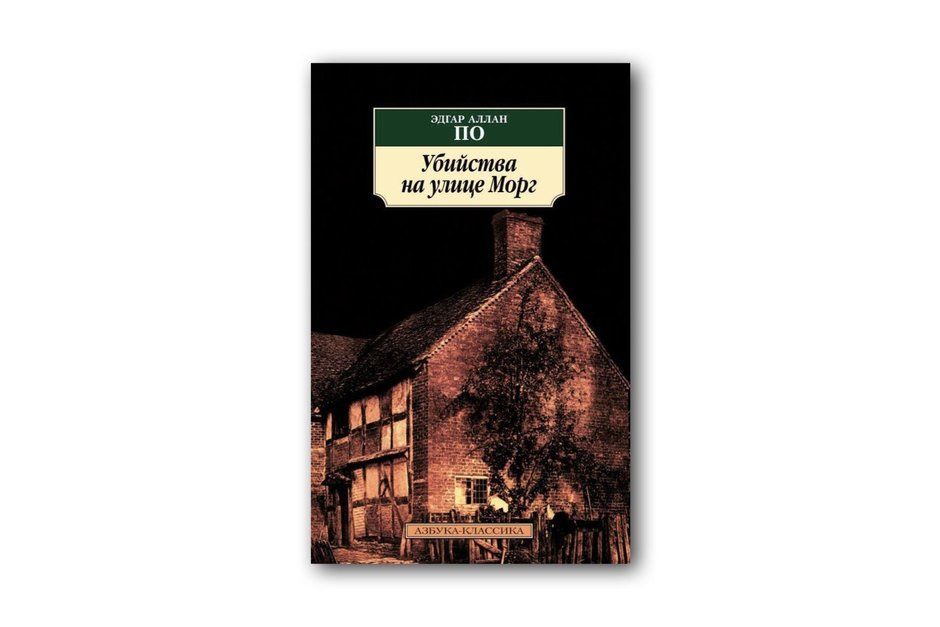
Publisher: Azbuka
Translations from English by: Raisa Oblonskaya, Rebekka Galperina, Irina Gurova, Viktor Khinkis, Abel Startsev, Olga Kholmskaya, Nora Gal
Number of pages: 288
Year: 2025
*Age rating: 16+*
Yekaterina Petrova is a literary columnist for the online newspaper Realnoe Vremya and hosts the Telegram channel «Булочки с маком».