Oleg Ivenko: “You build the boundaries of your own future yourself”
Premier of the ballet troupe of the Tatar Opera and Ballet Theatre — about dance, Nureyev, cinema, and love for his daughter
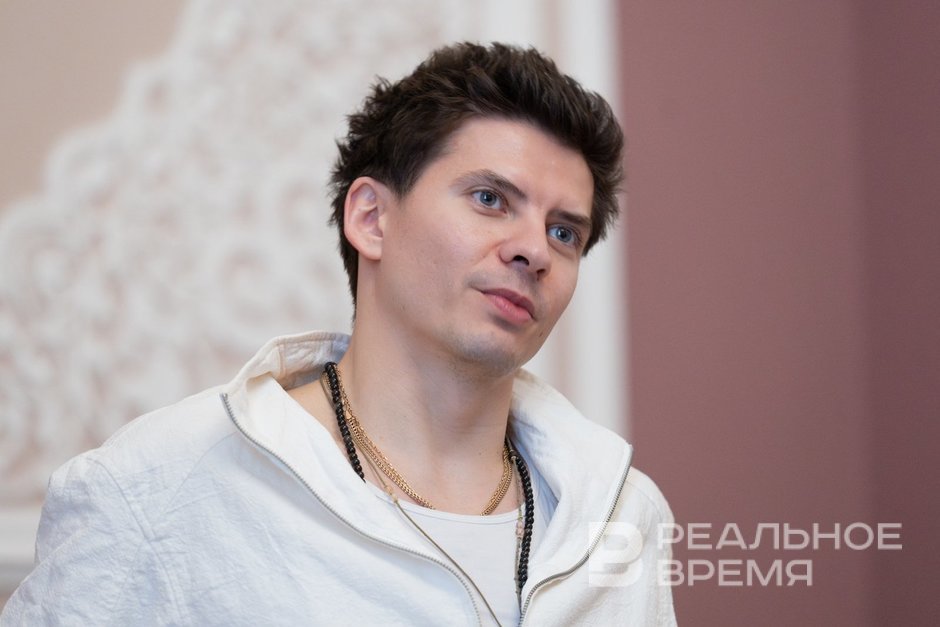
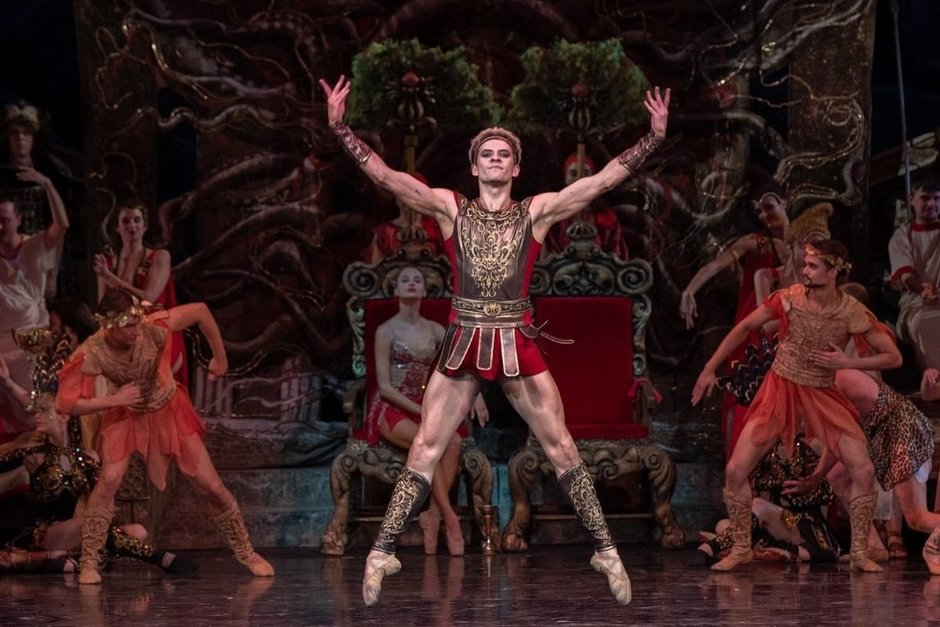
Today, the XXXIX Rudolf Nureyev Classical Ballet Festival concludes in Kazan — the Kazan audience, as always, has seen a host of brilliant dancers and outstanding performances. Realnoe Vremya has timed a major interview with the premier of the Tatar Opera and Ballet Theatre's ballet troupe, laureate of international awards, laureate of the “Soul of Dance” prize in the “Ballet Star” nomination, Oleg Ivenko, to coincide with this event. At this Nureyev Festival, he danced one of the main roles in the premiere production — “Cinderella” by Sergei Prokofiev, choreographed by Nadezhda Kalinina, and also participated in several other performances. In conversation with us, Oleg Ivenko spoke about his special attitude towards Rudolf Nureyev and Mikhail Baryshnikov, about his cinematic career, and about the difficulties of the current premiere. He reflected on family and his attitude towards art. He revealed a few secrets of the work on the StagePlatforma festival, which will be held for the ninth time this year. The details of the conversation are in our material.
“For me, Nureyev is, first of all, an icon”
— You traditionally dance a lot at the Nureyev Festival, and you also played Rudolf Nureyev in the cinema. What does this figure mean to you, and what, in your opinion, is his phenomenon?
— For me, Nureyev is, first of all, an icon. Secondly, a man who transformed male ballet. Thirdly, a man who went beyond limits. Fourthly, a dancer who allowed male dance to take place on stage, to come to the forefront. Therefore, of course, I have a special attitude towards Rudolf Nureyev.
Besides the fact that I played him in the cinema — when I came here and stepped onto the stage, I immediately felt a special pleasant heaviness and the feeling that the Nureyev Festival is something native, my own. I feel that Nureyev supports and helps me from within, I feel his presence here and the idea that none of this is accidental. I don't know where this came from, maybe it's some kind of quirk in my head.
— Did you also feel a special responsibility when you played him in “The White Crow”?
— Both responsibility and work: rehearsals, speech coaching, studying English. I had to trust Ralph Fiennes (the director of the film “The White Crow” — editor's note). A huge amount of work was done to move to a new level. The castings, the rehearsals — everything was a joy for me, but not easy, with a special challenge. It made me a thousand times stronger.
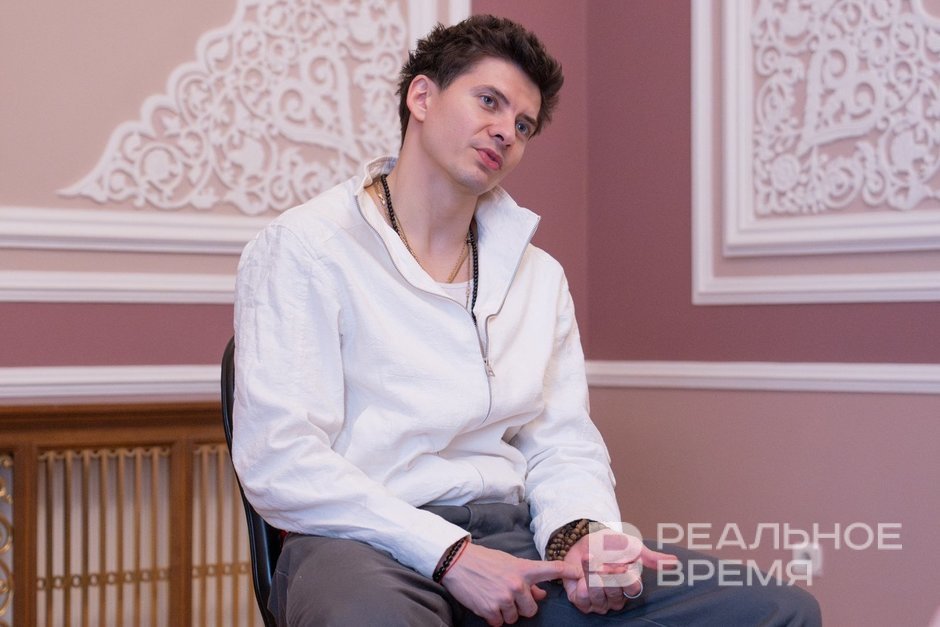
The castings, the rehearsals — everything was a joy for me, but not easy, with a special challenge. It made me a thousand times stronger.
— Didn't you prepare for the filming for a whole year?
— There was a year of castings alone, then preparation, a year and a half of studying the material. I also had to work on my physical form. I lost weight first (even though I was already thin) — to show Nureyev as a student. Then they said to me: “Now gain weight.” All that imbalance was, of course, madness. But an interesting madness. Thanks to this role, I learned how I can play with my body.
It was all a challenge: either you accept it, or you can't handle it. One of the candidates for the role, whom Ralph seriously considered, once prioritized meeting with friends, his personal time, over the casting. But I clearly knew why I had come, although I was sure that Polunin would win. But in my life, it always happens like this: everything you achieve happens thanks to your own work. You build the boundaries of your own future yourself.
— Yet you have the image of a trickster, a light-hearted person. How does that combine in your character with the monstrous hard work required of a ballet dancer?
— Cheerfulness, joy, freedom, ease of communication — all this is achieved only thanks to many years of practice in psychology. It helps relieve tension. There is more and more responsibility every year, and you have to somehow cope with it. Psychology, which I studied for six whole years from the age of 18, helps me not to go crazy. I took additional courses at the institute, trainings with mentors, coaching. I didn't need a psychology degree, but even from that age I knew that for self-development it would be very useful to me — to be able to figure out the human mind.
“If I do this, I will be one of the happiest dancers in the world”
— You are personally acquainted with the second famous Soviet ballet defector, Mikhail Baryshnikov. Whose vibe is closer to you — his or Nureyev's?
— I like Nureyev's rowdiness and Baryshnikov's right approach to business. Baryshnikov is very decent. Good self-presentation — that's Baryshnikov. Everything related to “bad” PR, ambiguous actions and deeds — that's Nureyev.
You have to keep all this in balance. I haven't done any serious rowdiness, because the strategy has to be long-term. There are fewer loud headlines in me, fewer provocations, because there are “buts” in everything. Ultimately, it all depends on what exactly you want to convey to the audience. Once you create a reputation as a rowdy, it's very difficult to convince people otherwise; they won't believe you.
— There were talks about you starring in a ballet film by Frederick Kiva alongside Baryshnikov. Will this work happen?
— The search for financing is ongoing; we are waiting. It's all in progress. We talked about it with the producer three days ago; the project will happen.
— Do you play the antagonist there?
— Yes, I'm that kind (laughs — editor's note).
— And you like it?
— In cinema specifically — I like it. This film is a non-trivial, non-standard story, with various types of relationships. Art-house, heavy, emotional, dramatic cinema. I really want to participate in it — to go beyond the limits of emotional control. Jake Gyllenhaal, Leonardo DiCaprio have had such roles — it's all about how you can position yourself within the difficult framework of this game.
Another factor that makes the project very interesting for me is the opportunity to act alongside Mikhail Baryshnikov. That was my main motivation from the very beginning. In the film, he will be my teacher — well, that's just a fairy tale, a gift! Playing Nureyev in “The White Crow” and then acting in a film with Baryshnikov — if I do this, I will be one of the happiest dancers in the world. Because I will come into contact with both.
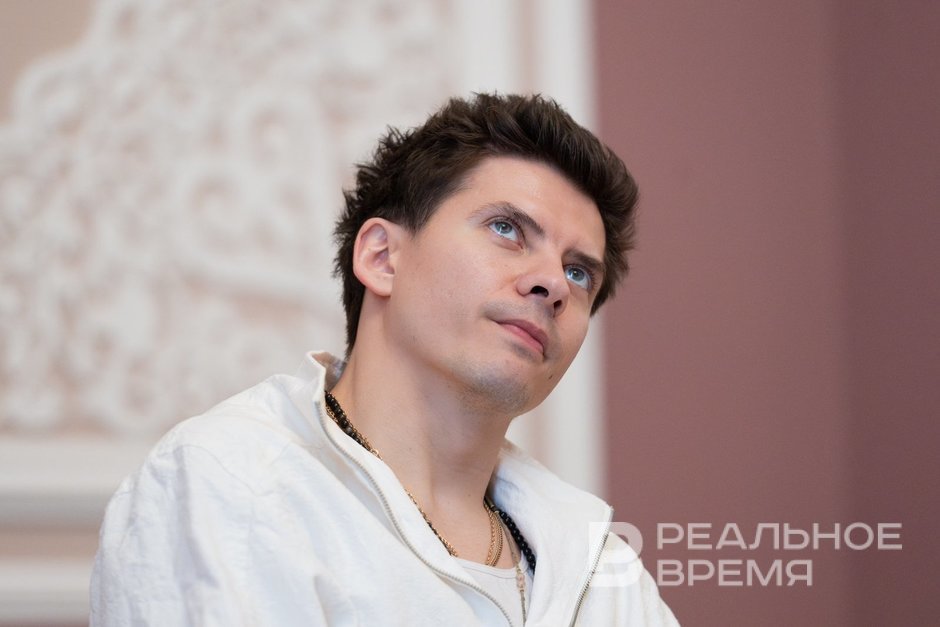
The opportunity to act alongside Mikhail Baryshnikov. That was my main motivation from the very beginning. In the film, he will be my teacher — well, that's just a fairy tale, a gift!
— Do you have an agreement with the theatre? Will they let you go for the filming?
— I've been working here for sixteen years already. A zone of trust has developed here; everyone understands everything. These won't be my first film shoots, but my third — after “The White Crow," there was also “Joyka.” I think it will be a plus for the theatre as well. And for me, cinema is one of the paths I want to master.
It's difficult. I won't hide it, I regret the time I spent building relationships with foreign producers and agents. Now everything has to be built anew. But at the same time, I think that in the future, the attitude towards Russian artists will change; a new hierarchy will grow. Staying in secondary roles, in the old place, will already be a crime for us!
Because for now, no matter how good your relationship with directors is, you remain within the hierarchy. You will only play certain roles — for example, exclusively Russian criminals. At the same time, Netflix and HBO have great projects in which Indians, Africans, and Chinese appear. And each has their own accent. So why do you treat us as if this isn't close to you? That has always been a mystery to me. Perhaps not now, but within ten years — this story will restructure. And that will be good.
“I have never danced a more difficult role”
— You opened this Nureyev Festival with the role of the Prince in “Cinderella.” What can you say about it?
— Honestly, I have never danced a more difficult role. It was very difficult to build the entire performance, every rehearsal, the role itself. Even though the Prince only appears in the second act, in terms of physical exertion, this role is simply killer. If not for Wagner's (Carvalho, another premier of the Kazan troupe who danced the Prince on the second day of the festival — editor's note) and my physical preparation, if we didn't constantly work out in the gym, we wouldn't have coped. My physical training coach, after seeing the rehearsal, said: “We need to work on your back, let's go.” And we went to work. Thanks to him a lot, everything worked out.
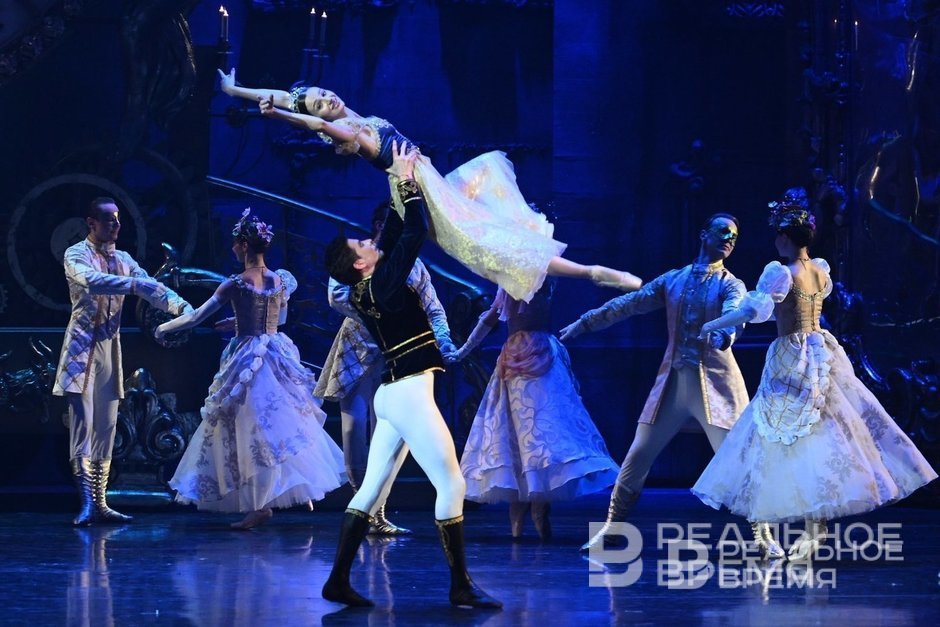
The last adagio was staged two days before the premiere. You reach the middle — you're already tired, and you still have to lift your partner just as many times. And you can't do it because either your shoulder isn't ready, or your breathing is already constricted. Kristina told me: “Hold on!” I dance throughout this performance on stage. This is a non-standard solution: usually the male part comes first, then the female, so that I can rest before the coda. But here we dance, then my variation starts immediately, followed by a crazy adagio, then the coda, then I rush around the stage looking for Cinderella... Before the premiere, I couldn't sleep, my anxiety was off the charts. And after the premiere too — I only managed to sleep on the third night.
In short, this is an insanely difficult role; even Crassus in “Spartacus” is easier. Although before that, I considered Crassus one of the heaviest roles, because there are many lifts, a five-minute adagio where I constantly carry my partner in my arms. But compared to the Prince in the new “Cinderella," it's simply heaven and earth. And when I came off stage after Lankedem in “Le Corsaire” at this Nureyev Festival — I wasn't even a bit tired, didn't lose my breath.
— In “Cinderella," the standing ovation went to the characterful, bright trio of the Stepmother and her daughters. Didn't you have a desire to be the Stepmother rather than the Prince?
— Still, no. We have wonderful dancers who perform this role virtuosically. And I, by the way, advise everyone to see Anton Polodyuk, who will dance this role in the fall. He does it unforgettably, inexpressibly.
— In terms of spirit and mood, which role in the performances of the current Nureyev Festival is closest to you?
— I like Shurale; Lankedem is excellent. But John in “Zorba” is not mine. I love him, but it seems strange to me that he constantly dances, and the performance is called “Zorba the Greek.” That's just a rhetorical question...
— In general, do you have a favorite role in classical ballet?
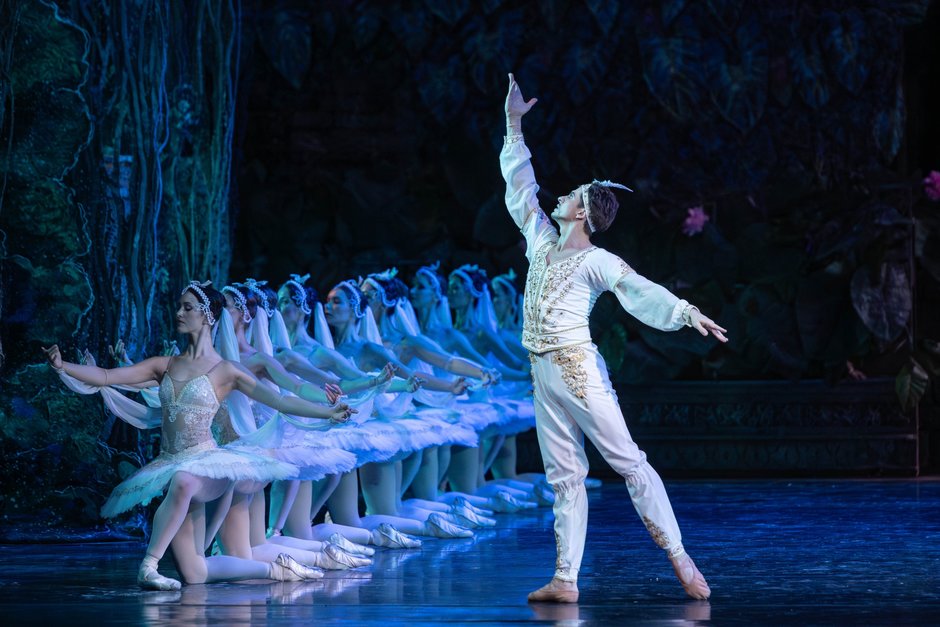
— Solor in “La Bayadère.” I really like him; he's such a warrior. I think this is my calling card. Basile from “Don Quixote” is also great, but not as much.
“I don't want to consider myself geographically tied to any specific place”
— You chose to work in Kazan in your time. Do you feel like a Kazan resident after 16 years, or do you remain a citizen of the world?
— I remain a citizen of the world. I don't want to consider myself geographically tied to any specific place. I respect the city, the culture of the republic, the Ministry of Culture, the Rais of Tatarstan, the management of our theatre. Everyone in their field is doing everything possible. It's just that I can't say yet that I would like to put down roots in one place maximally.
Of course, anything can happen; let's not make God laugh and make predictions for the future.
— In that case, what keeps you here? After all, you regularly receive interesting offers?
— I have a feeling of incompleteness. As soon as I understand that I have finished my work here, I think that's when I will move on. I can't even formulate by what criteria I will understand this. I will rely only on my feelings.
I had a moment in the summer of 2022 — I had to choose: either I gather my whole family and leave for Rome, or I stay here. I was offered the position of lead ballet dancer, and I wouldn't have lost out on money. But I stayed. That's all. I made my choice, I continue to work here.
You see, yes, you can leave. But there you would have to start everything all over again, build from scratch. I would have to forget about ballet, about classical dance there. To dance less often and not what I'm used to, because the trend there is completely different, more towards contemporary dance. Essentially, I would have to break everything here.
Moreover, the current political situation is such that if you leave, you cannot return. If it were peacetime — perhaps I would have tried. But in a situation where my parents, my daughter, and myself depend on me... I decided that it's too early for me to break everything here. I haven't done everything here that I would like yet. I don't mean just dancing all the roles, but also work in other directions that I need to do.
The world is changing, trends are changing, artificial intelligence is appearing, new people are coming to my team... There is still a lot of work here!
Perhaps the MC will be a robot, and the ticket takers — easily. But live performance will remain in ballet forever.
— Could artificial intelligence change ballet?
— I think that neither it nor robotics will do anything with dance. But they greatly influence other structures, what happens in the world around us. Every day we hear news about what is happening in the engineering world and think: “Well, okay, let's see where this leads.” Perhaps AI will greatly affect the film industry. But ballet — no.
— The audience is not ready to watch robots dance?
— Well, no. I think at a certain point, when everyone switches to AI art, and here, in ballet, live performance continues, the uniqueness of our art will grow. We will be a reminder of the distant, forgotten past. Perhaps robots will serve food and drinks in the theatre buffet. Maybe the MC will be a robot, and the ticket takers — easily. But live performance will remain in ballet forever. It will be a outlet for the audience; here they will see live human energy, not robot art.
“I already want to understand what I want to do when I no longer dance so actively”
— Your StagePlatforma festival, the contemporary ballets you create, stand out strongly from the classical track accepted here in the theatre. How do these two lines coexist in your work, and do they contradict each other?
— I don't think so, no, they don't contradict. We don't go into something ultra-modern, into abstraction like what Vladimir Varnava is creating now. We do it carefully; we started within the framework of classical training, but with our own vision. We create stories of famous personalities. At the moment, our characters are defined for several years ahead.
— What will we see this year?
— We are making a ballet about Houdini. It's our mystery story. There will be live orchestra music (though not a full one); the music is being written by Lyaysan Abdullina. “Poirot," as we remember, was written by Elmir Nizamov, and it's great that he gave way to the young.
I think Lyaysan will also write music for the festival ballet next year, which will be a jubilee for StagePlatforma: we will be turning 10. We want to do a big one-hour production, a ballet — so far I see it as one act. But perhaps we will divide it with an intermission. I won't say yet who it will be about — you will find out in November when we announce the next StagePlatforma.
— Then let's return to “Houdini.” Do you plan to include illusions in the dance fabric of the performance? And who is staging it?
— We invited a professional illusionist, Marat Salyakhov, who will suggest a few important tricks that we must perform. The ballet's choreographer, Oleg Gabyshev, will arrive in early June, and we will assemble the performance. Then we will only refine it and make adjustments.
I dance in the performance. But this time I gave one day to Wagner Carvalho; I want to see how the production looks from a different position — not as a dancer, but as a producer. I am sure that as a producer I will find many details worth improving. Usually I do this in parallel, but here I decided to separate the roles.
This experience will be useful for me for the future. I already want to understand what I want to do when I no longer dance so actively.
I dance in the performance. But this time I gave one day to Wagner Carvalho; I want to see how the production looks from a different position — not as a dancer, but as a producer. I am sure that as a producer I will find many details worth improving.
— Yes, a ballet dancer's career is short. Although Baryshnikov danced even at 68.
— That's what I want, like him. I like that. You can create other ballets, dance in a different capacity and in other roles. Do you know how many famous elderly heroes there are that can be shown on stage? A great many.
“I realized that this works only after making 8 festivals and 4 ballets”
— What else will you show at this year's StagePlatforma?
— “Poirot.” Igor Tsvirko will dance in the ballet; he has already given his preliminary consent. In the summer, we are going to Cyprus to dance “Zorba the Greek," and in the autumn, he will come to us in Kazan.
There are also parallel projects in preparation. It's too early to talk about them.
— Now StagePlatforma takes place within the theatre's walls, and this didn't happen right away. How does the management of the M. Jalil Tatar Opera and Ballet Theatre feel about this festival, and what is the future fate of the performances? After all, they are well received by the public; theatre-goers from other cities ask where and when, for example, they can see “Poirot," and so far there is nothing to answer them.
— It's clear that the management of a classical theatre does not treat our festival as one of its main projects. But that's normal; I respect their decisions and their position — first and foremost, to show their own productions. This is by no means a stone thrown at the management. I myself treat this festival more as a laboratory where something greater can be created, some interesting story.
Now we want to take these performances outside Kazan, show them in other cities and possibly countries. We are working on it. I, for example, want to show the performances at the Mariinsky Theatre. And in Moscow too, but where is not yet clear, because it's difficult to arrange a stage there.
— You also spoke about video versions of these ballets.
— Yes, there is such a desire too. We've already dangled the bait to several companies. Of course, if we find someone ready to do this with us, I will turn to Raufal Sabirovich (Mukhametzyanov, director of the Tatar Opera and Ballet Theatre — editor's note) so that he allows a recording to be made on the stage of our theatre.
— For the production of “The Personalities of Milligan," you gave away your own fee for that performance. Did subsequent performances allow you to earn?
— I also had to invest personal money in “Tesla.” The first feeling that we started to come out ahead came after the premiere of “Poirot.” Honestly, we didn't expect that. And when it happened, when the project bore fruit, I realized that this works only after making 8 festivals and 4 ballets. Of course, we are also grateful to everyone who helped us these 8 years.
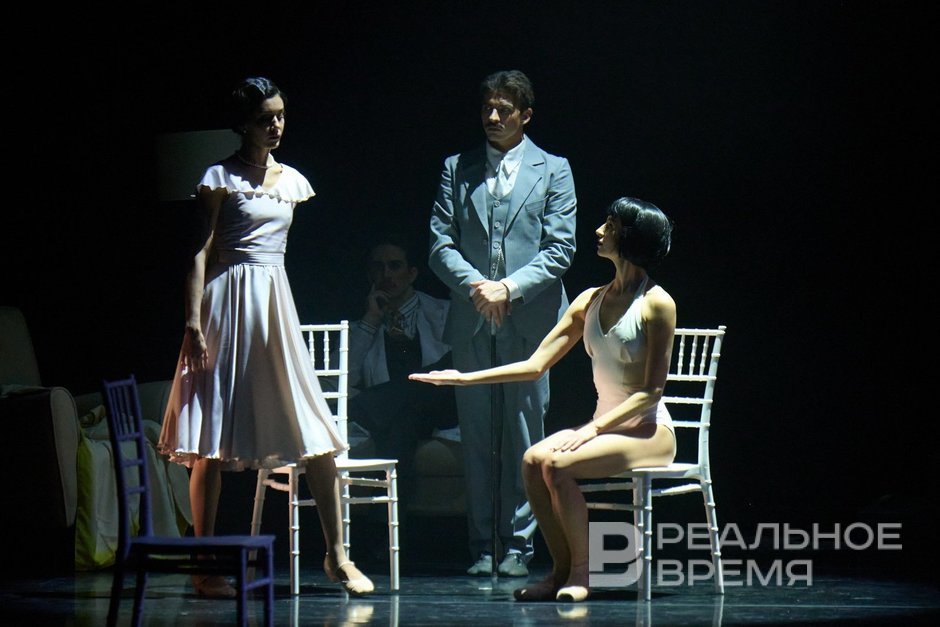
— So for you, this was initially a project that you conceived as a means of self-realization, not as a way to make money?
— I certainly didn't expect StagePlatforma to immediately bring me some fame and insane money. You can only earn money if the project takes off. If there is promotion, companies ready to take on certain risks, believe in you, and allocate funds for staging performances.
“I want my daughter to know that behind her back there is always a dad who has weight in the world”
— You act both as a dancer and as an impresario. Where do you find the extra hours in the day, and how do you manage not to lose out in any one area? When do you live?
— This is my life. I'm not ready to give up any of the things you listed. This, by the way, is also what ruined our marriage with Regina — after all, we are going different ways, living different lives. Of course, there are certain regrets, but I understood that it would only get worse in terms of our communication. I didn't want to ruin another person's life; I realized that she would be better with someone else.
— So you consciously sacrificed your family for your career?
— I love my daughter. We are one whole; she is my outlet. After she was born 4 years ago, I began to feel more responsibility to ensure that she lives in a wonderful future. In a good future that I must build for her.
I always wanted a daughter. But I never thought that I would be an exemplary family man, because I'm used to working too much. Even Ralph (Fiennes — editor's note), when I told him that Regina and I wanted to get married, said: “I doubt you'll succeed. With the schedule you live on, you simply won't be able to combine work and family to become who you want to become.” And when literally a week ago I told him that we had separated, he reminded me: “I told you so.”
— And if your daughter ever tells you she wants to go into ballet, would you be happy or not? Knowing how much sweat and tears there are in this profession?
— If she wants to, it will be her choice. I won't interfere. She, by the way, already comes to my ballet studio and takes classes. She has both my energy and my fire. And she really doesn't like it when someone is better than her. That's a good quality for self-realization, but bad for a family (smiles).
Continuing the conversation about how my relationship with my daughter is built: I want to maintain a balance between unconditional love and my paternal authority. I want her to feel it, but always be calm and know that behind her back there is always a dad who has weight in the world and can help.
You see, I didn't have that. I achieved everything myself and I know how hard it is.
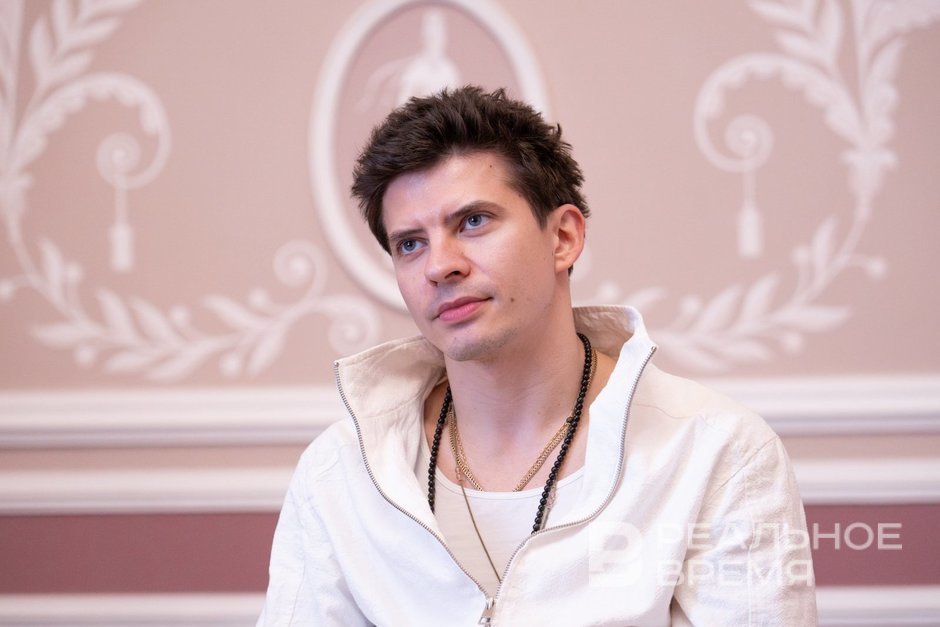
After she was born 4 years ago, I began to feel more responsibility to ensure that she lives in a wonderful future. In a good future that I must build for her.
— And you also support your parents now.
— Yes. My brother and I grew up in such a paradigm that someday we would need to support our parents. We were raised that way. We still help them to this day: they lived here in Kazan for two years when the special military operation began. I rented an apartment for them, paid all their expenses, of course. Plus, at that time, my daughter had just been born.
Then my parents moved to my brother in Canada and remain there to this day. And we also help our uncle as much as we can. My brother and I, one might say, carry the Ivenko surname on our shoulders.
Plus my projects, which also needed investment. I'm not arguing, there are people who have a much harder life. But it was difficult for me at that moment. I just had to get through it. And this is largely why I didn't risk leaving then.
“My task is to move from being a performer to being a creator”
— Returning to the moment when you finish your classical ballet career: what attracts you more — your own projects like StagePlatforma? Or perhaps diving deeper into ballet schools? Or going into cinema?
— Perhaps all at once. My task is to move from being a performer to being a creator. I want to create.
I even think I need to come up with something else. I feel I can do something else, but I haven't yet seen what exactly. Perhaps I have a talent as a film director. My inner feeling tells me that directing is exactly what I can do.
— And in one of your interviews, you said that if you were to make a film, it wouldn't be about ballet.
— If I do shoot something, it will be something different, not like everyone else. For example, like Ralph — he is now planning to make a second film about Nureyev. And he will play Rudolf Nureyev himself in his old age. He takes ballet class every other day and sends me materials. He wants to show the life and tragedy of Nureyev as an old man — how painful it is to be a ballet dancer in old age, but still want to be on stage. It will be interesting to see.
— But that won't be you.
— My idea is to show Nureyev's life in Paris. That's my fixed idea. I would gladly make a project about him sometime in the future. I would show his character, his difficult relationship with his surroundings. And I would do it as a series, not a film. But these are still just ideas.
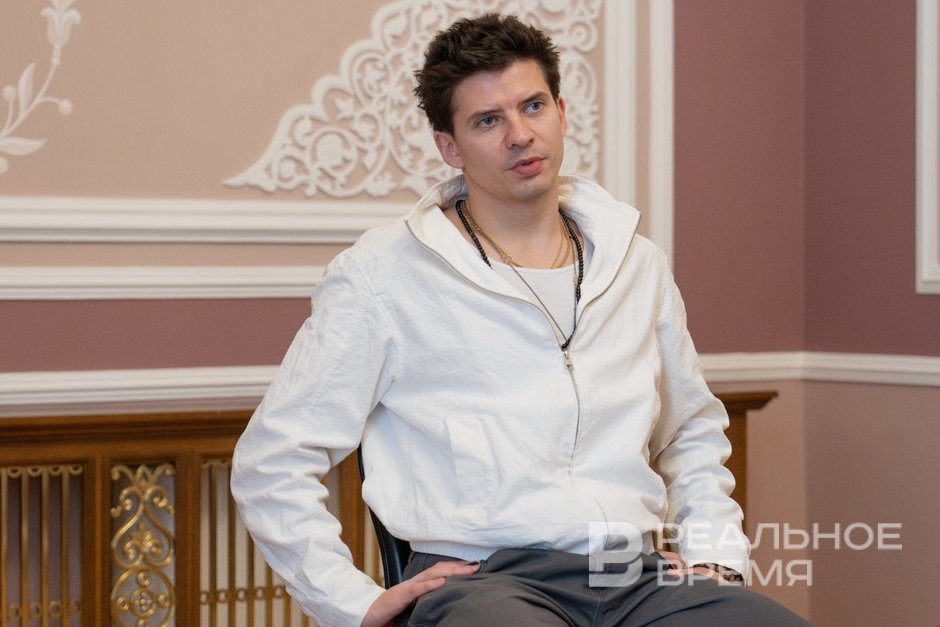
Perhaps I have a talent as a film director. My inner feeling tells me that directing is exactly what I can do.
— Is there a person who inspires you today?
— Ralph Fiennes. I really respect his hard work, his resilience, his unique way of thinking. He, by the way, has six siblings, and he also helps everyone a lot. It's a huge effort, and he is one of the examples for me.
And in the distant future, I would be very glad to be an example for someone myself. At least in some area!