In Nizhnekamsk, science and production spoke the same language
A conference of young scientists was held at the TAIF-NK production site
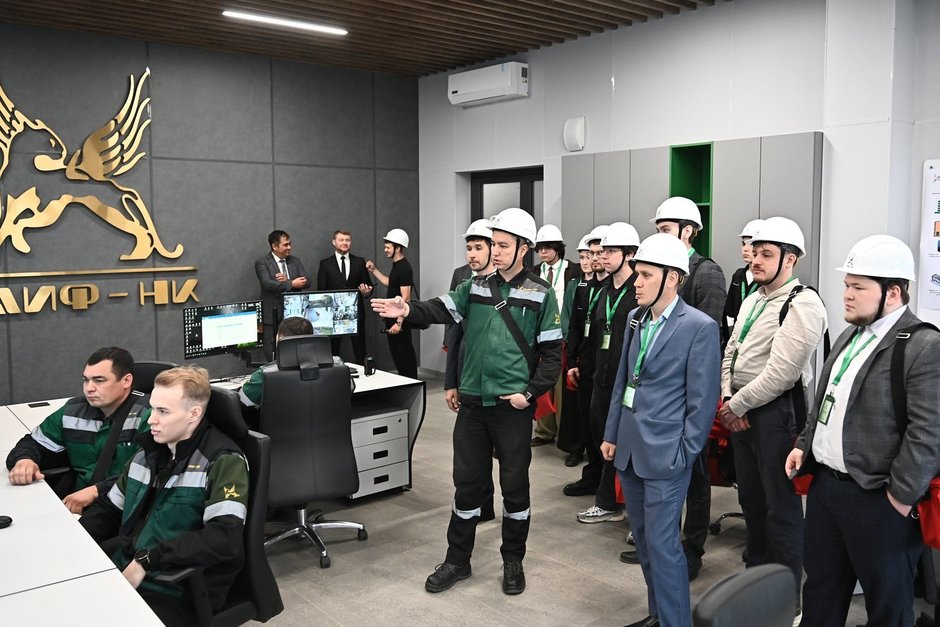
In Nizhnekamsk, at the site of TAIF-NK JSC, science and production spoke the same language — the language of concrete solutions, technologies, and future personnel. The scientific-practical conference “Modern Methods of Efficient Oil Refining” brought together young scientists, students, engineers, industry experts, and representatives of the academic community. But the main result of the day was not only the 16 presentations delivered. Much more important is something else: TAIF-NK demonstrated in practice that a modern plant can be not just an industrial site, but a hub for scientific thought, a place where ideas travel from the laboratory to industrial implementation. For more details, see the material by Realnoe Vremya.
Not just a conference, but a working platform for the future
In oil refining, where the cost of a technological error is high and efficiency is determined by the precision of decisions, the connection between science and production is of particular importance. That is why the conference at TAIF-NK was initially conceived not as a formal event, but as a space for exchanging practical experience, discussing pressing tasks, and seeking solutions that could be in demand in real production.
TAIF-NK JSC is today rightfully considered one of the most innovative companies in the industry. The enterprise is actively developing its own technologies for deep and efficient processing of heavy oil residues and high-viscosity oils. According to the Nelson Index, which characterizes the technological complexity of oil refineries, TAIF-NK is among the top 20 global refineries with a processing volume of oil and gas feedstock exceeding 8 million tons per year. And therefore, it is not surprising that here the conversation about scientific developments quickly moves into the realm of applied application.
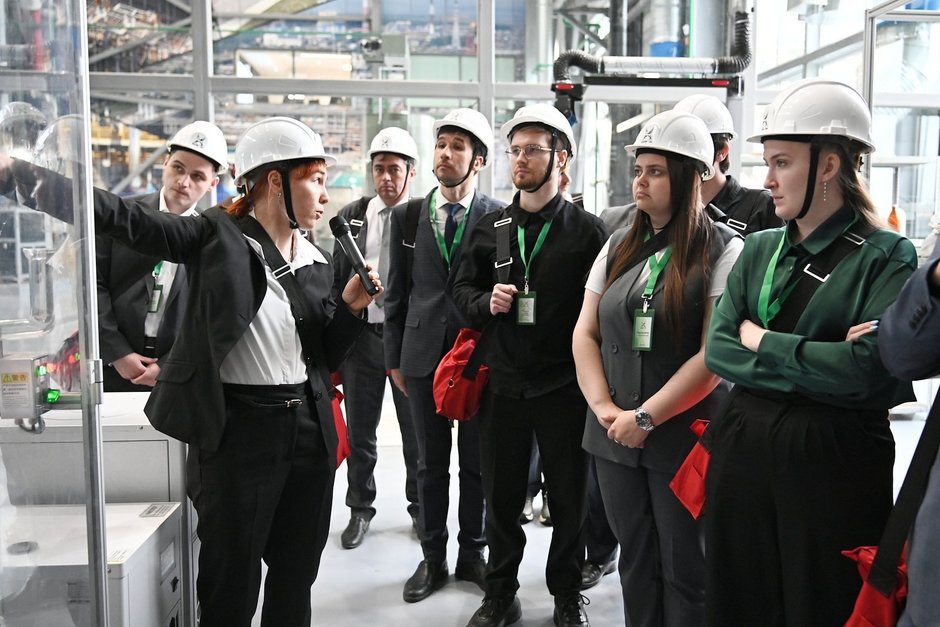
Before the start of the conference, participants were organized a tour of the production facility. Guests were told about the company's operations and shown the Heavy Residue Deep Processing Complex — the very facility that today attracts professional interest far beyond Tatarstan. For students and young researchers, this was a particularly important part of the program: to see not a diagram in a presentation, but live production, to understand the scale of the tasks, and to feel how the demand for new technologies arises at a large enterprise.
From an idea in one's head to an industrial unit
Deputy General Director for Strategic Development and Innovation of TAIF-NK JSC, Marat Idrisov, directly outlined the main purpose of the conference: the enterprise seeks to show young people that the distance between a scientific idea and industrial implementation can be much shorter than is commonly thought.
“The main goal is to show that we are open to cooperation and that scientific thought, with our support, can, after a fairly short path, move to an industrial unit," he emphasized.
According to Marat Idrisov, the idea for the conference arose a long time ago and was closely related to the topic of deep processing of oil and petroleum products. TAIF-NK, he noted, is consistently developing precisely this direction, focusing on a high yield of quality light petroleum products. Therefore, it is important for the company not only to improve technologies, but also to form a professional environment around itself — of students, postgraduates, engineers, young scientists ready to think about real production tasks.
In fact, this is the very model of interaction that is much talked about today, but which far from everyone has managed to implement: production formulates tasks, science offers solutions, and the enterprise creates conditions for these solutions to be tested and, possibly, implemented.
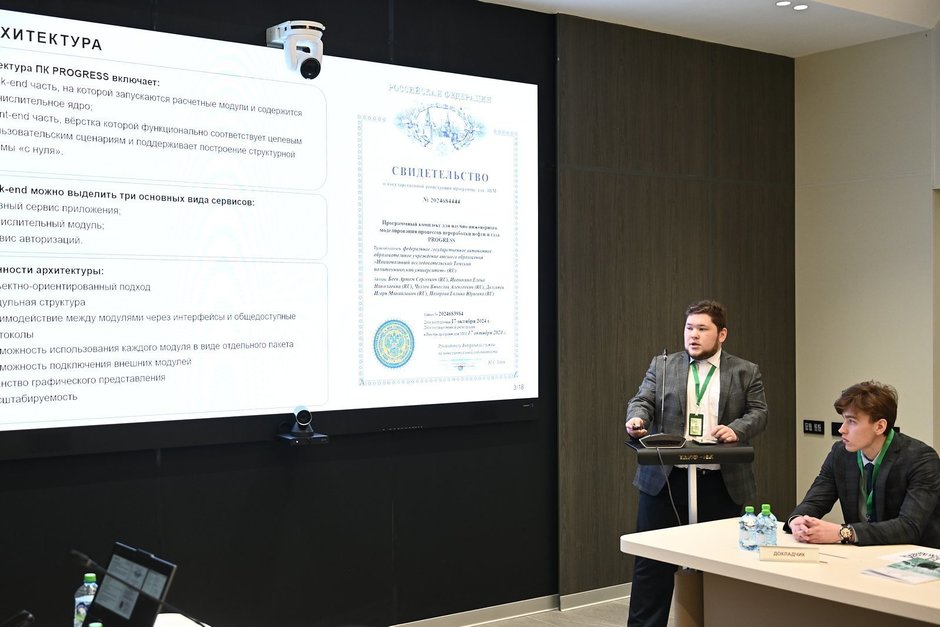
Young scientists — about what can really be useful to the plant
Characteristically, most of the presentations at the conference were not abstractly theoretical, but tied to real production tasks. Young researchers spoke about digital process modeling, artificial intelligence, new methods for evaluating raw materials and products, accelerating calculations, and improving control accuracy.
Postgraduate student and engineer at Tomsk Polytechnic University, Mikhail Grigorash, presented a report on modeling the vacuum gasoil hydrocracking process — essentially creating a digital twin of the unit. This solution allows studying processes in reactors and auxiliary equipment.
“TAIF-NK has a slurry hydrocracking technology, as well as reactors with a fixed catalyst bed for hydrotreating and hydrocracking. Therefore, I hope my research will be relevant to production technologists," he shared with a Realnoe Vremya correspondent.
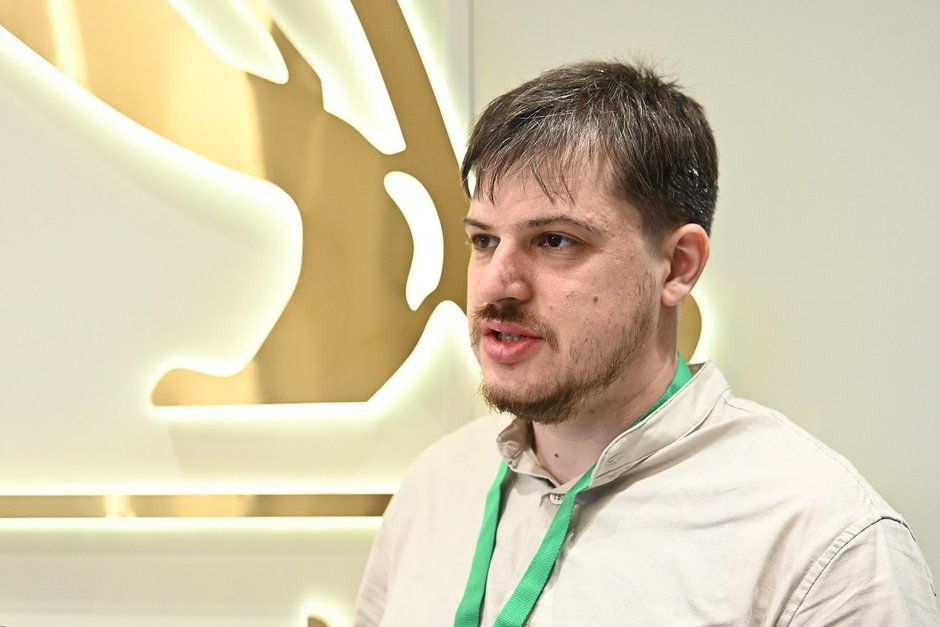
Equally modern was the topic presented by Alexey Firsyn from the Department of Chemical Technology of Oil and Gas Processing at Kazan National Research Technological University. He spoke about the use of artificial intelligence to evaluate bitumen-polymer mixtures, in particular to analyze their microstructure. So far, such tools in oil refining, according to him, are used sporadically, mainly in research work, but it is precisely such solutions that hold the promise of accelerating laboratory research and speeding up the search for new compositions.
“As far as I know, TAIF-NK has bitumen production where they use bitumen-polymer mixtures for road construction. My work is more focused on roofing materials, that is, roof coverings, waterproofing. There are different standards there, so accordingly, if the company produces such materials, it could apply this method for study," the young scientist explained the area of application of his work.
Alexey Firsyn very accurately formulated the essence of the conference:
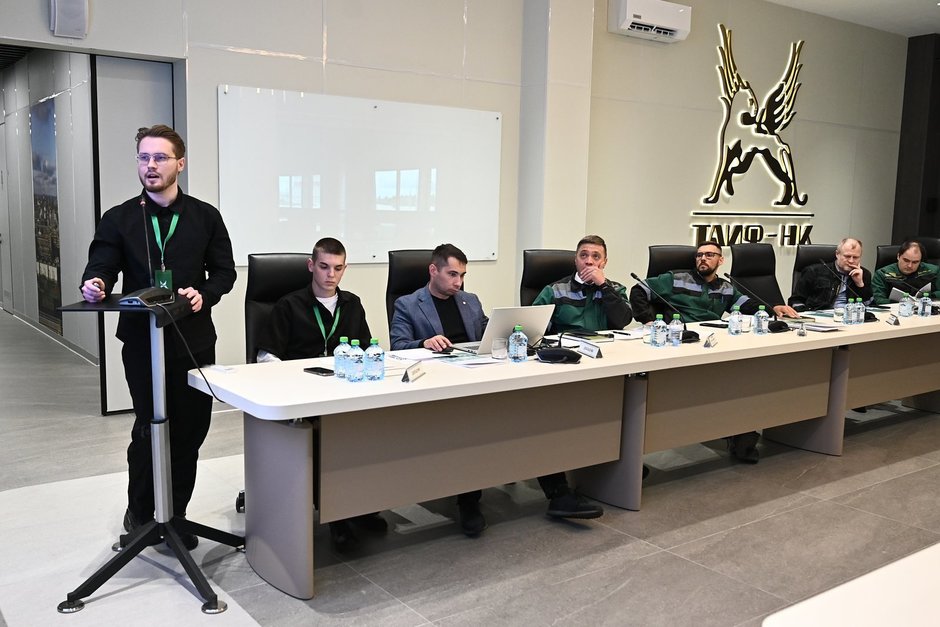
“Currently, it is very important that science and production hold such joint events, seeking points of contact, because science on its own, detached from real production tasks, most often works for the desk drawer. Until a customer is found, until someone applies the innovations, the research simply gathers dust and lies around, losing its relevance. Meanwhile, continuous communication, where production sets tasks for science, works more smoothly, clearly, and yields quick results. Furthermore, any such event is especially important for students; it is an opportunity to speak to a large audience, to showcase their work, to interest potential consumers of their research. Accordingly, it is a career starting opportunity.”
This is, perhaps, the most succinct formula of what took place at the TAIF-NK site.
Production as a career starting point
The students themselves agree with Firsyn's formulation. The conference was for them not only an opportunity to present their ideas but also a chance to be noticed.
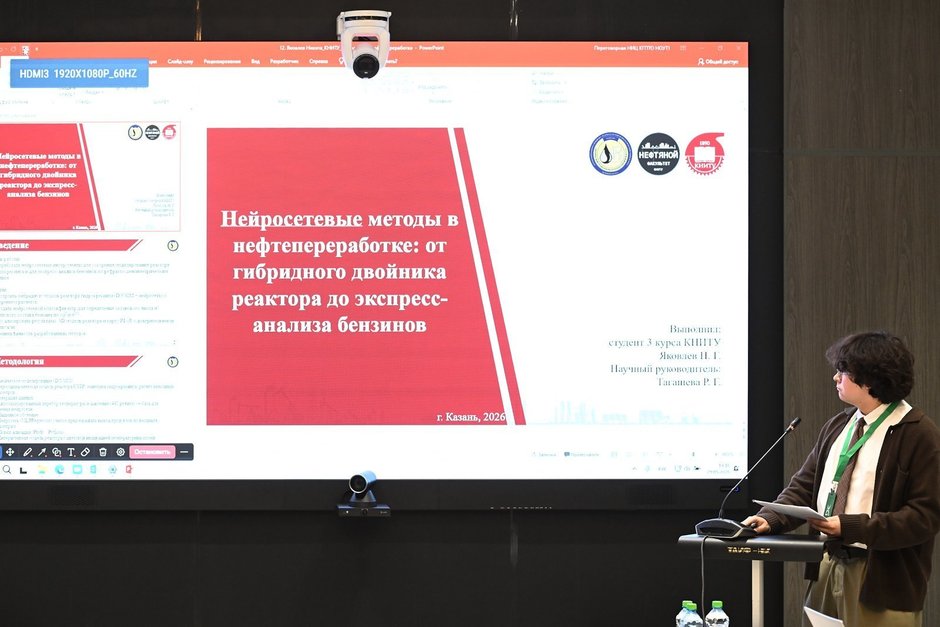
Third-year KNRTU student Nikita Yakovlev brought two topics at once. The first relates to accelerating calculation simulations using artificial intelligence — according to him, we could be talking about acceleration “by a thousand times.” The second is about calculating octane number and hydrocarbon composition based on refractive index and density.
Before the trip, he also studied information about the host's production sites.
“TAIF-NK has a blending unit in gasoline production where the final commercial gasoline is produced. For example, a densitometer or refractometer could be added at the output to measure refractive index and density, thus determining hydrocarbon composition and octane number. The error could also be reduced by expanding the database and performing more calculations," he shared his observations with a Realnoe Vremya correspondent.
Even more importantly, students have gained motivation to connect their future precisely with industry. Nikita Yakovlev does not hide this:
“After university, I would like to work in production. I find TAIF-NK very attractive as a workplace; I liked the attitude towards staff, the novelty of the production, and the fact that it is among the top 20 global oil refineries.”
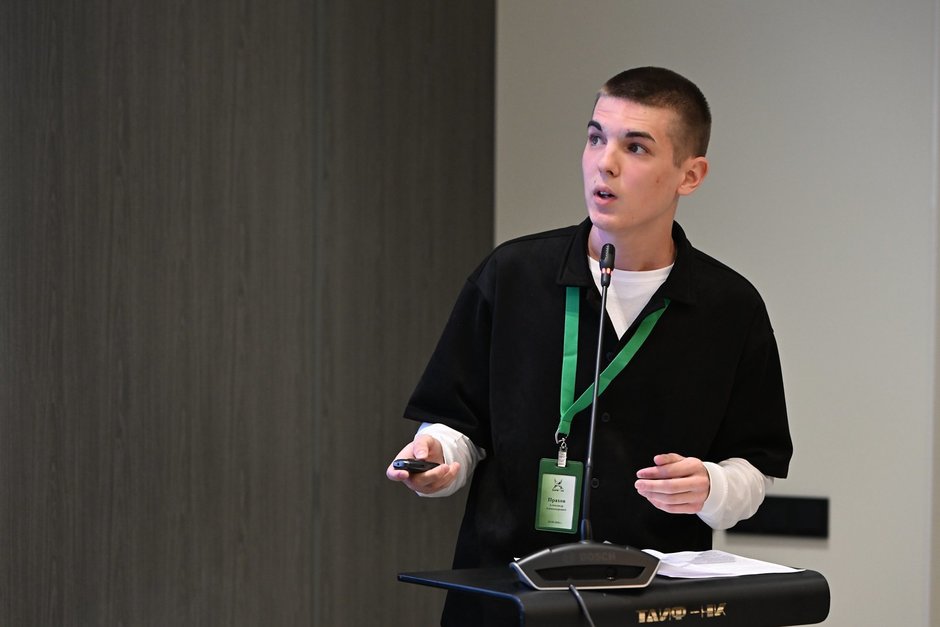
Another conference participant, second-year student of the Institute of Oil, Chemistry and Nanotechnologies Alexander Prakhov, was attracted by the scientific activity at TAIF-NK.
“I want to connect my life with science and teaching. I like working at the department, helping students; I already work as a tutor. Today, they told us about the TAIF-NK research center, which will soon start operating. That's also great for doing science directly in production; I really liked that work option as well," he noted.
When students see production from the inside
One of the conference topics was precisely personnel training. The development of any modern production is directly linked to people, especially those involved in the innovation process. For TAIF-NK, the conference was also a way to show future specialists that industry is not an abstract “plant behind a fence," but a space for professional growth, engineering discovery, and serious scientific work.
This was emphasized by conference participant and postgraduate student of the Nizhnekamsk Chemical Technology Institute, Arina Fakhrutdinova. She presented a topic related to career guidance solutions for production and spoke about a problem that worries almost all of industry today — the personnel shortage.
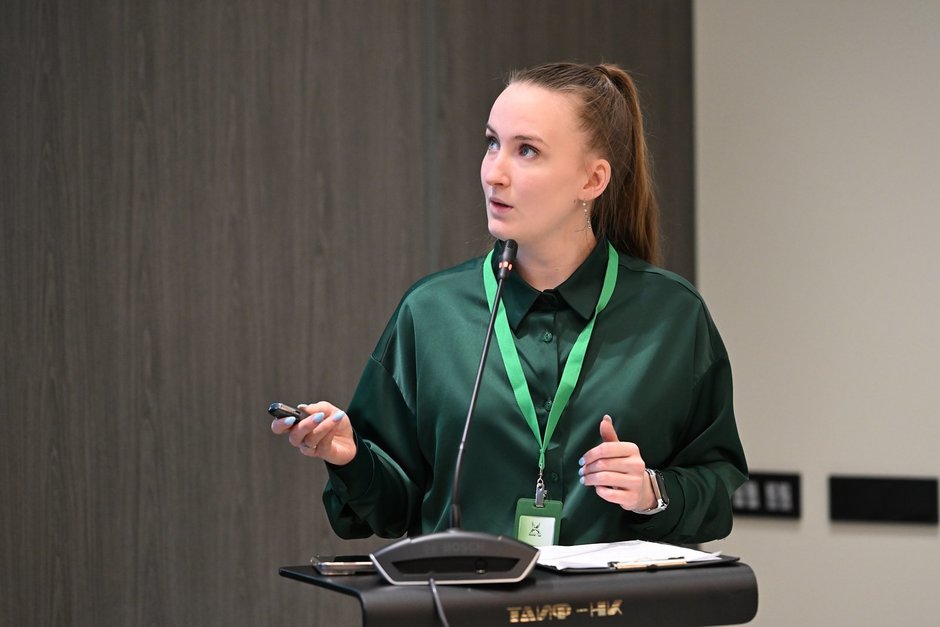
“Student participation in such conferences is very important because they see the company from the inside and, accordingly, develop a desire to get a job," she noted.
According to Arina Fakhrutdinova, one of the reasons for the engineering personnel shortage is that young people have a poor understanding of real work in production. The plant seems huge, complex, incomprehensible, and therefore frightening. Hence the distance between student and employer. Bridging this gap requires direct contact — joint programs, new educational modules, closer ties between university and enterprise.
“They don't know where they are applying, they don't know what they will have to do, that is, it scares them, so I came with this topic to establish this connection," she said.
It is precisely this kind of “connection” that TAIF-NK is building: through tours, open dialogue, professional discussions, and the opportunity to be heard not only by teachers but also by practitioners who work daily on the front lines of the industry.
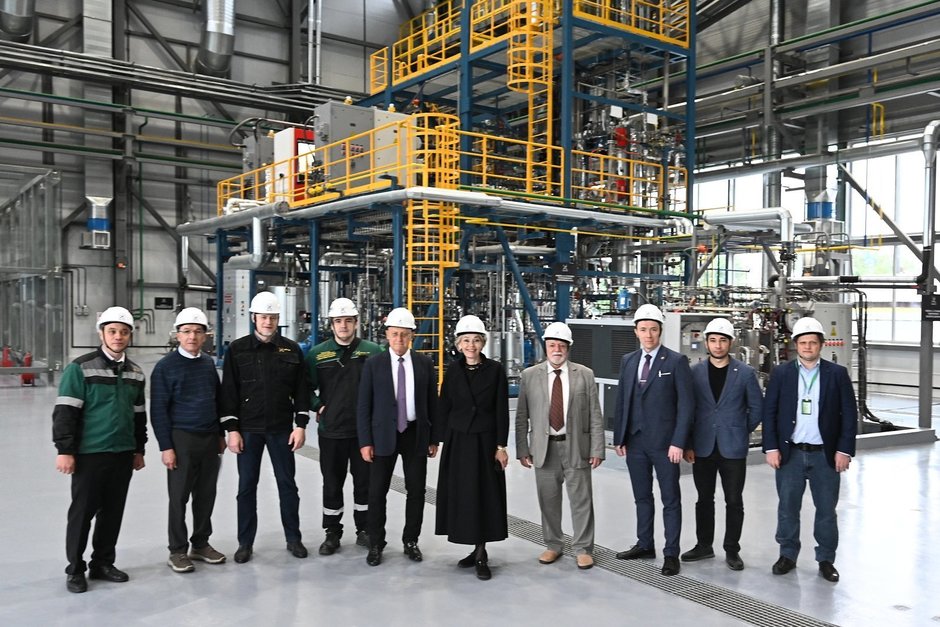
Experts: TAIF-NK is achieving something important and rare
At the end of the conference, the best presentations were determined. First place was awarded to Vladislav Maltsev from National Research Tomsk Polytechnic University, who defended his work on the topic “Forecasting the operation of a vacuum gasoil catalytic cracking unit when changing feedstock composition using a mathematical model.” Second place went to Sergey Petrov from KNRTU with the work “Scientific-technological approach to processing heavy oils and natural bitumens of Tatarstan.” And third place was taken by a student from the same university, Nikita Yakovlev, with the presentation “Hybrid surrogate model of a hydrocracking reactor based on DWSIM and machine learning with visualization in nanoCAD 3D.” The winner in the special nomination “Best Student Presentation” was Angelina Chernysheva — a third-year student of NCHTI, who brilliantly defended her work on the topic “Involving used motor oils in oil refining.”
The participants' presentations were evaluated not only by TAIF-NK specialists but also by representatives of the country's leading scientific schools. And their assessments of the conference sounded more than significant.
The head of the Department of Oil Processing Technology at the Gubkin Russian State University of Oil and Gas, Vladimir Kapustin, particularly noted the youth format of the conference and its connection to a modern industrial unit.
“The presentations are relevant, which is very important. And the main thing is that all this is done by young people. Young people are our future," he emphasized.
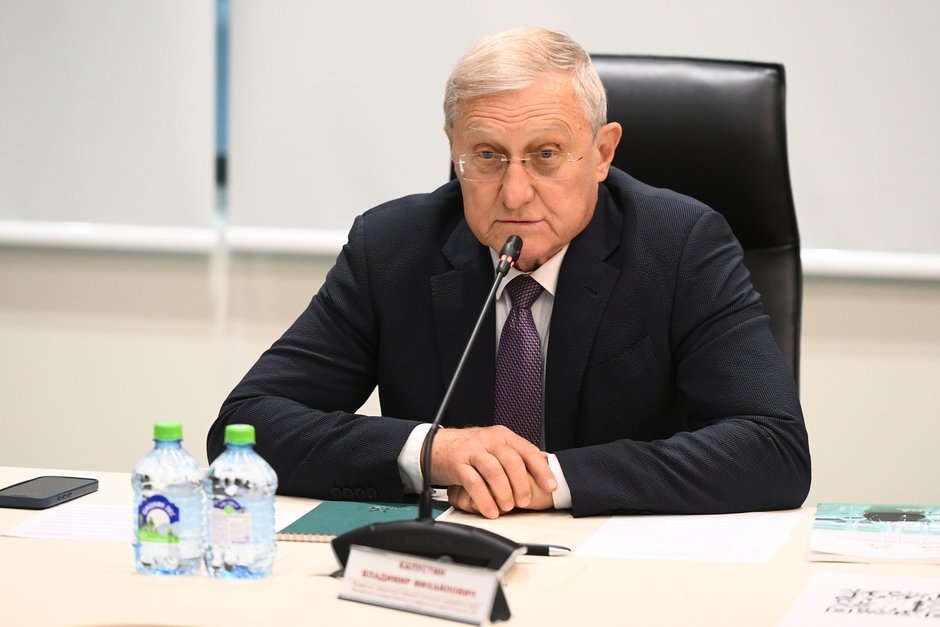
According to the expert, the very fact of holding such a conference next to the Heavy Residue Deep Processing Complex is symbolic and very correct: those who will in the future have to develop, maintain, and improve such facilities are the ones presenting. This is not a generation gap, but a direct handover of the technological baton.
Kapustin paid special attention to the HDPC. According to him, it is the best tar processing unit in the world:
“It is symbolic that in the face of very serious opposition from the West, technologies like those at the HDPC appear, allowing us to compete with the West. Today, on Tatar land, in Nizhnekamsk, such a unit operates at 3.6 million tons, which has not been able to be created anywhere else in the world. This technology is of outstanding importance. It would seem that it is a small city, but today it has rightfully become an oil refining center. Of course, the leadership of TAIF and the support of the company's initiative from the republic's leadership played a big role here.”
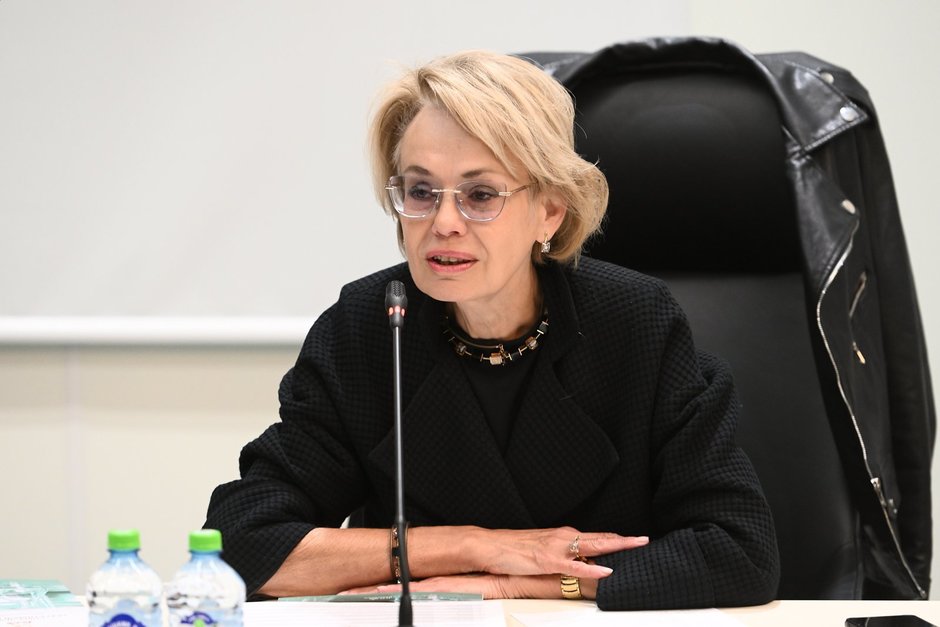
The director of the Institute of Oil, Chemistry and Nanotechnologies of KNRTU, Natalia Bashkirtseva, in turn, noted the importance of such initiatives for the development of the company's personnel potential:
“I am certainly pleased that the TAIF-NK company and TAIF as a whole are taking such steps in science and in the development of their personnel. The company's personnel potential is its heart. And I am very glad that many graduates of our university, our department of oil and gas processing, are leaders here in production. I am absolutely confident that our future graduates will also join their ranks and will be a worthy replacement, growing in the company and bringing benefit to it.”
And this is perhaps one of the main conclusions of the conference: innovation is impossible without people, and people come and stay where they see prospects, respect, and real involvement in the development of production. TAIF-NK is not just developing science in production, but is creating an environment where a scientific idea gets a chance to become an industrial technology, and a student becomes an engineer, a researcher, and an author of real change. For the industry, this is a good sign. For young specialists, it is an invitation. And for the company itself, it is further confirmation that the future of oil refining is built where they know how to connect knowledge, initiative, and production.