Cancer in marathon runners, brain AI implants, spinach against depression
Interesting science news of the week
Horses were domesticated 1,500 years earlier than previously thought
For many years, paleogeneticists have argued that the ancestors of all modern domestic horses spread rapidly across Eurasia around 2200 BC. This lineage combined two exceptionally fortunate mutations: a strong back and docility. Geneticists therefore believed that it was with these random mutations that the relationship between humans and horses began — people learned to ride and started breeding horses. Before that, horses were supposedly only a wild source of meat.
A new publication refutes this view. Paleogeneticists, anthropologists, and archaeologists from Harvard and Helsinki studied disparate paleontological and archaeological data from Eastern Europe and Central Asia — data that seemingly had no connection. The scientists compared skeletal deformations in humans, wear marks on the teeth of ancient horses, the design of the oldest wheeled vehicles (because humans were not always the ones harnessed to them), and even human dental calculus (for the presence of milk protein).
It turned out that approximately one-quarter of adult males of the Yamnaya culture (who lived from 3200–2600 BC, from the Southern Urals to the Middle Volga region) exhibited “horseman syndrome”: specific changes to the pelvic bones and spine resulting from extensive riding without a saddle. Horses living alongside the Botai culture (3.7–3.1 thousand years BC, Northern Kazakhstan) showed tooth wear that could only have been caused by a rope bridle. Furthermore, traces of horse milk protein were found in the dental calculus of Yamnaya people — indicating that mares were being milked as early as the beginning of the third millennium BC.

This means domestication was not the result of a successful mutation 2,200 years ago. Rather, it was a targeted selective breeding process that lasted thousands of years, accompanied by technological development. And when this breeding produced a true diamond among domestic horses — that lineage spread rapidly across the continent. Thus, 2,200 years ago, horse domestication did not begin — it ended.
Deficiency of four micronutrients may cause depression
Specialists in nutritional psychiatry (the study of nutrition's impact on mental health) have examined how nutrient intake relates to depressive symptoms. Researchers from three Japanese universities analyzed data from 5,068 Americans collected during a large-scale national study in 2017–2018. All participants were tested for depressive symptoms and recorded everything they ate over a specific period. Average nutrient intake values were calculated from this data.
9.1% of participants showed clinically significant depressive symptoms. Their diet differed markedly from that of those without depression — notably, they consumed significantly less fiber, folates (vitamin B9), magnesium, and selenium. This relationship was mathematically proven. Depression depended most strongly on vitamin B9 deficiency — people were neglecting leafy green vegetables and legumes.
A dose-dependent relationship was also found: the more folates people consumed, the lower their risk of depression. Avid spinach and lentil enthusiasts had a 45% lower risk than those who ate none at all.

How does this work? The Japanese scientists offer several explanations. First, fiber breaks down into short-chain fatty acids, which help reduce brain inflammation. Second, folates (B9) are needed for the brain to produce serotonin and dopamine. Magnesium regulates nerve signal transmission and helps block receptors associated with depression. And selenium protects neurons from damage and promotes the formation of new ones. This sounds convincing.
How can you enrich your diet with these “antidepressant” micronutrients? It's simple. Include leafy greens, nuts, seeds, peas, lentils, whole-grain bread, and seafood in your menu.
Do marathon runners have an increased risk of cancer?
A study has been published that identified an abnormally high frequency of precancerous colon polyps in young runners who practice marathons and ultramarathons.
It began when a cancer center in Fairfax, Virginia (USA) had to treat three young (under 40) patients with advanced colon cancer within six months in 2019. All were active marathon and ultramarathon runners, yet none had any known risk factors for cancer.
Researchers set out to investigate whether colorectal cancer is linked to a love of extreme running. The study included 94 extreme runners aged 35 to 50, each of whom had completed at least five marathons or two ultramarathons. They underwent colonoscopy — and nearly half were found to have polyps (adenomas). Not all are oncogenic, but 15% of the examined runners had grown large, advanced polyps in their intestines that can be interpreted as a precancerous condition.
The number of polyps found in the runner sample was much higher than typically observed during screening colonoscopy of adults in this age group. The usual prevalence of polyps in this group ranges from 1.2% to 6%. Here, it was 8 times higher!

This study has generated skepticism among some researchers and concern among others. After all, it has already been proven that moderate regular running (not extreme) reduces the risk of cancer (including colorectal) by 20% and reduces the risk of colon cancer recurrence by 37%.
But ultramarathons or multiple annual marathons exceed moderate exertion levels, not to mention the hours-long, grueling training involved. During this time, the body redirects blood from the intestines to the leg muscles, and oxygen deprivation can cause intestinal cells to die.
The Fairfax oncologists explain their results as follows: this is followed by inflammation and intestinal irritation. And indeed, many ultramarathoners report nausea, vomiting, cramps, diarrhea, or even rectal bleeding during prolonged training and competition. However, during tissue recovery, intestinal cells may begin to multiply too quickly and intensively. This increases the likelihood of mutations — and consequently, the risk of polyps and cancer.
Teams of AI agents are accelerating scientific research
Scientists worldwide are increasingly using artificial intelligence and acknowledge that AI is playing an increasingly active role in scientific laboratories. This week, Nature published two case studies in which scientists used teams of AI agents to develop hypotheses, design experiments, and analyze data. Both systems achieved good results: research timelines were significantly shortened compared to the classical approach involving only humans.
For example, when a system developed by Google Deep Mind specialists in California was tasked with identifying existing drugs that could be used to treat acute myeloid leukemia, it arrived at a plausible answer within hours. Such research takes humans months. The AI identified a list of potential drugs, from which human researchers selected five for further study. Three of them showed promising results in preliminary studies on laboratory-grown cells.
The second described system was developed at a nonprofit AI research laboratory in San Francisco — it was tasked with finding a drug to treat dry age-related macular degeneration (a disease that damages the retina in the elderly). The system began by consulting AI agents trained to conduct literature reviews. It used their reports and selected several potential drugs. Humans conducted experiments and returned the data to the system, which then fed it into an AI agent specializing in data analysis. As a result, the system proposed a list of molecular targets to act upon and identified an existing approved drug that might help. It is currently used to treat glaucoma.
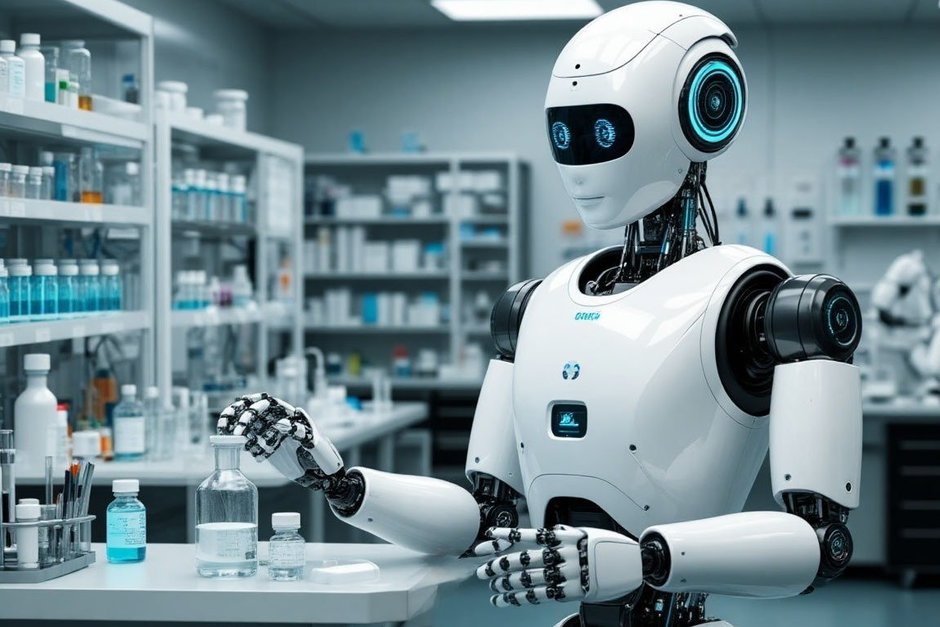
Both hypotheses proposed by the AI turned out to be plausible. However, there is one “but”: none of the drugs they suggested passed more rigorous subsequent testing — good results were only obtained in the early stages. But the trend is clear: systems composed of AI agents can generate plausible hypotheses and, most importantly, dramatically reduce the time spent on analysis and hypothesis selection.
Nevertheless, scientists warn each other: one can lose a lot of time and money during research if the AI leads them down a dead end while desperately (and plausibly) hallucinating. In short, as always, there are two sides to every coin. But AI is changing modern science — that is absolutely certain.
China moves to real-world trials of brain implants with AI
Chinese startups have significantly intensified their efforts to develop algorithms for brain-computer interfaces (BCI) based on artificial intelligence. These can help people move, speak, and control devices. Such interfaces connect the human brain to an external device or computer using sensors placed around or inside the head. They are now being actively developed to assist people with paralysis or neurodegenerative diseases.
China appears intent on leading this field — they have incorporated large language models into their brain chips. This allows scientists to decode brain activity better than using traditional signal processing and data analysis technologies. Chinese companies are literally competing with each other in developing and implementing AI-based BCIs. Moreover, human trials are already underway. Some devices are announced to be coming to market soon!
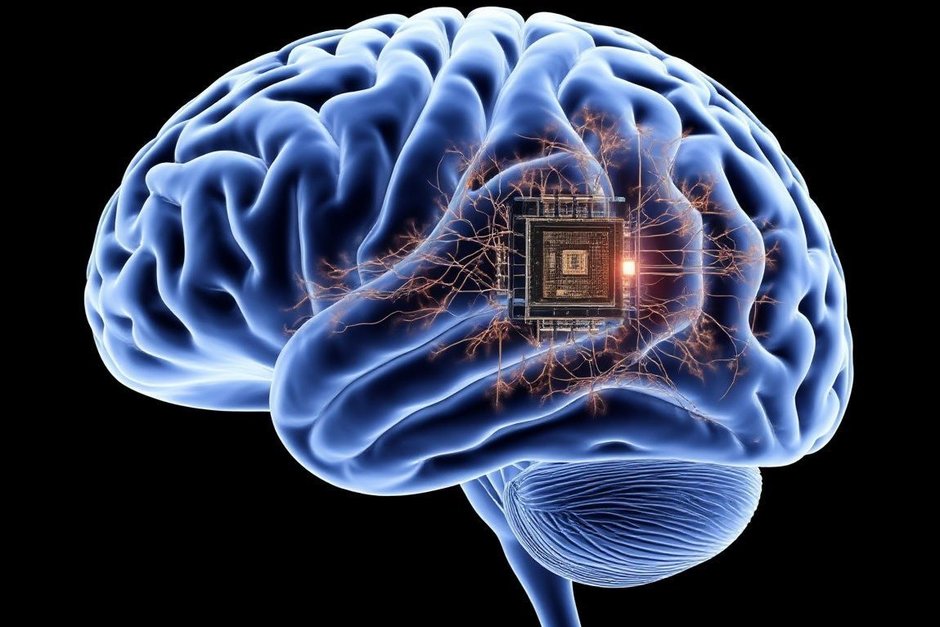
For instance, Shanghai-based company NeuroXess has already conducted clinical trials of its implant for people with paralysis. It is placed in a small indentation in the skull, with sensors positioned on the surface of the cerebral cortex. The system connects via a wire to a data transmitter (which also serves as a battery) embedded in the patient's chest. During trials conducted in October 2025, a 28-year-old man with a spinal cord injury was able to control devices by moving a computer cursor with the power of his thoughts. The company has also developed a large language model that decodes Chinese at a speed of 300 characters per minute. That is even faster than the average speaking rate of a native Chinese speaker. This model generated words and phrases for a 35-year-old woman suffering from a severe form of epilepsy. The company's research team is publishing articles on their results.
The Chinese government, by the way, has already stated that by the end of the decade, the country will become the world leader in BCI. By 2027, the Chinese plan to achieve major technical breakthroughs in this area, and by 2030, to create two or three world-class companies. In March, the country already approved the world's first commercial brain implant. At the same time, the Chinese government is concerned with developing ethical guidelines for the operation of such interfaces.