After the catastrophe: why “Barabbas” sounds contemporary again
Book of the week — the novel “Barabbas” by Swedish writer Par Lagerkvist

Almost all the great novels of the mid-20th century are read differently today than they were at the time of their release. Pär Lagerkvist's “Barabbas” is among them. In 1950, the Swedish writer told the story of a man whom the crowd freed from execution instead of Christ. The novel quickly moved beyond the biblical narrative. Lagerkvist received the Nobel Prize just a year after the book's publication. The Swedish Academy then noted his interest in the “eternal questions” of good, evil, and man's relationship with God. This week, on May 23, marked the 135th anniversary of the writer's birth. On this occasion, Realnoe Vremya's literary critic Ekaterina Petrova re-read his novel “Barabbas” and explains why it remains relevant.
A world without support
Par Lagerkvist lived during the European catastrophe of the first half of the 20th century: he witnessed world wars, the rise of totalitarianism, and the political violence of the 1930s and 1940s. During this period, he openly opposed dictatorships and wrote the novella “The Hangman” (1933), the plays “The Man Without a Soul” (1936) and “Victory in Darkness” (1939). And the novel “Barabbas” (1950) is not so much about ancient Judea as it is about a man who was left alone after the collapse of the old world. The narrative begins with the crucifixion of Christ and ends with the crucifixion of Barabbas himself in Rome. Christ dies among his disciples, Barabbas dies alone. Christ addresses God, Barabbas addresses the darkness.
Europe after two world wars stopped believing that progress automatically makes man better. The literature of the 20th century lost its former stability and its former language. Literary scholar Nikolai Anastasyev wrote that in the new art, “everything is broken, everything trembles with colossal tension and is ready to fly into pieces at any moment.” He associated this rupture with the crisis of humanism — the value system on which European culture had rested for centuries. As early as 1919, Alexander Blok, in his lecture “The Collapse of Humanism," said that Europe had lost the “balance between man and nature, between life and art.” Thomas Mann called what was happening “the end of the bourgeois-humanistic era.” After Auschwitz, Verdun, and total wars, man no longer appeared as the rational center of the world.
Lagerkvist built this crisis directly into the structure of “Barabbas.” His hero sees a miracle but cannot believe. He encounters the first Christians, hears stories about the resurrection, observes the fanatical faith of others, but inside him remains emptiness. Throughout the novel, Barabbas constantly tries to approach faith and then immediately retreats.
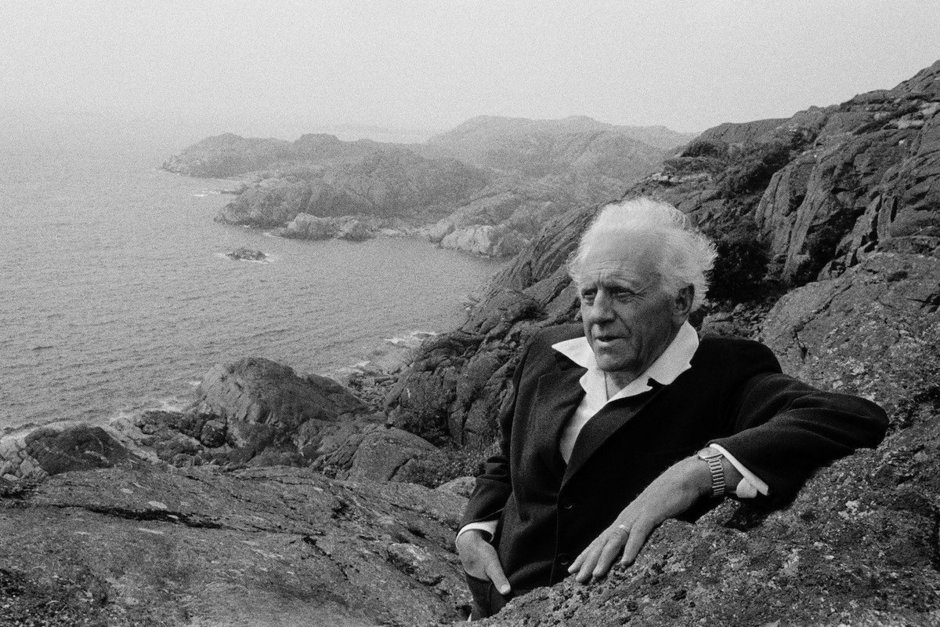
Lagerkvist showed the spiritual state of man after an era of violence. In the 1930s, the writer opposed totalitarianism, but in “Barabbas” he was already exploring the consequences of that experience. He was interested in a man who had lost his inner support. That is why the novel's hero is almost always silent, observes, and lives as a stranger among strangers. In one episode, Barabbas looks at the crucifixion and notices a strange darkness that covered the earth during Christ's death. Later, he returns to this memory again and again but never finds an explanation. Lagerkvist shows not the path to salvation, but the impossibility of finally believing.
The criminal, the witness, the man without faith
In the Gospel, the robber Barabbas appears only in a few lines, but Par Lagerkvist makes him the main character of the novel and turns him into a symbol of 20th-century man. The writer himself called Barabbas a “believer without faith.” He stands between two worlds: Barabbas no longer belongs to his former life as a criminal, but the faith of Christ's disciples remains alien to him. He hears the apostles' stories, seeks meetings with Peter, carries the name of Christ on his slave tag, yet says:
— I have no God, Barabbas finally answered <…>.
— Then why do you have “Jesus Christ” on your tag?
— Because I want to believe, replied Barabbas, not raising his eyes.
Barabbas could not leave Golgotha behind because he had seen the crucifixion with his own eyes. He observed the darkness over the cross, heard Christ's words: “My God, my God, why have you forsaken me?” Later, he went to the tomb to make sure that the resurrection had not happened. He wants to see with his own eyes that the dead do not return, but the empty grave brings him no answer.
Lagerkvist deliberately leaves the scene uncertain: Barabbas sometimes believes what he sees, sometimes convinces himself that the disciples simply carried away Christ's body. Even a miracle does not destroy his doubts. He repeatedly encounters people who are ready to die for their faith — a girl nicknamed Harelip, a slave named Sahak, Christians in Rome. But the conviction of others only intensifies his inner emptiness. Barabbas admits that he wants to believe, yet for him, faith is impossible without understanding, and he is unable to understand Christ.
Barabbas remains Lagerkvist's loneliest hero. Christ's disciples do not accept him because he was the one freed instead of their Teacher. The world of robbers no longer considers him one of their own either. Lagerkvist constantly emphasizes this state of being “in between.” Barabbas stands aside at the cross, separate from the crowd; he lives apart and dies apart. Even his connection with others arises only through violence and suffering. It is no accident that the hero says he was only once connected to another person — by an iron chain.
At the end of the novel, Barabbas is crucified alongside Christians, but even here he remains a stranger. Before death, he repeats words reminiscent of Christ's gospel prayer: “Into your hands I commit my spirit," but he addresses them not to God, but into the darkness.
“The age of anxiety”
French critic Marcel Brion, immediately after the novel's release, wrote in Le Monde about its “extraordinary human value and universal significance.” Swedish critics at the time discussed the book as a novel about doubt, suffering, and the spiritual wounds left by the Second World War. The 20th century made anxiety not a private emotion but a state of the era. Existentialist philosophers — Albert Camus and Jean-Paul Sartre — also spoke about a man left without ready-made answers. Sartre asserted: “There is no other world apart from the human world.” In “The Myth of Sisyphus," Camus wrote that no one dies “for the ontological argument.” Lagerkvist arrived at a similar conclusion through literature. His hero does not argue about religion as a philosopher. He simply lives inside anxiety.
Philosophy professor Bettina Bergo, already in the 21st century, called modernity the “Age of Anxiety” and noted that society lives with a constant fear of repeating the past. She writes: “Our future remains uncertain.” Barabbas exists in exactly such a world. He does not know what to do with the freedom he received instead of Christ. He does not understand how to live after what he saw. And the entire novel rests on this question.
Today, we again live with a sense of an impending rupture. Wars, political polarization, climate change, lack of confidence in the future have long become part of everyday life. Lagerkvist showed the world after catastrophe — after the crucifixion of Christ, when the old order had already collapsed and a new one had not yet emerged. Barabbas was freed instead of another man and immediately fell into a space of historical emptiness. He did not understand what had happened, but he felt: his former life was over.
Par Lagerkvist, even in his early books, wrote about the “anxiety” of the modern world and about the “threatening mechanization and sterility of civilization.” The Nobel Committee in 1951 formulated the main theme of his prose as follows: the writer sought “answers to the eternal questions facing humanity.”
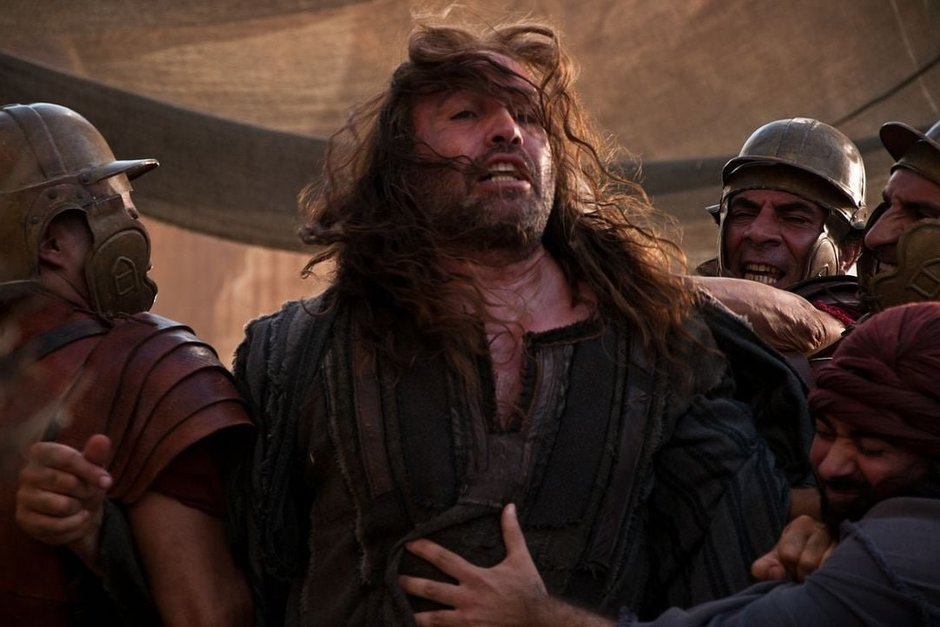
The most important thing in the novel is the disappearance of stable meanings. The 21st century is also experiencing a crisis of trust: people believe less in religions, politicians, democratic institutions, and the very idea of progress. Lagerkvist's hero exists in a similar state. Barabbas constantly tries to understand who the crucified man was and why his death changed the lives of others. But the novel provides no definitive answer. Every gesture of the hero ends in silence. Even when Barabbas tries to pray, he receives no confirmation that anyone hears him.
This silence gradually turns the novel into a story of loneliness. Modern man is constantly among people and simultaneously feels isolation. Lagerkvist shows almost everything important through pauses, glances, and the hero's inner distance. Barabbas avoids closeness, does not trust the brotherhood of Christians. He is in alienation. Barabbas received freedom but does not understand how to live with it. This freedom brings no relief. It becomes a burden.
Existential literature once again seems like a precise language for talking about anxiety. Lagerkvist fits into this return especially naturally. He grew up in a religious environment, later broke his ties with traditional faith, went through an interest in socialism and modernism, but never abandoned the conversation about human fear and inner crisis. His Nobel speech constantly echoes the theme of the fragility of human life. Lagerkvist's world is beautiful but unstable. Love can disappear. Man is mortal. Time destroys everything. And this describes modern society so accurately.
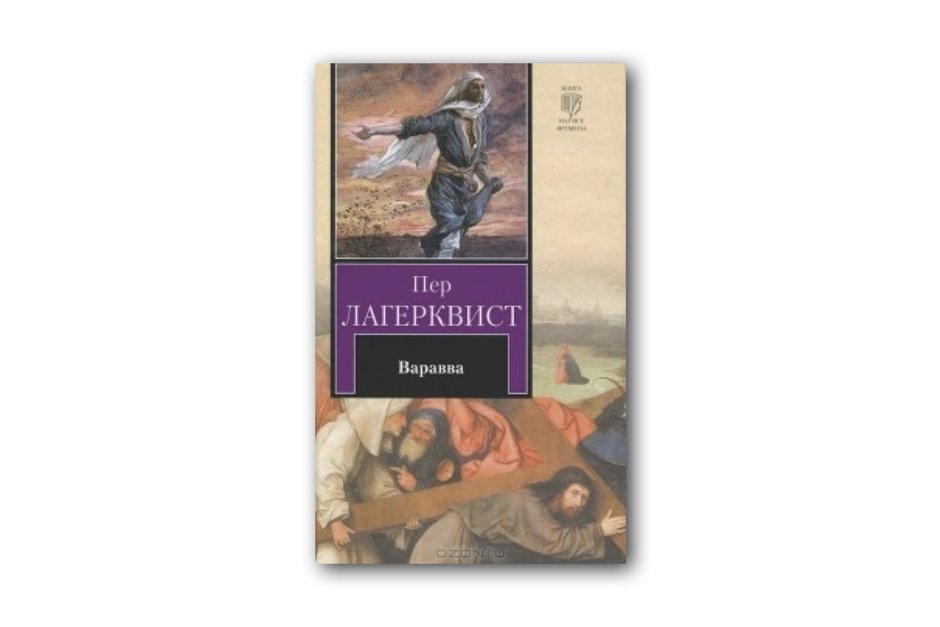
Publisher: AST
Translation from Swedish: Elena Surits
Number of pages: 448
Year: 2011
Age restriction: 18+
Ekaterina Petrova — literary critic for the online newspaper Realnoe Vremya, host of the Telegram channel «Булочки с маком».