Vakil Khamidullin: “Tatar ceramics must be born on its own soil — from material to execution”
A couple of Tatarstan ceramicists on how to revive lost traditions and establish production of local clay
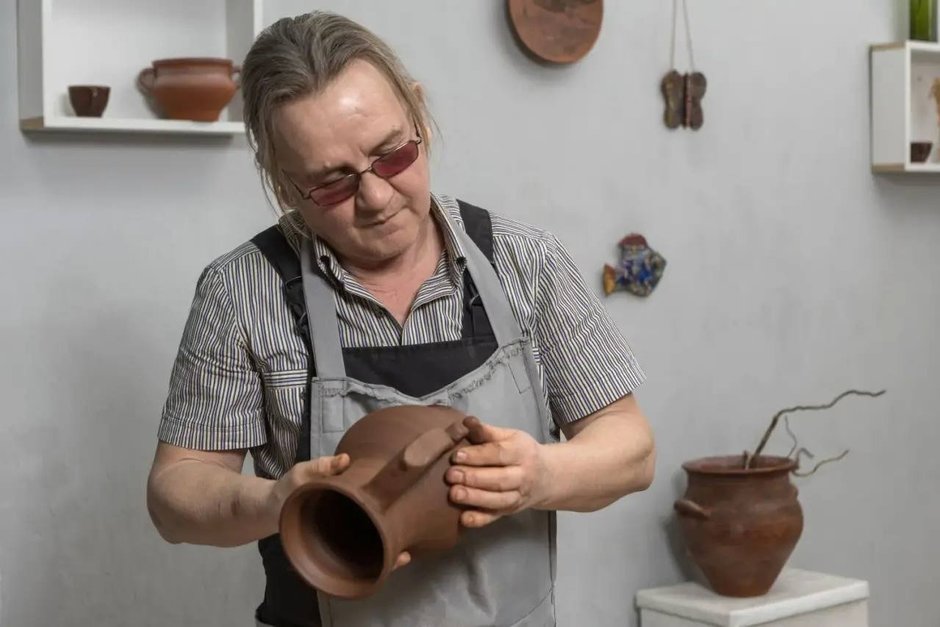
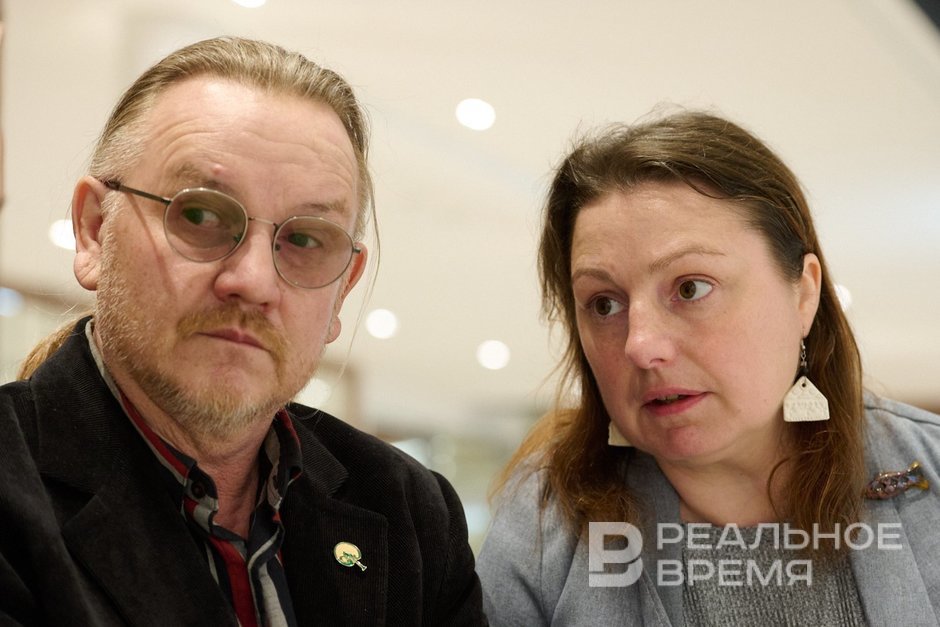
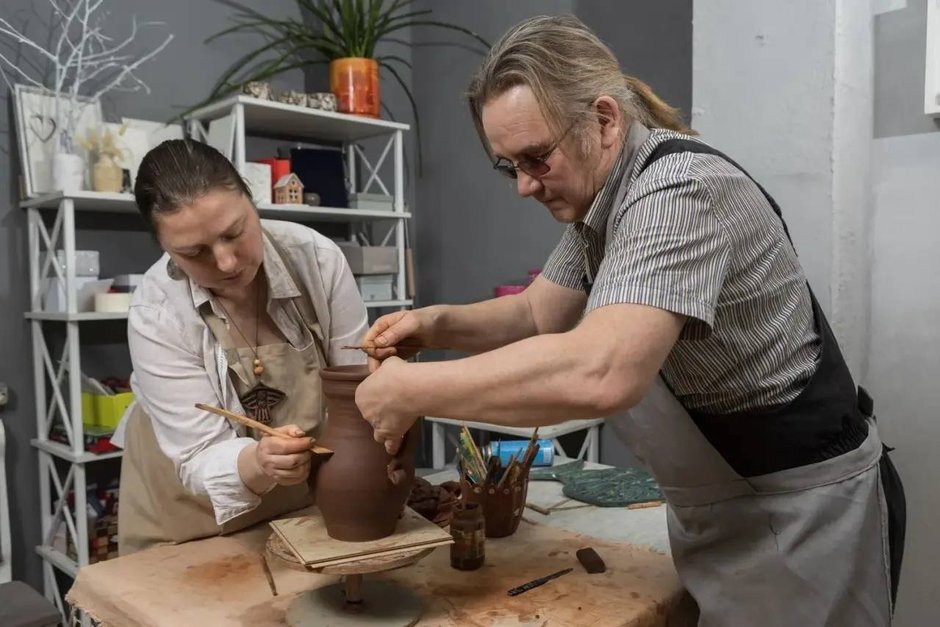
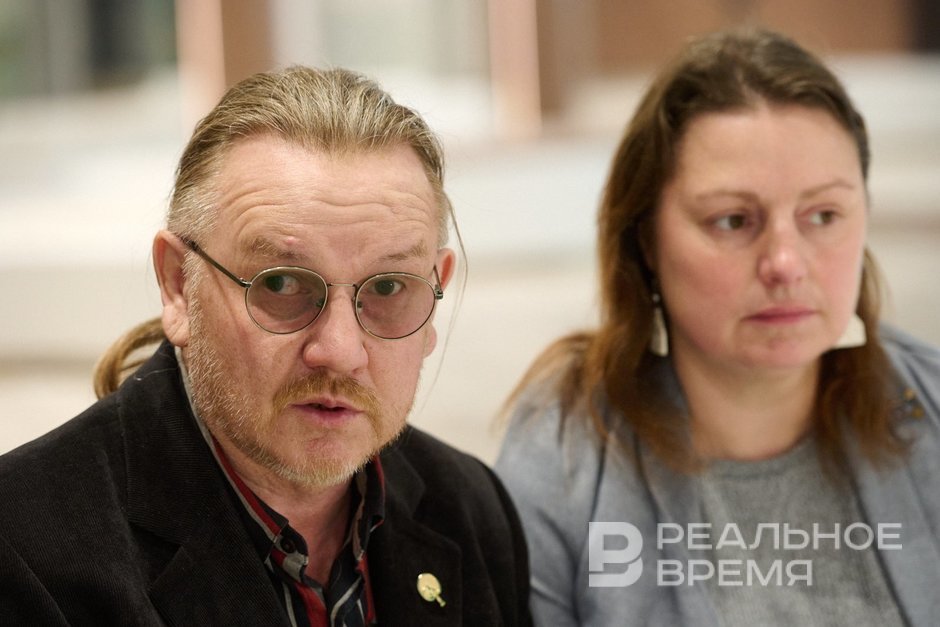
The ancient Bulgar traditions are being revived in Tatarstan by professional ceramicists Vakil Khamidullin and Anna Petukhova-Khamidullina. The creators of the “Our Heritage” workshop study and reinterpret the culture of their ancestors in a new way. Kazan residents will soon be able to see their works at the Folk Crafts Center in the former TSUM building. In an interview with Realnoe Vremya, the artists spoke about the problems craftspeople face today and how Tatarstan can find its identity in the world of ceramics.
“When you hold ancient ceramics, the master's energy is transmitted. It feels like he's telling you something”
— Today we are meeting in the former TSUM building, where the Folk Crafts Center is preparing to open. What will you present at this venue?
Vakil Khamidullin: I create works inspired by the pre-Islamic culture of the Bulgars — our ancestors who still believed in the elements. How did I come to this? Back in the 1990s in the Urals, I participated in excavations with Gennady Zdanovich (archaeologist, founder and first director of the Arkaim Museum-Reserve). There I saw pit-comb ceramics. But still, my own national culture is more interesting to me. The forms differ slightly from those in the Southern Urals. There are national ornaments characteristic of Turkic ceramics — for example, plant motifs.
Anna Petukhova-Khamidullina: There is a concept in archaeology — the pit-comb culture of the Neolithic era. We study it. We've been to Bulgar, Bilyar, and Arsk and have seen its traces there.
— What are the main features of Bulgar ceramics?
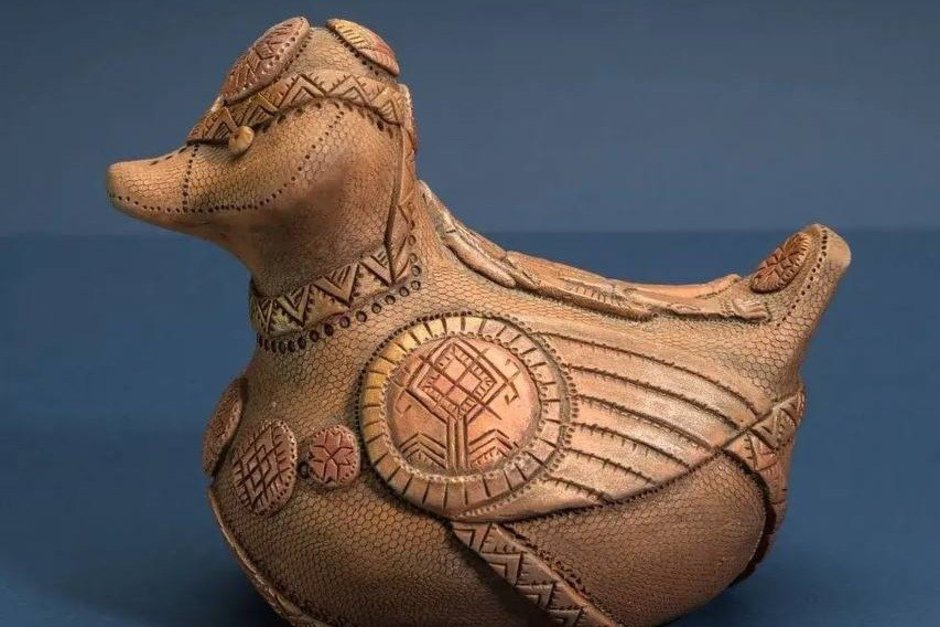
Vakil Khamidullin: Look, take an ordinary simple form. We all know about Zilant. He appears almost everywhere, on handles, for example. Elements of the animal style are used. This is characteristic only of nomadic peoples.
— When developing Bulgar traditions, do you create copies of real artifacts or offer a new interpretation?
Vakil Khamidullin: I have made copies, but for museums. Mostly I like this style itself, its depth, its antiquity. I mainly create modern products using ancient forms. If I just copy... you can see that in a museum. But if I reinterpret these motifs, it will attract more attention. I want people to see that we have an ancient culture, deep roots.
I've been on excavations, and when you hold ancient ceramics, the master's energy is transmitted through the form. It feels like he's telling you something. It's important to capture that and bring it into the modern world.
Anna Petukhova-Khamidullina: The fact is that in Bulgar, Bilyar, and Arsk, a distinct stylistic layer developed. The lines and dots are not drawn arbitrarily; they have symbolic meaning. For the most part, pit-comb ceramics with such decorative patterns are ancient calendars. We study this culture, preserve it, and interpret it in a new way.
— You said the patterns on ancient products are not random. Do you embed any messages in your own works?
Vakil Khamidullin: Absolutely! I've been on excavations, and when you hold ancient ceramics, the master's energy is transmitted through the form. It feels like he's telling you something. It's important to capture that and bring it into the modern world. Whether I succeed is for the viewer to judge. But I try to do it.
“We are planning a 'new sacredness' project at the gallery of modern art”
— Is there demand for such products? Who is more interested: Tatarstan residents or tourists?
Anna Petukhova-Khamidullina: We participate in fairs, for example, the Karakuz festival in Almetyevsk. There, such items are in demand. Our products are also interesting to museums, ethno-festivals, and historical reenactments. They are in demand not only in Tatarstan; we've traveled to Udmurtia, to Yekaterinburg — they are bought. But products need to be presented in a language familiar to the mass buyer.
— Do you sell more online or offline?
Anna Petukhova-Khamidullina: Face-to-face. When you explain the product to a person, they become engaged and understand what it is and why it costs what it does. This horse, for example, might cost 25,000 rubles. Why? Because here there is history, the master's work, individuality. It reflects the culture, the daily life, the symbolism of that era. Then the product becomes understandable and relatable. But people who are knowledgeable don't even ask questions; they buy immediately because they understand what they are taking. So we also do educational work. We explain, for example, why the duck is depicted here, how the duck and Tatarstan are connected.
Vakil Khamidullin: Collectors are also interested in the works. When I work at festivals, sometimes a person will come by, look, and say: “I've been looking for this for a long time.” They don't even look at the price. I say: “One of my pieces has a crack," and they reply: “That's just what I need.” We have our own consumer.
— A connoisseur, then?
Vakil Khamidullin: Yes, yes, a connoisseur.
— Do you feel competition from industry, particularly from China? Or are these two completely different stories?
Vakil Khamidullin: We have no such competition. Our works are individual; we have our own theme that neither China nor any other culture can simply overshadow.
Anna Petukhova-Khamidullina: When a master works, using their entire knowledge base of archaeology, history, and semantics, the result is a sacred product. And it's hard to compete with sacredness; it is intended specifically for this land, for these people. They recognize the signs, the symbols, they understand: this is ours. They pick up a cup with a geometric pattern: “That's it, I like it, I'll buy it.” Sometimes people cannot explain to themselves what attracted them.
Vakil Khamidullin: Visiting tourists also buy them; they like them, something draws them in. Maybe their distant ancestors were from here...
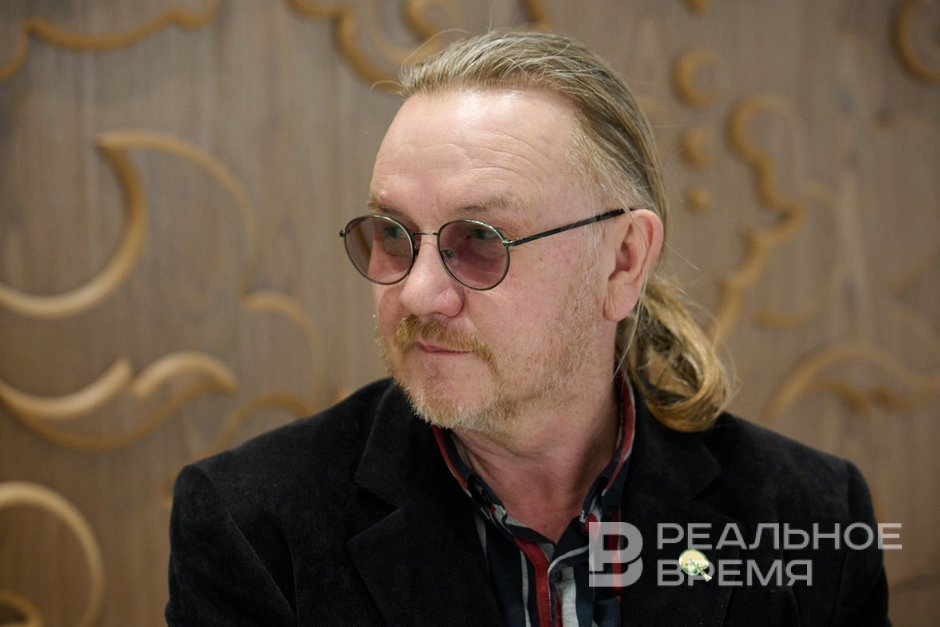
Anna Petukhova-Khamidullina: People are already tired of China, tired of Turkey. The flood of incomprehensible cheap souvenirs is simply drowning out our own culture. We will carry our roots, our origins. We need to emphasize our identity. Tula is known for its gingerbread and samovars. Tatarstan's brands are Kukmor felt boots, national cuisine, leather boots. But besides them, we also have ceramics, jewelry, textiles. We want this ancient culture to be recognized. By the way, in Izhevsk, we organized a project called “New Sacredness”: we held an exhibition and explained that every nation has its own cultural code.
— Are there plans to repeat it in Kazan?
Anna Petukhova-Khamidullina: I think yes, we will repeat this project. It was interregional; I invited ceramicists and jewelers from Tatarstan and Udmurtia. Here, we are thinking of doing the “New Sacredness” project at the Gallery of Modern Art.
Vakil Khamidullin: The question is whether they will accommodate us.
Anna Petukhova-Khamidullina: We will write the project proposal, and maybe we will be able to hold it.
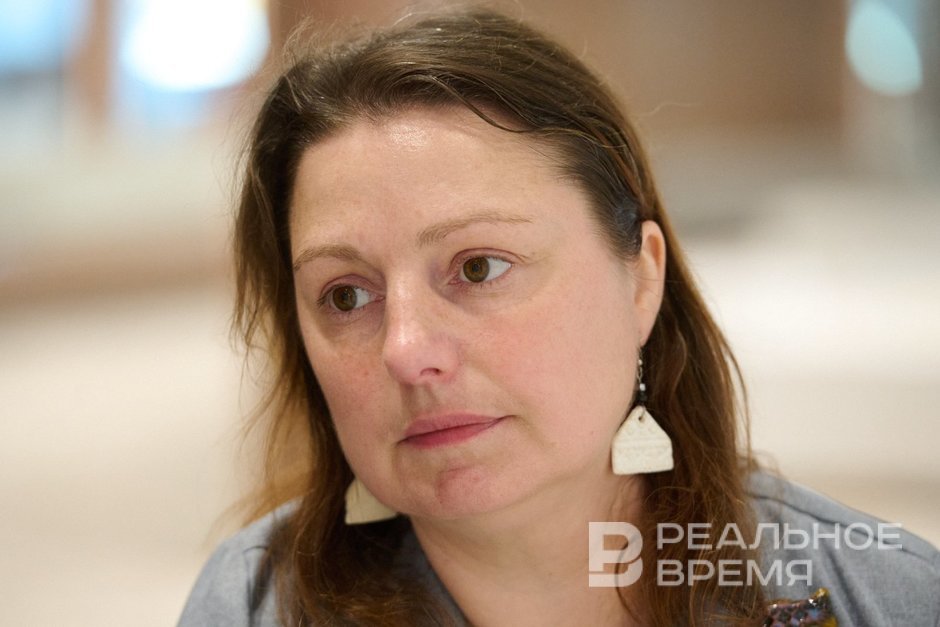
— Did your interest in Bulgar culture appear specifically after arriving in Tatarstan?
Vakil Khamidullin: I had the interest before. Even when I lived in the Urals, I went to ethnic festivals and saw many groups from Tatarstan. I noticed them primarily because of their national clothing. I am Tatar myself, so this all interests me. These are my ancestors, even though I am originally from Siberia. I talked a lot with the guys, and they all unanimously said: “You need to go to Bulgar! You will see very interesting ancient ceramics there.” That was in 1997–1998.
Sometimes you start working reluctantly, when you're not in the mood, and it heals you. You tap into a different energy, everything is forgotten. And when you finish the work, you become pure in soul. An internal metamorphosis occurs.
— How did you decide to move to Tatarstan?
Vakil Khamidullin: This is the second time I'm moving here. I first came in 2017, working at the College of Folk Arts and Crafts. The director, Raushania Kiyamutdinovna, invited me. I taught ceramics and design for a year. We worked very well together, but due to family circumstances, I had to leave. The second time I came was to the Sabinsky District, invited by its head, Rais Nurgalievich Minnikhanov. That was in 2022.
Ceramics is my second professional education. My first is design; I graduated from an art college. Then I studied at the Krasnoyarsk Institute, Faculty of Decorative and Applied Arts, Department of Ceramics.
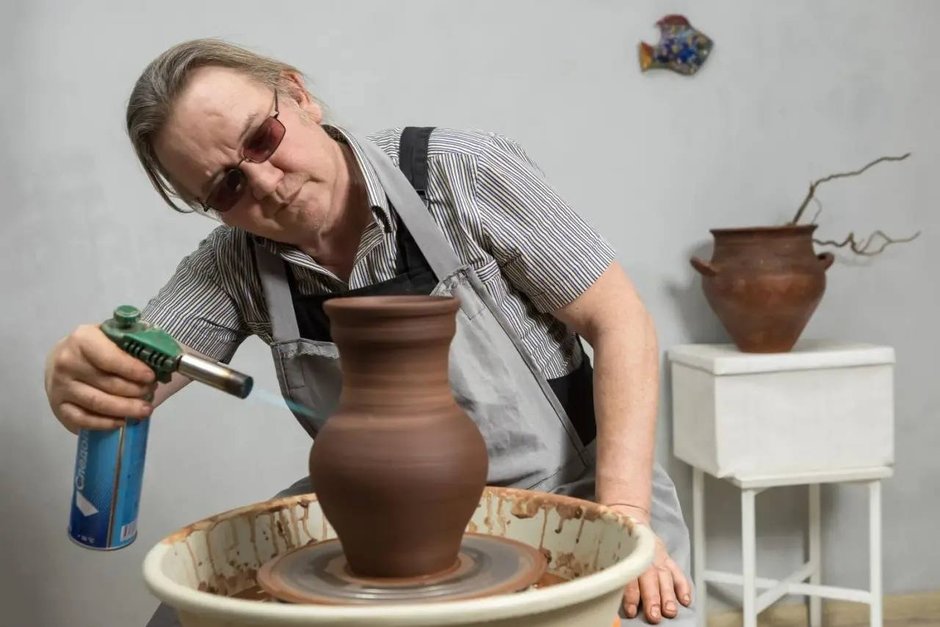
“For ceramicists [in Tatarstan] there isn't a single producer. I think in the future we will take care of this issue”
— How are craftspeople faring today in the difficult economic situation? Are materials becoming more expensive?
Vakil Khamidullin: Yes, materials are becoming more expensive...
Anna Petukhova-Khamidullina: Production is energy-intensive, and energy resources are also becoming more expensive. The kilns are not cheap. We are forced to buy the material. We cannot currently develop a quarry, prepare clay, and work with it. That would be ideal, but many ceramicists don't have that option. Right now we use Yaroslavl clay. It is very good; they have everything worked out, they have the technology. For us, it is optimal in terms of price-quality ratio. Glazes, of course, are expensive materials. We try to use domestic ones. Imported ones — German, French, Turkish — are very expensive.
Vakil Khamidullin: Tatar ceramics must be born on its own soil, from the material to the execution. I think in the future we still need to develop the quarry. We have already found locations; we just need to test this clay.
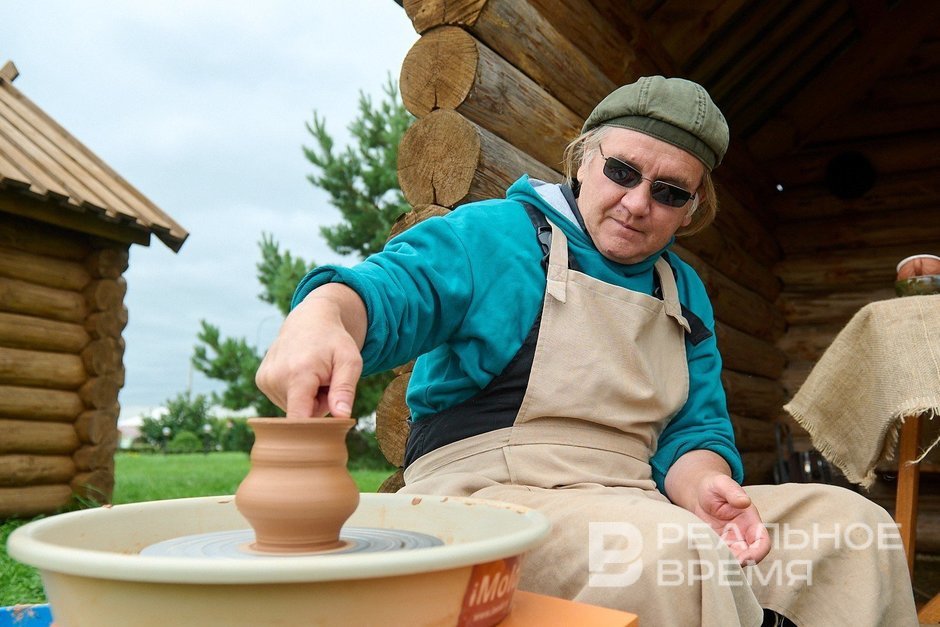
Anna Petukhova-Khamidullina: There is quite fatty clay in Tatarstan that can be worked with. But it still needs to be processed, additional materials added to bring it to a level where you can actually mold from it. We are in the development stage. Our products are branded; we want them to be made directly from our own material.
— But so far Tatarstan does not produce its own clay?
Anna Petukhova-Khamidullina: Unfortunately, for ceramicists, there isn't a single producer. I think in the future we will take care of this issue and will be able to supply them with our own clay.
— Besides the rising cost of materials, what other challenges are relevant today?
Anna Petukhova-Khamidullina: People are now afraid to buy extra things; they are saving money. We feel this very strongly and have to find ways to cope. It's not easy for us now because people have different priorities.
Do you know how I learned pottery myself? We were in our first year at the institute. The master sat us down at the potter's wheel, sat down himself, showed us, and said: “Everyone remember?” We answered: “Yes.” He replied: “That's it. I won't spin it for you. If you want — you'll learn” (laughs).
Vakil Khamidullin: It's also important that the masters be of a good level. Mostly we have amateurs, not professionals. There are some who reach a professional level. But there is no specific school for ceramicists.
I taught at the art college in Chelyabinsk and organized a ceramics department there. It is still operating, and it produces real ceramicists; they have a specialization. Here, too, we need to organize a ceramics department. I think someone will hear me. I would apply all my efforts, help make it happen; I have a huge amount of organizational experience. And then in about five years, everyone will see that new, professional ceramicists have emerged. Then they will raise new generations.
— Do you plan to conduct master classes yourself, also at the former TSUM building?
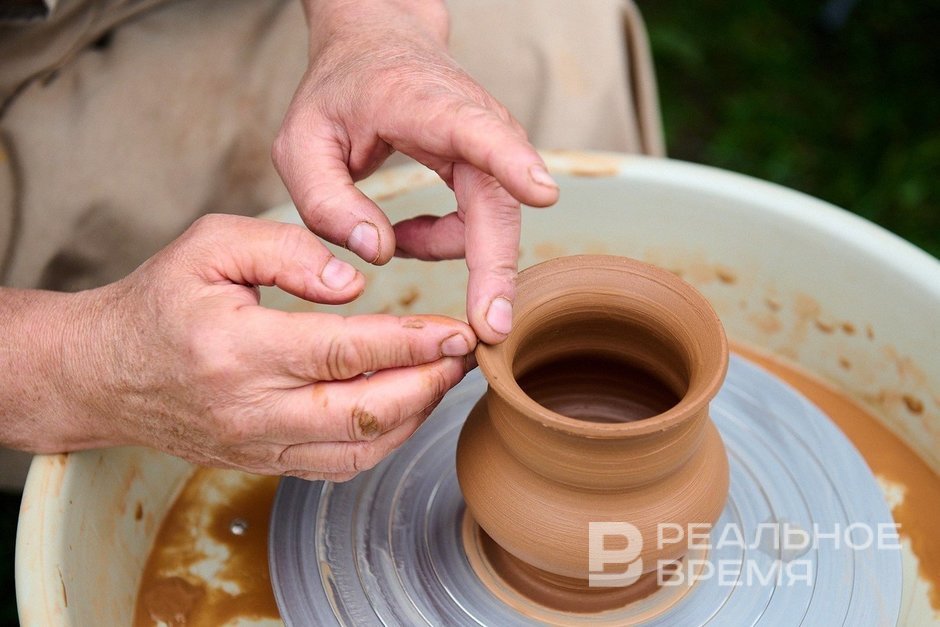
Anna Petukhova-Khamidullina: We plan master classes, but not mass ones. We can take three or four people at most. For example, a family could come. This is important so that people feel comfortable, so that we can work with each person, help them at the potter's wheel. More people could be seated for hand-building. But we don't have the goal of mass-forcing everyone to mold something.
Vakil Khamidullin: A master class takes about two hours. I've been teaching for many years, and the main thing is to train the fingers. How is a musician taught? They work with them individually, training their fingers. Without that, nothing will work. Ceramics is a craft based on intuition. And concentration is also important. You can't achieve that in half an hour, but in at least two hours you'll start to feel it. And then — work, work, work.
Do you know how I learned pottery myself? We were in our first year at the institute. The master sat us down at the potter's wheel, sat down himself, showed us, and said: “Everyone remember?” We answered: “Yes.” He replied: “That's it. I won't spin it for you. If you want — you'll learn” (laughs).
“When you finish the work, you become pure in soul”
— In the Sabinsky District, you conduct classes for children. How do you combine your own creative work with teaching? Has teaching perhaps influenced your artistic style?
Vakil Khamidullin: I'll let you in on a secret: those who teach are also the ones who work creatively. A true artist never fully realizes themselves without a student. A student is their continuation and their support.
— Is ceramics more about craft, business, or something for the soul?
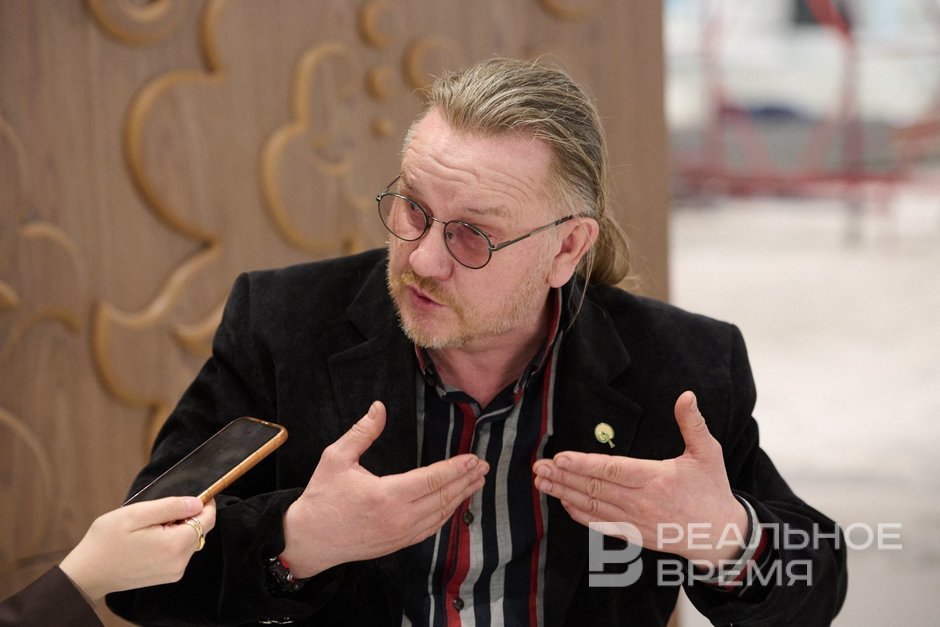
Vakil Khamidullin: Something for the soul. Sometimes you start working reluctantly, when you're not in the mood, and it heals you. You tap into a different energy, everything is forgotten. And when you finish the work, you become pure in soul. An internal metamorphosis occurs. I think that's the case for all artists. I know people who fanatically paint pictures day and night. Something must be happening inside them.
— Can a ceramicist today live solely off their creative work?
Anna Petukhova-Khamidullina: Different scenarios are possible. The question is whether the fire burns inside, whether the person is ready to create projects and defend their point of view. If they work for someone else all their life and are comfortable with that, then creativity might just be a hobby. They could become a ceramics teacher and create their own works in parallel, participate in exhibitions. Or they could go freelance entirely and focus only on their own project.
Vakil Khamidullin: But freelancing requires a lot of focus. You make sacrifices; every artist has to sacrifice something. That's the law. When I was a student, I didn't believe it; I thought it was a fairy tale. But no, it's really true. But if you work, if you don't go anywhere, if you improve yourself, then over time it pays off. There's a saying: 20 years an artist works on their image, and then the image works for them. If you gather an audience, develop, then your works will be valued. But if you go with the flow and make souvenirs, your level won't grow, and your works will be worth pennies. Good works already cost millions... well, not necessarily millions, of course. But those are auction pieces with artistic value.
— Is that realistically achievable today?
Anna Petukhova-Khamidullina: I think yes. We once had the tradition of Pestrechinka ceramics, lost after the revolution. It's gone now; that factory no longer exists in Pestrechinka; only a small museum remains.
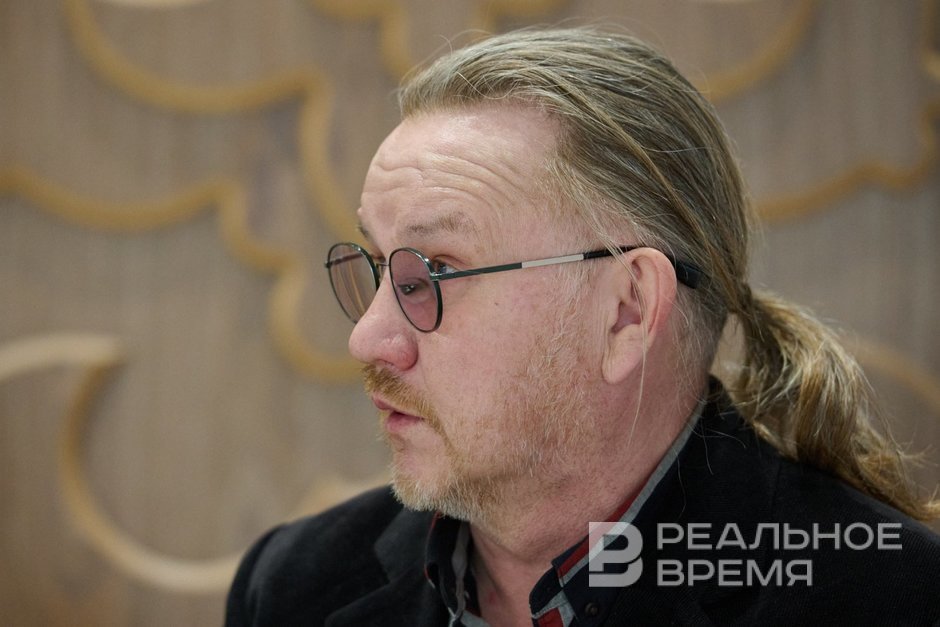
Vakil Khamidullin: We need to bring back those traditions. Then I could die in peace (smiles). I advise young artists not to chase fashion. You need to learn to express your thoughts beautifully in art and create an individual world. If your works are genuine, then you will definitely be noticed, and people will enter your world. Well, maybe after you die. But they will still come!
Anna Petukhova-Khamidullina: When a master invests themselves in their product, conveys their energy, their inner power, then it truly carries value. Like, say, Japanese samurai swords. Or Chinese porcelain.
Vakil Khamidullin: But their traditions have been refined over centuries. Due to historical events, many of our craft centers were lost. And we want to bring them back. When generational continuity appears, the works will have their own face; people will say: it's immediately obvious that this work is from Tatarstan.