Vladimir Soldatov from TAIF Motorsport wins the Kazan stage of SMP RSKG
The Tatarstan team's racer increases his lead in the overall SMP RSKG standings
From June 12 to 14, the second stage of SMP RSKG, the Russian touring car racing series, took place at the Kazan Ring circuit. After the season opener in May in the Moscow region, the racing peloton moved to the Vysokogorsky district to determine the stage winners and make changes to the overall standings. Details are in the report by Realnoe Vremya.
Cars for photographers, drivers to Rotenberg
— Mom, can you drive like that? — a young elementary school girl asked her athletic-looking mother when they stopped by the roadside, watching the racing cars zoom past.
— No, you have to study a lot for that.
— Well, please learn. You're cool.
— Well, thank you — the mother replied, either grateful for the compliment or ironically noting that she would have to change her role from an ordinary car enthusiast to a racing lady.
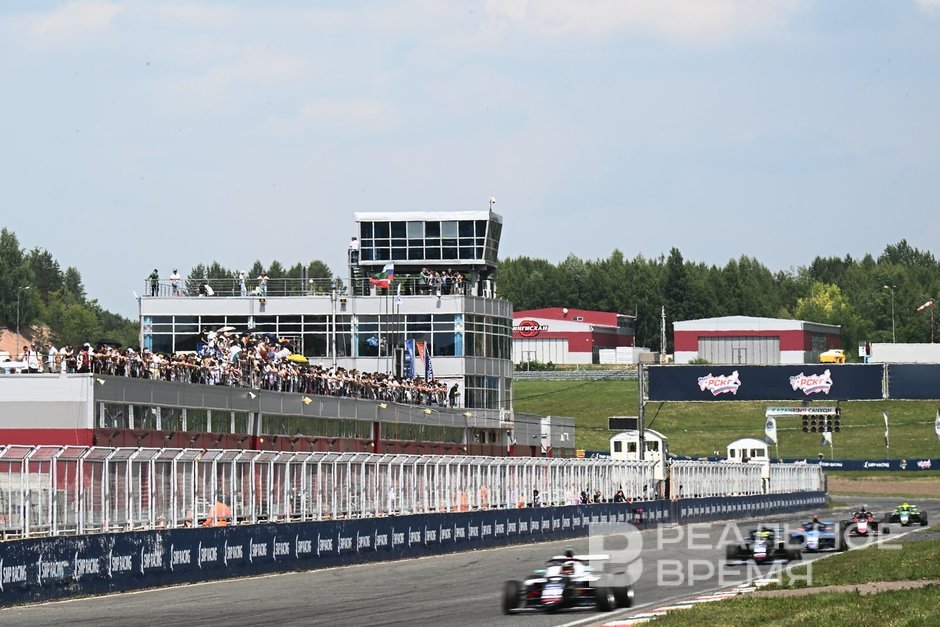
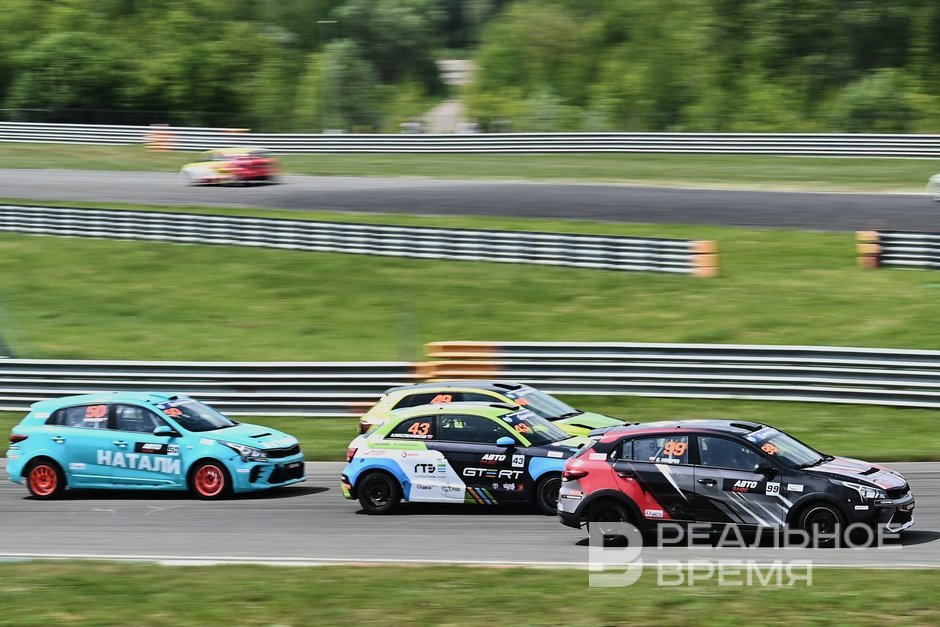
The cool mother, along with her daughter and several dozen, if not a hundred, spectators, headed to the spectator areas, simultaneously keeping an eye on the developments in the first race of the motor racing weekend. The commentator called the first race fiery. The eventual laureates rushed to the finish line with all their human and horsepower hidden under their cars' hoods. The eagerness was so great that Samara stable representative Meshcheryakov's engine stalled right on the podium grid, and his car had to be pushed by the force of three humans. There, the cars and drivers separated; the inanimate participants remained in the photographers' area, while the top three went to the award ceremony conducted by Boris Romanovich Rotenberg.
— And we did a promotional integration live on Match TV, and we won't get in trouble for it — someone from the TV crew joyfully said out loud in the press center office, which, by the way, had been moved to another wing of the building since last year. The advantage was a spacious room, and the disadvantage was that last year the office was shared with team representatives, and you could hear their instructions to drivers over the radios. An advantage comparable to sitting in the front row of a stadium and hearing voices from the team benches.
No matter how many horses are under the hood, one human behind the wheel is more important
The involvement of some participants in their sport is simply astonishing. One driver, entering the restroom with his radio still on, was forced to simultaneously answer questions from his team members. Another young man from the organizing staff, finally getting to his girlfriend who had been waiting for him for half an hour, began recalling during the conversation how last year one of the drivers had to be taken to intensive care, after which he started discussing the layout of the Kazan track. The girl listened silently.
Besides the track layout itself, it was interesting to study the geography of fans and the history of individual participants in the Kazan starts. This opportunity arose during a tour conducted by one of the event's commentators, Alexander Kabanovsky. “Petersburg, Minsk, Yekaterinburg, Chelyabinsk, Izhevsk, Chelny” — auto racing enthusiasts gathered near the paddocks — essentially the teams' changing rooms, practically “holy” in some pretentious sports — randomly shouted out.
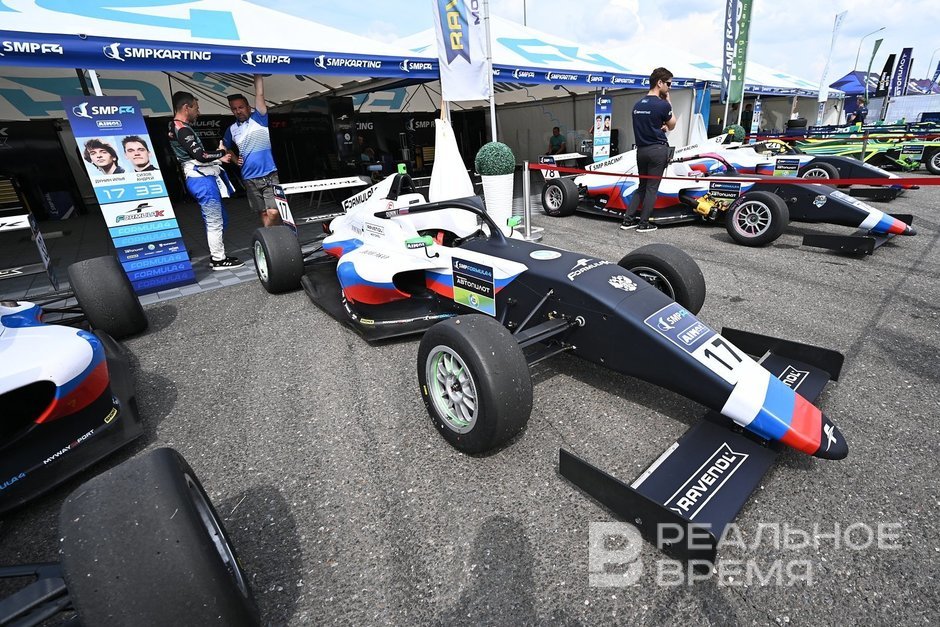
Here, too, there is a movement towards democratization of the sport itself, as teams compete not on a “budget race” scale, but under roughly equal conditions in terms of cars, fuel, and, for example, each of the numerous wings broken in the first stage near Moscow in May costs the same — around 900 thousand rubles — weighs the same, as do all the car components. Therefore, team owners try to find advantages elsewhere. Some look to foreign mechanics; foreign speech was clearly heard in the paddock of one team. But Kabanovsky explained in this regard that last year, when “legionnaires” began to be brought into Russian teams, they were clearly inferior in terms of knowledge of the track layouts. Interestingly, the speech was mainly Italian; their national football team, like the Russian one, is not participating in the World Cup.
They also try to find advantages in the main “diamonds” of any sport — people. Some are literally lured from other types of motor racing, like Lev Guba, who has winning experience in autocross. Others come from other sports, like Tatyana Alekseeva, whose mother, Ksenia Alekseeva, a World Cup holder in speed climbing, probably initially wanted her daughter to follow the beaten family path upwards along improvised cliffs. Or the heir to the fame of the great wrestler Alexander Karelin, who, alone among all, was introduced with his patronymic — Denis Alexandrovich Karelin.
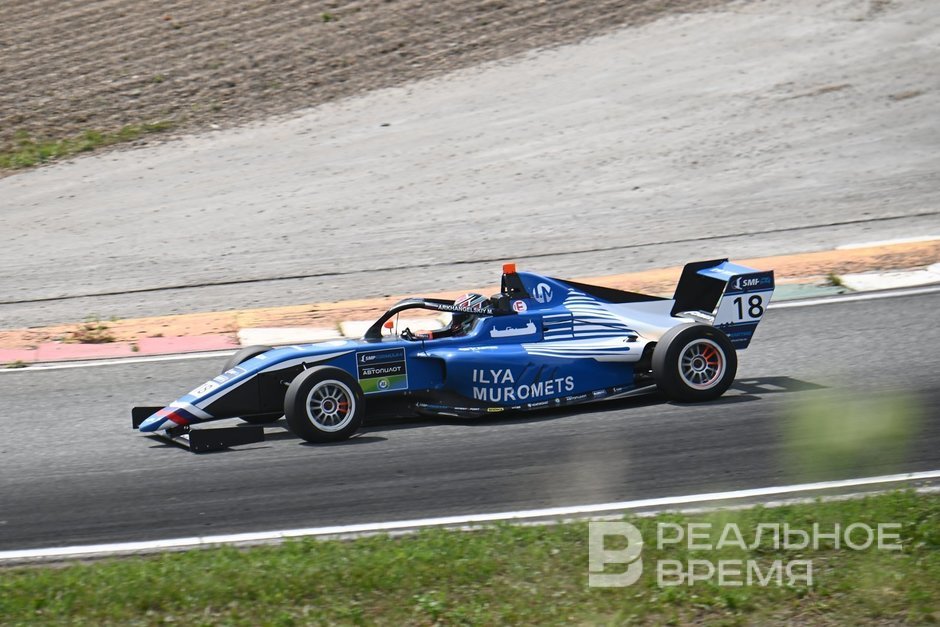
Among the racers of the Ilya Muromets team was Platon Kostin, who was called the grandson of the head of the Kazan River Port, Alexei Mikhailovich, who ran the river port from 1964 to 1987. And when the competition commentators emphasized that Kostin was born in Kazan and therefore could feel at home here, we thought that one could look for something in common between the fact that his ancestors worked in the river port and that current racing is directly related to the Northern Sea Route, whose name was borne by the bank of the Rotenberg brothers. And with the involvement of Dmitry Mazepin in the leadership of the Water Sports Federation, whose son Nikita was one of the few Russian drivers in Formula 1, the water element has become akin to the automobile one.
Vitaly Petrov as a man of celebration
In the Saturday race, car problems became insurmountable for Tatarstan driver Rustam Fatkhutdinov. His father sadly told this to a friend from Belarus who asked, “How are things?” Salavat-aby's answer was inaudible, but it was quite possible that he could have answered with the quote “My car is kaput.” Notably, the conversation took place right opposite the photo stand dedicated to the “STK Salavat” team.
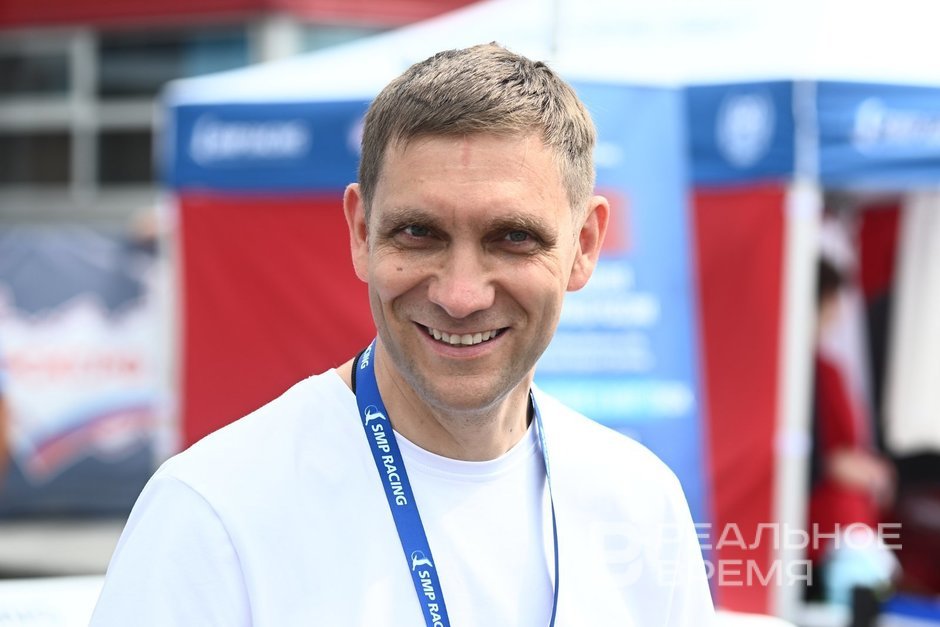
Legendary racer Vitaly Petrov barely had time to take part in the award ceremonies. Otherwise, it must be admitted, the trickle of spectators at the morning races was quantitatively inferior to Saturday's, when it was truly a human stream.
Among the VIPs was Dzhau dat Minnakhmetov, who, unrecognized by anyone, modestly left the circuit, just as Salavat Fatkhutdinov had the day before, and as the head of the Sabinsky district of the Republic of Tatarstan, Rais Minnikhanov, prepared for another start last year, without any fuss.
The “Survivors” of Kazan Ring
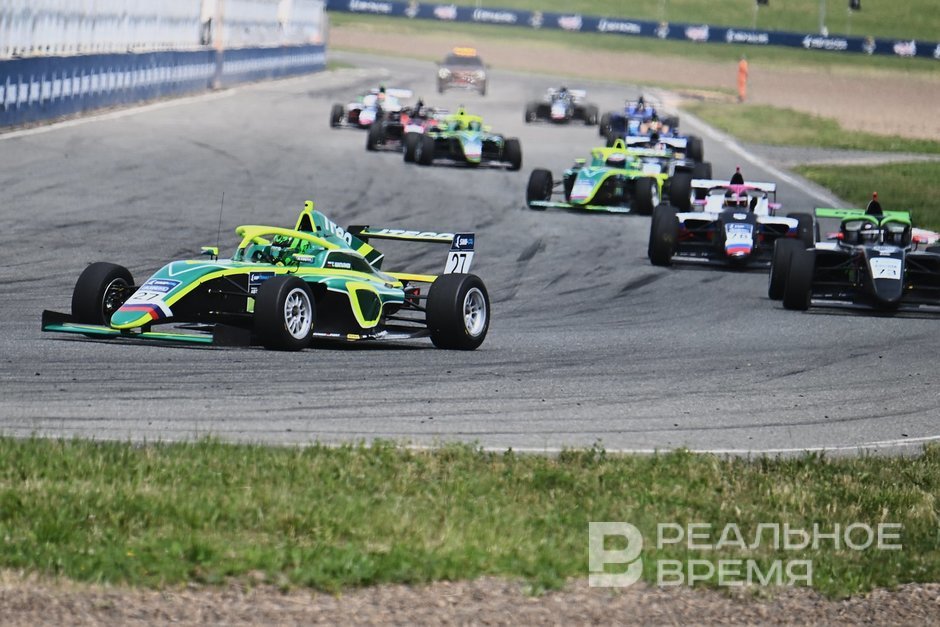
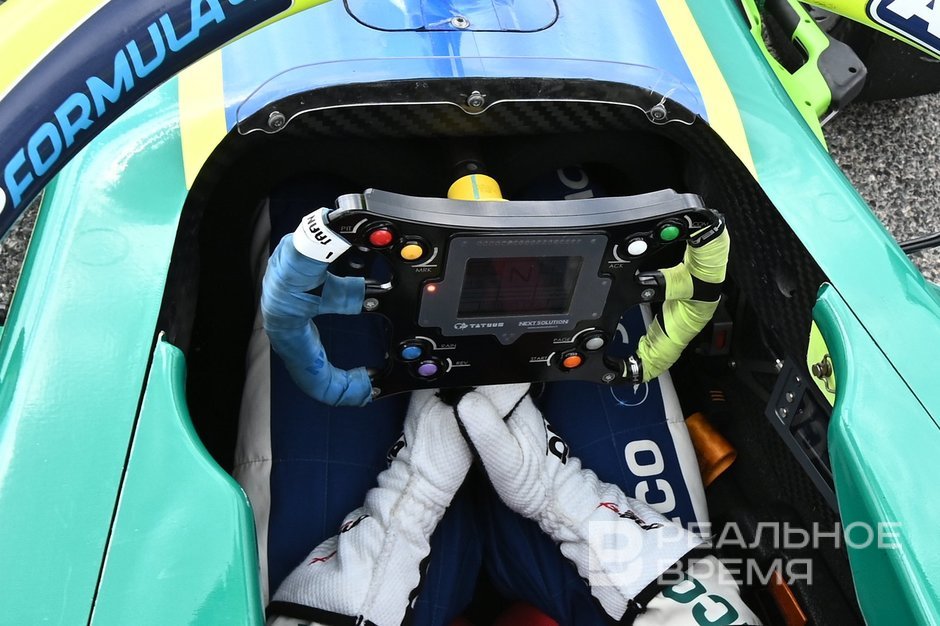
An attempt to describe the races in text will fail in comparison to the television and video images that delighted viewers. Therefore, in the reportage part of the material, I would simply like to share personal observations that remained in memory after two days of watching the races. The Formula 4 prototypes visually differ from the bulk of the starting cars, and the excursionists' attention was drawn to them during the paddock walks organized by the stage organizers. In this regard, the different racing fates of the drivers called for interviews with spectators and the press are interesting. If Platon Kostin won his race, then Alekseeva was forced to retire after a collision with Ivan Gigaev.
“He sees academicians, cosmonauts, sees Ištoyan…" The legendary phrase from the film comedy “Mimino” came to mind after Samvel Iskoyants took the second step of the podium and answered questions from the event's press service in a humorous manner. And interestingly, Iskoyants's surname was remembered, but the name of the race winner in the Touring Light class, Pyotr Plotnikov, had to be clarified from the final protocols.
In the main classes of the Russian touring car series, SMP TCR Russia and Super-Production, the confrontation on the Kazan Ring Canyon track was rich in events that directly affected the final balance of power after the race. Moreover, the fight for life or death or retirement was underway from the very first day of the competition. For example, the battle between Dmitry Bragin and one of the Slutsky brothers led to the tire of the TAIF Motorsport driver starting to rub against the body, causing the car to fill with smoke.
From the start, Artyom Sevryukhin and Vladimir Atoev pulled ahead, pursued by Maxim Soldatov from TAIF Motorsport, and this trio had a noticeable handicap over the others as they approached the backmarkers from the Super-Production class. By lap 10, they had all lapped the slower car, after which Atoev attacked Sevryukhin's car. The fight for position turned into contact — after a nudge from the SMP Racing driver's car into the Lada Sport Rosneft driver's Lada Vesta TCR, the rear chassis could not hold up... As a result, Sevryukhin ended his race on the green verge, and soon Radik Basyrov's car, competing in the other Super-Production class, joined him there.
In his case, he was honestly letting the overtaking cars from the SMP TCR Russia class pass until his car turned into a three-wheeler. The left rear wheel refused to continue the race, flying out of the chassis. Following him, Alexander Smolyar from SMP TCR Russia crashed out after a collision with a car from Super-Production. By the end of the race, the intra-class competition within the same class had turned into inter-class competition with representatives of the other class, and could rightfully be called inter-class. And those who made it to the finish could rightfully be called “survivors," recalling the title of a famous Hollywood film. But not all “survivors” could count themselves among the winners.
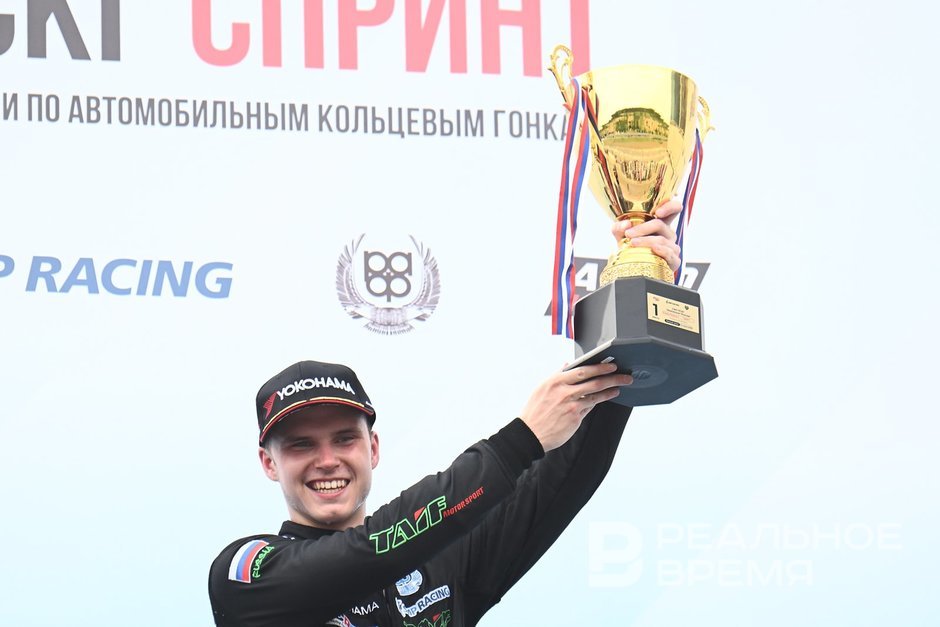
According to preliminary results, Vladimir Atoev was declared the winner, but then the stewards reviewed the collision episode, finding Vladimir at fault and disqualifying him. Ultimately, first place went to Maxim Soldatov; second place was taken by the “handsome gentleman," as young fans called him, Artyom Slutsky from Lukoil Racing Twins Team; and third place on the podium went to Ivan Chubarov from LADA Sport Rosneft.
If only a month passed between the opening round of SMP RSKG in May and the Kazan stage, now there will be two months until the third round at Igora Drive in the Leningrad region. And they can be whiled away by rewatching the Kazan stage, which proved eventful in terms of memorable incidents of various scales.