Coffee worsens sleep, ancient beer found in China, and a black hole as the birthplace of ghostly neutrinos
Interesting science news of the week
Even if you sleep enough hours, coffee disrupts the internal mechanism of sleep and prevents proper recovery. American scientists have created a wound-healing patch embedded with genetically engineered human cells. At Harvard, epigenetic clocks have been developed that can predict how many years of life a person's biological reserves will last. Archaeologists have found nearly 4 liters of beer in China that is 2,500 years old. Astronomers and physicists have suggested that “ghost” particles with monstrous energy are born in supermassive black holes. More details about the scientific news of the past week are in the review by Realnoe Vremya.
Coffee impairs sleep quality
Scientists from Wroclaw Medical University studied a large body of data on coffee consumption and its effect on human sleep. They came to disappointing conclusions: even if you sleep enough, coffee can worsen sleep quality and the effectiveness of bodily recovery.
Even though caffeine generally improves attention and reaction, especially if we haven't slept enough, it disrupts the “microstructure” of sleep. This cannot be assessed subjectively, but can be detected using an electroencephalogram. The Polish scientists conducted an analysis of 32 studies carried out over the past 46 years, in various settings and using different methods, ranging from taking caffeine before bedtime in a laboratory to multi-day coffee drinking and assessment of sleep at home.
It turned out that caffeine alters the electrical activity of the sleeping brain: it suppresses the activity of “slow” waves, especially in the lowest range, which is considered the main marker of sleep depth (and therefore of recovery effectiveness). At the same time, caffeine enhanced “fast” frequencies.
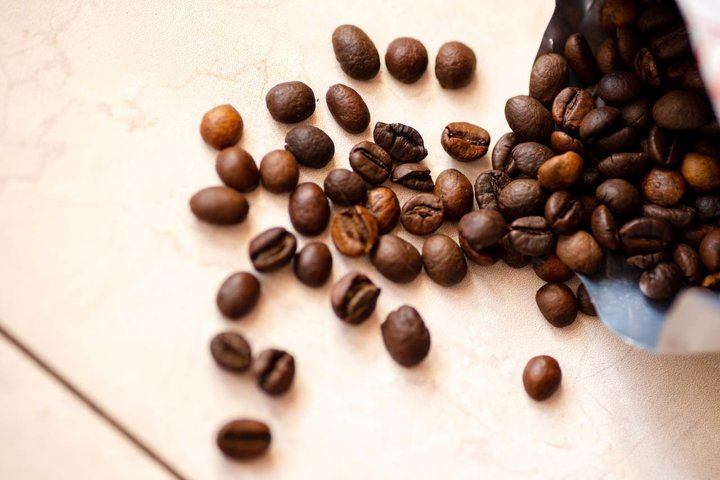
This means that during sleep under the influence of caffeine, the brain was in a relatively active state, close in characteristics to wakefulness. At the same time, subjectively, the person does not notice anything wrong: they are sleeping the prescribed 8 hours. With a normal sleep duration, the rest ends up being superficial.
In short, caffeine does not banish sleep but interferes with its mechanics. Under its influence, the brain recovers more slowly and less effectively. At the same time, the study showed that some people are more susceptible to this effect than others — this is determined by genetics. Caffeine affects their sleep even if they drink coffee in the morning. Other factors increasing susceptibility include age, stress, chronic fatigue, and metabolic rate.
Epigenetic clocks playing the cuckoo
This past week, a study was published about new powerful “molecular clocks” calibrated using gene activity data. They are used to assess the biological age of rodents, monkeys, and humans. For people, they can even “cuckoo” how long they have left to live.
Usually, age is measured by time, but in the biological sense, it is not so linear: the “ticking” in human cells can slow down, speed up, stop, and restart depending on health and the environment. This is precisely why, in recent years, researchers have intensified the study of so-called molecular clocks — ways to truly assess the actual level of biological aging of the body. These methods are based on different indicators. Some scientists measure the concentration and composition of metabolites in the blood. Others scan the brain. Still others assess the level of DNA methylation, which affects gene activity. This last type of assessment is called epigenetic clocks in scientific parlance. This method is used most often because it is currently considered the most accurate.
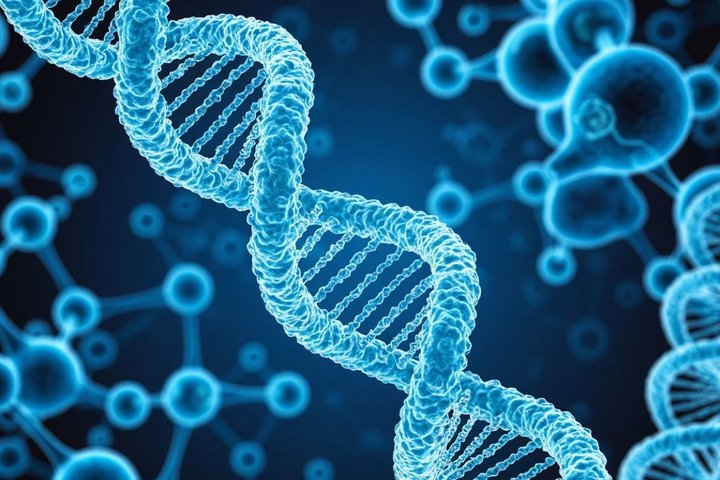
The new article describes how the Harvard Medical School (Boston) decided to develop even more informative epigenetic clocks. They examine not chemical marks on DNA, but directly the activity of genes, whose activity increases or decreases with age. In the experiment, the activity of genes in more than 25 tissues from 11 individual mammals belonging to four species — mice, rats, macaques, and humans — was analyzed.
It turned out that many signs of aging are common both to different tissues of the same species and to different species. Changes associated with biological aging turned out to be fundamental. Using this system, it was even possible to predict the time of death in humans (among participants in a large sample being studied for heart health).
Importantly, the “biological clocks” sped up or slowed down in response to factors affecting aging and lifespan, such as exposure to gamma radiation, chronic diseases, etc. That is, they also react to changes in the environment.
It is assumed that the new method will greatly assist physicians and biologists. It will help determine which medications or lifestyle changes can mitigate the many consequences of aging.
A patch with human cells heals wounds
Biochemists at Rice University (Houston, USA) have developed a patch capable of healing wounds. It incorporates genetically engineered human cells that produce substances promoting wound healing — cytokines. Experiments on pigs and mice have shown good results even in the healing of deep wounds.
Such a patch will be especially useful for people with chronic, non-healing wounds. Today, such conditions are treated with compression bandages, hyperbaric oxygenation, and other methods, but the effect of such treatment is limited. And skin grafts are ineffective in half of cases.
The scientists from Houston decided to focus on cytokines — immune signaling molecules. They reduce scar formation, fight infection, and stimulate wound closure. It was on this basis that they created the patch. On its substrate are hollow protrusions with hydrogel, containing living human epithelial cells. These were genetically modified to constantly synthesize and secrete human cytokines. Through channels in the protrusions of the patch, these cytokines continuously enter the wound.
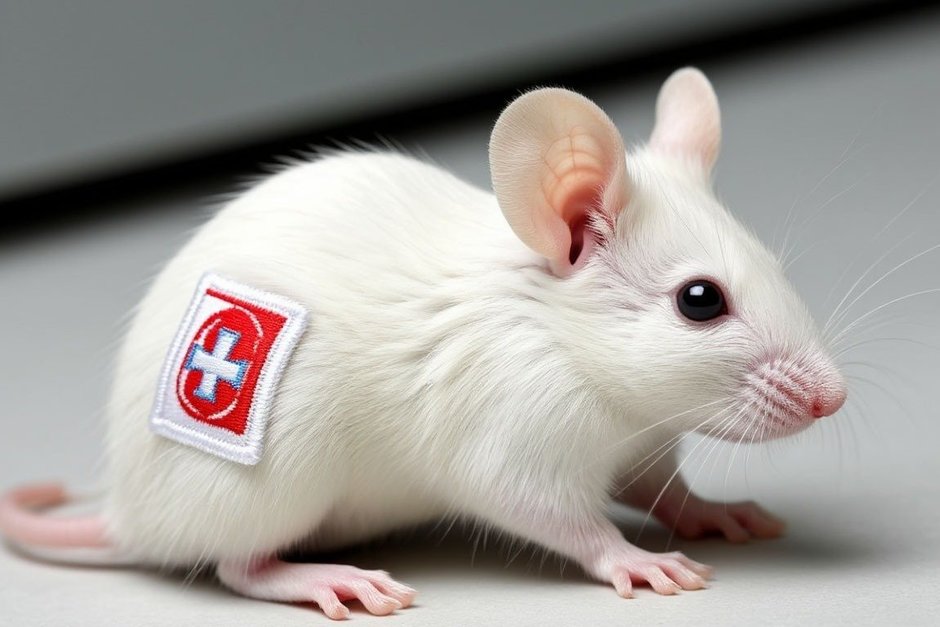
Experiments on mice were encouraging. By the third day of wearing the patch, 95% of the cells remained viable; by the seventh, more than half. The cytokines continue to be produced and enter the wound properly. Moreover, patches with three types of cytokines significantly accelerated wound healing — after two weeks, their area was only 10% of the original. Without the patch, the wound area remained much larger — 40% of the original. At the same time, scar formation with the patch was practically nonexistent.
After mice, they moved on to pigs. The patch with cytokines healed the wound in 15 days to 30% of the original area (without the patch, the wound area remained at 70% of the original).
The scientists will continue their work: the results so far confirm the hypothesis that bioactive patches could in the future deal with deep, non-healing wounds.
Have scientists found the “birthplace” of ghostly neutrinos?
Neutrinos are particles that physicists call ghostly. They share with ghosts the ability to pass not only through walls but through entire planets, because they hardly interact with matter. This makes them very difficult to detect. But it is precisely because of this unique feature that neutrinos travel across the entire universe, without losing any of their energy or their strange neutrino properties. That is why astronomers hunt for them as the most desirable prey — the most inaccessible corners of the universe can be slightly revealed through the study of neutrinos.
In February 2020, a detector of the KM3NeT/ARCA underwater telescope in the Mediterranean Sea registered a unique event — the passage of a neutrino, which was named KM3-23021F. The uniqueness lay in the energy of this particle — monstrously huge, 220 peta-electronvolts (the prefix “peta” denotes a quadrillion-fold magnitude). This value exceeds the capabilities of the Large Hadron Collider by more than 30,000 times. Scientists are still trying to understand what exactly in space could have generated such a giant particle energy. For example, it was suggested that this neutrino could have resulted from the explosion of a primordial black hole.
Now a new version has been proposed. Physicists and astronomers from the University of Florence (Italy) have suggested that the ghostly ultra-high-energy neutrino could have been formed in blazars. A blazar is an active galactic nucleus in which a supermassive black hole ejects jets (“tails” of energy) at nearly the speed of light. If one of these “tails” is pointed towards Earth, it becomes bright and noticeable to terrestrial astronomers. Now scientists suggest that blazars are capable of producing high-energy neutrinos. Calculations performed have shown that this is quite possible.
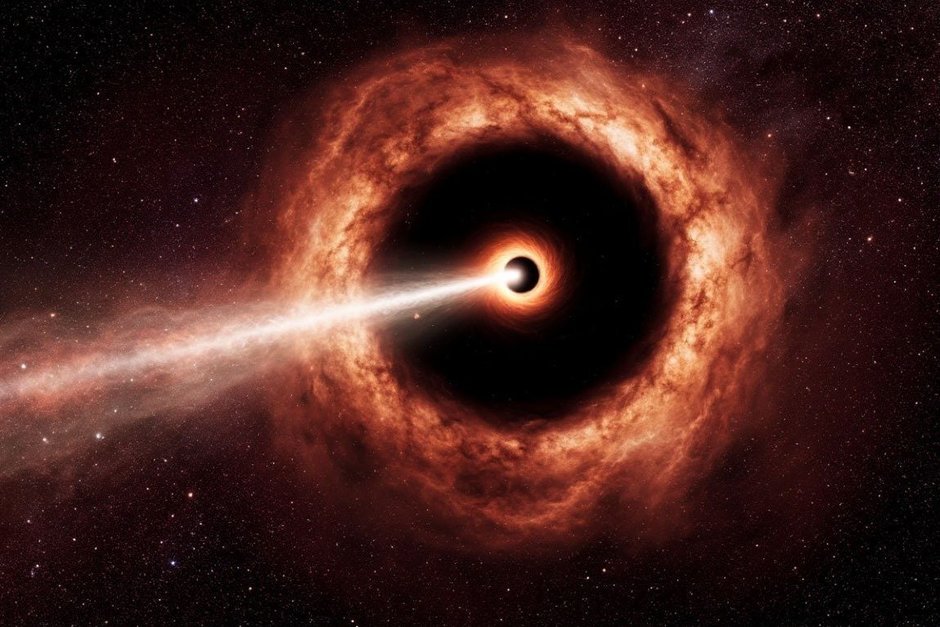
Now the Italian physicists will monitor new data from the underwater telescope, accumulate it, and subsequently hope to prove that blazars are the factories of the most energetic neutrinos in the universe.
Nearly four liters of 2,500-year-old beer found in China
At the Shanjiazhuang cemetery in China, archaeologists found 183 tombs dating to the Warring States period (475–221 BC). In one of these tombs, a unique artifact was discovered: a bronze bottle containing 3,740 ml of a transparent, bluish-green liquid with sediment at the bottom. Over two and a half thousand years, the liquid did not evaporate because the bottle was tightly sealed in two layers — with fabric and organic glue.
Chemical analysis showed that scientists had found an ancient Chinese analogue of beer — an alcohol brewed from cereals. This was understood because practically no tartaric acid was found in the liquid, while the concentration of lactic and oxalic acids was quite high. The main raw material for the ancient beer was millet grains (92%), with the addition of wheat and barley. They were ground and heated before being left to ferment. This was determined by the tiny starch grains preserved in the solution and by the thousands of dead yeast cells found under a microscope.

The uniqueness of the discovery lies in the fact that until now, ancient brewing methods have been studied from the residue on the walls of vessels. It was already known that the ancient Chinese practiced brewing in two ways. In the first, the starter was made from sprouted grains (i.e., malt); in the second, from fermented grains or herbs. In the north, millet was used; in the south, rice. And now, scientists have obtained a unique opportunity to study the liquid fraction of an ancient beverage.