Нow “The Murder of Roger Ackroyd” changed detective fiction & taught readers not to trust the narrator
Book of the week — Agatha Christie's detective story “The Murder of Roger Ackroyd”

One hundred years ago, on June 7, 1926, British readers first saw the novel “The Murder of Roger Ackroyd” on bookstore shelves. Today, this book is called not only Agatha Christie's main work but also one of the most influential detective stories in the history of the genre. In 2013, six hundred members of the British Crime Writers' Association recognized it as the best detective novel of all time, and Christie herself as the best crime writer. At the same time, disputes around the book have not subsided to this day. The literary critic of Realnoe Vremya, Ekaterina Petrova, tells how Christie broke the formula of the detective novel, cemented her reputation as a major innovator, and turned the figure of the unreliable narrator into one of the most notable literary devices of the 20th century.
The novel that changed the rules of the game
In 1920, Agatha Christie published her first novel, “The Mysterious Affair at Styles," which introduced the Belgian detective Hercule Poirot — a former policeman with magnificent mustaches and an egg-shaped head. By the mid-1920s, the writer had already published several novels and stories about Poirot, but her name was not yet on par with the leading detective authors. True recognition came only after “The Murder of Roger Ackroyd.”
In the mid-1920s, the writer was looking for a way to surprise readers who had grown accustomed to classic puzzles in the spirit of Arthur Conan Doyle and Edgar Allan Poe. Christie received hints from several sources. In her autobiography, she recalled that her brother-in-law, James Watts, suggested an unusual idea: to make the criminal a character resembling Dr. Watson, that is, the detective's companion and the narrator of the story. In 1924, a similar suggestion was sent by a young naval officer, Louis Mountbatten. Both pieces of advice prompted the writer to work on the book, although Christie devised the plot herself.
As a result, she structured the narrative around the village doctor James Sheppard, who accompanies Poirot and narrates the story in the first person. This move was particularly audacious for an era when readers were accustomed to trusting unconditionally the person from whose perspective the story was told.
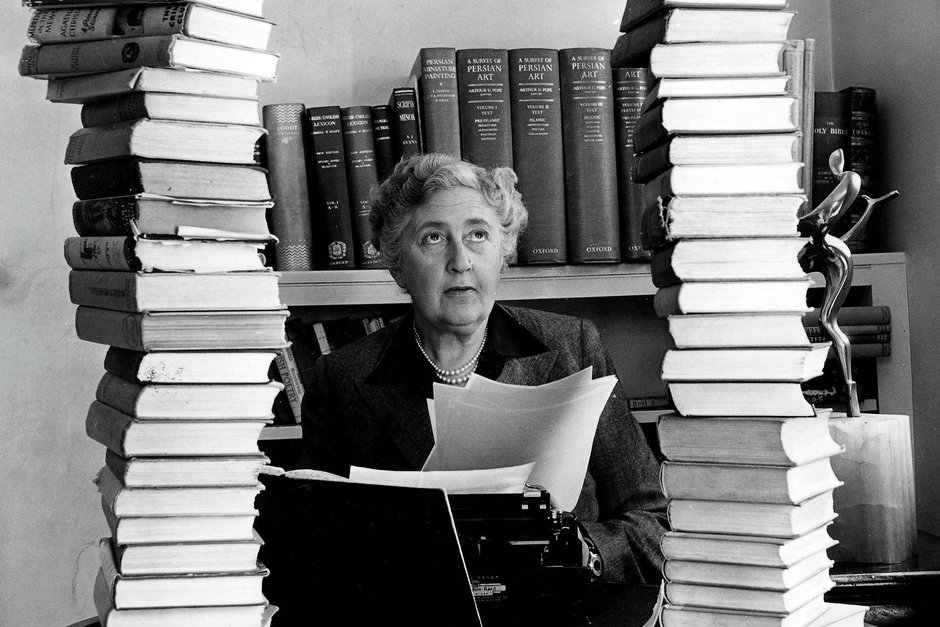
From July to September 1925, the London Evening News newspaper published the novel in installments under the title “Who Killed Ackroyd?”. Within a few months, Christie submitted the manuscript to Collins publishers, and in June 1926, the first book edition was released. Biographer Laura Thompson wrote that this book forever changed the writer's reputation: as early as 1925, Christie understood that she had found a winning idea.
Reviewers highly praised the complexity of the puzzle and the author's skill. The New York Times Book Review noted that Christie precisely calculates the number of clues while simultaneously making the solution almost elusive, and The Scotsman called the novel one of the most original detective stories of its time. However, while some critics admired the writer's inventiveness, others accused her of “unfair play” with the reader.
The perfect crime in an English village
Everything begins in a place that looks completely ordinary. King's Abbot is a small English village where everyone knows each other and carefully watches others' affairs. The narrator — Dr. James Sheppard — lives there with his sister Caroline, whom Agatha Christie later described as a woman “full of curiosity, knowing everything and hearing everything; a veritable detective agency at home.” Behind the facade of calm provincial life lie secrets and omissions. Christie uses the classic Golden Age detective setting — a village and a country estate — but fills it with an entire network of connections between the characters. As Poirot notes, everyone has secrets.
The death of Mrs. Ferrars brings anxiety to this world. Dr. Sheppard rules it a suicide by the wealthy widow, and his sister immediately suggests that a year earlier she had poisoned her own husband and now could not bear the guilt. That same day, the landowner Roger Ackroyd invites the doctor to dinner and says he was planning to marry Mrs. Ferrars. He also says that the woman told him about blackmail and promised to name the blackmailer. Shortly afterward, Ackroyd is killed in his study by a dagger, and the letter with the blackmailer's name disappears.
Several people fall under suspicion: the stepson Ralph Paton, the servants, the secretary, the houseguests, and even a mysterious stranger someone saw near the estate. Christie builds the investigation according to the classic closed circle of suspects, where almost every character is hiding something.

Even after a hundred years, the novel does not feel cumbersome. The writer quickly introduces the reader to the characters and immediately launches the investigation. She does not divert the plot or waste chapters on extraneous episodes. Instead, Christie gradually reveals the characters' secrets: an illegitimate son, a secret marriage, blackmail, and drug addiction. At the same time, the reader receives exactly as much information as necessary for the plot's progression.
Hercule Poirot plays a special role in this structure. “The Murder of Roger Ackroyd” became the third novel about the Belgian detective. By the time of the novel's events, Poirot has already retired and settled in King's Abbot, where he grows marrows and pumpkins. However, Ackroyd's mysterious death forces him to return to investigations.
Unlike Sherlock Holmes, Poirot relies little on chases and physical clues. He trusts “order and method” and his famous “little grey cells” — as the detective calls his ability to logically analyze facts. Readers are accustomed to trusting his conclusions, and Poirot's rational perspective contrasts sharply with Dr. Sheppard's subjective narrative, which accompanies the investigation and recounts the entire story in the first person.
A century of distrust
The strongest literary deception often occurs when the reader trusts the wrong voice. This is the principle on which the figure of the unreliable narrator is built — a storyteller whose words cannot be taken at face value. The term was established by American literary critic Wayne Booth in his book “The Rhetoric of Fiction” in 1961. At the same time, unreliability does not equate to outright lies. The narrator may be mistaken, misunderstand what is happening, or deliberately withhold important information. Researchers distinguish different forms of such narration: from delusion and limited perspective to intentional concealment of information.
However, Agatha Christie did not invent this device. Even before her, unreliable narrators were used by Edgar Allan Poe in stories told from the perspective of characters with disturbed perception, by Henry James in “The Turn of the Screw," where the reader never fully understands the nature of events, and by other 19th-century authors. Nevertheless, it was “The Murder of Roger Ackroyd” that made this tool part of mass culture. The reason lay in the genre. Early 20th-century detective fiction had taught audiences to trust the narrator — the detective's assistant. Christie used this expectation as part of the novel's construction and made the source of trust the source of deception.
The reader falls into the trap from the very first pages. The story is told by Dr. James Sheppard, who helps Hercule Poirot and takes Captain Hastings' place as the chronicler of the investigation. His narrative appears calm, detailed, and conscientious. Christie's key technique is that Sheppard almost never directly lies. Instead, he carefully doles out information. The most famous example appears in the scene after Ackroyd's murder, when the narrator writes:
“I did what little was required.”
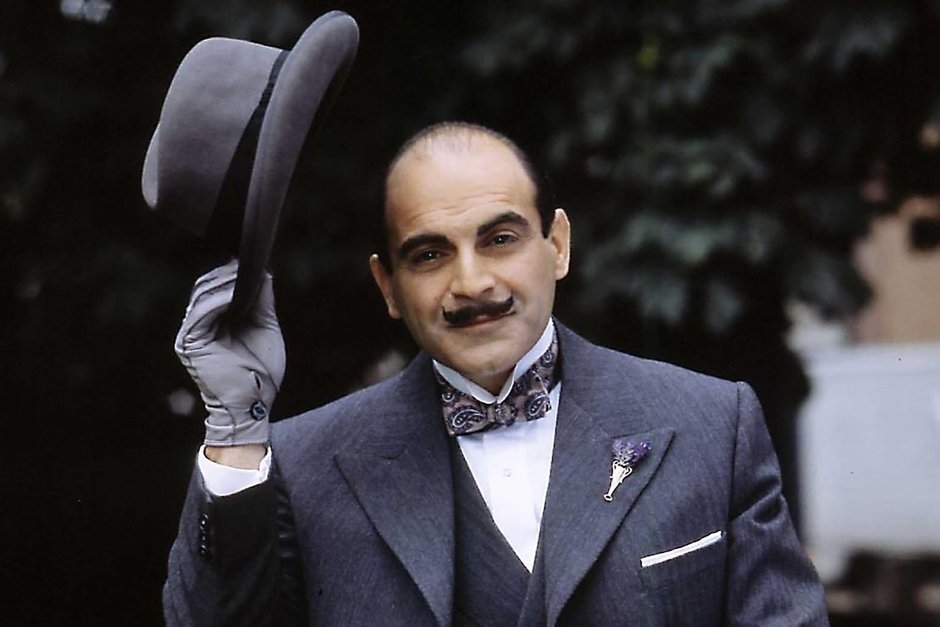
But this phrasing conceals specific actions with the dictaphone and the rearrangement of objects, while remaining formally truthful. That is why the ending is rather a test of the reader's attentiveness. Sheppard conceals his own actions, confuses the perception of time, and uses Ackroyd's voice recording to create a false alibi.
At the same time, the novel constantly leaves clues. Christie acts in utmost good faith and builds the puzzle on verbal and visual clues, not on secret information. She makes the reader draw incorrect conclusions independently. Upon rereading, almost every detail falls into place, and the main deception is born from the reader's own erroneous assumptions.
After the novel's publication, the unreliable narrator device was particularly enthusiastically adopted by 20th-century modernists, who rejected the idea of an objective, omniscient narrator. Writers became increasingly interested in memory, perception, and the inner experience of the individual. Stream of consciousness, fragmented memories, and a subjective view of the world made unreliability a natural part of the story. In the works of Samuel Beckett, Graham Greene, James Joyce, and William Faulkner, the reader no longer received a ready-made picture of events but assembled it from individual fragments and contradictions.

Later, various authors developed this device in their own ways. In “Lolita," Vladimir Nabokov creates a manipulative narrator: Humbert Humbert consciously justifies his own actions and substitutes rhetoric for facts. In “The Remains of the Day," Kazuo Ishiguro's Stevens does not intentionally deceive but rewrites the past to preserve his familiar self-image. In “One Flew Over the Cuckoo's Nest," Ken Kesey shows the world through the hallucinations of Chief Bromden. In “Fight Club," Chuck Palahniuk links unreliability to mental disorder and distorted perception of reality. In “Gone Girl," Gillian Flynn combines two models at once: Nick Dunne hides important facts, and Amy Elliott-Dunne consciously constructs a false version of events. All these books use different types of unreliability but retain Christie's main lesson: the reader tends to trust the voice that guides them through the story.
Today, it is difficult to imagine a psychological thriller without playing with trust in the narrator. Contemporary authors more often link unreliability to trauma, memory lapses, self-deception, or split personality, but the logic of the device itself remains the same. “The Murder of Roger Ackroyd” continues to live not only as a classic detective story but also as a study of the mechanics of perception.
Publisher: Eksmo
Translation from English: Andrey Petukhov
Number of pages: 264
Year: 2016
Age rating: 16+
Ekaterina Petrova — literary critic for the online newspaper Realnoe Vremya, host of the Telegram channel «Булочки с маком».