Cemi Can Deliorman: “Now with the Tatarstan National Symphony Orchestra, I hope we are opening a new chapter”
Chief conductor of the Presidential Symphony Orchestra of Ankara — about Russian orchestras, working with the Tatarstan National Symphony Orchestra, music, and artificial intelligence
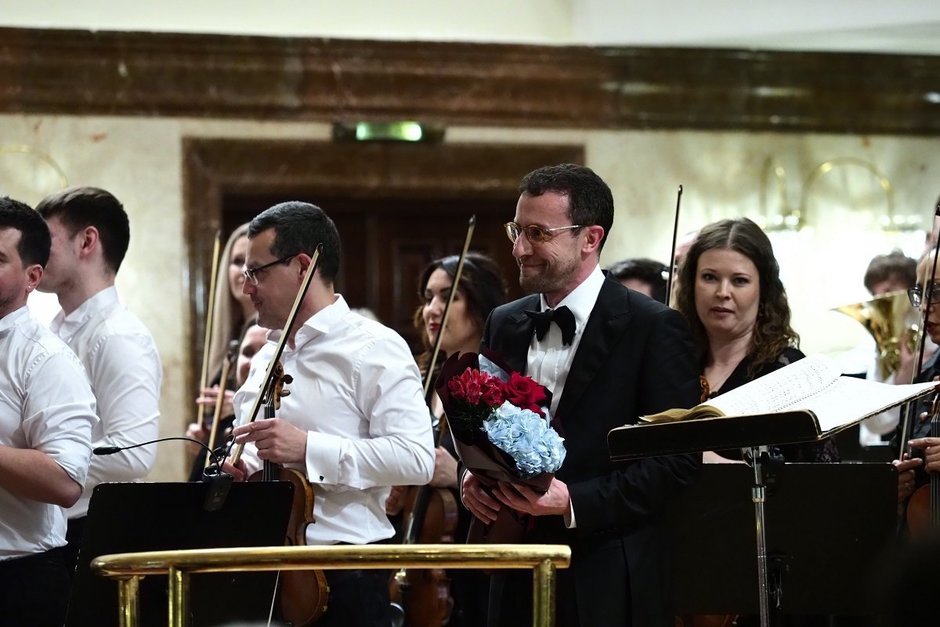
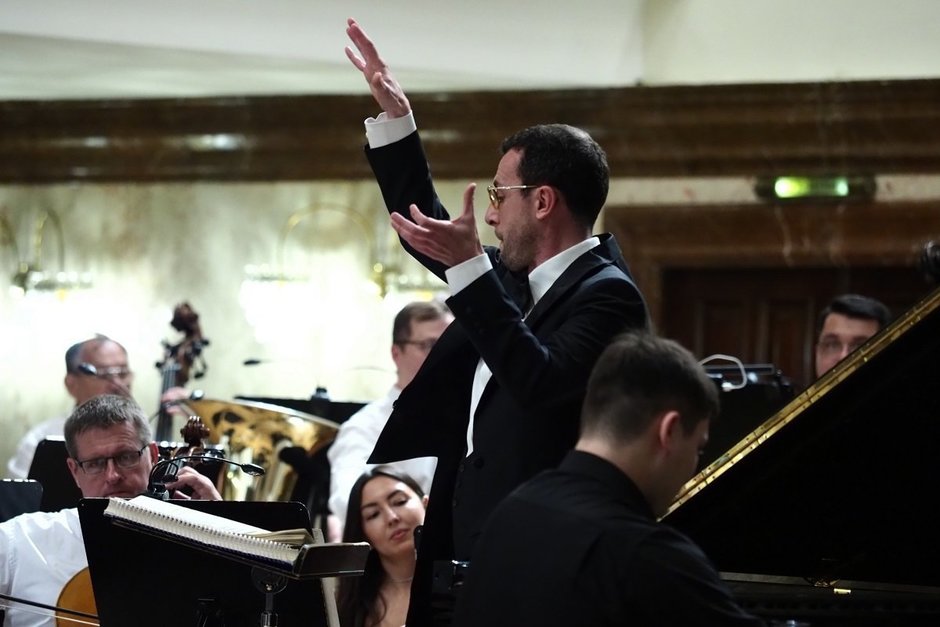
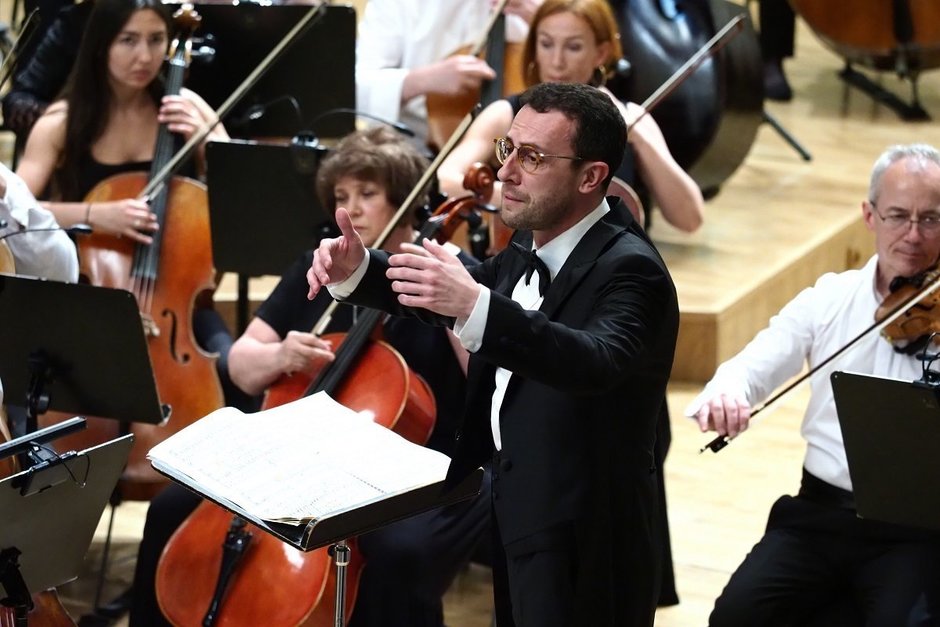
The “White Lilac” festival has concluded in Kazan — the Tatarstan National Academic Symphony Orchestra under the baton of Alexander Sladkovsky held it, as always, with sold-out audiences and new names. During the final concert, Cemi Can Deliorman — Artistic Director and Chief Conductor of the Presidential Symphony Orchestra of Ankara — was at the podium. It was the maestro's debut in Kazan. Sergei Prokofiev's Third Piano Concerto and Sergei Rachmaninoff's Second Symphony were performed. Before the concert, Maestro Deliorman gave an interview to Realnoe Vremya. About the particularities of Russian orchestras, how Ankara rated the performance of the Tatarstan National Symphony Orchestra, why audiences should not only listen to “nice” music, and how artificial intelligence might change classical art — in this conversation.
“Russian orchestras are the most productive in the world”
— Russia gave the world Prokofiev and Rachmaninoff. Have you had many opportunities to work with their music, and which of these two composers is closer to you? Why?
— I have conducted many works by Prokofiev and Rachmaninoff. With Rachmaninoff, it was mainly the piano concertos. Prokofiev appears in my programs less often, but I am currently working on his Second Symphony and am close to completing it. And now I am performing these two great composers in one program with a magnificent orchestra!
As for Rachmaninoff's Second Symphony, I have conducted it with various orchestras in Turkey and with the Mariinsky Theatre Orchestra in St. Petersburg. And now — in Kazan. It is a very famous symphony, one of the composer's most performed works.
When I was in Tambov last year, I visited Ivanovka and toured the Rachmaninoff Museum-Estate. Thanks to that, in my opinion, I gained the key to understanding the Second Symphony; for me, it is now closely connected to Ivanovka. In this music, there is both character and the purity of nature from that place.
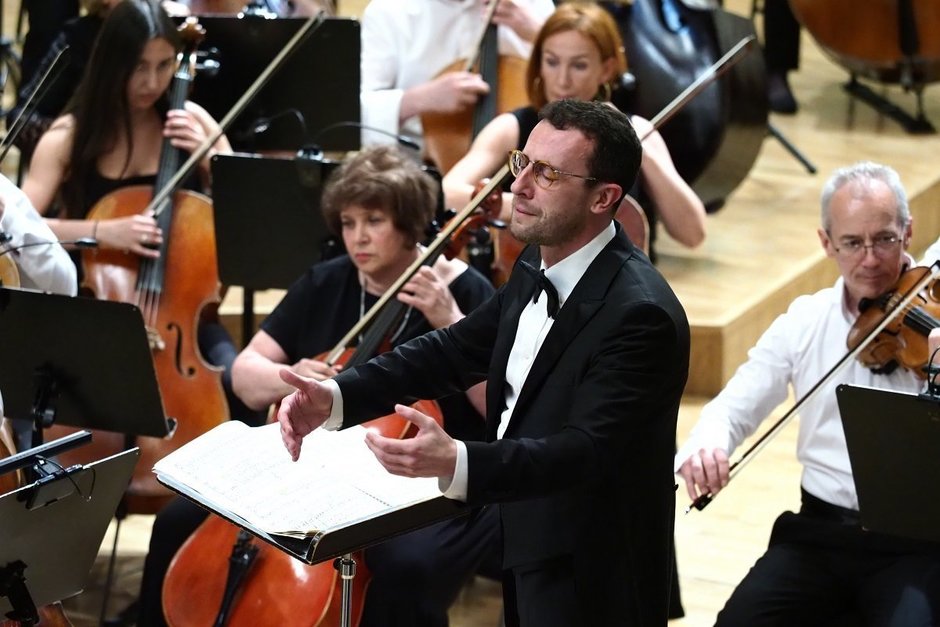
— You have worked with many ensembles around the world, and not long ago you became the first Turkish conductor at the helm of the Mariinsky Theatre Orchestra. What, in your opinion, is the special characteristic of Russian orchestras? How does their playing style differ from European or Turkish ensembles?
— There are several answers to this question. First, I believe Russian orchestras maintain a connection with their audience better than others; I constantly see this in Russia. If compared to Turkey — our orchestras also have a very loyal audience. We have many young listeners. But in the best European orchestras, it's quite different: the audiences are older, and there isn't that kind of connection. Yet, for an orchestra, this is one of the most important things.
Second, having been coming here regularly for three years — to the Mariinsky, the Bolshoi Theatre, and now to Kazan — I see the colossal productivity of Russian orchestras. They give many concerts, prepare diverse programs, and play very often. It's an incredible spectacle. Russian orchestras are the most productive in the world. I think this gives them a unique energy and dynamism. And it allows them to play with their whole soul.
I must say separately about the Mariinsky Theatre Orchestra: in my opinion, it is the most productive musical organization in the entire world. Compared to other major opera houses in the world, they play five or six times more! And what particularly impresses me is that all tickets for their performances are always sold out.
Finally, thirdly, besides productivity and immense energy, what distinguishes Russian orchestras from others is a special quality of sound, which comes from the great Russian compositional tradition. In the country of Tchaikovsky, Mussorgsky, Rachmaninoff, Prokofiev, and other great masters, a unique musical language developed. On the homeland of this music, a characteristic quality of sound, typical of the performance of Russian orchestras, has also evolved. This is a huge tradition, very, very important.
“Did you hear the orchestra from Tatarstan? They are fantastic!”
— You have already met Alexander Sladkovsky's orchestra. What can you say about it?
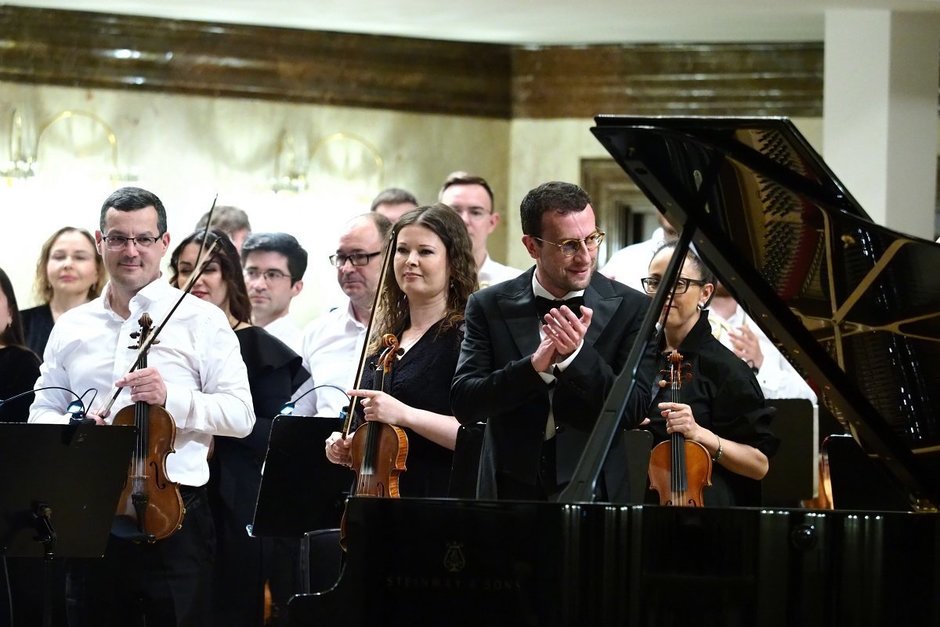
— This orchestra is special. Let me start from afar: I was invited here to the festival 9 months ago. My performance was already in this orchestra's program when, before the international festival in Ankara, I was surprised to find the Tatarstan National Symphony Orchestra in its program, which made me very happy. On the day of their arrival, I met Maestro Alexander Sladkovsky and greeted the orchestra. I listened to a rehearsal — they were playing with a young Turkish pianist. I immediately understood: this was going to be an unforgettable concert! And I wasn't wrong: after the concert, my musicians and the audience in Ankara asked me: “Maestro, did you hear the orchestra from Tatarstan? They are fantastic!” Everyone was impressed.
Therefore, now when I worked with them, I already knew what an incredible level of musicians you have working here. I think everyone in this orchestra plays Rachmaninoff at least ten times a year. But even now, we were studying this music together, seeking deep nuances within it. Because I have devoted a lot of time to Rachmaninoff, I know his music — the concertos and pieces. I have read a lot about his life.
I am very pleased to have the opportunity to present my interpretation here with an orchestra fantastic in its dynamism, with an ensemble of the highest level. The musicians' reaction to the conductor's requests is instantaneous. You don't even need to speak; they respond to your every movement. They understand everything at first glance; you don't have to repeat anything. An amazing interaction develops. So I am truly happy to have received this invitation!
— How familiar are you with the Tatar musical tradition?
— Not very deeply, but I am familiar. Tatarstan, and especially Kazan, is a special region where different cultures blend. The same is true in my homeland — Turkey. We host representatives of many cultures. Among them is a large diaspora of Tatars who emigrated to our country at different times. I am in Kazan for the first time, but the culture of Tatarstan is not so distant for me. I could even say it is close to me.
— Would you be interested in working with the music of Tatar composers?
— Yes, of course! I love to explore. That is my first, my main goal — to discover something new. Now, with the Tatarstan National Symphony Orchestra, I hope we are opening a new chapter, starting a new exploration.
“We have the youngest and most devoted audience I have ever seen”
— Turkey is a country with strong musical roots, but worldwide it is mainly known for its folk and popular music traditions. What is the situation with academic music in your homeland now?
— I am the Music Director and Chief Conductor of the Presidential Symphony Orchestra of Ankara. This orchestra was founded in 1826 — 200 years ago! It is older than the Berlin and Vienna Philharmonics, older than any symphony orchestra in America. It is a truly unique musical phenomenon, providing the answer to the question of how deep the classical music traditions are in Turkey. It is the key to understanding its history in our country.
In 1923, after the revolution and the formation of the Republic of Turkey, Mustafa Kemal Atatürk invited the orchestra to Ankara. And then a great musical revolution began in Turkey, sweeping the entire country. In the Ottoman Empire, classical music existed only in the palaces, for the aristocracy. Now it became open to the public.
Conservatories opened in the country — classical music education began. Many talented young musicians and composers, whose talent grew in music schools, went to France, Germany, America for higher musical education, but later returned. A school of composers emerged, writing ballets, operas, and symphonic music. We are proud that we had our own “Turkish Five” composers who laid the foundation of modern academic music in our country (the “Turkish Five” includes Ahmed Adnan Saygun, Ulvi Cemal Erkin, Cemal Reşit Rey, Hasan Ferit Alnar, and Necil Kazım Akses — editor's note). After them, new generations of composers grew up, working all over the world.
Currently, Turkey has six state orchestras, many professional private orchestras and chamber ensembles, six state opera theatres, and several conservatories. In short, the classical music industry in our country is rich.
— Is public interest in symphony concerts in Turkey growing, or does classical music remain an elitist art?
— The audience is a wonderful advantage of Turkish musical culture. We have the youngest and most devoted audience I have ever seen. Many students study in Turkey, and these young people line up to buy tickets for symphony music concerts. They fill all available seats. I am very pleased with the attention of the young audience because they are the future of our classical music. This means that interest in classical music will continue in the future. The works we present are not always simple. And if young people are interested in them — I think that means we are doing something right and good.
— How is state support for classical art structured in Turkey? As the head of the Presidential Symphony Orchestra, do you feel state support?
— Yes, of course. We feel one hundred percent support from the state. First and foremost from the Minister of Culture of Turkey. We, the musicians of state orchestras, play in new concert halls — not only in Istanbul and Ankara; they are being built in more and more cities. We hold many festivals across Turkey, inviting leading musicians to them. As the Presidential Symphony Orchestra, we have a packed concert season each year and the opportunity to invite top orchestras, top musicians, and conductors from around the world. It is impressive! We have one hundred percent state funding, which covers all our needs: concert venues, musician uniforms, instruments, down to the strings for violins.
— Like here in Tatarstan! Maestro Sladkovsky always emphasizes that his orchestra achieves success only thanks to the full support of the republic's authorities.
— And we are happy to have such opportunities at a time when, in the West, symphony orchestras are forced to constantly cut their budgets or even close down due to lack of funding.
“Music shouldn't always be nice”
— You often include complex works, little known to the general audience, in your repertoire. But is the public ready to hear, instead of “Eine kleine Nachtmusik," the works of Ligeti and Schönberg? How do you balance the commercial success of concerts with the educational function of the orchestra?
— I consider it very important to discover new works for myself and to share these discoveries with musicians and the public. Because if you constantly play only the most popular works, you can lose a great deal of what was created alongside or in parallel with them.
We say “Mozart” and think of “Eine kleine Nachtmusik," but there are so many things by Mozart we almost never hear! Of course, his work is well researched, but why do we always only play the most popular pieces, leaving the rest hidden from our attention? As a conductor, I try to explore something new, even within the works of great composers. Of course, I perform their major works, but at the same time, for example, I try to include their early pieces in the repertoire. These may be very small works they created before becoming great masters. But this helps to reveal the composer's oeuvre fully, to understand his development.
And second: I try to include the likes of Ligeti and Schönberg in programs. I believe that music should not only be a pleasant pastime for the audience. It should change a person, even fight with them in a way. A person may not like what they hear, but music sometimes must be something disturbing. Something that shakes the listener, makes them think, and ultimately changes something within them. Music is like life itself. We don't love everything in our lives; we have problems too. Music is like that. It shouldn't always be nice.
That's why I also muster the courage to commission new works from composers. I give them freedom: “Write something for us! I'll give you time, I'll pay you, and you write something that truly represents you. Don't try to write something commercial.” And composers strive to cross the boundaries of the possible, to break them. It's sometimes difficult for the orchestra, but we try to do it.
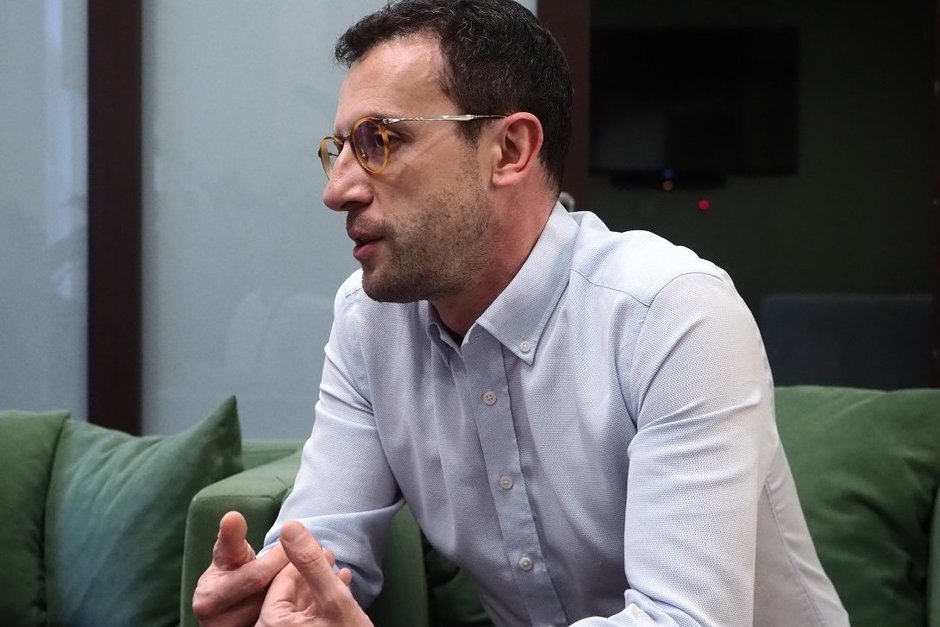
— The concert in Kazan is possibly a chance for you to get to know the city. Do you have a tradition of visiting special places before concerts — museums, architecture, mosques? Do you have time to do this?
— Unfortunately, besides rehearsals, I have many online meetings and other work these days. I arrived at the hotel after a long flight — we had a layover in Baku, and the journey to Kazan takes about 14 hours in total. I only have time to visit the Kremlin.
But, of course, I usually really enjoy exploring the cities I visit. If I have time, I don't go to tourist sites. Yes, you can take nice photos there, but I'm more interested in how locals live: where they go for walks, what they do, how they enjoy their city, which cafes they go to. Of course, I like popular restaurants, but non-tourist “local” life attracts me more. I hope I'll have a chance to explore that in Kazan on future visits.
“Mahler's music is, first and foremost, human”
— If you step away from work and put on music for your soul at home — what would it be? Folk? Jazz? Baroque music? Mahler? Rachmaninoff?
— At home, I have a radio with a good sound system. Sometimes I turn it on to a random station and enjoy listening to good folk music. I practically don't listen to pop music — I don't think it's for me. I love traditional Turkish music with its unique melodic structure. I listen to jazz. I like some individual performers — for example, Nick Cave and Tom Waits.
Sometimes I try to listen to electronic music. I explore new genres — on Spotify, I'm interested in what people listen to today. Even rap — I'm curious about its power.
— Is rap music, in your opinion?
— I wouldn't define it as music. It's a special genre of declamation. Rhythm, words — and people follow it, listen to it. And I try to understand why. I explore the aesthetics of combining rhythm and words. But, of course, as a general direction, classical music is everything for me.
If I'm not listening to music, I prefer to remain in silence. Actually, even then, something is playing in my head most of the time, and it's hard for me to create silence for myself. To do that, I try to occupy myself with something else: take a walk in nature, tend to the tomatoes in my garden, or, for example, cook something.
— What do you most enjoy conducting? Do you have a favorite direction in music, favorite composers to work with?
— It's hard to choose just one thing from everything I love. Not even as a conductor, not as a musician, but rather as a listener, I have felt very close to the music of Gustav Mahler for many years. I have conducted many of his works and want to make a complete recording of his compositions in the future. I read his letters, studied his life day by day. In my opinion, his music is very human and personal. For example, Beethoven's music is revolution, Mozart's is genius, Bruckner's is grandeur and the universe. But Mahler's music is, first and foremost, human. We feel it that way.
But, of course, my favorite music isn't only Mahler. I also feel close to the works of many other composers. After all, I studied in Austria for seven years, and I greatly enjoy playing Haydn, Mozart, Beethoven; I really love Schubert and Brahms — indeed, the whole group of German-language composers. I grew up on that as a musician.
I also love contemporary classical music. You mentioned Ligeti and Schönberg, and I can say that Schönberg, for me, is a continuation of Mahler; after all, he studied with him.
“I have an optimistic and positive opinion about artificial intelligence”
— In your opinion, how will artificial intelligence change musical art? And will it change it at all?
— I am sure that yes, AI can change music. And I think it will be good. I have a very optimistic and positive opinion about artificial intelligence. I know many people who share concerns about AI's impact on art. They fear it could create music better than Mozart. But even if that is so — we would only be for it!
— And would you conduct that music with pleasure?
— Of course. You must understand that AI is something that merely follows us. It was created by humans. And as long as it follows humans — we will welcome it!
Considering how exactly it will change art — I think it will expand our capabilities. With it, we may not have to sit at a table and study something new for hours. But we will have to teach AI what we want to create. That will be a completely different kind of communication. It “thinks” differently, not like us. But I am not afraid of this; I welcome it. It's unlikely that AI can create something unique on its own — it only combines human experience and compiles it.
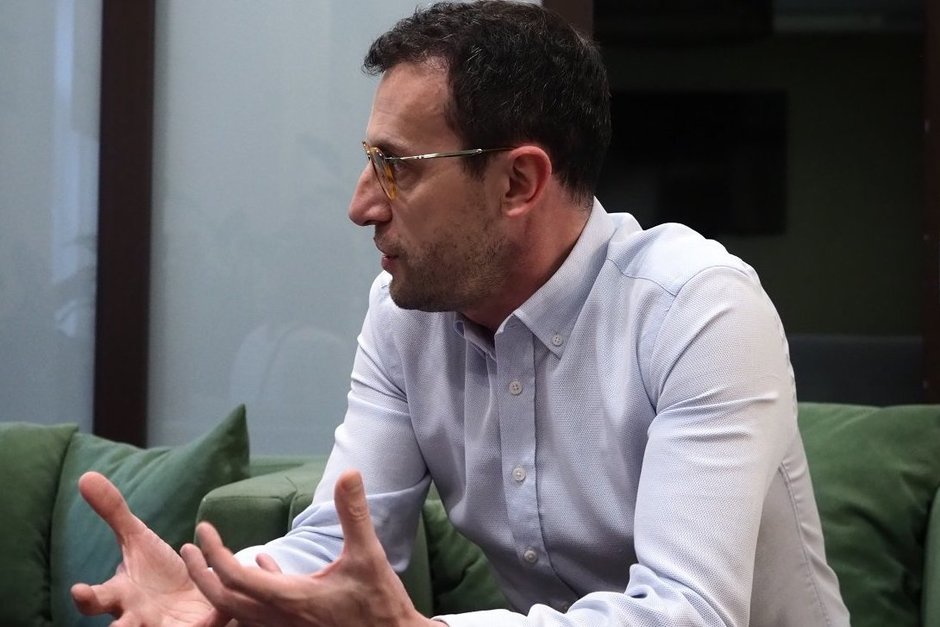
— And if we develop this idea: a robot conductor — is that a real future or still science fiction?
— For conducting, it is too mechanical, too physical an entity. I don't think that will be possible in the future. Because our art goes from person to person. We must interact with the listener; that is the essence of our work.
The hall, the musicians, and even the instruments — it's all real life. A violin, for example, truly lives day by day. Stradivarius and Guarneri violins have been living for four hundred years and get better every day. This is all living creativity, not artificial intelligence.
And when we perform on stage — it's a unique event that cannot be repeated. Every concert is an act of unique magic. It happened — and that's it. It will never be like that again. No robot, no computer can create that!