Public activists urge Russia’s Prosecutor General to review legality of recycling fee hike
Car owners question the legality of linking the recycling fee rate to engine power
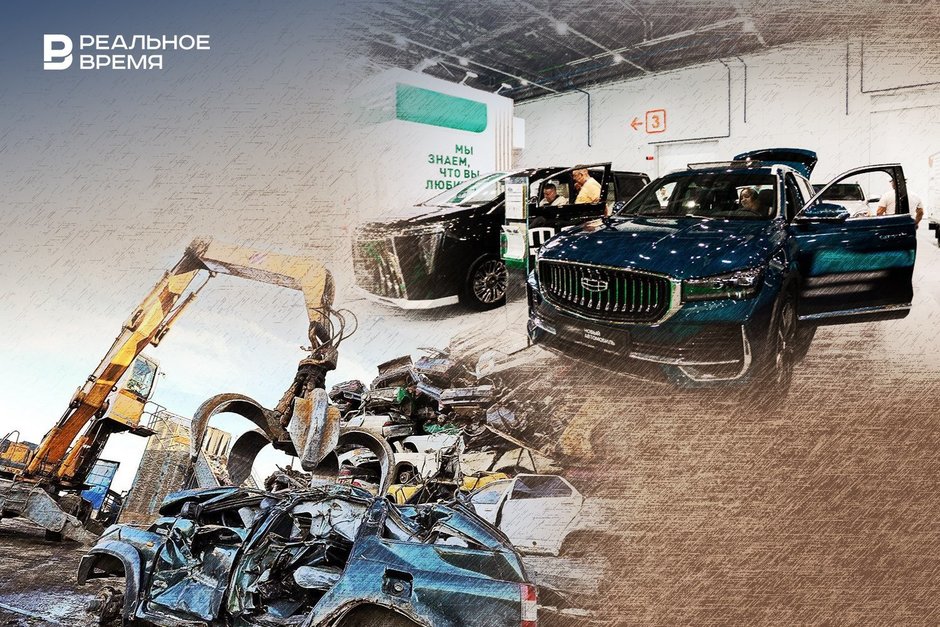
The Federation of Russian Car Owners (FAR) has requested that the Prosecutor General’s Office review the legality of the government decree raising the recycling fee on vehicles starting from December 1. Public activists appealed to Russia’s Prosecutor General Alexander Gutsan, asking him to submit a motion to repeal November’s Decree No. 1713, which “increased recycling fee rates hundreds of times.” The reasons why activists believe the government act was issued in violation of current legislation, who benefits from vehicle recycling revenues, and how the funds entering the budget are spent — all this is detailed in Realnoe Vremya’s report.
“Taxes and fees must have an economic basis”
The Federation of Russian Car Owners has sent an appeal to the Prosecutor General of Russia, in which public activists ask for an assessment of the legality of the government decree increasing the recycling fee and linking it to engine power.
They point out that, according to Part 3 of Article 3 of the Russian Tax Code, “taxes and fees must have an economic basis and cannot be arbitrary. Taxes and fees that hinder citizens from exercising their constitutional rights are not permitted.” Moreover, “under Clause 9, Part 1, Article 6 of the Tax Code, a regulatory act on taxes, fees or insurance contributions is deemed inconsistent with this Code if it contradicts the general principles and/or the literal meaning of its specific provisions.” The appeal also notes that, under the law, “the recycling fee is levied in order to ensure environmental safety, including to protect human health and the environment from harmful effects caused by the operation of vehicles, taking into account their technical characteristics and wear.”

In its appeal, the Federation lists its main objections to the decree raising the recycling fee:
- it “contradicts legal acts of higher authority, since the increase in the recycling fee is clearly arbitrary and lacks any economic justification”;
- it “does not explain the significant difference in recycling costs between vehicles with engine power below and above 160 horsepower”;
- it “lacks any economic reasoning for substantially increasing the recycling fee by linking it to engine power”;
- since many entrepreneurs in Russia import vehicles from abroad, “it is evident that such a significant increase in the recycling fee will lead to the closure of many businesses involved in this field, worsen the financial position of individual entrepreneurs, reduce employment, and ultimately have the opposite effect — a decline in tax revenues to the federal budget.”
Lavrenty Sichinava, a Kazan-based lawyer who prepared the legal argument for the Car Owners’ Rights Protection Society, described this method of calculating the recycling fee as absurd in an interview with Realnoe Vremya:

Under the new rules, the recycling fee rises sharply for vehicles with engines both below and above 160 horsepower, even though they may belong to the same class — a fact the lawyer says defies logic.
FAR representative Dmitry Zolotov explained what public activists find wrong with the new calculation system:

Zolotov emphasized that, in this case, the treasury would lose twice — first, from reduced recycling fee revenues, and later because only 10 car owners instead of 100 would pay transport tax, buy fuel (which includes excise duty), pay for inspections, registration fees, and mandatory insurance (OSAGO).
Recyclers do not see the recycling fee
Both activists and lawyers, as well as ordinary car owners on online forums, are asking where the recycling fee funds actually go — and whether they are truly spent on vehicle recycling and environmental restoration. Realnoe Vremya addressed this question to the Ministry of Industry and Trade of Tatarstan, asking which organizations in the republic handle vehicle recycling and whether they receive any budget funding related to the recycling fee collected from manufacturers and importers.
“There are no such organizations,” the ministry replied. “When a car is written off, it is dismantled for parts, the components are sold, and the rest is taken to a scrap metal collection point.”
As Realnoe Vremya discovered, numerous private companies in the republic recycle vehicles commercially, profiting from the process and allowing owners of old cars to earn money as well. The Kazan-based enterprise Vtorchermetaccepts vehicles from owners upon deregistration, pays them based on the scrap metal price, and issues a recycling certificate for the traffic police:
“We accept vehicles as scrap metal and pay owners depending on contamination levels. If the car comes with all its plastic parts, glass, seats, wheels — things that hold no value for us — the owner will receive less,” the company told Realnoe Vremya. “We receive no money or compensation from the state; we are a commercial scrap-processing enterprise that earns income by selling processed metal.”
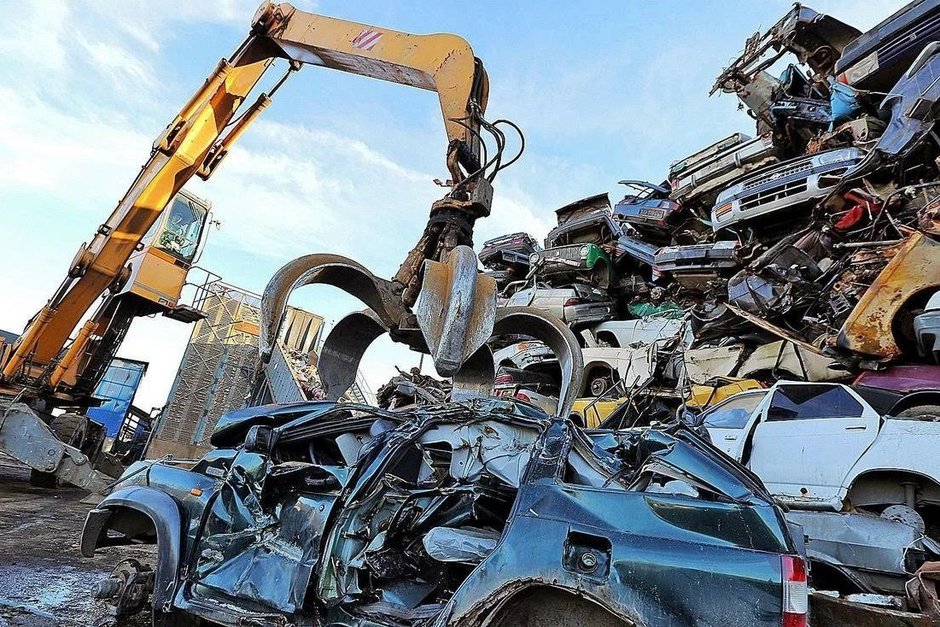
They added that the cost of recycling — that is, scrap processing — has nothing to do with engine power. What matters is the total amount of metal and the level of contamination by non-metallic materials.
Alongside such major firms, many small, semi-legal or illegal workshops — known as “autodismantlers” — are also engaged in vehicle “recycling.” They buy old and damaged cars, dismantle them for parts, sell usable ones, refurbish repairable ones, and send the rest for scrap.
“It makes no difference to me whether I’m dismantling a Mercedes, a Ford, or a Kalina,” said the owner of such a semi-legal business, who agreed to speak to the publication only on condition of anonymity. “The labour effort is roughly the same. The profit differs, of course — the price of used parts depends on their condition, make, and model year. Sometimes a rare old part can cost more than a new one, simply because it can’t be found anywhere else.”
Back in 2010, when Russia launched its “vehicle scrappage” programme, the Ministry of Industry and Trade published a list of participating dealers and recyclers. The programme included an early version of the recycling fee: owners who turned in old vehicles for disposal paid 3,000 roubles and received a 50,000-rouble discount certificate toward a new car assembled in Russia. The initiative had a clear, environmentally focused goal — to remove unsafe old vehicles from the roads and support domestic car manufacturing.
In Tatarstan, several companies were involved in vehicle recycling at that time. Today, some have closed or gone bankrupt, while others, like the aforementioned Vtorchermet, continue to recycle cars purely on a commercial basis.
Currently, as the Ministry of Industry and Trade of Russia recently informed Autonews.ru, funds collected from the recycling fee are directed to purposes unrelated to the disposal of old vehicles:
“These funds are allocated to finance various government programmes, including those aimed at supporting the country’s socio-economic development, assisting industrial enterprises, and implementing national projects in the field of technological leadership. This includes projects related to industrial transport mobility, the development of domestic machine tools and robotics, microelectronics, new materials and chemistry, and several other areas.”