Personnel shortage — the new reality
Why production automation is no longer a question of money, but a question of survival
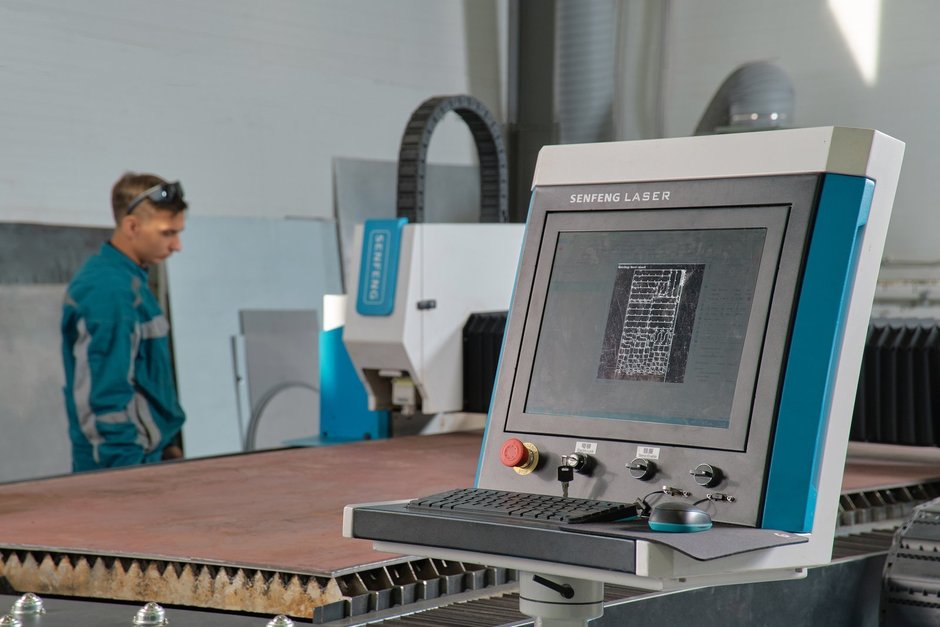
Over the past two years, we have observed a trend transforming from a mere “challenging factor” into a genuine challenge for the entire Russian industry. I am referring to the shortage of labor. And if earlier this sounded like an abstract threat from economic reports, today it has become a concrete headache for every technical director and workshop manager. Arseny Grushelevsky, General Director of Proteiros, discusses this and other trends in his author's column.
A catastrophic shortage of people who create the product
Despite a temporary shift in the labor market in favor of employers, there is a catastrophic shortage of people who directly create the product. These are machine operators, welders, setup specialists, and high-grade fitters. The demographic situation and the unpopularity of blue-collar professions among new generations suggest that things will not get easier. We are entering an era where there will be practically no one left to staff production shifts. This poses a serious question for industry: how to maintain output volumes and ensure the predictability of the production process.

The answer, in my opinion, lies in a fundamental revision of the approach to labor organization through automation. But there is an important nuance here that is often overlooked.
Automation not for automation's sake
Although automatic production is always more productive and precise than manual labor, it does not make sense to automate all production processes. Before launching any project, one must calculate how much money this could actually save and over what period. Automatic lines are best suited for producing large quantities of standard products. Here, payback will be quick, and the defect rate will significantly decrease.
One of the most illustrative automation projects we participated in was a continuous production line for freeze-dried coffee. Full automation of the process, from the arrival of raw beans to packaged coffee in jars, reduced the number of operating personnel from 55 to 10 people, increased production volume from 3,000 to 5,500 tons per year, and reduced the defect rate from 3% to 0.5%. The final production profitability rose from 13% to 19%. And now, the design for the second stage of production capacity is already underway.
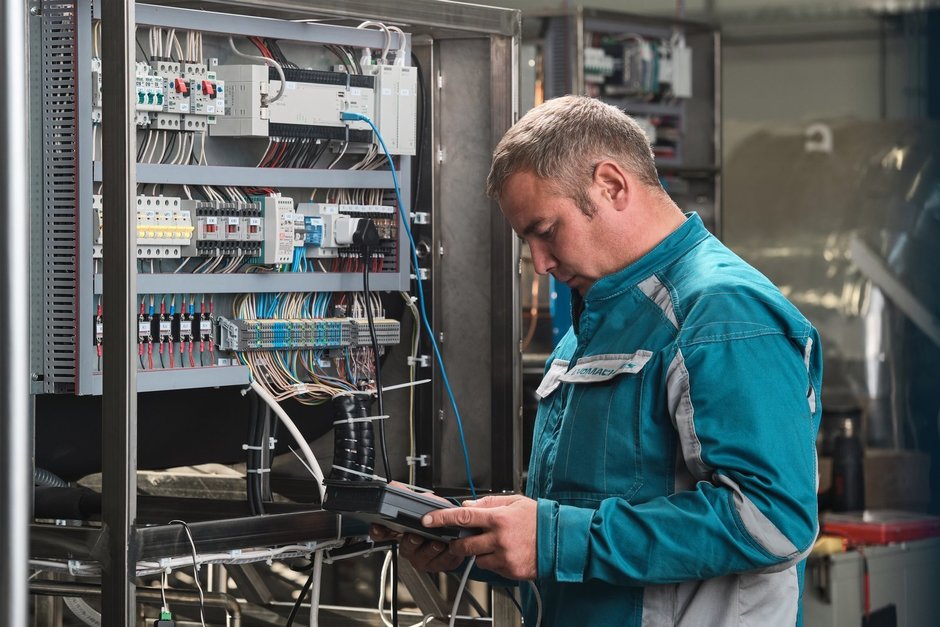
However, point solutions for automating operations have not been canceled either. Sometimes it is profitable to automate them completely, and sometimes semi-automatic solutions make sense. Only an audit and calculation can show this.
Procrastination as the main risk
Why do many factories still postpone modernization? The typical logic of a production director sounds like this: “The equipment is expensive, and there are still people. It works somehow, why get involved in long and complex projects?”
This logic was workable yesterday. But today, “there are still people” turns into “there are no longer any.” Yesterday's machine operator retired, and a young specialist doesn't come to the workshop due to working conditions or salary. As a result of the personnel shortage, wages rise; “buying” a worker is now a luxury.
Automation, on the one hand, is a way to save on the wage fund, and on the other hand, it is a tool for stability and predictability. Investing in line re-equipment now becomes a kind of insurance for the enterprise. An automated section does not get sick, does not quit, and does not demand a pay raise. It requires investment here and now, but if you don't start this process today, by the time of peak personnel shortage, it will be impossible to enter it. Work prices will rise, and production will simply come to a standstill.
The “stuck task” syndrome
Working with factory technologists and engineers, we constantly encounter a phenomenon we call the “stuck task.” This is a situation where a problem has matured, the solution is fundamentally clear, but the team has neither the time nor the extra competencies to delve into it.
A classic example: there is an outdated machine that is the “bottleneck.” Its breakdown will stop the workshop. There are either no analogues on the market, or they cost astronomical sums. The task is non-standard and requires “from scratch” design. The plant technologist understands the risks but cannot devote himself to this topic 100% because his main job is to maintain the current process, which is barely running anyway.
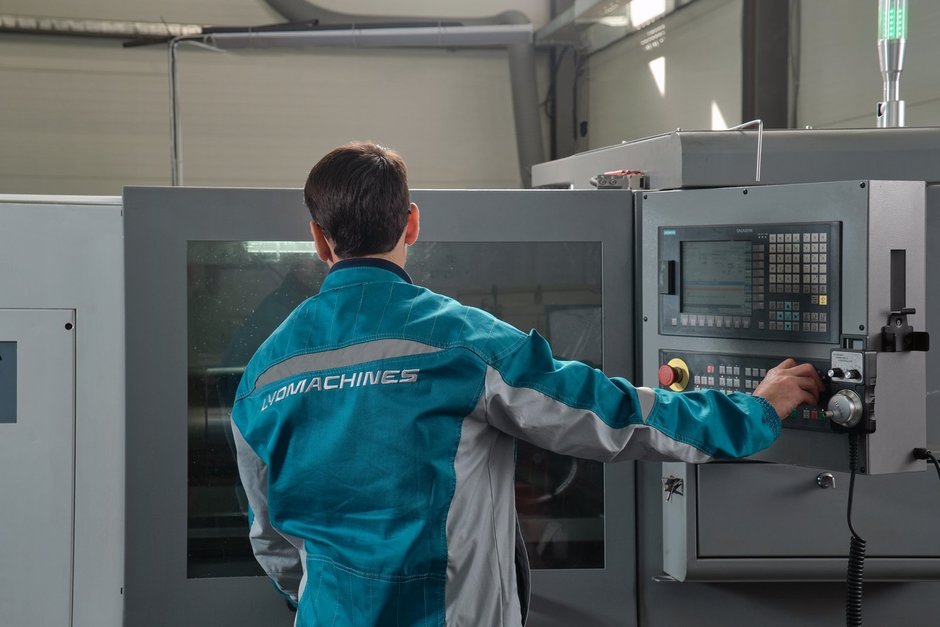
This is where the main role of engineering teams like ours lies. We are not just manufacturers of hardware. We take on this “stuck task," carrying out the full cycle: from audit and development of technical specifications to manufacturing and commissioning. We integrate into the customer's chain of competencies, taking on that very deficit of time and knowledge that prevents the enterprise from moving forward.
The budgeting mistake: counting not just the price tag
The second important point that often stands in the way of automation projects is the approach to budgeting. A typical customer mistake is treating non-standard equipment as a regular purchase.
As a result, the estimate is cut at the design stage, a minimal budget is set, and no one thinks about risks. And when it turns out during the process that a unique drive requires special operating conditions or that the foundation needs reinforcing for installation, money has to be found over and above the plan, the project stalls, and all participants get stressed.
We always suggest that clients look at the project from the perspective of total cost of ownership. The budget should include not only materials and work but also:
- A buffer for risks. For unique solutions, this is not 5–10%, but 20–50%. This is the market norm, not contractor greed.
- The cost of commissioning. Training your technologists to work with the new system is an investment in ensuring the equipment does not stop after a month.
- Phasing. A viable project is one with stage-by-stage financing. Pay for the draft design, approve it, move on. This allows you to avoid sinking a huge budget into a dead-end development branch.
Industry is on the threshold of a major structural reorganization driven by the personnel shortage. And the winners in this race will not be those with more money, but those who start systematically replacing manual labor with automated solutions earlier.
We, as an engineering community, need to convey a simple thought to enterprise managers: non-standard equipment is not a luxury or a technologist's “whim.” It is a basic tool for maintaining business stability over the next 5–10 years. And you need to start this journey not by searching for a magical machine, but with diagnostics: invite experts, audit your “bottlenecks," and honestly assess how ready your production is for a future where there will be significantly fewer people at the machines.