The Universe of innocence of Orhan Pamuk
This week's book: “The museum of innocence” by Turkish writer Orhan Pamuk
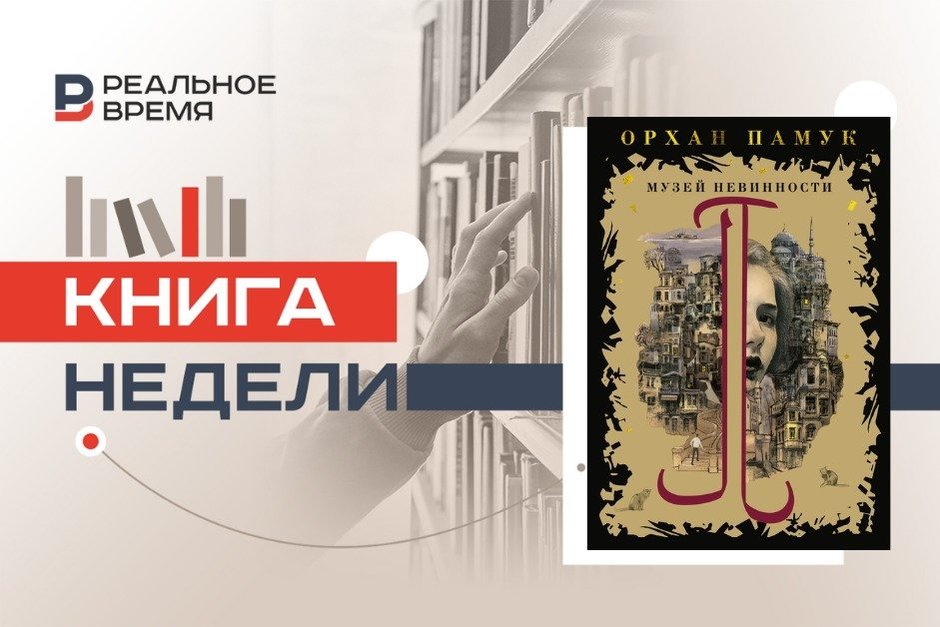
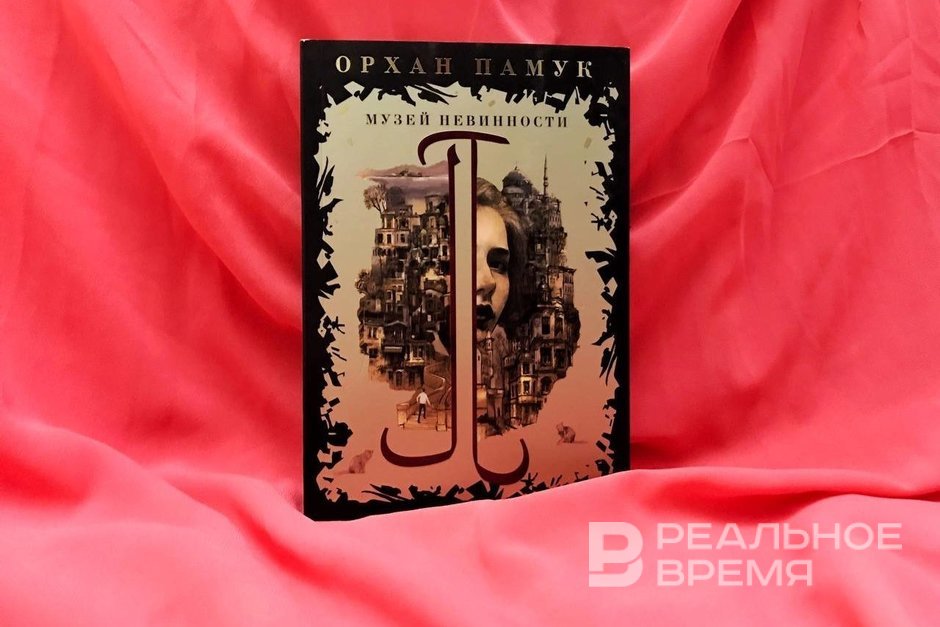
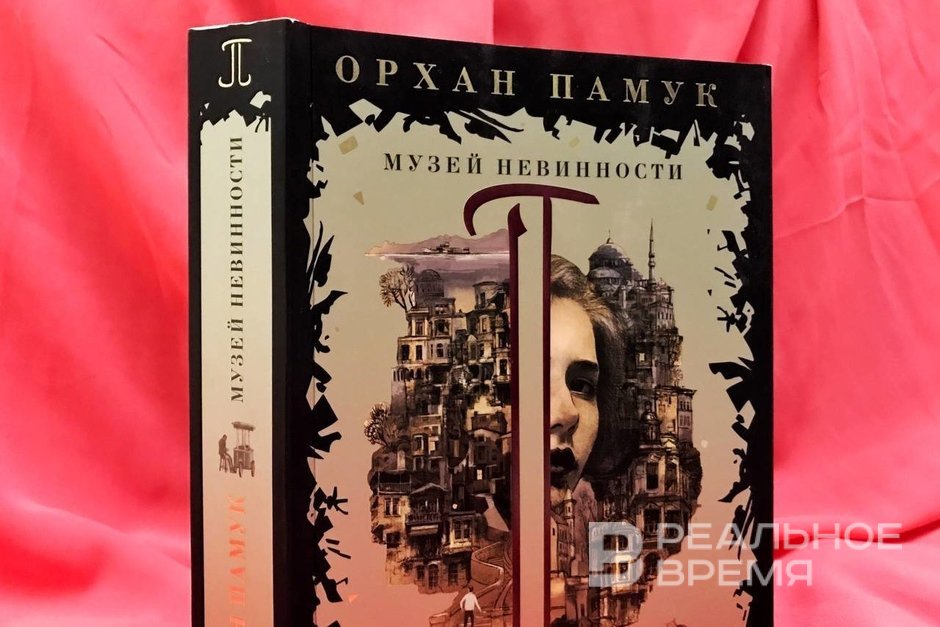
The novel by Nobel laureate in literature Orhan Pamuk, “The Museum of Innocence," has long ceased to be just a book. It is also a real Museum of Innocence in Istanbul's Çukurcuma district, a theatrical stage — at the end of December 2025, a play based on the novel was staged at the Kamal Theater — and now a nine-episode adaptation released on February 13th on Netflix. The story of Kemal and Füsun expands into different media, forming a cohesive artistic system — Pamuk's universe, where the novel becomes a museum catalog, the museum a companion to the text, and the series a new way to tell what has already been written. Yekaterina Petrova, literary columnist for Realnoe Vremya, will tell how Pamuk worked on the book for seven years and studied the history of museology, how the museum became “a place where time is frozen," and also why the writer sued over the adaptation.
“I have lived a very happy life”
The idea for the book came ten years before Pamuk began writing the novel. He started working on it after the release of “Snow” in 2002, but interrupted it a year later to work on his memoirs “Istanbul: Memories and the City.” Then the writer returned to the novel and worked on it for a total of seven years. While preparing the novel, Pamuk conducted special research. For the parts of the book related to gathering, storing, and collecting, the author studied the history of museology and visited numerous museums in Europe and Asia. Also, while preparing the novel, the writer studied videos on YouTube about the history of Turkish music and cinema.
Before its release as a separate edition, two fragments of the novel were published in the Sabah newspaper. Pamuk had previously allowed this newspaper to publish his articles for the Western press. The first edition's print run was 100,000 copies. Translation rights were sold to more than 30 countries even before the work on the text was completed. The writer planned to present the book in October 2008 at the Frankfurt Book Fair, but the event was canceled. The first public reading took place at Vienna's Burgtheater with the author's participation.
The novel “The Museum of Innocence” begins with the protagonist's account of the “happiest day of his life.” It was the day on which the protagonist became intimate with his eighteen-year-old distant relative, Fusun. The narrative in the novel is first-person: the narrator, Kemal Basmaci, is the thirty-year-old son of a wealthy Istanbul family of textile industrialists belonging to the new bourgeoisie.
In 1975, two months before the events begin, Kemal was in a relationship with Sibel — an educated girl from his circle, a Sorbonne graduate. He met Fusun in a boutique where he went to buy a bag for his fiancée. Over the following month and a half, an intense and secret physical and emotional relationship developed between Kemal and Fusun.
Kemal is convinced he can maintain both his engagement and the secret relationship. He believes his marriage to Sibel and his relationship with Fusun could continue forever. However, Fusun disappears immediately after Kemal's engagement party. The engagement scene at the Hilton hotel in Istanbul becomes the climax of the first part of the novel. The evening ends not with a breakup with Sibel, but with Fusun's offended departure. After her disappearance, Kemal searches for her unsuccessfully for nearly a year, traversing every district of the vast city and sinking deeper into despair. Objects and places associated with his beloved and their meetings become his consolation. But the engagement to Sibel is eventually broken off.
When Kemal finds Fusun, she is already married to Feridun — an aspiring filmmaker who has loved her since childhood. Fusun lives with her husband and parents in a poorer neighborhood. Kemal begins to visit their home regularly. Over eight years, he comes for dinner 1,593 times, almost every evening. He finances the film company “Limon Film” to make a movie in which Fusun could play the lead role, and effectively becomes part of the family.
All this time, Fusun keeps her distance. For nearly 350 pages, Kemal is barely allowed to touch her hand. His obsession manifests in collecting objects: he takes hairpins, salt shakers, a porcelain dog from the TV, and 4,213 cigarette butts left by Fusun from the house. To hide his guilt, after each theft he brings expensive gifts to the house.
After Fusun's father dies, circumstances change. She divorces her husband, and Kemal hopes to marry her. Fusun agrees to marry him on the condition of a formal introduction to his family and the performance of all required ceremonies. They set off on a trip through Europe by car. The morning after a stop at a hotel in Babaeski, the car Fusun is driving crashes. Fusun dies, Kemal is severely injured and falls into a coma.
Having recovered, Kemal decides to create a museum where all the objects he collected will be displayed. He visits 5,723 museums and transforms Fusun's family home in Çukurcuma into the “Museum of Innocence.” In the finale of the narrative, Kemal asks the writer Orhan Pamuk to write a novel as a catalog of the museum. The last words of the book, spoken at the hero's request, are:
Let everyone know: I have lived a very happy life.
“Can love exist in such a place?”
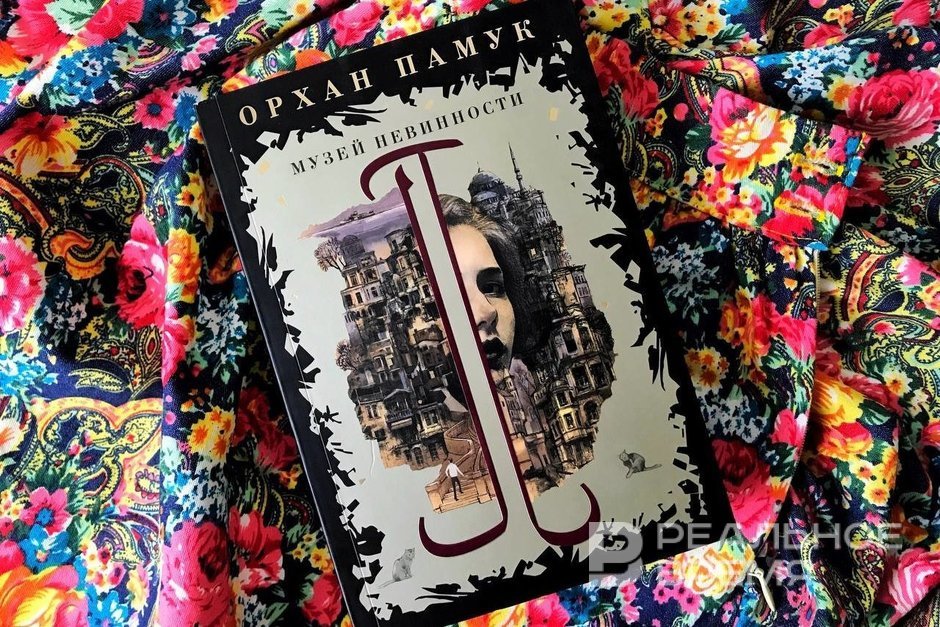
The novel “The Museum of Innocence” was published on August 29, 2008, by Istanbul-based İletişim Yayınları. The Russian edition, translated by Apollinaria Avrutina, was published in 2009. After the Turkish edition, the novel was first published abroad in Germany with a print run of 100,000 copies. In the USA, the book was published on October 20, 2009, by Alfred A. Knopf in a translation by Maureen Freely. This translation was shortlisted for the Independent Foreign Fiction Prize (2011). The New York Times included the novel in its list of “The 10 Best Books of 2009.” In the UK, in January 2010, the Waterstones bookstore chain selected the novel as its “Book of the Month.”
Structurally, the novel is built as a series of 83 short chapters. Kemal emphasizes the documentary nature of his work, calling himself an “anthropologist” of his own experience. Right at the beginning, he formulates a quasi-theoretical justification for collecting:
Anyone who has even a remote idea about the meaning of culture knows: behind all the knowledge of Western civilization, which rules the world, stand museums, and their creators, true collectors, while gathering memorable rarities, never think about what awaits them
The theme of the museum and collection develops as a central compositional device. Kemal gradually comes to the realization that the things he has collected are “special, deeply personal objects that preserve the memory of deep pain and moments of happiness.” This premise correlates with the general problematic of accumulation and collecting as a shameful act that becomes public and valued in the museum format. The obsessive appropriation of objects and the museum itself are a variation on the Proustian idea of recoverable time. However, having established this device, Pamuk does not so much develop it as repeat it endlessly: the thefts become more frequent, the description of objects becomes increasingly feverish, and the museum project ever more grandiose.
Kemal considers his main psychological problem to be his inability to recognize happiness at the moment of experiencing it. And this state is directly linked to nostalgia as the driving force of the first-person narrative. In one episode, he reflects:
If anyone had told me that it would never happen again, I wouldn't have missed it. Moments of happiness, filled with the golden glow of light, gave my entire being a feeling of deep peace. They probably lasted a few seconds, but at the time I thought they were countless.
The city in the novel is presented as an equal subject of description, put on display: wooden houses, apartments of the newly rich, the Golden Horn, tankers on the Bosphorus, restaurants, and television programs of the 1970s. Kemal's museum is a diorama not only of his nostalgia but also of Turkey in the late 1970s. Pamuk captures the everyday: soda advertisements with German model Inge, programs on the state television channel. Pamuk was writing this very history of Turkey — the history of gestures, words, films, and popular culture.
A distinct layer in the novel is the question of female identity and sexual morality. Kemal's mother formulates a social diagnosis:
“In a country where men and women cannot meet, talk, and be friends freely, there can be no love," she said almost angrily. “And you know why? Because as soon as a man sees a free woman, he doesn't look at whether she's bad or good, beautiful or not, but immediately pounces on her like a wild, hungry animal. Everyone here is used to living like that. Then they call it love. Can love exist in such a place? Don't deceive yourself.”
Kemal himself acknowledges the limitation of his own perspective:
After all, following the example of most Turkish men from my world who found themselves in a similar situation, instead of trying to understand what my beloved woman dreamed of, what she thought about, I dreamed of her.
Of course, no work by Orhan Pamuk is complete without the clash of East and West. At the time of writing the novel, the author was living between New York and Istanbul. And his Museum of Innocence contains East-West clocks — pocket watches with two dials. The novel's characters constantly compare the traditions of still rather conservative Turkey with the freer life in the West. In one episode, Kemal observes:
If we lived in the West and I visited the Keskins' house four or five times a week, everyone would certainly acknowledge that I was coming to see Fusun. And then the jealous husband would try to stop me. So in a European country, I wouldn't have been able to see them so often, and my love for Fusun wouldn't have taken the form it subsequently did.
And in the finale, after the tragedy, Kemal reports:
As consolation, I read the books of Proust and Montaigne.
The metafictional twist is realized through the appearance in the text of a character named Orhan Pamuk. This slightly unsettles the reader, makes one pause and think, but simultaneously reinforces the central concept — Kemal's dream of the museum. In the end, it turns out that the story is actually written by the eccentric writer Orhan Pamuk, whom Kemal hired to present it as an annotated guide to the museum.
So I tracked down Mr. Orhan Pamuk, who has told you the story in my name and with my approval.
International critics compared the novel to classic examples. The Financial Times compared the book to Joyce's “Ulysses," Tolstoy's “Anna Karenina," and Nabokov's “Lolita.” Elif Batuman in the London Review of Books analyzes the references to “Lolita” in detail and draws a parallel between the prison frame of “Lolita” and Pamuk's museum display case. According to American professor of English and literature Michael Gorra, the novel “deserves its length," and its story is “not just a tale of lovers, but of a whole world, namely Istanbul.”
“A place where time is frozen”
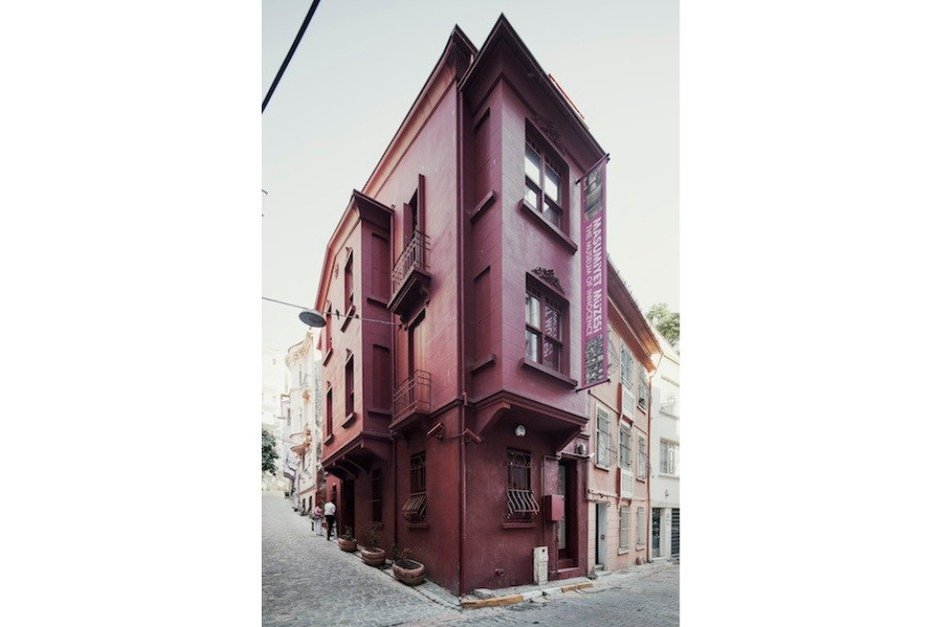
The real Museum of Innocence was opened in Istanbul in April 2012 as a space created by Orhan Pamuk in dialogue with the novel of the same name. The museum is housed in a 19th-century building in the Çukurcuma district and is conceived as a “companion” to the book. However, the museum and the novel were created in parallel, so they can be perceived independently of each other.
The impulse for the project came long before the novel's publication. The idea came to Pamuk in 1982 during a dinner with the last prince of the Ottoman dynasty, who after exile worked at the Antoniadis Palace Museum in Alexandria. Pamuk was struck by the idea of a man who had outlived his era and became a guide in his own house-museum. Ten years later, he devised a crazy plan: to write a novel in the form of a museum catalog and simultaneously build the museum to which this catalog referred.
In the 1990s, Pamuk began collecting objects for the future exhibition. “I wanted to collect and exhibit the 'real' objects of a fictional story in a museum and write a novel based on these objects," Pamuk wrote in the museum catalog. Elif Batuman, who attended the press conference for the museum's opening, clarifies that the writer's first step was not writing, but contacting a real estate agent: he “needed to buy a house for his future heroine, Fusun.” In 1998, Pamuk purchased a three-story wooden house in Çukurcuma. The character's social standing was largely determined by the property. The building was restored by architects Ihsan Bilgin, Cem Yücel, and Gregor Sunder-Plassmann. Construction was completed in 2003.
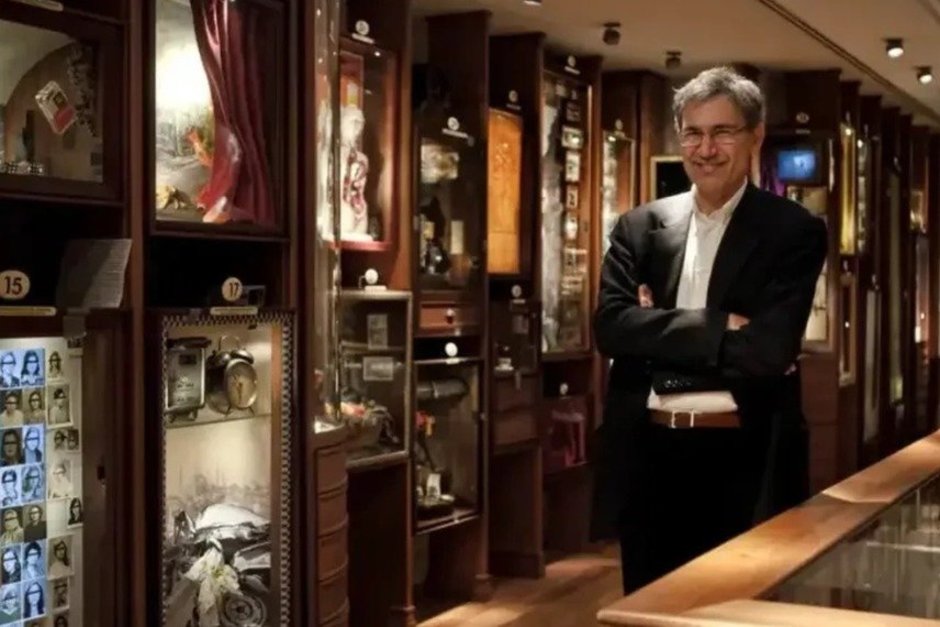
Simultaneously, the collection of objects was underway. Pamuk bought dishes, keys, watches, and other items that might have belonged to the characters at flea markets and second-hand bookshops. Some items were borrowed from the writer's personal belongings, some were found in Istanbul and beyond, but the author himself insisted: “This is not Orhan Pamuk's museum," but a space reflecting the novel's narrative.
The novel was published in 2008, the museum opened four years later. After the book's publication, the collection was finalized by an interdisciplinary team of artists, designers, and architects. The exhibition is arranged in 83 display cases — corresponding to the number of chapters. Batuman describes in detail “Case 68: 4,213 Cigarette Butts," which contains all the cigarettes smoked by Fusun from 1976 to 1984. Assistants emptied several hundred packs of “Samsun," replaced the tobacco with chemically treated paper, lit the cigarettes, and placed them in a vacuum machine. “These cigarettes were smoked by a vacuum, not by us," Pamuk clarified, to avoid violating anti-tobacco laws. Under each butt, he personally wrote the date and sometimes a fragment of conversation.
In the same text, Batuman recounts Pamuk's answer to a question about the political context of 1980: “I expressed everything I wanted to say about the 1980 coup through Fusun's mother's quince grater, which is in case 66.” About the museum in general, he said he wanted it to be “a place where time is frozen.”
Shortly before the opening, Pamuk published a manifesto on museums. “Museums should represent humanity... but state-supported museums strive to represent the state, not individuals. This is not a good or innocent goal," Pamuk wrote in his manifesto. And he added: “Museums must become smaller, more individual, and cheaper... The task of museums of the present and future is not to tell the story of the state, but of the individual.”
In 2014, the museum received the “European Museum of the Year” award from the European Museum Forum. The book still contains a ticket for free admission — it is inserted in the 83rd chapter of the Turkish edition. Upon visiting the museum, the ticket is stamped.
In 2015, British director Grant Gee made a documentary film “Innocence of Memories” with Pamuk's participation, and Turkish director Demet Haselçin documented the construction and operation of the museum.
In February 2026, interest in the museum surged on the eve of the release of the novel's adaptation on Netflix. A few days before the series launch, the museum was visited by about 500 people daily, compared to the usual 200. The museum's manager reported that after the release, the number of guests would “likely double.” Visitors came with books to use the free admission ticket. Among them were guests from China, Hungary, Italy, Japan, and Russia.
“If they don't film exactly this, they'll end up in Siberia”
The nine-episode series based on the novel “The Museum of Innocence” premiered on Netflix on February 13, 2026. Variety called it a “hotly anticipated” adaptation. The series begins in 1970s Istanbul, where a wealthy man named Kemal becomes romantically obsessed with his poor distant relative, a shopgirl named Fusun.
The premiere took place at the Hilton Istanbul Bosphorus hotel — a space befitting the spirit of the novel. Invited guests were shown the first two episodes. On the same day, the series became available simultaneously worldwide on Netflix. The project was directed by Zeynep Günay, the screenplay written by Ertan Kurtulan, and produced by Kerem Çatay. The lead roles were played by Selahattin Paşalı (Kemal) and Eylül Lize Kandemir (Füsun).
The history of the adaptation was long and involved a legal dispute. In 2019, Orhan Pamuk signed a contract with a Hollywood production company, but their version of the series included serious changes to the plot, specifically Fusun's pregnancy. “Too many changes. Once you do that, the rest of the book is no longer my book at all," the writer stated. Pamuk sued to reclaim the rights to his story and won the case in 2022. According to him, it took “two and a half years and cost a lot in legal fees.”
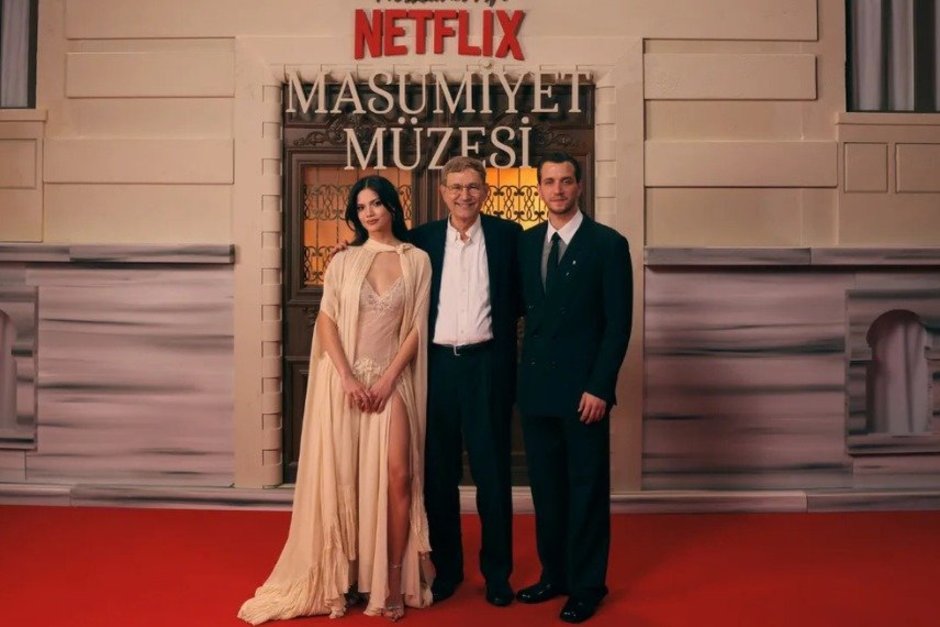
After regaining the rights, Pamuk began negotiations with Ay Yapım and changed the terms of engagement. He did not sign a contract until the screenplay was completed and did not take an advance, in order to have strict control over the text. Pamuk met with the screenwriter and producer “every two months, like students doing homework," reviewed drafts of all nine episodes, and made corrections.
“When the script was prepared in this way and we were sure that if they didn't film exactly this, they would end up in Siberia or be hanged — then I calmed down," the writer said with a smile. In the credits, at his request, not only the novel but also the museum is mentioned. A second season is ruled out — “so the ending of the story remains unchanged.” Pamuk also clarified that after the “disastrous first experience," he decided “not to let anyone make a film based on my books without seeing the complete script.”
Director Zeynep Günay confirmed the author's deep involvement: “Orhan Bey and screenwriter Ertan Kurtulan went through a process that lasted a year and a half... He followed the script so closely that it reassured me.” According to her, the writer was present on the set during the last two weeks of work: “Every time he was on set, I felt a great relief.” Pamuk also appeared on screen, playing himself — the writer Orhan Pamuk to whom Kemal tells his story. “You can't call it acting, because I'm playing myself," he said.
Pamuk specifically explained the choice of director, wanting it to be a woman. After the novel's release, the writer was criticized by Turkish feminists for the dominance of the male perspective. “Although I tried to avoid the common misconceptions or prejudices of Middle Eastern men, unfortunately, I am a Middle Eastern man and I fully accept all the feminist criticism," he said. Having a female director, he noted, “added more of the heroine's point of view.”
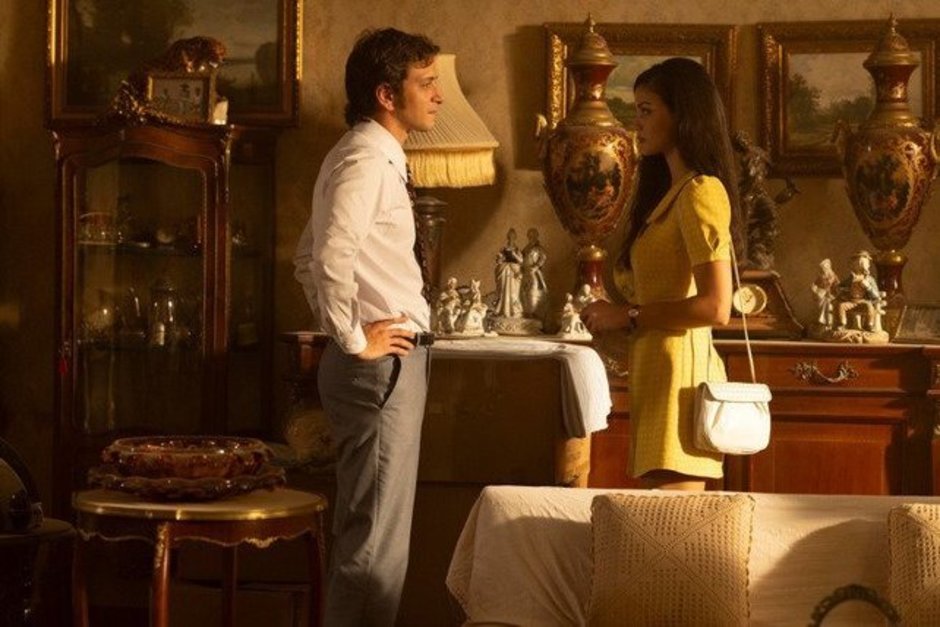
The series was released in Turkish with dubbing and subtitles in other languages. Today, Turkish series are broadcast in 170 countries, and in 2024, Turkey ranked third in the world in TV series exports after the USA and the UK.
Initial responses to the adaptation were mixed. Decider noted that in the first episode, Kemal “comes across more as a predatory womanizer than as a man in denial of his profound love.” The reviewer wondered whether the feeling of “creepiness” would be addressed later on. Simultaneously, producer Kerem Çatay told The New York Times that after watching all nine episodes, Pamuk “was so happy... He said he liked it.”
Publisher: Azbuka
Translation from Turkish: Apollinaria Avrutina
Number of pages: 640
Year: 2025
*Age rating: 16+*
Yekaterina Petrova is a literary columnist for the online newspaper Realnoe Vremya and hosts the Telegram channel “Buns with Poppy.”