How Russian scientists are redefining the rules of artificial intelligence
Expert: Open models and algorithms presented at the ICOMP 2025 conference are making technology a public asset
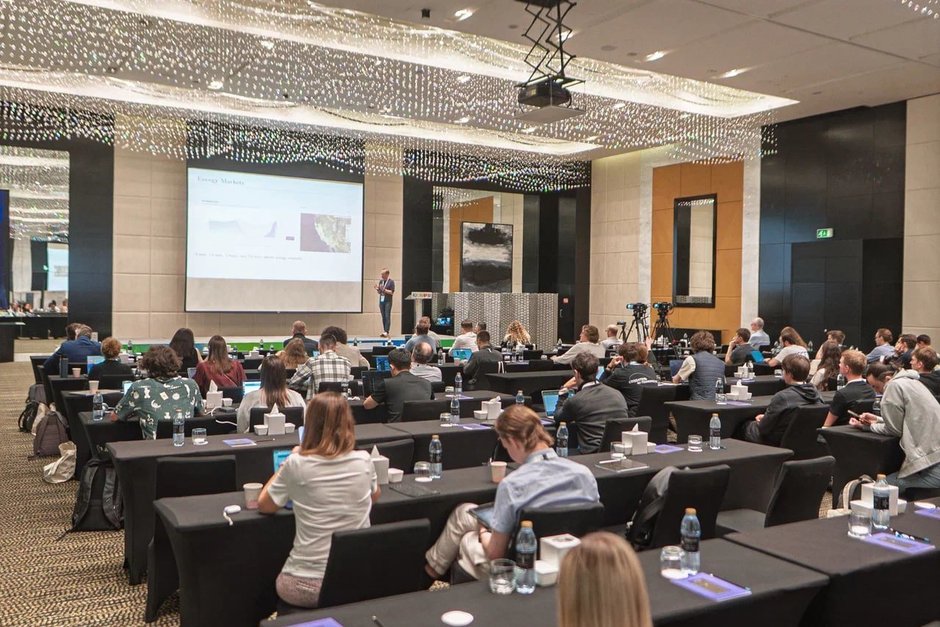
The world of artificial intelligence is undergoing a quiet revolution. Just a few years ago, the most advanced technologies were accessible only to IT giants with virtually unlimited budgets. Today, the situation is changing dramatically, and the recent International Conference ICOMP 2025 held in Abu Dhabi — organised by Innopolis University in cooperation with the Skolkovo Foundation and the AI Alliance — clearly demonstrated this, says digital economist Ravil Akhtyamov. According to him, Russian scientists have found themselves at the forefront of this movement, offering solutions that make AI a resource accessible to businesses of any scale. In his opinion piece for Realnoe Vremya, the expert elaborates on the main trend of the conference — the fundamental shift away from uncompromising and costly computation in favour of practical and economical solutions.
From the Cult of the “Ideal” to the Cult of Efficiency
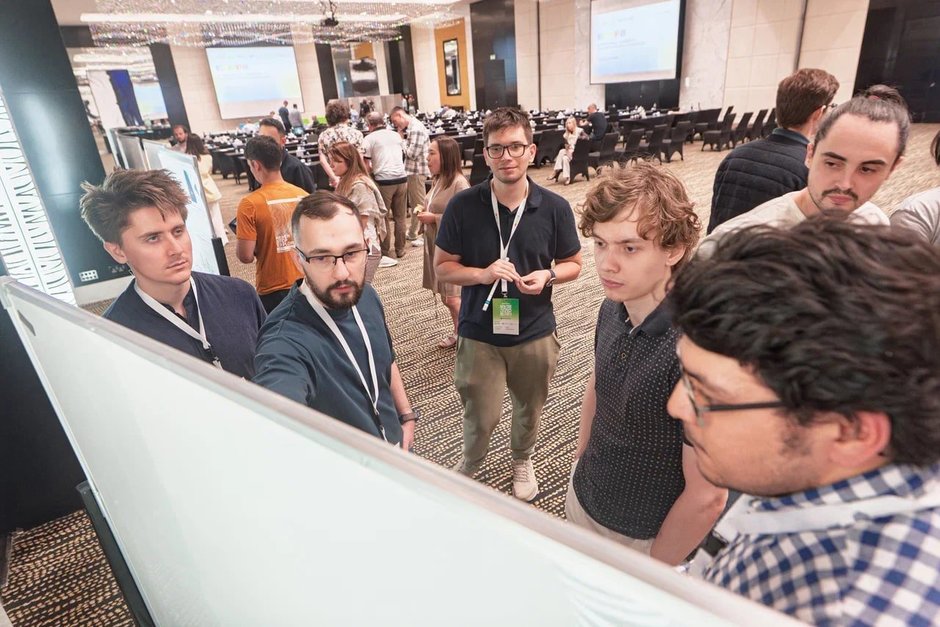
The best paper of the conference was recognised as “Qi Fan Norms and Beyond: Dual Norms and Combinations for Matrix Optimisation”, presented by researchers from MIPT, Sber AI4Science, and the AIRI Institute.
This study demonstrated a fundamentally new approach: when tuning the weight matrices of neural networks, a “nearly optimal” solution often matches the quality of the ideal one, while being achieved several times faster and at far lower cost. This opens the way for creating lighter yet more powerful models, significantly lowering the entry threshold for companies without billion-rouble budgets for supercomputers.
Imagine construction work: it is not necessary to align every tile with micrometre precision — it is enough to lay it properly so that it lasts for decades. For 99% of practical tasks, such an approach is more than sufficient. The same principle is now being applied to AI development.
A Breakthrough in Optimisation: Newton’s Method 2.0
Particular attention at the conference was drawn to the study “Adaptive Regularised Newton Methods with Inexact Hessians”, produced by an international research team including Alexander Gasnikov, Rector of Innopolis University and a member of the conference’s organising committee. The scientists managed to achieve what seemed impossible — simplifying the classical Newton’s method, one of the cornerstones of computational mathematics.
They allowed the algorithm to work with approximations instead of the computationally intensive calculation of second derivatives. In economic terms, this represents a radical reduction in costs. The result is a tool that maintains quality while making AI development and operation significantly less expensive.
This approach is particularly important in the context of workforce development for the AI industry. On the eve of the conference, the organisers held the ASCOMP Computational Optimisation School, attended by 108 students and young researchers from leading Russian and international universities. Such educational initiatives are preparing a new generation of specialists capable of working with efficient, not merely powerful, algorithms.
Practical Tools for Real Business
The conference became a platform for showcasing concrete tools that can already be used by small and medium-sized businesses. At a special session organised by Sber, several ready-for-deployment developments were presented.
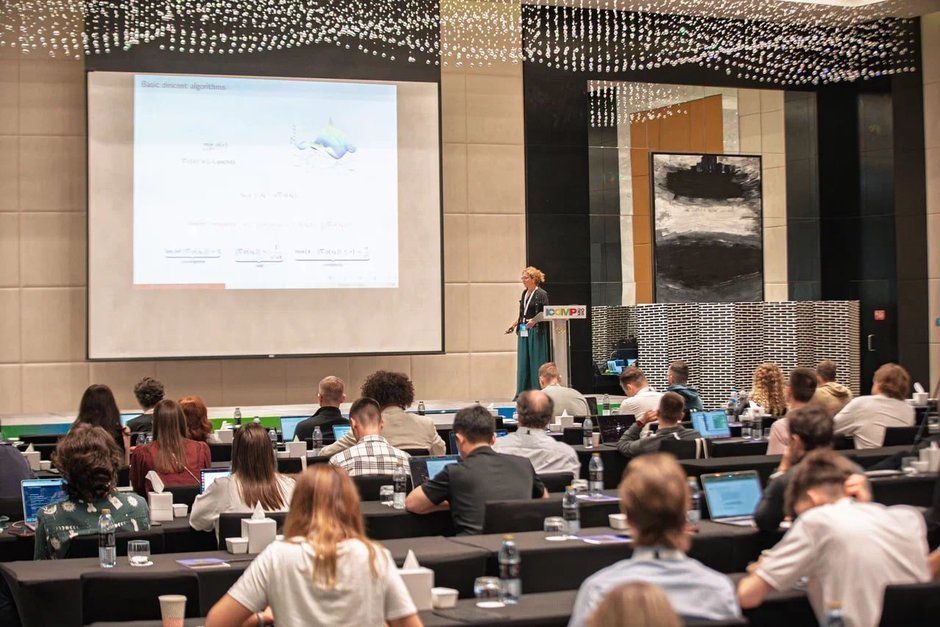
Denis Parkhomenko, Executive Director for Data Research at Sber, presented a new highly efficient media tokeniser that surpasses existing counterparts in both quality and performance. This algorithm converts images and videos into special “tokens” — compact numerical representations.
“Our team has created a tokeniser that, at the same compression ratio as current state-of-the-art analogues, delivers higher reconstruction quality. This directly impacts the speed of generative models — usually a quadratic dependence — and the quality of synthesis. Already, it enables models such as Kandinsky to generate videos and images with greater sharpness and precision, which we plan to implement in the near future. But even more importantly, we have become leaders in reconstruction quality without losing compression efficiency. This lays a fundamental foundation for developing next-generation tokenisers with even higher compression ratios,” said Denis Parkhomenko.
For businesses, this means not only a 30–40% reduction in computational costs and a two— to threefold increase in processing speed but also access to higher-quality and faster generative models without budget expansion.
Equally significant were developments in logistics and forecasting. The Ride framework for finding shortest paths in complex graphs and the TSForesight library for time series forecasting are ready-to-use solutions that can be deployed by companies with minimal adaptation.
For logistics firms, implementing Ride reduces fuel costs by 15–25% by eliminating inefficient routes. In retail, using TSForesight improves demand forecasting accuracy by 30–40%, significantly cutting logistics and storage costs.
Economic Impact: Figures and Facts
The relevance of this approach is confirmed by independent studies. According to the Institute for Statistical Studies and Economics of Knowledge at HSE University, Russian companies implementing AI allocate about 15% of their total digitalisation expenditure to these technologies. More than half of AI projects (51%) are funded from organisations’ own resources, making cost reduction a critical factor for real-world adoption.
Cost estimates for AI projects highlight how significant the savings can be. A small project involving an object detection model costs roughly 2.2–2.75 million roubles (based on the hourly rate of a Python developer), while large and complex projects may require years of work and much higher investments. The new algorithms presented at ICOMP 2025 can reduce these costs by 40–60% by lowering the required computing power and training time for models.
The technology allows small companies to compete with IT giants on equal footing. Whereas high-quality generative AI previously required massive computational resources, now a standard server can suffice.
Expanding Accessibility: New Opportunities for the Regions
Equally important, the solutions presented create a synergistic effect with the global trend toward openness in AI. According to a Linux Foundation study, adopting open-source solutions costs businesses on average 3.5 times less than proprietary ones.
For small and medium-sized enterprises, this means the ability to use the same technologies as IT giants without multimillion-dollar infrastructure investments. Even a regional logistics operator can now employ the same algorithms as international corporations.
This approach is particularly relevant in the context of import substitution, as many enterprises face the need to optimise costs. Manufacturing firms, transport operators, and financial organisations alike can gain direct economic benefits from implementing adaptive optimisation methods.
What Is the Bottom Line?
ICOMP 2025 clearly demonstrated that we are entering a phase in which technological advantage is determined not by the sheer volume of data or computing power, but by the efficiency of the algorithms that process this data. The Russian mathematical school, traditionally strong in optimisation, is becoming a critically important asset in this race.
Sometimes, a nearly optimal solution yields the same result but processes much faster. This principle of “efficient sufficiency” may become the foundation for a new technological paradigm in which AI becomes truly accessible to all — from global corporations to startups in Russia’s regions.
The expansion of technological accessibility through open models and efficient algorithms is about creating a competitive environment where innovation arises not only in corporate R&D centres but also in small companies, university labs, and regional hubs. And as the conference has shown, Russia has every opportunity to claim its rightful place in this new reality — not as a follower, but as one of the architects of the era of accessible intelligence.