Aigul Alyavetdinova: “My mission is to help people, including the most vulnerable”
Where people unable to look after themselves are discharged from the RCH, who searches for patients' relatives and why one should learn to knit
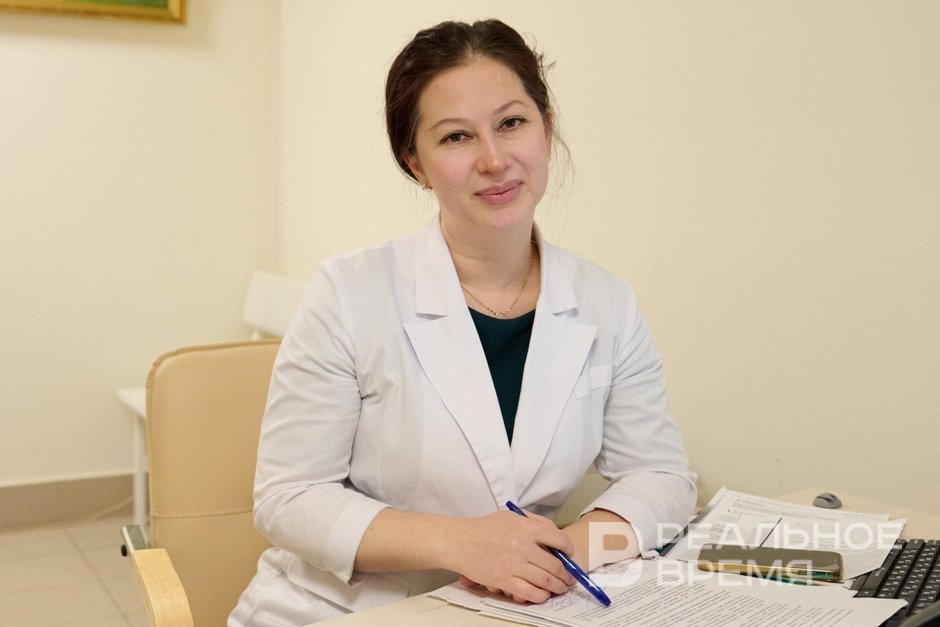
Aigul Rashidovna Alyavetdinova, a medical psychologist at the RCH and a social work specialist in the acute cerebrovascular accident (ONMK) department, does work that is invisible behind the hospital walls but invaluable for people who have encountered misfortune. As a social work specialist she explains to people and their relatives how to apply for disability, what package of documents to collect to receive social assistance and what they are now entitled to from the state. Thanks to her work the patient receives a clear route sheet and detailed explanations. Besides, Aigul Rashidovna solves the problems of discharging lonely or homeless people who from now on will not be able to look after themselves: she goes to the social protection service, helps find places in shelters and boarding houses, and tries by all means to find their relatives so that the person does not remain alone with misfortune. And as a medical psychologist she works with patients and their relatives in the stroke department, helps with the restoration of cognitive function and supports morale. In her portrait for “Real Time” Aigul Rashidovna tells astonishing stories (both with a good ending and sad ones), reflects on the meaning of life and explains how to preserve one's strength if your close one has fallen seriously ill.
“You come at them with a stone, and you — with a treat”
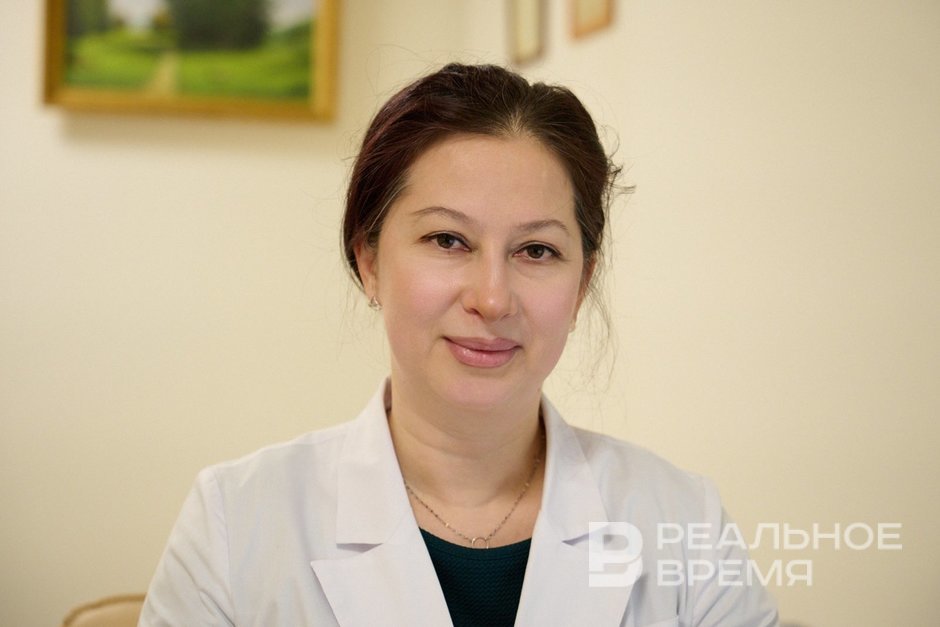
Aigul Alyavetdinova combines two positions at the RCH — social work specialist and medical psychologist in the neurology department for patients with acute cerebrovascular accidents.
She grew up in a medical family and since childhood dreamed of a profession in which she could help people. The total length of service of the Alyavetdinov dynasty is more than a century, and it all began with a great-grandfather who was a feldsher. Aigul Rashidovna did not catch either her great-grandfather or her grandfather, the doctor, but stories about them are passed down from generation to generation of the family:
— I especially remember the story of how he related to the “gratitude” of patients. Once, when grandfather Ibragim was not at home, his cured patient brought half a sack of sugar as a present. His grandmother met him and did not refuse the provision for the winter: it was hard to feed a family of six in those years. But when grandfather returned home, he got angry and returned the sugar. He was principled and considered that, having assigned him an official salary, the state had taken care of feeding the family.
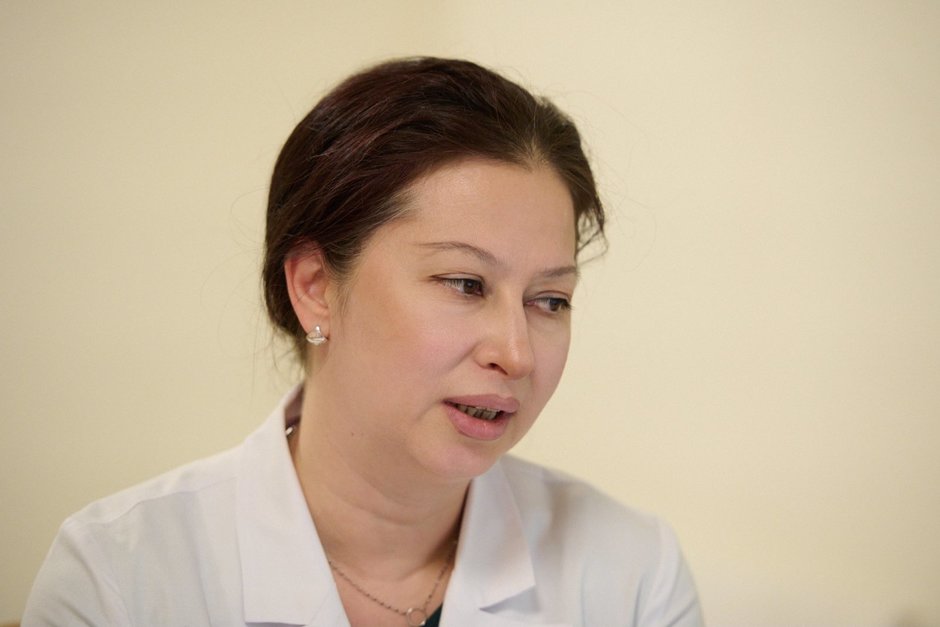
The house was full of books on medicine, because Aigul Rashidovna's father, Rashid Alyavetdinov, was also a doctor, a doctor of medical sciences, an honored doctor of the Republic of Tatarstan. And her mother has worked as a medical speech therapist for many years. Our heroine recalls that mom and dad have always been and remain for her an example of honor and dignity. Despite the fact that the family lived in prosperity, the children were brought up in strictness and modesty. Our heroine remembers her father always over books, because he was engaged in scientific activity. And her mother is still the closest person for her.
— She has lived her whole life with the saying “Siña tash belän, ä sin — ash belän.” Translated from the Tatar language it means “You come at them with a stone, and you — with a treat.” From her I learn the art of healing with the word, says Aigul Rashidovna.
Since her school years she has had the saying of Socrates engraved in her memory: “One cannot heal the body without healing the soul.” She understood quite early that she wants to help people with the help of conversations and moral support, to delve into human psychology. Therefore in 1998 she entered the faculty of social work of the medical institute. After it she got a job at the City Center of Occupational Pathology. She received a second higher education — she studied to become a clinical psychologist.
“A person needs to be told about everything so that they do not remain alone with misfortune”
At the RCH our heroine is part of the multidisciplinary team of the stroke center and works in accordance with both of her educations. After all, after a stroke about 80% of patients receive disability of varying degrees of severity. A person may get severe persistent impairments of motor functions, impairment of speech, of the cognitive sphere, etc. Therefore after discharge a patient with persistent severe neurological impairments will need to undergo a medical-social examination. But most often patients and their relatives are poorly informed about their rights and about the basics of the legislation that is called upon to protect their interests. No one enters the stroke department according to an approved plan. It is always a big surprise and grief for a person and their family. And if they are discharged from the clinic with a disability, as a rule, they do not know where to go for help afterwards and what to strive for.
As a social work specialist Aigul Rashidovna tells patients and their relatives in detail about how to properly process the documents at the bureau of medical-social examination and about what measures of social support exist for them, where to go, with what documents, within what timeframes to manage in order to process the disability group.
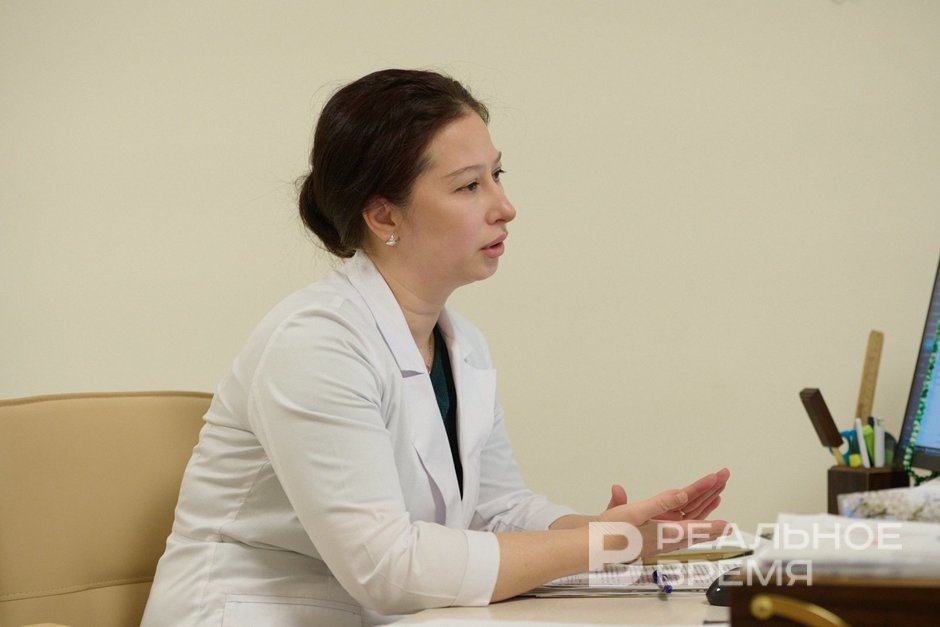
When we ask about his individual rehabilitation program — it turns out that it has just been lying on the shelf for several years, and how to get everything written in it and how to use it, he does not even know
After all, the legislative support of people with disabilities in Russia is broad. The state guarantees them both rehabilitation and technical means and social services. When processing the disability group at the MSEK the patient receives an individual program of rehabilitation and habilitation, where everything he can claim is written. But at the same time he is often completely helpless, and not only physically but also communicatively. After all, no one is born with the ability to walk through the authorities, especially this concerns villagers. Therefore someone needs to orient them from the very beginning, help draw up a clear plan and give all the necessary information. This is what the social work specialist at the RCH does.
— For example, if a person after a stroke does not walk — they are entitled to absorbent underwear, diapers, an anti-decubitus mattress, a wheelchair, a chair with sanitary fittings. For those who walk, the list is different: walkers, handrails, etc. And there are also subtle nuances in medication provision and sanatorium-resort treatment… And the person needs to be told about all this so that they do not remain alone with it all, explains Aigul Rashidovna. — Do you know what situations I have had? A patient comes who is already lying with us for the third time. His condition is getting worse and worse. And when we ask about his individual rehabilitation program — it turns out that it has just been lying on the shelf for several years, and how to get everything written in it and how to use it, he does not even know.
“Having such a broad legislative base, people do not use it. Because they do not know about these possibilities”
This gap in the social organization, unfortunately, has been known for a long time. In the polyclinic at the place of residence there is simply no one to tell the patient about this. It happens that polyclinic therapists and neurologists in small districts help to orient themselves, but this is not their job, and as a rule, the doctors simply physically have no time for it. Another possibility — a “pushy” relative who knows how to find out everything and achieve everything they are entitled to. But there are very few of such. And people simply despair, give up and arrange life after a stroke as they can manage themselves. At the same time many patients in the village do not even have a toilet in the house.
— Of course, it is very painful to understand this. After all, having such a broad legislative base that guarantees the receipt of all these means, people do not use it. Because they do not know about these possibilities. No one will tell them about this, because in essence there is no one to do it. And there are also benefits, compensation payments, subsidies — and they too must be obtained. And I tell them about all this — about social benefits, allowances and subsidies, says our heroine.
Having told everything that can be useful to the patient before discharge, Aigul Rashidovna checks how everything has been absorbed: “And now take a test with me.” She tries to make sure that the person knows exactly where to go and what to ask for. Patients and their relatives try to remember and write down everything: where, when and with what documents to go. Because for the MSEK a rather tight timeframe is established within which one must manage to fill out various referrals and collect documents.
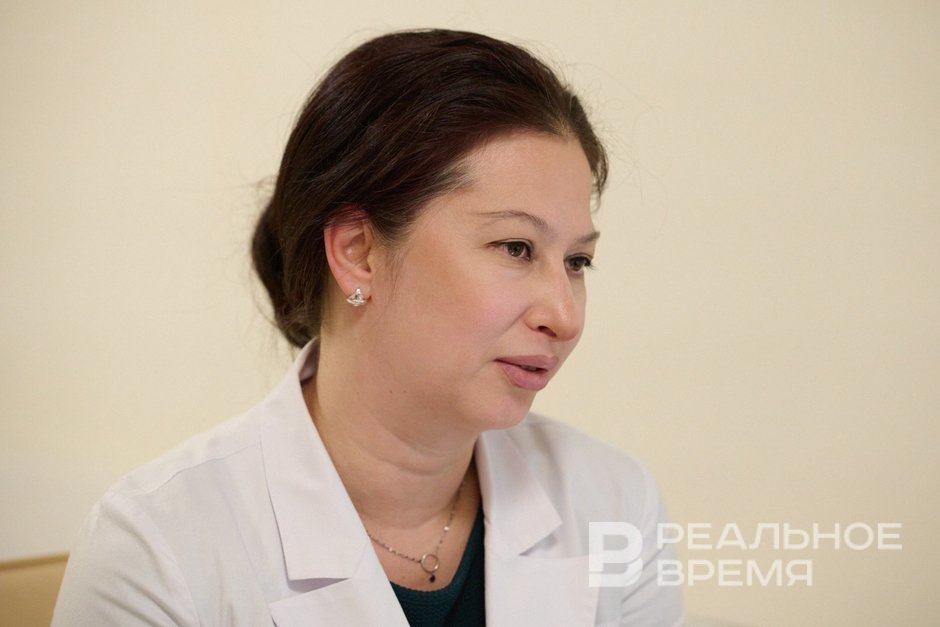
There are semi-commercial institutions — for example, “Priyut Cheloveka” — they help us very much. Wonderful people work there, I constantly turn to them, they do not refuse us
Our heroine says that a huge role in this work is played by the human factor. Not every specialist in the social sphere on the ground is ready to enter into the situation and do beyond what is prescribed to them by the job description. Not everyone makes contact and agrees to get involved in situations when a person cannot help themselves.
— Once I was processing a complex case; I went to one of the districts of the republic to the social protection department. And there the employee simply would not make contact. I told her then: “After all, none of us is insured against anything. Your close one too could find themselves in such a situation.” And you know, she fell to thinking. And she began to talk in a completely different way, recalls Aigul Rashidovna.
An even more complex case — if there are no relatives nearby or if the person is in a difficult life situation. Where and how to discharge them if they cannot take care of themselves and have no close ones?
By law a social worker is attached to such patients, who serves them at home. Upon discharge Aigul Rashidovna notifies the Comprehensive Center of Social Services for the Population (KCSON) that it is getting a new ward. And in this activity of hers our heroine helps not only the patients of the stroke department — there are plenty of lonely helpless patients in other departments of the hospital too.
When it is necessary to discharge a lonely helpless patient, social work specialists encounter difficulties in processing the documentation. One cannot discharge a person “into nowhere” if they cannot look after themselves. The way out becomes a boarding house or an internat.
— Homes of mercy and boarding houses assist us and do not remain indifferent. But, of course, there are also great difficulties. After all, they too have their own flow, a rather large one, she says. — There are not enough homes of mercy, and this is a serious problem. There are semi-commercial institutions — for example, “Priyut Cheloveka” — they help us very much. Wonderful people work there; I constantly turn to them and they do not refuse us. But they (if there are free places) take only those patients who can at least somehow look after themselves — for example, move only partially but otherwise are quite independent.
The system is arranged so that the clinic has no direct connection with state boarding houses of the general and psychiatric type. Interdepartmental interaction always goes exclusively through the social protection department. Aigul Rashidovna sometimes goes herself to the territorial social protection departments when she has to discharge lonely people left incapable of living independently. One has to look for solutions together with the employees of the social services.
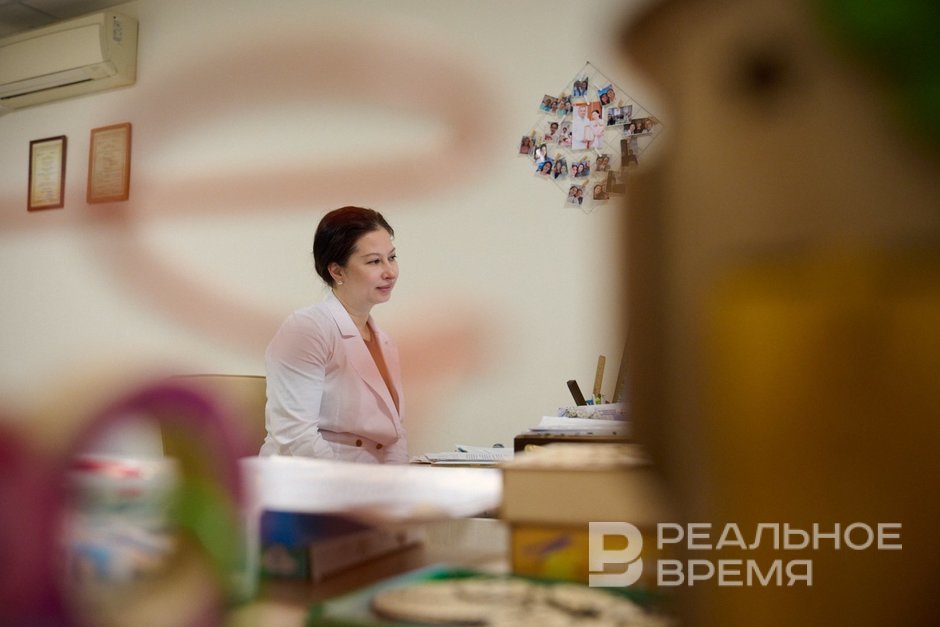
“Everyone must be equal in their dignity and their rights”
And until the last Aigul Rashidovna tries after all to find the relatives of her difficult wards. In her work she has seen very different cases. For example, once a patient with dementia was admitted to the ONMK, at first glance completely lonely. A social worker was attached to her, who constantly came to her and performed work according to the federal list of social services. These services are sometimes free and sometimes paid — a small sum is withheld from the pension of the ward for them. Everything is determined by the IPPSU — the individual program of provision of social services. For example, this is help with sanitary-hygienic procedures. But then the old woman ended up with a stroke at the RCH. How was she to be discharged?
Our heroine began to sort out her documents, turned to the competent bodies… It turned out that the old woman was the owner of two apartments in Kazan, and that she had a former daughter-in-law and a grandson in Moscow.
— Through the state bodies I found out their phone numbers, called the daughter-in-law and said: “Please come. Help her.” She turned out to be a decent person — she agreed. She came, sorted out the situation, rented out the grandmother's apartment, and with that money placed her in a private boarding house. We have plenty of private boarding houses, there are places there, thank goodness those only relatives who could be found did not refuse this grandmother. This story ended well. But there are also such old people who remain completely alone, even if they formally have children and grandchildren. I do not know how this happens, but we see that too, Aigul Rashidovna says sadly.
She recalls a case from the time of Covid: an 86-year-old woman was lying in the ONMK. She had five children, three of them in Kazan. The children chipped in and hired a caregiver for their mother, but none of the five wanted to take her home. At the same time the old woman was adequate, socially oriented, and partially able to look after herself. Right up to the day of discharge not one of the children was going to take their mother to themselves. But here fate itself made an unexpected turn: they did not manage to discharge the patient. Her temperature rose and Covid began. She died in the Covid hospital.
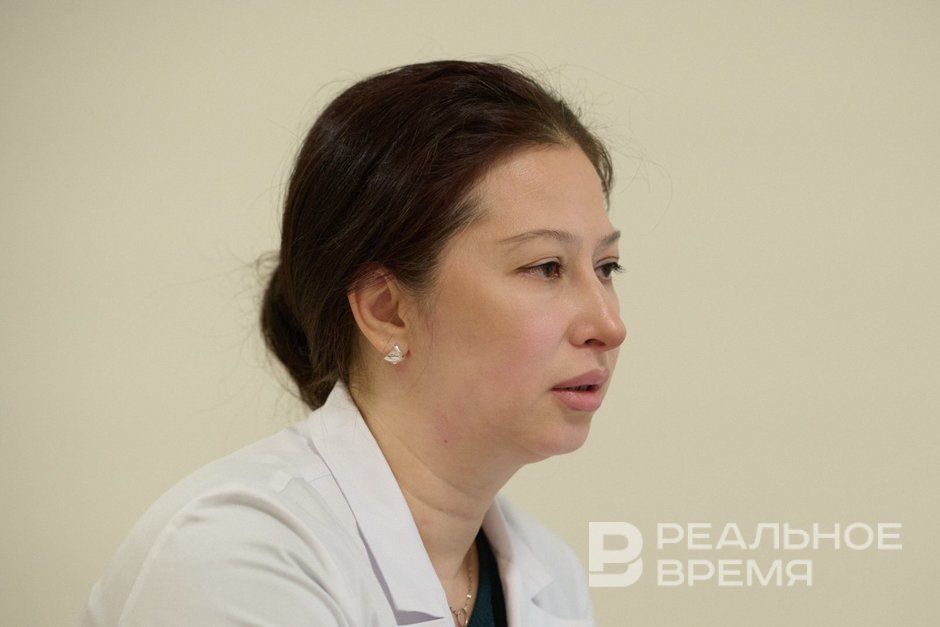
We all came into this world temporarily, and each — with his own mission. Everyone must be equal in their dignity and their rights, regardless of status and material position
We ask: how does Aigul Rashidovna manage, seeing such stories, not to lose faith in people?
— I do not know, she answers thoughtfully. — Probably thanks to my upbringing and what my parents instilled in me. And faith in God. We all came into this world temporarily, and each — with his own mission. Everyone must be equal in their dignity and their rights, regardless of status and material position. It seems to me that my mission consists in helping people, the poorest and most vulnerable among them too. This brings me pleasure. If I see a result — my soul feels very good.
“We got everything involved: social networks, and even the Liza Alert squad”
The work of Aigul Rashidovna is not always as linear and understandable as it may seem: here is the patient, here is their address, here is the phone of the KCSON to which this territory belongs. There are tangled and complex cases. Sometimes people enter the hospital without documents, and if they are unconscious or in a serious condition, they cannot even tell the ambulance staff what their name is.
— There was a case when a young patient was brought to us by ambulance in a serious condition, and in the medical history there were only his surname, first name and patronymic, which he had managed to tell the feldsher before losing consciousness. He had also managed to say the address of the “working house” — the street and the house. He had neither documents nor a phone. The ambulance staff thought he was homeless. I went to this address, and such a house does not exist at all. I began to call all the territorial shelters — but nowhere was such a citizen listed. From the available data we found out that he had been registered in Astrakhan Oblast. We got everything involved: social networks, and even the Liza Alert squad. In the end I managed to contact the administration of the oblast. There they confirmed that such a one was in their database. Through social networks we were able to find his son. Then we contacted his elderly parents, who, it turns out, by that moment had already been looking for him for more than a week! On the very next day the father came to Kazan. It is hard to imagine what the members of his family went through. Fortunately, for this patient everything ended well. He had gangrene of the lung, very rapidly progressing. But thanks to our resuscitators and thoracic surgeons he was saved, our heroine tells.
Colleagues joke that Aigul Rashidovna would have made a decent investigator, because sometimes she has to conduct a very deep search, dig up the grain of truth, sort out very hard and complex things, and “place” helpless people. She herself goes to the places of residence of difficult patients — and admits that she could not have imagined before in what conditions people can live. Sometimes she has to travel a long way too: once through the district police department they established the identity of a patient with a craniocerebral injury registered in Mari El. Aigul Rashidovna went to the neighboring republic and found his aunt and uncle, who then took their nephew home. In cases of long trips she is provided with transport from the RCH motor depot; within Kazan she uses her personal car.
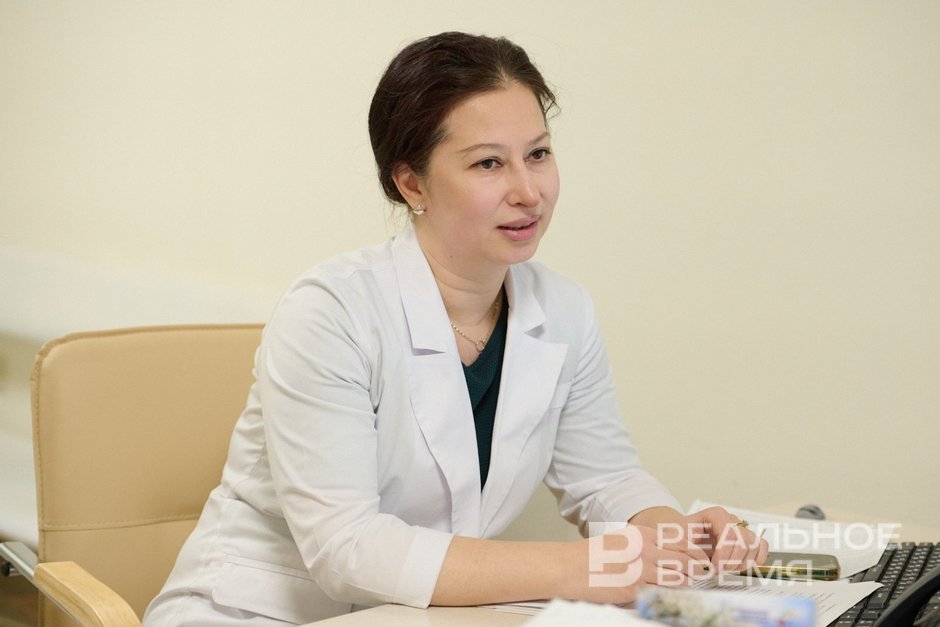
Our heroine tells another dramatic story: in 2010 a woman of about forty with a spinal injury was admitted to neurosurgery. Her cohabitant had stuck a knife into her back and damaged her spinal cord. She was operated on by Valery Ignatyev — the hero of one of our portraits.
— Valery Georgievich is a man of a kind soul. He operated on her and calls me: “Well please, help.” And she was admitted without documents; she had no fixed place of residence, was marginalized. We began with her with the processing of a passport. First I went to where she had lived with this cohabitant. I found a neighbor, the two of us chipped in, paid the state fee, and I submitted the documents for the processing of a passport for this patient. She was discharged from us already in a wheelchair — her legs remained immobilized. I managed first to place her in the CSA “Miloserdie” — we have such a home where people without a fixed place of residence who cannot move independently are temporarily placed. And then she was transferred to a district, to a specialized internat, recalls Aigul Rashidovna.
People without a fixed place of residence who have lost everything in life also need help. Our heroine considers that no one should condemn them.
— By no means! I have had to see people of creative professions who once occupied good positions in such a state. There was also a scientist — lonely, neglected, leading an asocial way of life, she recalls. — And one must try to help each one.
“Women whose hobby was knitting recover well”
Besides the “detective” and explanatory function, our heroine has another important role: that of medical psychologist of the ONMK. Her functional duties as a psychologist of the ONMK include a mandatory primary examination of patients after a stroke and the determination of their psychological status. This happens still in the intensive care unit if the patient is conscious.
And then, in the process of the person's recovery, she conducts psychological support in dynamics: individual consultations, testing for the level of anxiety and depression on various scales. Classes are held in a group for the restoration of cognitive functions, correction of the psycho-emotional state. Various techniques are used in this: motivational psychotherapy, cognitive trainings, art therapy, other methods and methodologies depending on the patient's condition.
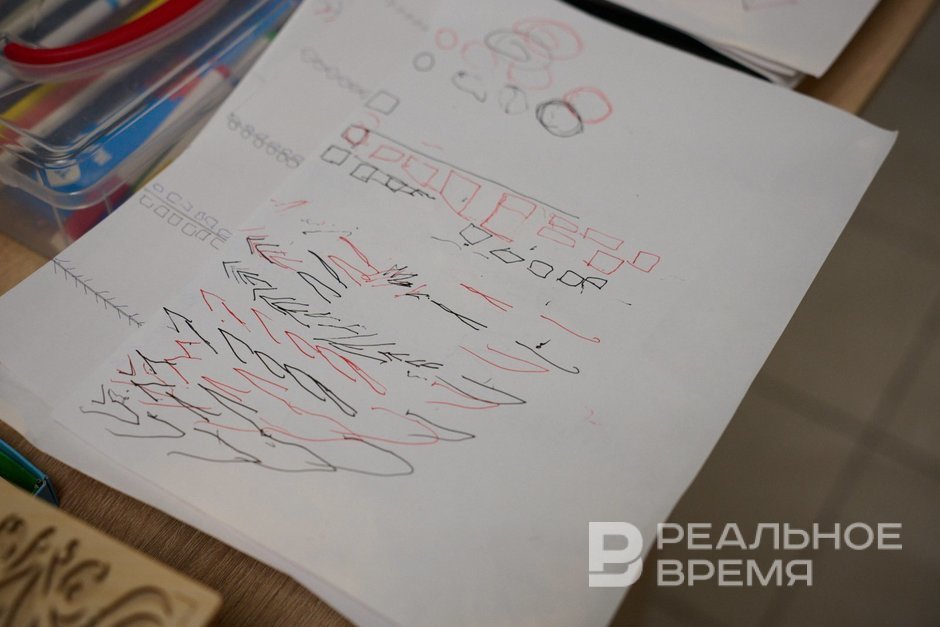
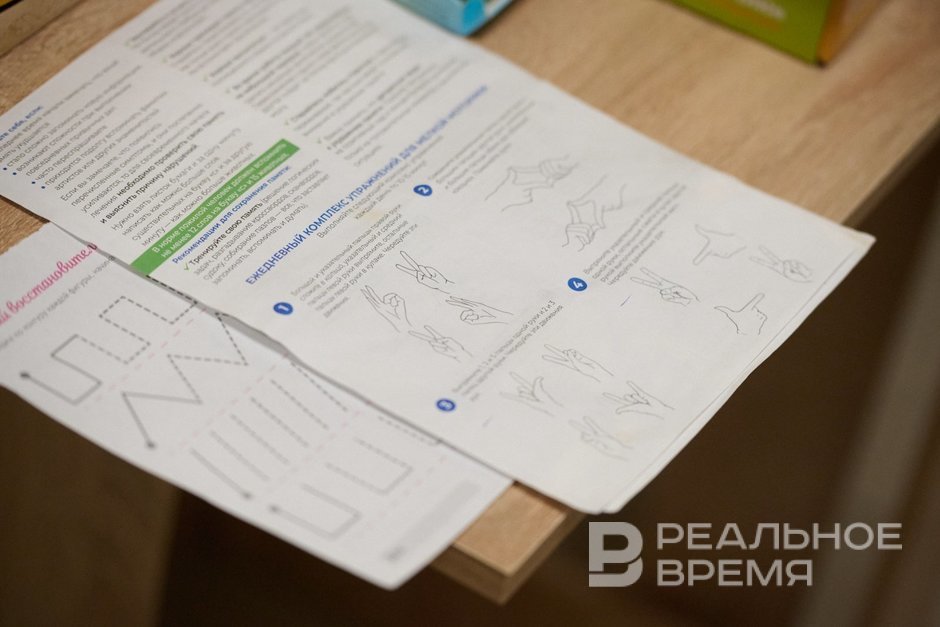
Serious work goes on the basis of fine motor skills. After all, its development is directly connected with the brain. Exercises for fine motor skills go from simple to complex. Aigul Rashidovna also does neurogymnastics with the patients in order to develop interhemispheric interaction and form new neural connections in place of the dead ones. Interestingly, the psychologist recommends doing neurogymnastics and other exercises before noon, in accordance with biorhythms. This, by the way, applies not only to patients with a stroke but also to hypertensive patients and people with transient ischemic attacks: all exercises and serious mental tension — in the first half of the day.
A big role in recovery after a stroke is played by the cognitive reserve of the person.
— If the patient's work was connected with science or with creativity — we notice that they recover a little faster, precisely thanks to the numerous developed neural connections. Also, by my observations, women whose hobby was knitting recover very well. It is very interesting to watch this! After all, when you knit a pattern or a complex item, you have to constantly change direction and think through the types of knots. And it turns out that, first, these patients have excellent fine motor skills, and second, strong and developed neural connections, tells Aigul Rashidovna.
With respect and all seriousness the RCH treats the religious convictions of patients. Aigul Rashidovna too believes in higher powers. And as a psychologist she knows how important this side of life is for a person in trouble.
— For believers there are prayer rooms at the RCH; sometimes I accompany patients and their relatives to them. Orthodox Christians can light a candle in the small chapel, order a prayer for health, and can invite a priest in order to take communion. In the Muslim prayer room one can both perform namaz and invite a mullah for a conversation. Sometimes it happens that after meetings with the clergy patients begin to recover little by little even, it would seem, in the most hopeless cases, our heroine tells. — I think that the power of prayer and the power of faith give a very great resource.
“If one of your close ones offers help — agree!”
Upon discharge the patients of the stroke center and their relatives receive extensive recommendations from Aigul Rashidovna, also as a psychologist — about how to act further and what methods of psychological rehabilitation are worth trying.
Separate work is done by the medical psychologist with the relatives of the patients. They too have suddenly encountered a big problem, therefore a consultation is necessary for them too. As our heroine tells, often they show a state of anxiety, and sometimes people fall into depression. The psychologist helps them find motivating factors in life, the points one can hold on to. But, of course, here at the RCH she has very little time for full-fledged work, therefore she always recommends that the relatives of patients work through the problem comprehensively and step by step with a psychologist at the place of residence. After all, there are rehabilitation centers at polyclinics too, in which medical psychologists work.
— But the first thing to do for the relative of a patient is to relieve the acute state. This is what we do here. For example, when they visit their sick close one — they must pull themselves together and be tuned to the positive, so as not to create a burdensome mood in the ward. All efforts must be directed only at recovery. So that the patient sees in their close ones not a source of tears but support, explains the psychologist. — A very great deal in the process of recovery depends on the close circle, on care, on attention, participation and love. After all, a stroke is a family story.
Another invariable recommendation that Aigul Rashidovna gives to the relatives of the patients of the stroke department — try to replace each other in caring for the sick person if there is such a possibility. This helps avoid burnout and the aggression toward the patient that accompanies it. In order to bring your close one out of the crisis, you yourself must be in resource.
— Therefore I always recommend: if one of your close ones offers help — agree. Even for a couple of hours, because even two hours of rest outside the hospital will give a resource, says our heroine.
Aigul Rashidovna sees all the relatives who appear at the patient's bedside. She quickly notices which of the close ones is more stable and which needs help. Who should be a little abstracted from the situation and who should be brought closer to the patient. Bringing the relatives of patients out of hysteria into a resourceful state has to be done in different ways. Sometimes a simple question is effective: “Who is the sick one here? Who is worse now — you or your relative?” As a medical psychologist our heroine picks the keys to each situation. After all, it seems to us that each such story is unique. Unfortunately, the specialists of the ONMK see them every day and have already learned to work with the patterns of such situations.
Aigul Rashidovna more than once during the conversation says that she believes in the existence of the Almighty. And therefore she is sure: one must never lose hope. One must fight — for oneself, for one's close one — to the last. This is what she sees every day in the ONMK. If a person has a resource, has a good, right, loving environment — then the chances of recovery are higher.
A doctor studies all his life. A psychologist — too. As a medical psychologist of the stroke center Aigul Alyavetdinova regularly takes new training courses and seminars and raises the level of her professional qualification. For example, last year she went to a conference on oncopsychology, and recently she completed training in neuropsychology at the Bekhterev NMIC.
“I try always to be in resource. After all, I love my work”
And how does one preserve one's own resource in situations when one constantly sees human misfortune? The psychologist of the stroke department has a task that is not simple and even in a certain sense mutually exclusive: on the one hand, one must get on the same wavelength as the patient, establish an emotional connection with them — and on the other, preserve one's own equilibrium and not let oneself drown in the situation. How not to burn out in such conditions? Our heroine honestly answers:
— I cannot answer this question unambiguously. Probably my mother with her magnanimity and kindness is always before my eyes. I try to live by the principle that she instilled in me. If I do not like something, I try to endure it. Not to let an aggressive relative of a patient throw me off balance. I try always to remain in resource. After all, I love my work and try to relate with understanding to the patients and their relatives.
Behind the walls of the hospital our heroine is a loving mother and a beloved daughter. She cares for her mother, tries to give her the maximum of care and love, admires her character and never stops learning from her love and wisdom. And she calls her son her support — he is already grown up and is finishing medical university.
— Mother and son — my two anchors who support me in everything. This is my resource. Of course, I want to see my son successful, good, decent, a knowledgeable doctor. Who will try not to make mistakes, because a doctor's mistake can cost a person their life. This is enormous responsibility, and I hope that he is aware of it, our heroine reflects.
I cannot go anywhere. It seems to me that this is my mission — to help those who cannot help themselves
A successful medical psychologist who knows how to work with difficult situations must be very much in demand in private centers. We ask whether Aigul Rashidovna has ever had the desire to change her work for something calmer and more predictable. She shakes her head negatively: no. She is not going to leave her work in state medicine.
— I think that people go into the sphere of medicine by their spiritual qualities, by their worldview. My son says to me: “Mom, why do you need this? You worry about each one, you are afraid of not finishing something, you carry all the worries about the patients home.” After all, at home too I try to read something, analyze, call somewhere, find something out. But I am not going to give up and abandon my work. It seems to me that this is my mission — to help those who cannot help themselves, reflects Aigul Rashidovna. — I cannot remain indifferent. I cannot imagine that I would not help a person who very much needed my help. And when hope appears in a person's eyes, I understand that I am not doing my work in vain.