Lo Dagerman: “Today we ask ourselves the same question: what can one hold on to in this world?”
Swedish writer Lo Dagerman — about her famous parents Stig Dagerman and Anita Björk, the book “The Sky Nearby” and humanism
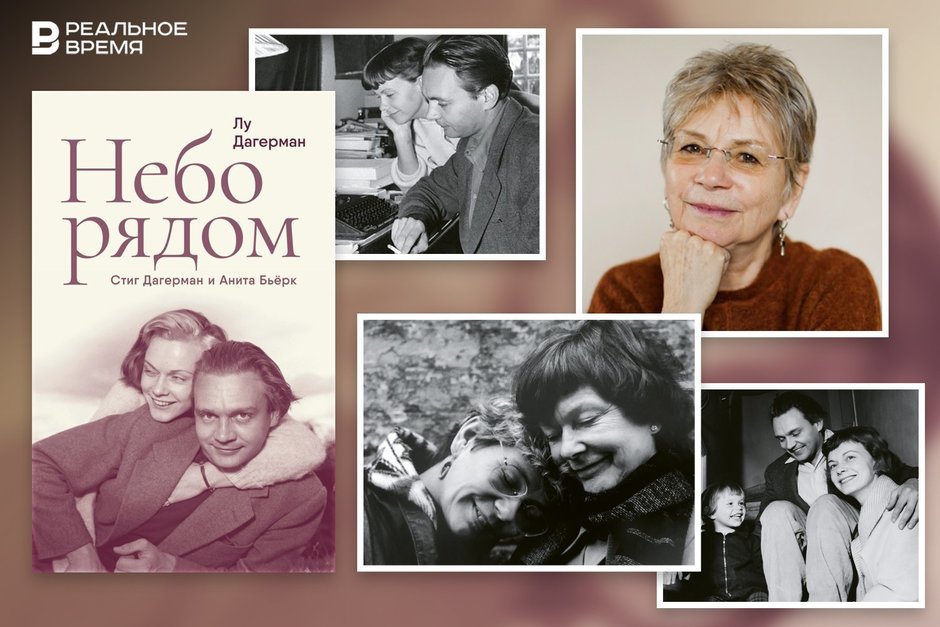
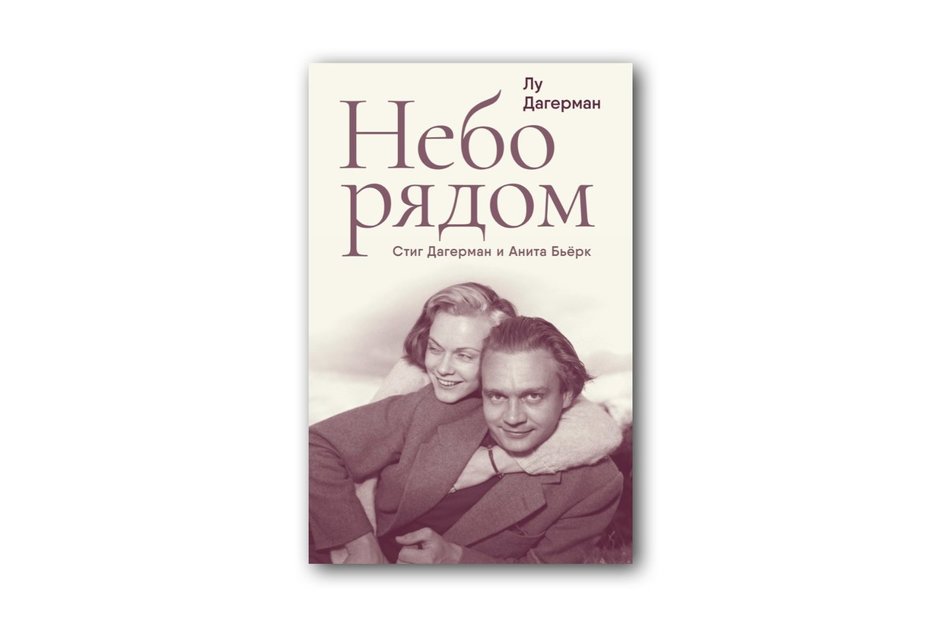
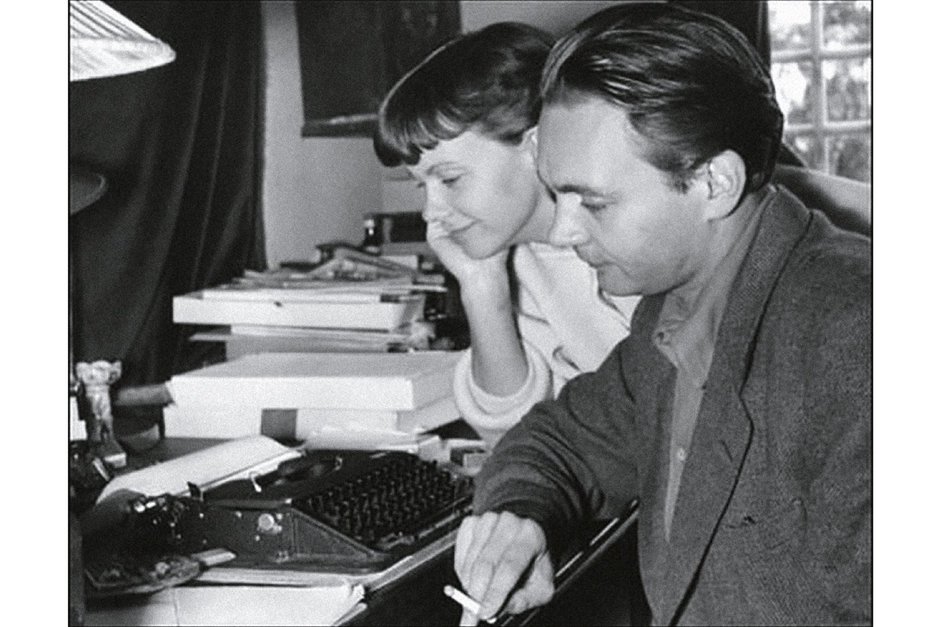
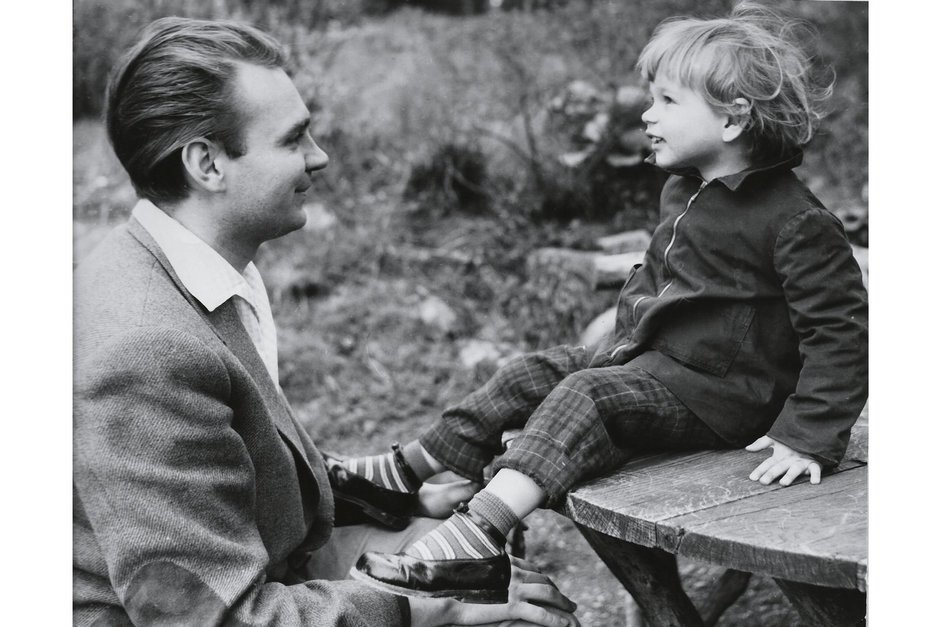
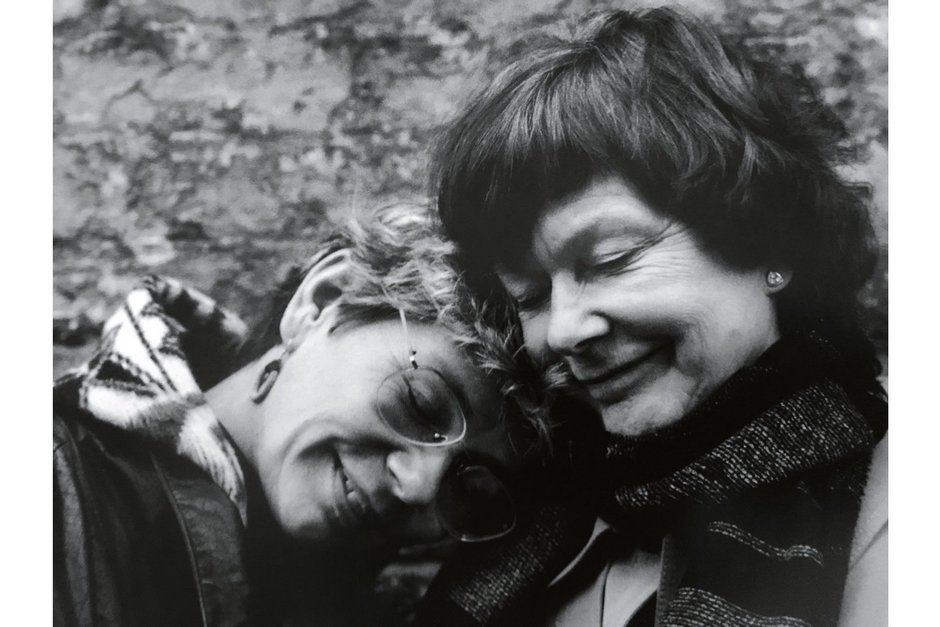
This autumn the Ivan Limbakh Publishing House released the book by Lo Dagerman, “The Sky Nearby.” Lo is the daughter of the classic of Swedish literature Stig Dagerman and the Swedish theater and film actress Anita Björk. At first glance it may seem that she wrote about the love of her parents. But in fact the book is far deeper. It is a biography of a creative union, a difficult family history and a dialogue with parents who are no longer there. The literary reviewer of “Real Time” Ekaterina Petrova talked with Lo Dagerman about her parents, the book “The Sky Nearby," her father's legacy and the reasons for the new wave of popularity of his texts.
— Lo, for a long time you did not want to write about your parents — Stig Dagerman and Anita Björk. At what moment did you change your mind and what made you do it?
— Life was very full: I have two children, I emigrated to the USA and was engaged in a multitude of other things. Besides, the family history, in which the father commits suicide — one does not want to plunge too deeply into such a legacy, especially when you are only in your early thirties. But the children grew up, and I acquired the necessary distance — both temporal and geographical. I grew up and lived far from home. And then the pandemic began, and I, honestly speaking, came to love that time: I found myself locked in my own house. Then I gathered all the materials that were kept with me, and there turned out to be quite a lot of them, and laid them out on the dining table. And before me a story took shape.
I want to add one more thing. Once I was asked to tell about Stig and Anita. This request stayed with me, but I did not want to do it, because I was afraid to present their story in too romantic a light — after all, we all knew that it ended in suicide. But the request itself made me think: what do I actually know about my parents? And then I wanted to let them tell about themselves.
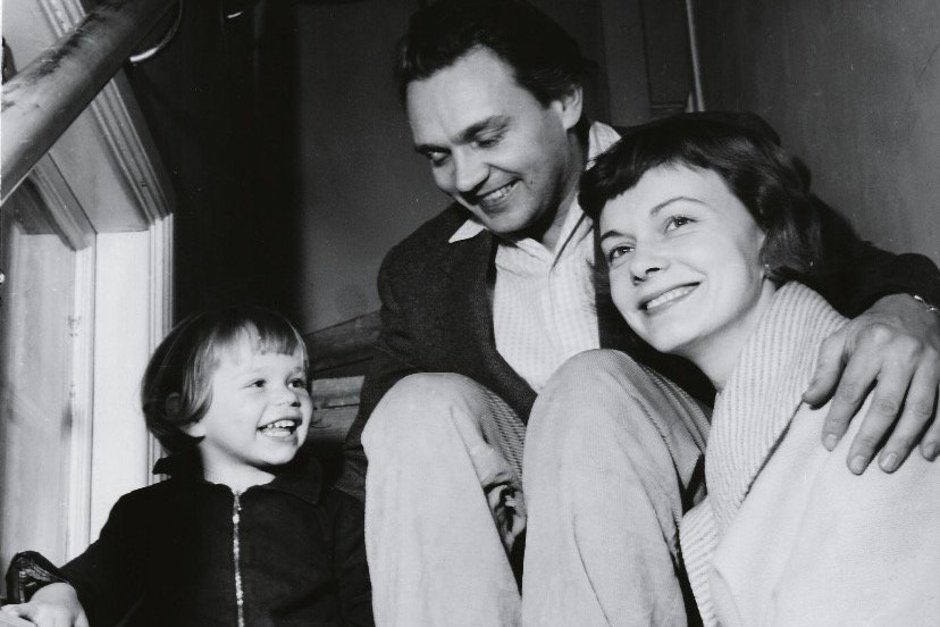
— In “The Sky Nearby” you write that after reading the diaries of Anita and Stig you understood that in fact you did not know your parents. What new did you learn about them? What surprised you as a researcher and as a daughter? After all, these are two completely different roles.
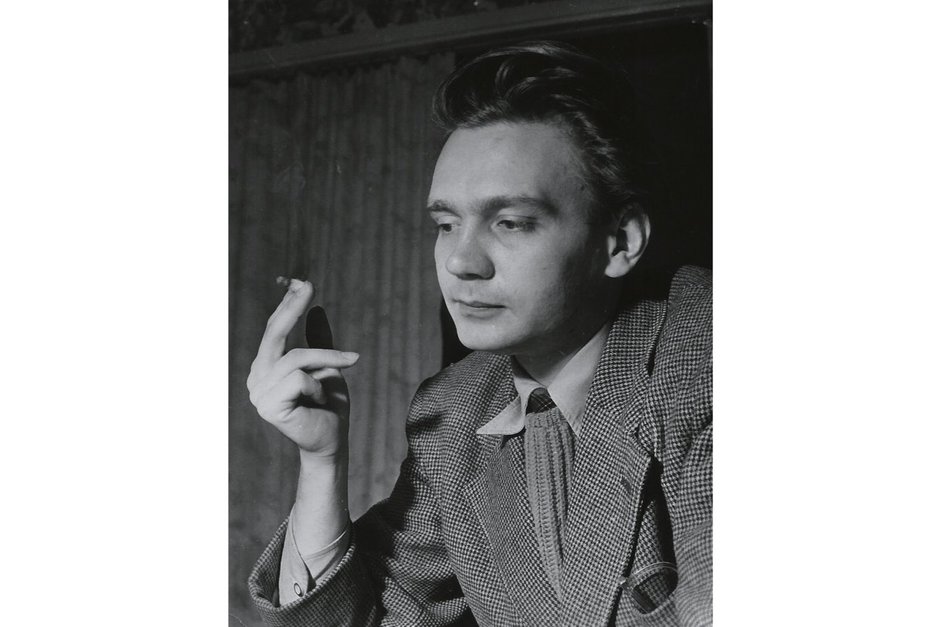
— You know, all of us have family stories. And we are lucky if after our parents there remain documents that allow us to look into their inner life. The diaries that Stig and Anita left were in themselves not especially frank. Usually there is simply written: “I did this, I did that.” But from time to time there are true discoveries. In the case of Stig, he left us only his last diary. I wanted to understand how in it the gradual immersion into the obsession with the garage was reflected (it was precisely there that Stig Dagerman committed suicide, — author's note), how this state developed and in what sequence the events occurred.
My mother's diaries covered thirty years. About much I had known in general terms before too, I understood what was happening in her life. But only now did I realize how deep her depression was in some years and what despair she experienced.
— In the book there are insertions with your personal recollections that change the character of the narrative as we plunge ever deeper into the story of Stig and Anita. When you tell about yourself as a little girl, you write in the third person, as if increasing the distance between yourself and the events that were happening then. Later recollections are already described in the first person. Why did you choose precisely this way of narrating?
— You know, I did not plan this at all in advance. But I very much liked your interpretation, thank you. This book in a certain sense wrote itself, because many parts of this story I carried within me for long years. But when I switched between the adult view of the events and the perception of a very small child, it was important for me to designate for myself and the reader: now we are entering the consciousness of a little girl. She does not yet fully realize herself, does not reflect, but simply absorbs feelings and observes what is happening around. This is not the adult Lo, but precisely the child.
— What was harder to describe — yourself or your parents? And how did you manage to separate the daughter from the researcher in yourself?
— The hardest thing — is to find the authentic voice. When you write about other people, relying on documents and materials, you understand that you will never be able to restore what happened with precision. But you try to be as honest as possible in your interpretation: to understand what was happening, in what state the person was, what they could have thought and felt. And when you write about yourself, the task is no less difficult, but for another reason. There may be too much information, and one has to separate the main thing in order to understand what really truthfully conveys a specific moment of life.
— Throughout the whole book you mention many well-known people — writers, artists, creative personalities. Your parents too were well-known artists and people of art. How difficult is it to grow up in such a family? How was it for you?
— I emigrated (laughs). And in America you become an anonymous person. As I already said, geographical distance helped me, and also that I grew up. All this gave me freedom. Stig always said that creativity needs freedom, and for this, in a certain sense, distance is necessary. Of course, there are many children of famous parents who follow in their footsteps — work in the theater, become writers. And this is wonderful, I am only for it. But my path turned out different.
— The Russian writer Ekaterina Manoilo in an interview with me about her debut novel “Father Looks to the West," partly based on the events of her life, said that in the process of writing the book she created a relationship with her father that she had not had. In Ekaterina's life he was an absent figure. The book helped her build a relationship that had not existed before. And did your book help create a similar connection with your father, who died when you were still very small?
— To a certain extent the book really helped. But back in the 1990s I began working on translations of Stig's works. We started with the collection of stories “Night Games," and I worked together with an American translator. In essence, this was my own translation work. It is astonishing what a wealth of texts my father left behind! I only needed to plunge into them. And the very process of translation forces one to take apart every word, every sentence, paragraph after paragraph, to ask oneself again and again: what exactly does he want to say here? It was then that I truly felt closeness to my father. This work laid the foundation for the book “The Sky Nearby.” The main question that determined my life, the relations with my mother and our whole family history was connected with Stig's creative crisis, which in the end led him to suicide. Therefore in the book I followed his texts, how his creativity changed, how the creative crisis gradually took possession of him and, in the end, led to suicide. And this, in turn, became a trauma for the whole family.
— Why did the relationship of Stig and Anita turn out to be so important for understanding both of them as creators? Are Anita and Stig a creative union or after all a love story? Can one at all draw a boundary between these concepts?
— And what is love? Especially the love of young people? In the book there is a chapter about what they saw in each other — a kindred soul. As we know, falling in love is in many ways built on illusion, but it is precisely it that allows us to overcome the isolation of our own “self” and feel closeness with another person. Both Stig and Anita, as, indeed, many of us, carried within themselves a deep feeling of loneliness. The title of the book — “The Sky Nearby” — is an engraving that was on the wedding ring Stig gave to Anita; in it the lines from the poem by Karl-Jonas Love Almqvist are played upon, in which, in essence, it is said: “You will never be alone.” There is also another form of going beyond one's own “self” — immersion in art. Be it writing or playing on the stage, creativity too gives a feeling of overcoming oneself. And this is no less attractive. So the book — is about overcoming loneliness and going beyond oneself through love and art.
If one traces the path of my father, it becomes clear that the creative crisis began in him long before he met Anita. He was moving away from his first family; he needed to look for new possibilities for writing. He gradually entered the world of the theater and saw in Anita not only an object of love but also the possibility to begin a new stage, to find a new path. He wanted to expand his possibilities as a playwright. For him this was an attempt at renewal and a search for a way out of the crisis. It seems to me this is the key question, a kind of point of support for the whole book.
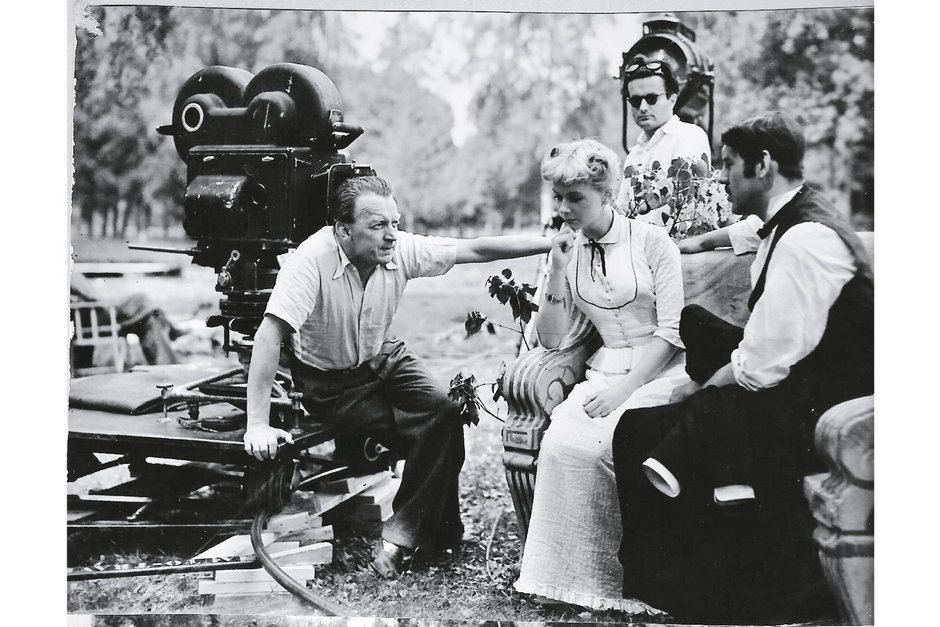
In the case of Stig and Anita closeness arose thanks to love and a shared passion for art. But in the proper creative work their paths diverged. For various reasons Stig never managed to fully establish himself as a playwright. During the time of living with Anita he wrote only one play. But Anita's career, as is visible from the book, developed swiftly. She worked in the theater, was part of the troupe, and spent much time away from home. Stig, however, remained at home and wrote in solitude. Their creative occupations did not feed each other. Moreover it was Anita who earned the money — she had to support the family, because Stig earned practically nothing. The more she worked, including filming in Germany, the further they moved apart from each other.
But I want to add one more important thing. They did after all have one common passionate interest — the texts and poems of Karl-Jonas Love Almqvist. In the last years of his life, in 1953—1954, Stig turned to Almqvist as to the possibility of his own creative renewal. Anita shared his enthusiasm. In this they were together again, and it was then, in 1953, that they truly felt that “the sky is nearby.”
— When two people fall in love, they in a certain sense become dependent on each other. But then comes the period of separation, distance appears — and this is completely normal. People now draw closer, now move apart, and then find closeness again. However for Stig this distance, it seems, became something traumatic and unbearable.
— To understand Stig, one needs to take into account the traumas that he experienced in childhood and adolescence. He was separated both from his mother and from his father. He was raised by his paternal grandmother and grandfather, who in fact became his real parents. But when Stig had to move to Stockholm in order to continue his studies, he received the news that his grandfather had been killed by some psychopath. And only a few months later his grandmother died too. Therefore the themes of abandonment, loss and loneliness were very deeply rooted in him. And, of course, he tried to comprehend and rework them through his creativity.
— You have lived in the USA for more than forty years and have done much to spread your father's work. You in fact had to introduce the American audience to Stig. How is his work perceived in America today? What in his books turned out to be especially close to the American reader?
— We have achieved a certain success. I am speaking about the interest on the part of publishing houses, the appearance of articles and publications. Gradually we manage to find our reader in various segments of the American book market. For example, in 2010 the University of Minnesota Press contacted me: they wanted to discuss the possibility of publishing the book “German Autumn” in the USA. Interest in the theme of the Second World War is very great there. This book, based on the testimonies of eyewitnesses and telling about post-war Germany, turned out to be in demand. It is used in university courses, it is referred to when the conversation turns to post-war Germany.
Another important step is connected with Jean-Marie Gustave Le Clézio. Through a mutual acquaintance I asked him to recommend an American publishing house that might be interested in Stig. He proposed his own publisher — David Godine from Boston. On the East Coast of the USA — in New York, Boston, Philadelphia — there is an intellectual environment and many young people who find it interesting to read literature from different countries. There we released the collection of stories “Wet Snow.”
Several years later, in 2016, Colm Tóibín published in The New York Review of Books an article about Stig. He considered his work in the context of Canadian and Irish literature, as well as the writers of the northern countries. He called the article “The Hard-Won Truth of the North.” Stig has admirers among well-known authors: the same Colm Tóibín, the Irish-American writer Alice McDermott, the Norwegian-American writer Siri Hustvedt. Their interest too helps introduce the American audience to his works.
Another very pleasant phenomenon — is the interest on the part of young writers with different cultural and national experience. Someone grew up in a Swedish-American family, someone — in a French-Spanish one. They become acquainted with Stig's work in France or Sweden, where he is well known, and then tell about him already in America, publish texts on the internet. One Swedish researcher even wrote a dissertation about why Stig became so popular in France. She speaks about the role of literary critics, translators and publishing houses that introduced readers to his works. But there is also another important factor — Stig's very biography. This is a young writer who lived in an era of great change. The Second World War, the onset of the Cold War — an extremely turbulent time, when humanity faced the threat of its own annihilation. The story of a person who came out of this epoch of upheavals and died soon after it cannot but be captivating.
— In Russia Dagerman became known to the broad reader relatively recently: his novel “The Island of the Doomed” came out in Russian only in 2021, but at once found favor with readers. What do you think, what won over the Russian audience to Stig? What turned out close to it?
— Russia has a very long literary tradition, and people find consolation in literature. I think here again one can recall Colm Tóibín's article “The Hard-Won Truth of the North.” Russia too is in many ways a northern country, therefore for Russian readers it is possibly easier to feel kinship with the Swedish writer. Our common melancholy, the feeling of loss, silence, fathers who abuse alcohol — all this may be close to the Russian reader.
We have already spoken about psychology, trauma, loss, loneliness and overcoming oneself. Stig reflected on where to seek consolation. In one of his texts there is a remarkable thought: “Our thirst for consolation is unquenchable.” In Sweden Stig was sometimes presented exclusively as a very gloomy writer, missing the theme of liberation, which is also present in his work. We even made a film about this: my son worked on it together with Stellan Skarsgård. In the film we highlighted Stig's words:
— However the miracle of liberation is approaching, and moreover from a completely unexpected side for me.
It seems to me that young people today too recognize themselves in his texts. Especially close to them are Stig's reflections on the position of young writers. In that same essay he writes that Henry Thoreau at least had Walden Woods, where he could find consolation. And where are we to go? Modern young people, who find themselves in the very thick of what is happening, in many ways experience the same thing.
— I very much love Scandinavian literature and read a lot of it. At some moment, when enough had accumulated, a real discovery happened to me: despite the fact that Russia and the northern countries are different states and a geographical distance separates us, we are in many ways similar mentally.
— You know, this is another reason why interest in Stig's work is growing in other countries too. For many years now we have been observing a new surge of interest in northern literature, cinema and art. This is connected both with Ingmar Bergman, and with the detective literature that came from Sweden and Norway, and with such authors as Karl Ove Knausgård. In Italy, for example, there is the publishing house Hyperborea, which specializes in the literature of the northern countries. And among the writers it presents Stig occupies a special place: more of his books have come out there than anyone else's. This is astonishing! Possibly the internet played its role too, but interest in the northern countries as a whole has noticeably grown. And this too helped introduce readers of different countries to Stig's work.
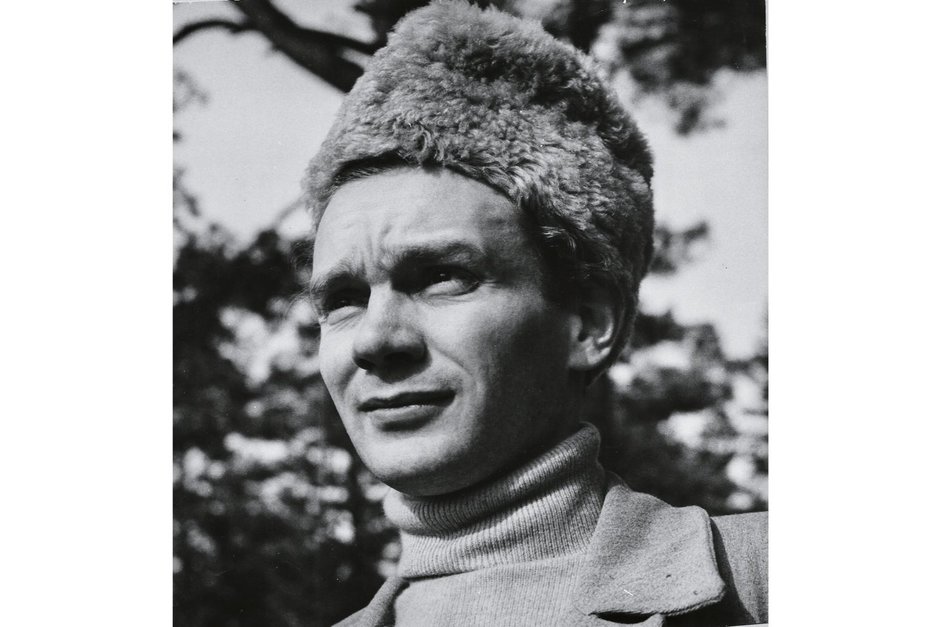
— I wanted to return to “German Autumn.” This book made a huge impression on me. The Scandinavian countries and Germany — are areas of my special interests, and besides I very much love reportage literature. Everything came together here: a Swedish journalist arrives in Germany after the Second World War and writes a book of reports. It would seem that at that time it was completely obvious who were the good ones and who were the bad ones, where good and evil are — everything is perceived in black and white. And nevertheless Stig manages to preserve an astonishingly objective position. We understand that objectivity in itself is rather subjective, and today to remain objective seems almost impossible altogether. But this book for me — is an example of genuine objectivity, and at the same time it is filled with emotions. And if one remembers that Stig's first wife was German, whose family fled from Germany, the impression becomes even stronger.
— You know, for Stig the question of what the role of the writer is was very important. He wanted his texts to change something, to make the reader think. One of his tasks consisted in throwing down a challenge to the reader. Today we live in an extremely polarized world, where people draw conclusions too quickly. But the world is incredibly complex, and Stig wanted to confront the reader precisely with this complexity. One of the main questions that he poses in “German Autumn”: who do we become if we cease to see humanity in other people and to acknowledge their suffering, even if these people are guilty?
In the philosophical plan Stig gradually moved away from the political view of the world and came to a more humanistic position. In 1950 one journalist asked him a question: does he believe in humanity? One must remember in what context this question sounded: the Cold War, the atomic bomb, Hiroshima and Nagasaki, the Holocaust. Stig answered it in the essay “Do We Believe in Man?” He wrote:
— The fate of man is accomplished always and everywhere, and immeasurably great is only the significance of one person for another. I believe in solidarity, compassion and love — these are the last white shirts of humanity. Above all other virtues I place that form of love that is called forgiveness. In my opinion, the thirst for forgiveness in man is ineradicable, and not because of some original sin there, be it of paradise or hellish origin, but because all of us from the very beginning of life encounter the cruelty of the world order and can do little about it — at least far less than we would like.
This is a very short but beautiful essay that sounds especially relevant today. I am very glad that it was included in the book “A Thousand Years with the Lord” from the Egalité publishing house. Why are we still interested in what Stig wrote so long ago? Because the spirit of the time is in many ways similar. And today we ask ourselves the same question: what can one hold on to in this world? I think, to solidarity, compassion and love — in the broadest sense. After all, we all belong to one human race and in the end are connected with each other.
The editorial board expresses gratitude to the translator Natalia Press for her help in conducting the interview.