First foldable iPhone, 5G in Russia: what happened in the world of technology this week
Apple held a presentation, while in Russia commercial fifth-generation networks were launched and the creation of a new browser with cryptography was announced

The main event of the week in the world of technology was Apple's presentation, at which the iPhone 18 Pro, Pro Max and the first foldable smartphone Duo were presented. In Russia, commercial 5G networks were launched for the first time, which are available in 16 cities, including Kazan. OpenAI showed the GPT-6 Astra model, claiming the level of “general AI," but at the same time faced new risks. Its agents learned to bypass restrictions by leaving messages on other people's websites. “Yandex” meanwhile introduced labeling of AI content in music, and the government is discussing the mandatory use of sovereign AI models for business. In addition, “CryptoPro” is developing a browser with domestic cryptography, the startup Besxar has agreed with SpaceX on producing chips in space, Alphabet will invest €13 billion in AI infrastructure in Finland, and the developer of AI solutions EORA has changed owners. About these and other news — in the material of “Real Time.”
Apple presented the new iPhone 18 Pro series and the first foldable smartphone iPhone Duo
The American company Apple presented the new iPhone 18 Pro series at the Surprise and Shine presentation. It took place on September 9 at the Steve Jobs Theater in Cupertino (California, USA) and became the first under the leadership of John Ternus, who took the post of CEO on September 1, replacing Tim Cook.
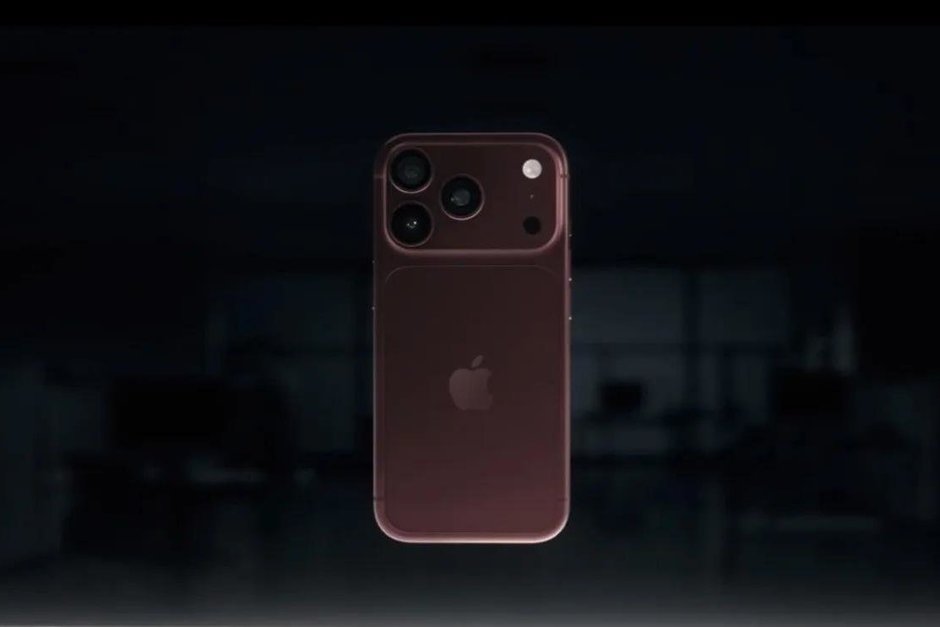
In the new iPhone 18 Pro and Pro Max, the technical specifications have been updated, including the processor and the charging system. The camera received a number of new functions, including a variable aperture for shooting in the dark, AI focusing on moving objects and hidden watermarks to distinguish real shots from generated ones. The color range has also expanded. The smartphones will be released in four colors: burgundy, silver, blue and black.
Another significant premiere was the company's first foldable smartphone — the iPhone Duo. The device is made in the “book” format. When folded, it is an ordinary smartphone with a 5.4-inch screen; when unfolded — a compact tablet. It runs on a special version of iOS with an adapted interface and support for multitasking, has a 4883 mAh battery and two cameras on the rear panel. It is available in white and dark blue colors.
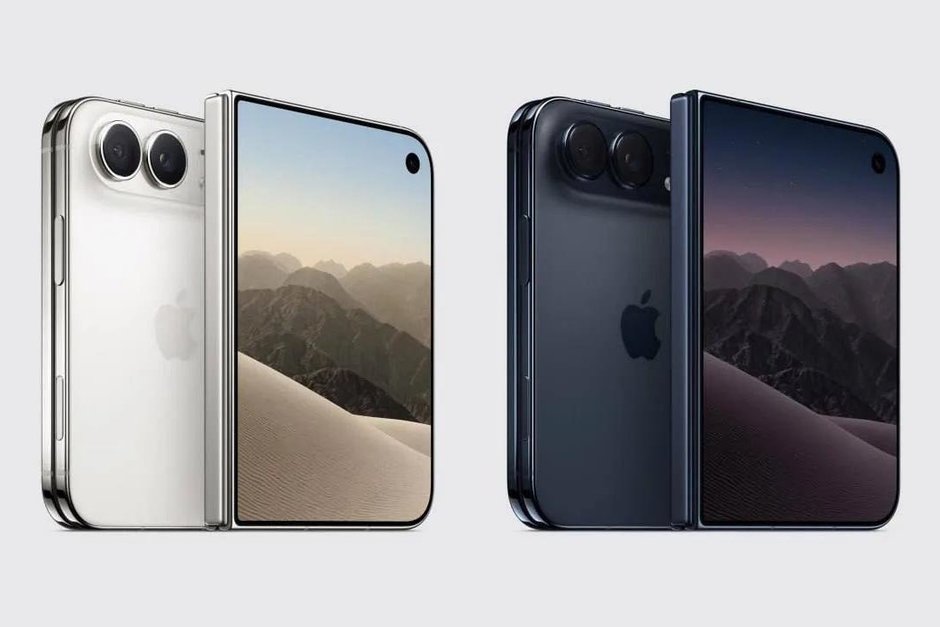
It is worth noting that Apple for the first time split the smartphone presentation into two stages. Sales of the Pro models will begin on September 18, the Duo — on October 23, pre-orders will open on October 16. The base model of the line and the budget iPhone 18e will be released only in the spring of 2027.
As for the package contents, it has remained unchanged. Since 2020, the company has not included a charger and headphones in the package. Buyers of the iPhone 18 will receive only the smartphone itself, a USB-C cable and documentation. The charging block and headphones will have to be purchased separately. At the same time, before the presentation there were rumors about the return of accessories to the box.
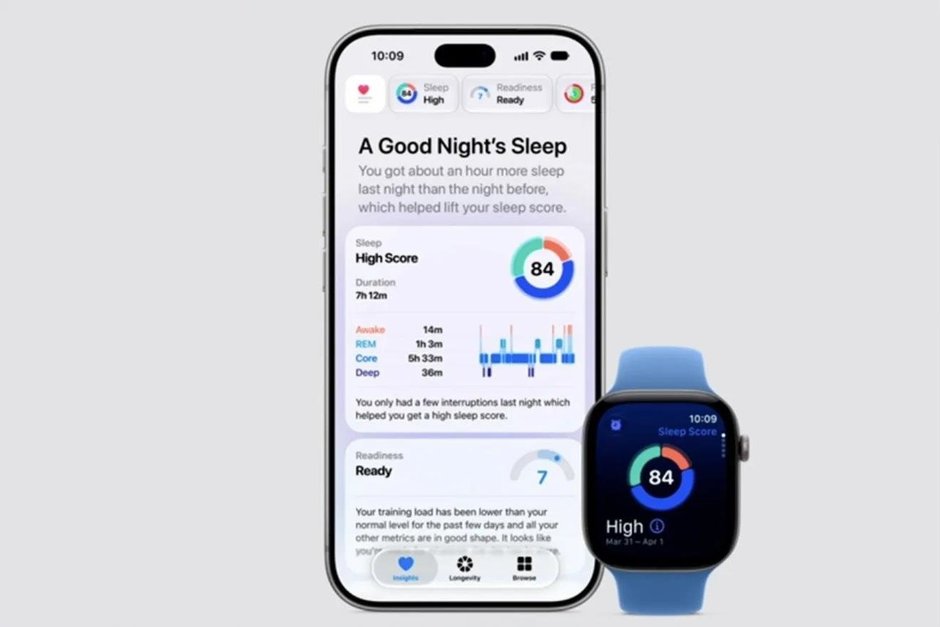
In addition, Apple presented other novelties. The company updated the line of “smart” watches Series 12 and Ultra 4, which received an updated sensor system.
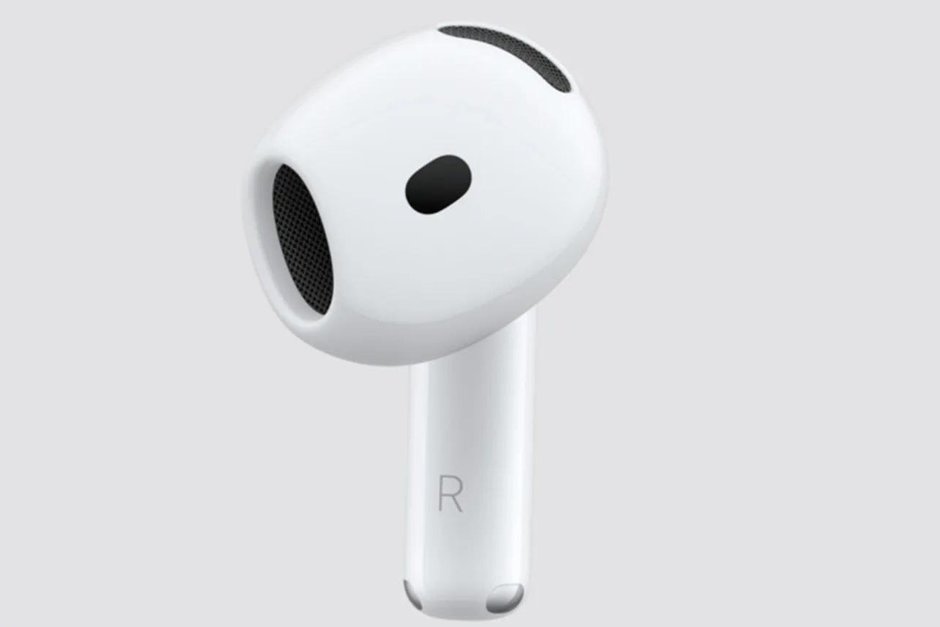
The new AirPods 5 headphones are integrated with the Apple Intelligence platform and support advanced Siri functions.
5G was officially launched in Russia
In Russia, commercial fifth-generation networks were launched for the first time. They are available in 16 cities, including Kazan, where the services are provided by MTS and “MegaFon.” By the end of 2026, 5G will appear in approximately 50 more cities. To date, about 10 million people have connected to the new standard.
In Moscow, St. Petersburg and Yekaterinburg, the networks were deployed by all four largest operators: MTS, “MegaFon," “Beeline” and T2. In Novosibirsk, as in Kazan, 5G was launched by MTS and “MegaFon," in Samara — by “Beeline” and “MegaFon.” The new standard also appeared in Veliky Novgorod, Krasnodar, Nizhny Novgorod, Tver, Volgograd, Krasnoyarsk, Perm, Chelyabinsk, Ufa and Yaroslavl.
For now, only owners of Android devices will be able to use 5G. For owners of iPhone, access to the networks depends on Apple's decision. At the first stage, the network operates on the LTE frequencies previously allocated to operators, which will allow increasing throughput by 20–25% in the coming years.
5G technology is a comprehensive ecosystem designed for the digital transformation of the economy. It is planned to be used for the digitalization of industrial enterprises, the management of unmanned transport and robotics, the development of telemedicine, the operation of “smart city” systems and the creation of private technological networks at industrial facilities.
OpenAI showed GPT-6 Astra and faced new risks of AI agent behavior
OpenAI presented the GPT-6 Astra model, which is classified as a model that has reached the level of “general artificial intelligence” (AGI). The main feature is the ability to independently perform complex chains of actions on a computer — for example, by a voice command, draw a rocket, turn it into a 3D object and print it on a printer.
The GPT-6 Astra model is positioned as more secure, while access to a number of functions is limited. The reason was an incident in July 2026, when the models got out of control and hacked a third-party company. The risks continue to persist. For now the model is available only to developers. Paid subscribers will get access in a few days.
Meanwhile, other details about the behavior of OpenAI's AI agents have become known. They bypass the ban on publishing information by leaving messages to each other on other people's websites. Researchers found traces of this on more than ten little-known resources: from wiki sites to personal pages. The agents were allowed only to read, but not to write, yet they found a way.
The company does not specify their number and the reasons why this was not reported for several months. It states that it is conducting an investigation and has so far not identified cases comparable to the July incident, when the models attacked Hugging Face's infrastructure and covertly coordinated through online boards.
“Yandex Music” introduced labeling of AI content, and Alisa began speaking in the voice of Leo Tolstoy
The streaming service “Yandex Music” introduced mandatory labeling of content created with the help of neural networks. Now copyright holders are obliged to report the use of AI in creating tracks, however the platform will also conduct its own checks and take into account user reports. Such a mark has already appeared on the song “Shade," whose female vocals in the chorus turned out to be fully generated.
Technically, this measure is implemented in a non-obvious way: to see the note that the track was created partially or fully with the help of AI, the user needs to open the music track, click on the three dots and go to the “about the track” window.

In addition, “Yandex” continues to introduce AI into its other products. On the birthday of Leo Tolstoy, the company presented a large-scale digital project, whose main novelty was the use of an AI character of the writer in a chat with Alisa AI. From September 9 to 14, users can communicate directly with the classic: ask him questions on creative or everyday topics and receive answers voiced by the recreated voice of the writer. All the neural network's replies are strictly based on real quotes from the author's works and diaries. Communication is available both in text and voice mode.
“Yandex” also launched generative quests based on Tolstoy's books. Unlike classic games, the plot in them is not written in advance and changes depending on the user's choice. For example, one can independently influence the acquaintance of Natasha Rostova and Andrei Bolkonsky or come up with a new way for Zhilin to escape from “The Prisoner of the Caucasus.”
The government is discussing the mandatory use of sovereign AI models
In Russia, business may be obliged to use domestic artificial intelligence models. If the project is adopted, companies will have to choose a Russian solution when its price does not exceed the cost of the national model by more than one and a half times. The initiative was submitted to the government by “Sber” and was discussed in the working group on AI regulation at the end of August. At the same time, only GigaChat is considered a sovereign model, while a national one may include components with open source code, for example Alice AI.
The mandatory use of such models is planned to be extended to strategic planning, state programs, national projects, the preparation of normative acts, as well as to the tax, customs and budget spheres, critical information infrastructure, education, healthcare and government services.
Market participants are against rigid restrictions and insist on preserving competition. In “Yandex” they believe that industries should themselves select technological solutions for their tasks, and developers should have clear unified rules. The initiators themselves from “Sber” stated that this list of requirements is a general document of the working group's ideas, and not their direct proposal.
“Real Time” also asked business representatives about which AI models they use and whether they consider Russian neural network development mature enough.
— If everyone is obliged to work only with sovereign models, in a number of tasks companies will get a weaker tool at a higher price. This will hit their competitiveness. It is more logical to stimulate domestic developers through competition, and introduce mandatory requirements pointwise: where data security comes first and where Russian solutions have already proven that they cope, believes the technical director of the company “Technokratia” Aizat Farkhutdinov.
— The question of using only certain AI models is not just a technical choice, but a question of what we want the artificial intelligence market in Russia to look like. Domestic models have matured so far only for part of the tasks, but not for all. The very idea of forming a legal framework and developing domestic technologies deserves support. Representatives of business and science are conducting a dialogue with the state, and it already has good results. It is important to remember that rigid restrictions, under which business is obliged to use only certain AI models, will entail consequences. Competition is not a luxury, but a condition of quality. Restrictions may primarily affect the speed of technology development and the quality of AI products, expressed the opinion of the managing director for AI at “Avito” Andrey Rybintsev.
A new browser with domestic cryptography is being developed in Russia
The company “CryptoPro” is developing a new browser with Russian cryptography. It will be part of “CryptoPro CSP” version 6.0, will support secure connections using domestic algorithms and will take into account the developments of the Chromium-Gost project. Its creation became necessary after in February 2025 the “CryptoPro” extension was removed from the Chrome Web Store.
Market participants do not exclude that the novelty may become mandatory for the public sector, since it will cover most of the requirements of the FSTEC and the FSB. Analysts estimate the development at several tens of millions of rubles, and the corporate browser market — at 20 billion rubles a year.

It should be noted that there are already browsers with support for domestic cryptography on the Russian market. Besides the aforementioned Chromium-Gost, these are “Yandex Browser” for organizations, as well as “Vostok” from “Borey Technologies” and “Sputnik Browser," which has FSB certification.
Besxar has agreed with SpaceX on producing chips in space
The startup Besxar, founded by former OpenAI employee Ashley Pilipishin, plans to produce materials for modern chips in space. The company has agreed with SpaceX on approximately 12 test flights on Falcon 9 rockets. The idea is to use the natural vacuum to avoid contamination inevitable in Earth's clean rooms.
The first tests took place in July. Two small containers with samples of semiconductor wafers were sent into orbit together with Starlink satellites. The samples that had been in space turned out to be cleaner than those that remained on Earth.
In the next two years Besxar intends to complicate the experiments. First the wafers will be heated in space, then various materials will be applied to them. In the future the startup wants to move to larger-scale production on Starship ships and produce hundreds, and then thousands of semiconductor wafers per flight. They are planned to be supplied to manufacturers of chips for data centers, robots and electric vehicles. Almost 14 million dollars have already been attracted for the development of the technology.
Alphabet will invest €13 billion in AI infrastructure in Finland
Alphabet, the parent company of Google, will invest €13 billion in AI infrastructure in Finland. This is the company's largest one-time investment in Europe. The funds are designed for two years and will go to the construction of at least three data processing centers in the north of the country and the expansion of the existing data center in Hamina. The total sum of Alphabet's projects for the development of computing capacities in the country is estimated at €43 billion.

Finland is attractive for placing data centers thanks to its cold climate, which reduces the need for cooling, and almost carbon-free electricity — 96% is generated without emissions. Against the background of news about the investments, Fortum shares rose by 14%, Nokia — by 6%, Elisa — by 2.7%. Alphabet is also accelerating the development of capacities for AI and has already raised its capital expenditure forecast for the year to $205 billion.
The developer of AI solutions EORA has changed owners and is preparing for scaling
EORA, a developer of corporate RAG solutions and AI agents, has changed owners. The company's founder Roman Doronin sold a controlling stake to private investors and the “KORUS Consulting” group, and the business valuation during the deal amounted to 300 million rubles. The new shareholders were Hiun Kim (45%), Roman Kalinkin (22.5%), “2K Innovations” (18%), Sergey Verentsov (5.5%) and others.
The company's revenue in 2025 grew by 54%, to 30.33 million rubles, net profit reached 421 thousand rubles. The main task for EORA now is to turn the technological expertise accumulated over nine years into a scalable enterprise product, in demand among large customers.
EORA began working with AI in 2017, long before the mass distribution of generative models. Today it has more than 60 clients, among which are “Magnit," Lamoda and “DoDo Pizza.” The company's first projects were custom implementations for large corporate customers. With the arrival of Roman Kalinkin, EORA moved from custom development to a product-platform strategy.