Alexander Aibаtov: “Sadyrin said — only the kitchen meets the top league level”
Interview with the General Director of FC Rubin — about the team's Spartan daily life, street football, and the 2003 bronze
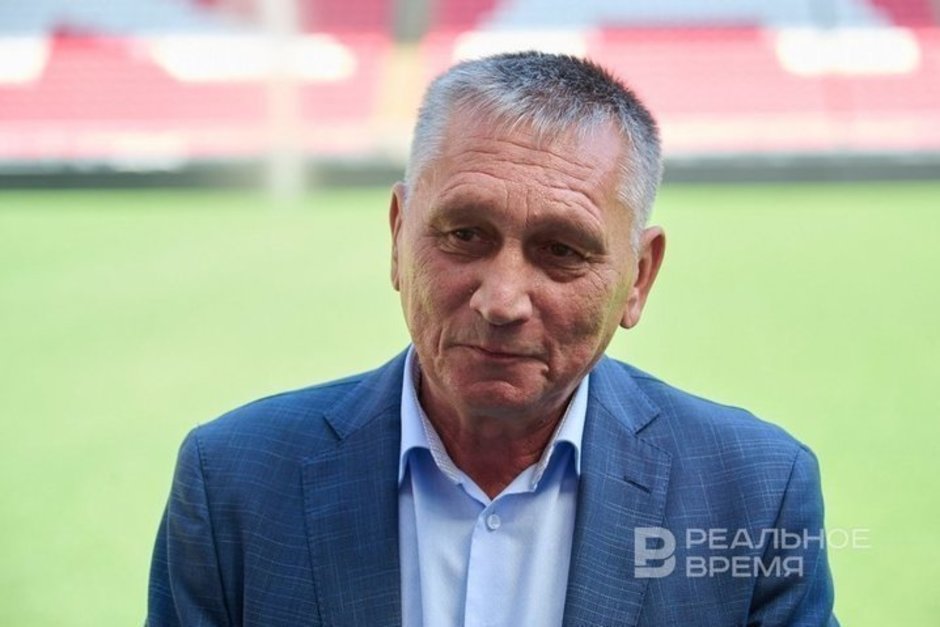
Alexander Aibаtov rose from senior administrator to General Director of FC Rubin. Behind him are long road trips, Spartan conditions, and the bronze history of the legendary Kazan team. He shares memories of Rubin's best period (2001–2013) in a book created with the support of TAIF. Realnoe Vremya publishes an interview with the club's director from this edition.
“On our street, the city ended and a birch grove began”
— Alexander Rustemovich, your first coach is the well-known Kazan mentor Alexander Lavrovich Klobukov. At the same time, you lived on the very outskirts of the city. How was your childhood?
— Actually, I was born in the city center, on Bulak (Kaban Lake). Now the center of Kazan looks magnificent, but back then it was slums. We lived in a semi-basement room where only the legs of people passing by on the street were clearly visible from the window. Then, by the time I reached kindergarten age, my parents, specifically my father, were given an apartment. It was a service apartment located in Troitsky Forest, within walking distance of the Veterinary Institute. There weren't many more amenities; we still went to a communal tap for water. We would put milk cans on sleds and go across the road to the Veterinary Institute for water.
— I can say that having lived my entire Soviet period in the city center on Ostrovsky Street, next to the Detsky Mir store, I understand you like no one else. On such a trip for water across the road, on Degtyarnaya Street, my grandmother, a home front veteran, was hit by a truck.
— My condolences. For us, it was safer in that regard because the road only went one way, up to the turn to our house. There was no other way because there was nowhere to go further; a birch grove stretched beyond.
In this regard, we had a certain advantage that we began to extract from the lack of civilization. The fact is that on the other bank of the Kazanka River, there were numerous garden plots, and there was no bridge to the Novo-Savinovsky district at that time. Taking advantage of the fact that my neighbor's friend's father worked at a boat station, we would take that boat and arrange a crossing during the summer. Many Kazan residents were reluctant to travel to their gardens around the city through the center, and we solved this problem for 10 kopecks per person.
By the way, our water problem was eventually half-solved when cold water was installed in the apartment. As for everything else, gas was delivered in cylinders, we heated the stove with wood, and the bathroom was in the yard. But none of this felt like hardship in childhood, because everyone lived like that, and what did we kids need? All childhood was spent on the street, when entertainment was tied to active yard games, plus football in summer and hockey in winter. You'd run home, sprinkle some bread with salt for a snack, and back outside.
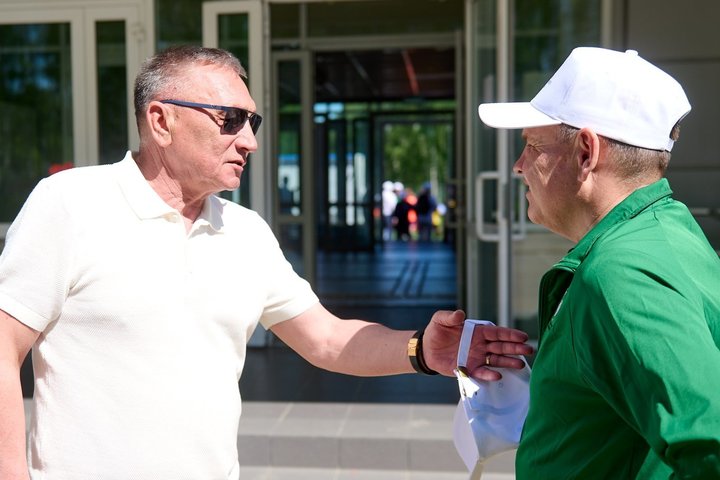
“We went to football, as well as for water, across the road to the Veterinary Institute”
— You probably went to football, as well as for water, to the Veterinary Institute.
— Yes, there was a stadium there where the physical culture collective of the Electronic Computer Factory, “Volna," was based, with the brilliant coach Alexander Lavrovich Klobukov. And it was my proximity to the stadium that had a certain positive influence. I came to training from home already prepared, unlike the other guys from our area, who changed clothes on the street or in the institute's lobby under the fond supervision of the local cleaners.
— “Where to after washing?”
— Yes, that was their identifying password. Secondly, what helped me thanks to my proximity to the stadium was the duty that Alexander Lavrovich entrusted to me: keeping the net with balls at home. And, using my position, I trained the power and accuracy of my shots at home alone. It so happened that next to the stadium there was a structure where, I think, the changing rooms of the “Yunit” football school (“Young and Talented”) are now located. There is a stone wall there with three barred window openings. This entire structure matches the width and height of a football goal. And I would blast the ball into this structure until I was out of breath, practicing power and accuracy. At some point, students from the Veterinary Institute saw me and invited me to play with them. Then it escalated. Students graduated, others replaced them, often there weren't enough people, and I would run with them. And so all day long, that is, on days when I didn't have training with Klobukov, I was involved in “street” football.
— Klobukov is known for his talented group of students born in 1975: Varlamov, Gainullin, Pozhidaev, and Tukhvatullin. Did anyone from your group with Alexander Lavrovich move on to big football?
— No one made it to the senior teams, but personally, from the age of 14–15, I began to be involved in training sessions with Rubin's special class under Yuri Mikhailovich Kuznetsov, and there, from our age group, experienced fans should remember Igor Dolgopolov, with whom we played in the same group.
— We are slowly approaching the 1970s, when Kazan was left by Viktor Kolotov, the best product of Tatarstan football during the USSR era. Do you remember him on the field?
— I remember Viktor Mikhailovich more from his seasons at Dynamo Kyiv, which I began to support over time. Much later, working together with his coach from “Trudovye Rezervy," Alexander Mikhailovich Dyatlov, I learned a lot about Kolotov's personality. They told a story that when Kolotov was brought for a trial at Rubin to coach Nikolai Ivanovich Sentyabrev, a friendly match was organized at the Zvezda stadium, which was located on the territory of the Artillery School. Regarding Kolotov, Sentyabrev immediately dismissed all offers: “Are you kidding? Just look at his physique…"
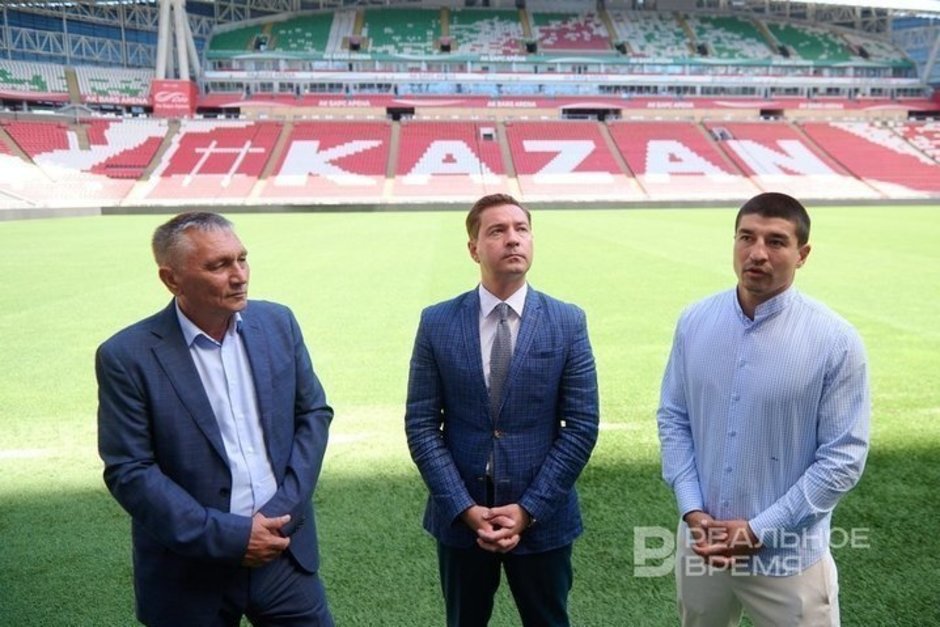
“Until the end of his life, I had warm relations with Ildar-aby Gibadullin”
— The explanation is likely that Nikolai Ivanovich needed grenadiers, not footballers with Kolotov's build, who was later nicknamed “Skinny” on the team. Nevertheless, Sentyabrev is and remains a legend of Rubin's coaching staff.
— Returning to my coaching — it so happened that I started working at the KFK named after Mayakovsky. We were based at “Trudovye Rezervy," communicating a lot with Dyatlov and other coaches. With the same Renat Giniyatullin, we took the Tatarstan national team to the All-Union Gagarin Memorial Tournament in Adler. There I remember Airat Akhmetgaliev and Ruslan Nigmatullin. He also started at the Mayakovsky KFK, and then Ruslan's family moved to Gorki, the 10th microdistrict; it became more convenient to travel to training at “Elektron," and I recommended him to Ildar Gibadullin. Until the end of his life, I had warm relations with Ildar-aby.
— The parents' move led to him finding a coach who became almost family to him. This can be called an act of God, which, however, also happened to you when you joined Rubin's administrative staff under Albert Shamilevich Bagautdinov, without actively seeking it.
— Initially, it turned out that the current director of the bandy club “Dynamo-Ak Bars," Valery Nosov, together with Damir Kayumov, persuaded me to move to work in the city sports committee. By the way, the persuasion itself took place during a bandy tournament; I remember we were at the stadium of the Artillery School. Damir Dayarovich, the godfather of women's football in the republic, made this argument: “Go, maybe you'll like it, maybe it will be interesting for you.” In the end, it so happened that a department for team sports was opening in the sports committee, which Nosov headed, and I came under his leadership. Also because it was 1998, the time of the default, difficult in terms of funding, when my group born in 1984–1985 simply stopped traveling to tournaments due to lack of money. In the end, we had three official matches with the team of Vladimir Borisovich Savelyev, who, by the way, was also from Yudino, like Kolotov. And whose son Igor later played for Dynamo Kyiv — such are life's parallels.
By the way, during my work connected with the sports committee, I was struck by a moment when our boss, Kamil Shamilevich, called in a responsible employee and reprimanded him because in one of the tables of the Russian Bandy Championship, when “Raketa” was still playing, there was an error with a team that was not fighting for medals, was not being relegated, but had one goal incorrectly recorded in the table. And we had a rule: every morning after game rounds, to prepare tables for all team sports: hockey, basketball, football, handball, rugby, field hockey, bandy. And so Iskhakov found an error in the indicators of a team placed somewhere around seventh or eighth place. An error in the goal difference of one goal. That is, this team is not fighting for anything, not being relegated anywhere. Nevertheless, the boss gave a dressing-down because we had to work impeccably.

“When I moved to the sports committee, global changes were happening in Rubin's administrative staff”
I had just moved to the sports committee, worked for a year, and then global changes occurred in Rubin's administrative staff, as a result of which Albert Shamilevich was appointed General Director of the football club. And in this capacity, he asked me to bring Nikolai Pavlovich Ulyantsev, then the head of the Kazan Football Federation, to a meeting. I brought him, went out for some fresh air, and then they said that Albert Shamilevich was looking for me to say: “You have a flight tomorrow with the team on the route Saratov — Dimitrovgrad. Go to administrator Zhenya Yakovlev, he'll show you everything and tell you.” I heard the saying “They married me off without me.”
— The main thing is that the marriage turned out to be very successful!
— It couldn't have been otherwise with such assistants as Renat Latypov and Nikolai Ryabtsev, who strengthened our administrative staff.
It's clear that I had experience with business trips, to Adler, for example, but a professional team is a completely different matter. There was coach Pavel Fedorovich Sadyrin, and for me, that was something out of this world, plus professional footballers. Thinking about all this, I couldn't sleep all night. We went on the road trip, won in Dimitrovgrad, which was considered a success. Bagautdinov came there in his Volga. After the game, he said: “Send the team off, you'll come back with me.” So I did. On the way, we made a green stop, laid out food on the hood of the Volga, congratulated each other on the victory, and then I asked Albert Shamilevich how to process travel expenses, and he floored me: “What travel expenses? You are now a club employee.” I replied — how so, I have a ton of unfinished business at the sports committee, there's a university championship going on, not only football, but basketball too, and he said: “You're transferring from the sports committee to the Rubin club as an administrator from the start of the season.”
— Sadyrin had a couple of clubs in his career whose work is hard to explain: Krystal from Kherson in 1989 and ten years later Rubin. I can explain Kherson because Pavel Fedorovich's wife was unwell in rainy Leningrad, and he traded its damp climate for the dry climate of Kherson. In Kazan, by and large, he was also biding his time.
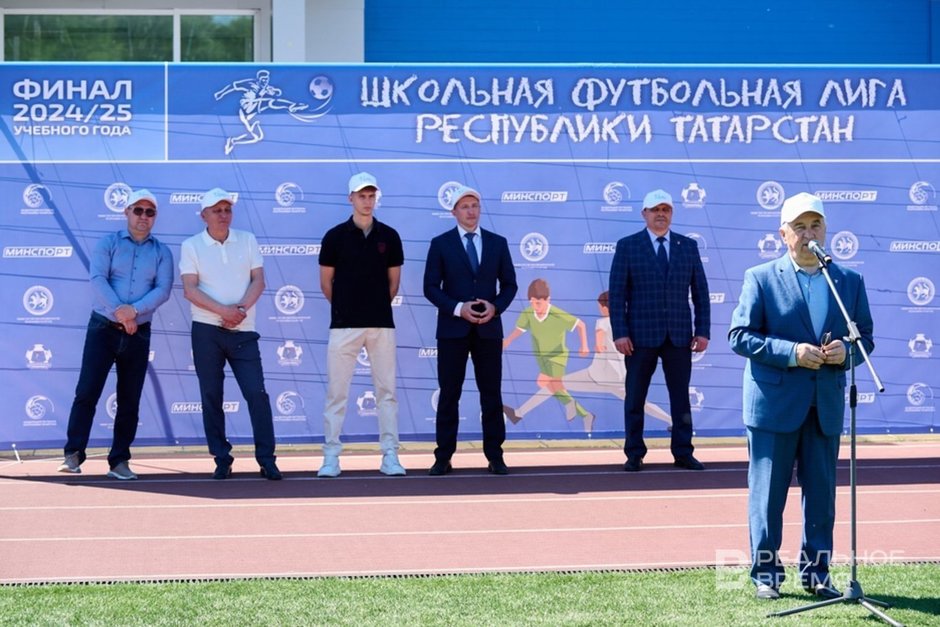
— Most likely, that's true. I remember that in response to our aspirations for the Premier League, he said that Rubin was only suitable for the Premier League in terms of the kitchen. Not in terms of its size, but the level of cooking, because our cook, Galiyabanu-apa, cooked excellently. And this was during a period of economy on everything possible. In terms of food quality, I repeat, everything was top-notch, but the living conditions were Spartan.
Pavel Fedorovich was demanding in work, could raise his voice, but otherwise he was a simple person in communication. Once, we spent about four hours in a group talking with him, listening to stories and memories from his football past. He trusted professionals; when I went to him with questions, he replied: “That's your area of responsibility; why are you asking me? You don't interfere with advice on how to train, so why should I teach you how to do your job?”
This was a wonderful school of life, and from the height of my years, I am now surprised when a team has half a dozen administrators and they still complain that they can't keep up, they're overwhelmed: “That's not our function.” I understand that both the level and the times are different. Back then, on road trips, our wonderful masseur, Gadil Zainullin, and I would start the morning at six o'clock, going to the market for groceries. We bought them and took them to the restaurant to be prepared and chopped for breakfast. The restaurant chefs only fed the team hot meals.
“In the fight for bronze, an important moment was that we conceded four unanswered goals to CSKA in the first round”
— In the end, you became so fused with your work that you stayed on even after the management changed, when Ilgiz Fakhriev and Farit Khabriev came to the club. I'm saying this because now it's common to talk about coming to work with one's own staff. If people are doing the same thing, then they all belong to that staff.
— We mustn't forget that I was already acquainted with Khabriev, having crossed paths at work — he was at the State Committee for Sports under Hanif Murtazin, and I was at the city sports committee. I also knew Fakhriev as a person from the football world, although best of all, of course, we were acquainted with his manager at Neftekhimik, Nail Nurmeevich Gizatullin.
— I note that he is also a fan of Dynamo Kyiv from Soviet times. I would like to mentally transport you to 2003, the time of the debut in the Premier League, which for Rubin turned out like Kolotov's successive debuts in Kazan, then the USSR national team, and finally Dynamo Kyiv. No one has yet been able to surpass Rubin's achievement: winning medals in the year of their Premier League debut.
— It seems to me that an important moment in this regard was that we conceded four unanswered goals to CSKA in the very first round. That match gave Berdyev grounds for a serious conversation with the newcomers, especially the foreign ones. They had come to the team, assembled by Konstantin Sarsania and Sergey Pryadkin. The failed debut gave an opportunity to explain to the foreigners not to think they were some great masters who had arrived and would now show everyone how to play football. Without hard work, without game and personal discipline, nothing can be achieved here.
And our bronze was a kind of advance at that time, because in terms of the overall components, such as the level of players, coaching skill, facilities, and budget, objectively we should have been somewhere around eighth to tenth place. That tenth place we took the following year, 2004. I would also highlight our captain, Seryoga Kharlamov. He united and rallied the visiting guys with the locals so much. They often got together with their families and children, turning into a single team where the components play not just for the written sum, for themselves, but for everyone.
And the work of Kurban Bekievich, who began with the players walking in pairs across the field without a ball for about 30 minutes, making rearrangements and movements at the whistle, and so on. Berdyev devoted a lot of time to the basics that are taught from childhood in our academy. I remember that at one training session, someone from the players didn't have a partner, and they put me next to him to move around, passing the ball in one touch. We run past Berdyev with my partner, he asks: “Sasha, are you on the roster?” I don't go along with the joke; I say: “No.” He replies: “Too bad.” And to one of the players: “Watch the administrator, how to move. How the knee moves, how to cover the ball, learn in general.”