A million “Cats”
In Russia, 1 million copies of Japanese writer Genki Kawamura's book “If All the Cats in the World Disappeared” have been sold

On Monday, August 24, the publishing house Bombora held a creative meeting with Japanese writer Genki Kawamura, author of the bestseller “If All the Cats in the World Disappeared.” In Russia, 1 million copies of this work have been sold. The round number served as the occasion for an online meeting between the author and Russian journalists and book bloggers. The literary critic of Realnoe Vremya, Ekaterina Petrova, talks about the phenomenal popularity of the book in Russia and the influence of Leo Tolstoy's work on “Cats.”
“Cats," Tolstoy, and Tarkovsky
“If All the Cats in the World Disappeared” is a philosophical parable about a young postman with a fatal illness. When the hero learns of his diagnosis, the devil appears before him and offers a deal: to gain an extra day of life, one thing must disappear from the world forever. Thus, smartphones, cinema, clocks, and cats vanish. At each stage, the hero reflects on how the world changes with the disappearance of these things, and also reconsiders his relationships with his parents and his ex-girlfriend.
“Cats” was published in Japan in 2012, and a year later, the novel was nominated for the Japan Booksellers' Award. In 2016, when the film adaptation was released, the total circulation in Japan reached 1.015 million copies. Negotiations for the book's publication in Russia began in 2019; at that time, about 2 million copies of “Cats” had been sold worldwide.
— I believed in this book, even though it was slow to 'take off' in Russia. At the time, I thought the history of this novel in Russian would end with a print run of 10,000 copies. But I did everything I could to make the book sell in large numbers, — said Tatyana Sova, editor of Genki Kawamura's books.
To date, the book has been published in 38 countries with a total circulation of 3 million copies, one-third of which (1 million copies) were sold in Russia. “I am incredibly surprised and amazed! This figure makes me very happy," Kawamura commented on the news of the sales in Russia.
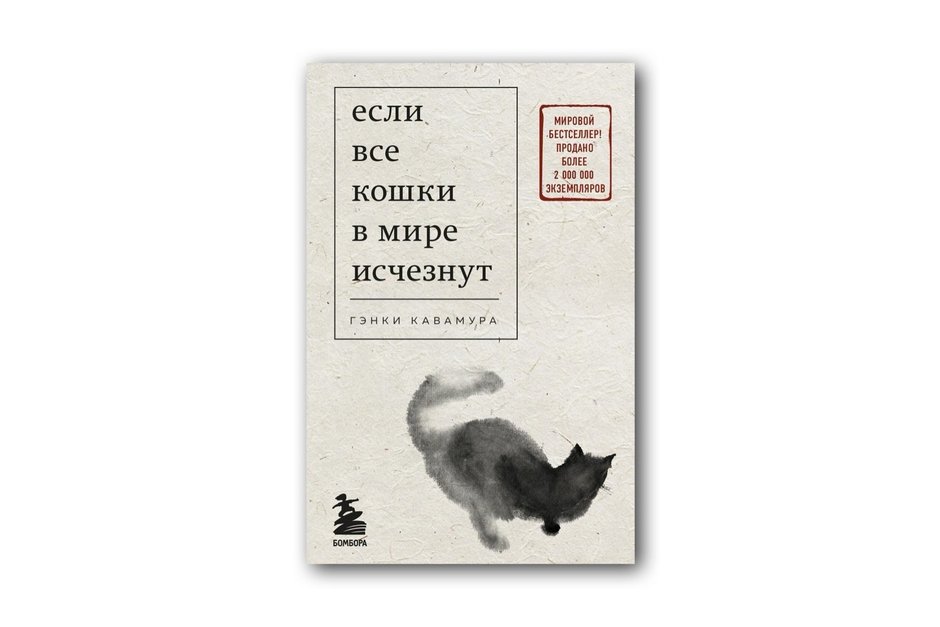
Although Japanese and Russian cultures do not intersect in any way, Kawamura explained the book's popularity through values close to him:
— I try to raise universal themes. I am very close to the ideas of Christianity. In my works, I rely precisely on Christian commandments. This probably resonates with readers in a country like Russia. In addition, 'Cats' is based on personal experience: I was deeply affected by the death of my uncle and transferred that into the book. Perhaps that also influenced the readers' reaction.
Genki Kawamura noted that he was greatly influenced by Japanese authors who are also loved in Russia — Haruki Murakami, Yukio Mishima, Yasunari Kawabata — as well as the works of Russian writers: Leo Tolstoy and Fyodor Dostoevsky.
— When I was writing 'If All the Cats in the World Disappeared,' I often turned to the famous novel of my predecessor, Natsume Soseki's 'I Am a Cat,' and to the works of the famous Russian director Andrei Tarkovsky. I am in constant creative contact with them, — Kawamura added.
Producer, director, writer
In Russia, Genki Kawamura is primarily known as a writer, but worldwide he is known as a film producer and director. He was born in 1979 in Yokohama and studied journalism at Sophia University in Tokyo. After graduation, in 2001, he began his career at the film company Toho, working his way up from ticket seller to producer. His breakthrough project was the film “Train Man” (2005), which grossed 3.7 billion yen at the box office. In 2011, Kawamura became the youngest recipient of the prestigious Fujimoto Prize.
In addition, he participated in the creation of many box-office and critically acclaimed films. Among them are the crime thriller “Confessions” (2010), the drama “Villain” (2010), as well as anime hits “Wolf Children” (2012), one of the highest-grossing films in history, “Your Name” (2016), and the recent “Suzume” (2022) and “Monster” (2023). The latter won the Best Screenplay award at Cannes, and after the screening, the audience gave the creators a standing ovation.
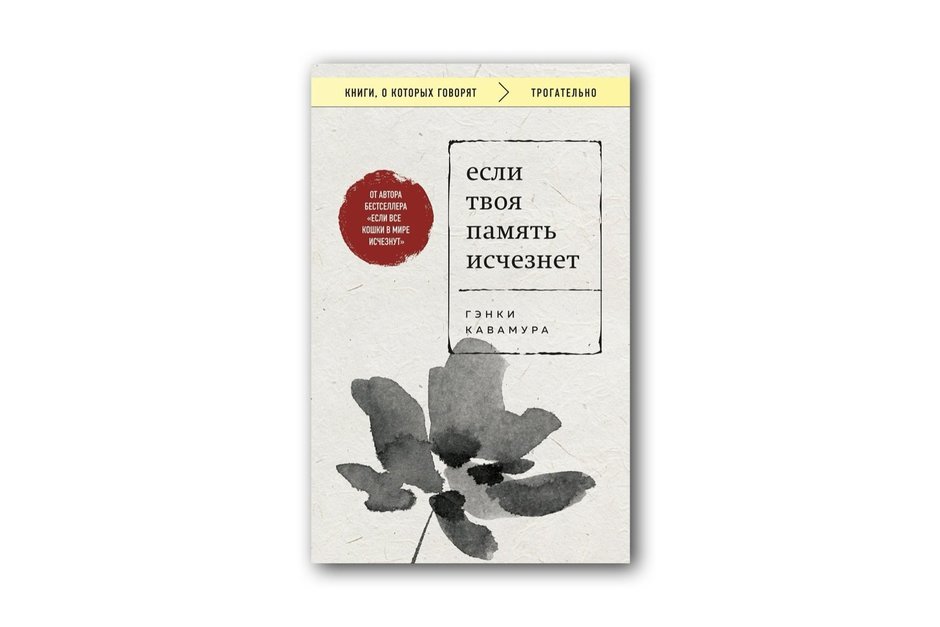
In 2012, “Cats” became Genki Kawamura's literary debut. He subsequently published several more novels, including “The Man with a Million” (2018), “If Your Memory Disappears” (2019), and “Exit 8” (2025).
As a director, Kawamura received a Palme d'Or nomination for the short film “Duality” (2018). He made his feature debut with the film adaptation of his book “If Your Memory Disappears.” The film was titled “One Hundred Flowers” and earned Kawamura the Best Director award at the San Sebastián Film Festival.
— When I wrote 'If Your Memory Disappears,' I immediately decided it needed to be adapted for the screen, and I wanted to direct the film myself. This book tells the story of my grandmother, who supported me in my directing endeavors, — Kawamura said.
“If Your Memory Disappears” is a touching story about time and illness. The plot follows a young PR manager named Izumi who cares for his mother, Yuriko, who suffers from Alzheimer's disease. The woman gradually loses her memory and stops recognizing even her own son. However, in the process of caring for his mother, Izumi learns about her secret past and the life she lived before his birth. This book, like Kawamura's other works, is written in the format of a light yet emotionally rich philosophical parable.

This fall, another of Kawamura's books, published in Japan in November 2016, will be released in Russian — “April Comes and She Will Appear.”
The novel's protagonist is a psychiatrist named Fujishiro. He is preparing for his wedding to a girl named Yayoi but is not entirely sure of his feelings for her. Suddenly, Fujishiro receives a letter from his first love, Haru, who left on a long journey ten years ago. Her messages from Bolivia revive vivid memories in the hero. As a result, he tries to reconsider his present and reflects on the nature of his feelings.
— I interviewed about a hundred couples who were married but could not continue living together. I wanted to explore the theme of why love disappears: where does the love go from the lives of people to whom it promises much at the beginning of a relationship and who are sincerely infatuated with each other, ready for a life together. But then love fades, and they part, — Kawamura shared.
Ekaterina Petrova — literary critic for the online newspaper Realnoe Vremya, host of the Telegram channel «Булочки с маком».