Yuri Solano: “In the Champions League final, I rooted for Arsenal and Piero Incapie”
Interview with the coach of the Rubin Academy, whose players win the Champions League and UEFA Conference League
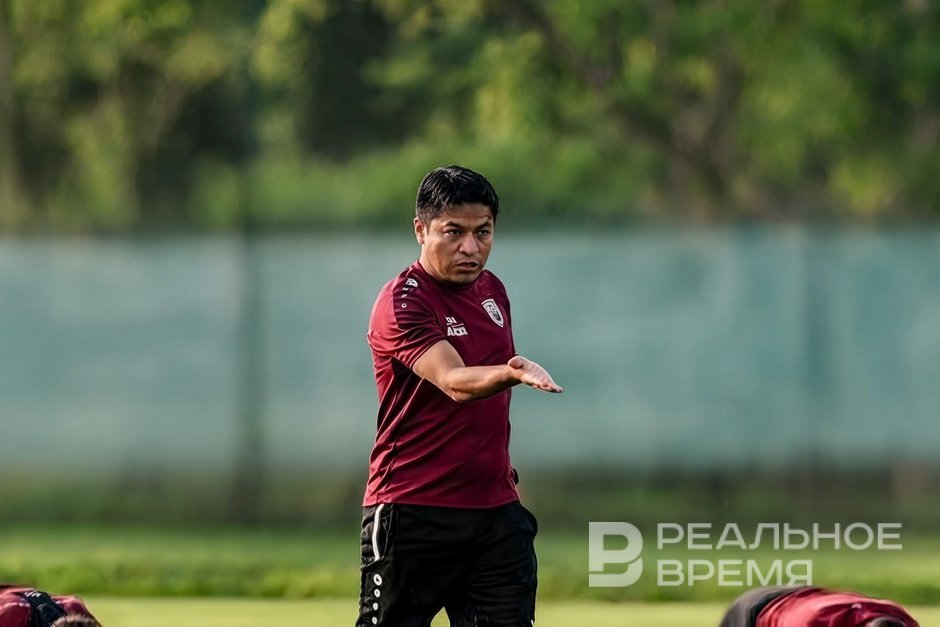
The World Cup is over — it's time to take stock. In an interview with Realnoe Vremya, Rubin Academy coach Yuri Solano assessed the performance of the Ecuadorian national team, which featured six of his former players. The team advanced from the group stage, sensationally beating Germany, but lost to Mexico in the first round of the playoffs. Solano spoke about his work at the Independiente del Valle academy, nurturing world-class stars, and the nuances of refereeing at the tournament.
“Independiente del Valle is one of the top football academies in the world”
— Yuri, tell us how you worked with six Ecuadorian national team players and won the 2021 U-20 Copa Libertadores?
— Let me start by saying that the core of the current Ecuadorian national team consists of graduates of the Independiente del Valle academy. It is one of the top football academies in the world — not to mention South America — and the only one in Ecuador that operates at such a level. There, a full range of opportunities for developing players has been created: there is a strong coaching staff, a medical department that structures work to properly build muscle mass in young players, plus psychologists who work on the players' mental development. I was fortunate to work there for almost three years: I started with the U-17 juniors, then brought them up to the U-20 youth team level, and eventually introduced them into the orbit of the main squad — at least up to the second team for sure.
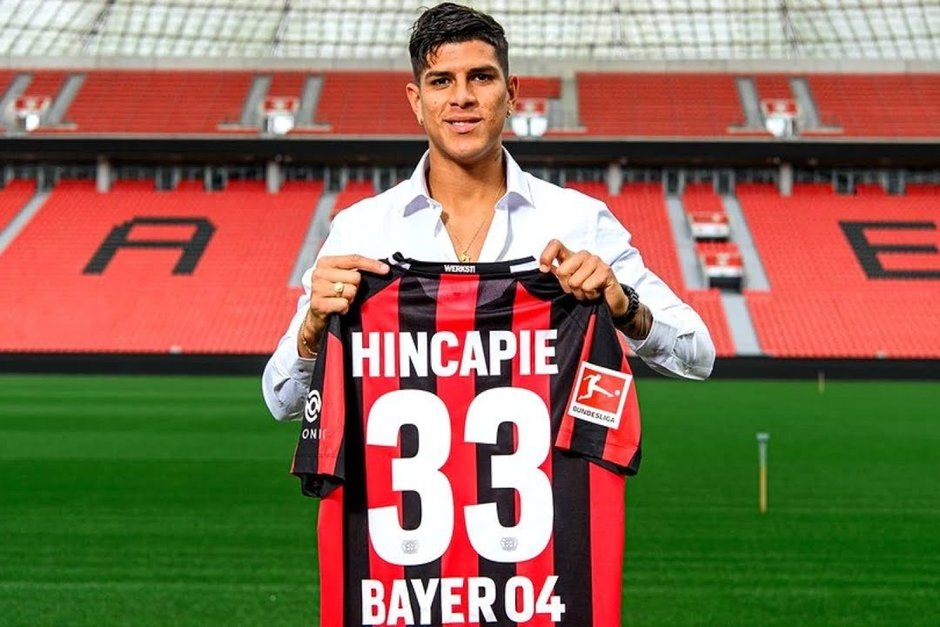
— At the same time, the Ecuadorian national team at this World Cup turned out to be one of the youngest — on par with Côte d'Ivoire: the average age of the players was 24. This is exactly the age of my recent charges — guys born in 2001–2002. When I started working with them in late 2018, they were just over 17, and some hadn't even turned 17 yet. Anthony Lenin Valencia, Pedro Vite, Piero Incapie, Moisés Caicedo, Willian Pacho — and also Joel Ordóñez, he is a year younger, born in 2003. A very physically gifted guy — he trained with the older guys. I especially worry about Joaner Chávez: he plays for the national team, but didn't make the World Cup squad — he currently plays for Czech Sparta. I constantly worry about them: after all, I didn't just observe their development, but directly participated in their football journey.
— Can you characterize the listed footballers from the perspective of what they were like under your guidance and what they have become now?
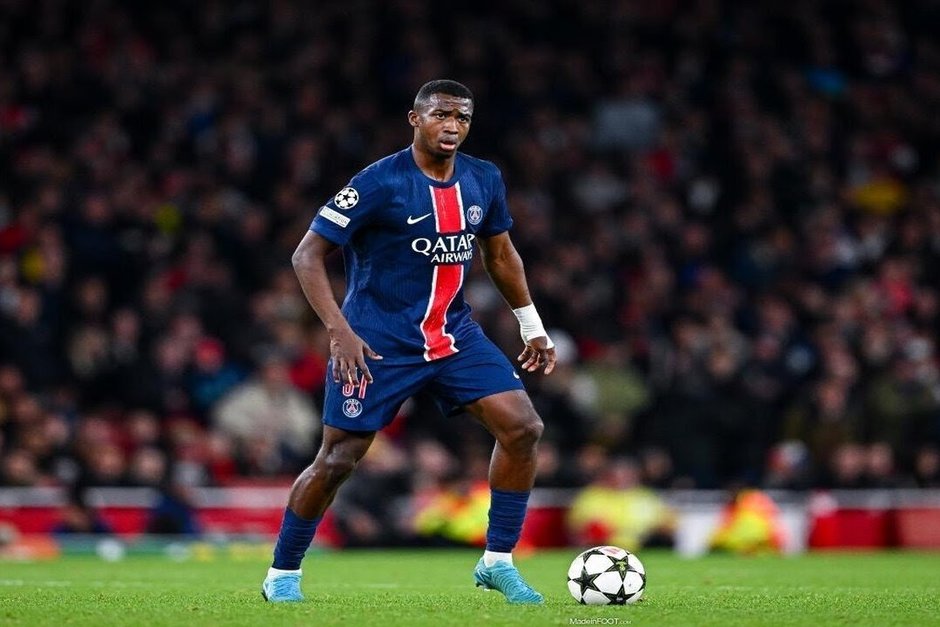
— I think there is no point in saying anything about the current state of their careers, which everyone already knows. Willian Pacho (PSG) won the Champions League two years in a row. This year, he was opposed in the final by Piero Incapie, who moved to Arsenal from Borussia Dortmund. Moisés Caicedo (Chelsea) won the UEFA Conference League last year. Pedro Vite plays for Mexican Pumas, but Manchester City is interested in him. The Belgian championship is represented by Anthony Lenin Valencia (Antwerp) and Joel Ordóñez (Bruges). But when they were younger, honestly, not all of them seemed so promising as to become top players, although they had the makings. However, regarding Pedro Vite and Piero Incapie, even then there was interest from the coaches of Ecuador's youth national team — everyone understood that a strong generation had gathered there. Neither Caicedo nor Pacho were called up to that U-17 squad. Interestingly, things were especially good in defense, since Incapie, Pacho, and Ordóñez are all center-backs. When I worked with them, that was a plus: you had options, could always rotate the squad, and give everyone the opportunity to develop.
If in the case of Vite and Incapie it was clear that they were talents, the others were helped to grow by that very comprehensive work established at the Academy. It implies that you work within clearly defined rules and schemes that are adopted, providing each player with a certain individual development program.
“Only Independiente del Valle follows the path of developing its own players”
— At the 2021 European Championship, 18-year-old Ilya Zabarny was included in the Ukrainian national team. He was from the Dynamo Kyiv academy, and the national team's game was built on their system. He integrated into the squad, jumping from the youth national team level to the senior team without even being involved in the Ukrainian U-21 team. Now, positionally, he competes with Pacho, being a center-back at PSG. As a youth team coach at Independiente del Valle, were you a hostage to the game system used by the main team?
— Exactly. That is the point of working at an academy, when players of all ages adhere to a single game model. The head coach is also selected to play according to the model adopted at that club. The most striking example in this regard is Barcelona in Spain. This is embedded in the philosophy, in the DNA of the club; this is how it defines itself as a club. But this does not mean that you are completely deprived of the opportunity to improvise if it brings benefit. One does not interfere with the other, because the club is an environment for player development, and development can happen in different ways.
My players were lucky because at that time, I don't know about now, the club had a rule that five homegrown players had to play in the starting lineup at all times. This was an internal limit, a rule that was not imposed from above by the federation or anyone else. It was due to the fact that development was prioritized over immediate results.
And this development, to some extent, influenced sporting results, as it brought financial returns. When the opportunity arose to sell leading players, they took it and continue to do so. This year, a 17-year-old player was sold to Chelsea, as well as three 16-year-old players to Bayern Munich and Arsenal. Regarding Arsenal, we are talking about twin brothers named Quintero, who will move to Europe upon reaching the age of 18. It is clear that the junior team will weaken in the short term, but this also gives coaches an incentive to work even better. Since we are talking about selling players with the retention of part of the rights, which allows us to receive percentages from further sales of a given player. This item was also in my contract, and when my former players are resold, I receive a certain percentage of the deal.
— Do you remember how you won in 2020?
— First, we won the youth championship in Ecuador and qualified for the Copa Libertadores. We started with a 1-0 win over Paraguay's Libertad, followed by a hard-fought 1-0 win over the very famous Chilean club Colo-Colo. And the final group game was easy, when we thrashed one of Bolivia's football leaders, Jorge Wilstermann, 5-0. In the semifinals, we drew one of the giants of South American football — Brazilian Flamengo.
Youth club tournaments are often won by representatives of Argentina or Brazil. And here we successively got Flamengo, when the score was 1-1 after regular time, and we scored the equalizer in the 90th minute and won on penalties 5-4. And in the final, we beat Argentine River Plate 2-1. For our country, this victory was a huge achievement; we won for the first time, and I don't know when we will repeat this achievement. Because it is very difficult to compare the level of training of young footballers from Argentina, Brazil, and our Ecuador. In general, only Independiente del Valle follows the path of developing its own players, comparable to the world level.
“I worry about all my former players because they are good guys”
— You returned to Ecuador after working in Kazan as a translator and coach of amateur teams. Did this experience come in handy?
— Of course, working with Sozvezdie, a purely amateur team, I achieved my first victories at the level of the Tatarstan championship. Having joined the student team Motor-Academy, I began to work, mastering other competencies — managerial, administrative — but that was at the time when I was combining my work as a translator at Rubin and Rostov. This experience coincided with my professional training as a coach and later proved very useful in working in the first division with Vadim Evseev, who was then starting his collaboration with Khabarovsk's SKA-Khabarovsk. All the accumulated experience, plus the knowledge gained in psychology, greatly helped me in my work.
— When this year's Champions League final took place, two of your former players were on opposite sides of the barricades — Willian Pacho and Piero Incapie. Who were you rooting for?
— Honestly, I was rooting for Incapie and his Arsenal. It's just that PSG is objectively stronger and more creative. That's speaking about this particular match. But in general, I worry about all my former players, including because they are good guys, responsible, and determined.
— Ecuador's advancement to the playoff stage came after a heroic victory over Germany. What didn't work out to get out of the group without such complications?
— It seems to me that we have not yet formed such a strong attack group comparable to the selection of players in defense. After all, we went to the World Cup from second place, behind Argentina, conceding very few goals in CONMEBOL. But no matter how strong the defense is, a balanced team is necessary for good performances. And we didn't have a very successful performance from Enner Valencia at the forefront of the attack, and it seems to me that the national team coach needed to slightly restructure the team's game, not making such a reliance on Enner. It's one thing when the whole team's game is built around a player of Lionel Messi's level, but we don't have that, and the level of finishing chances turned out to be very low.
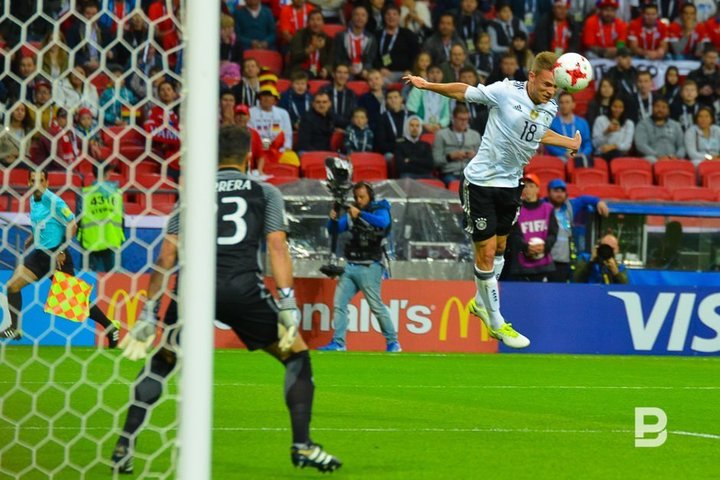
— Now you are helping to develop the Kazan amateur team Girl Power — a women's team. And I have a question related to the refereeing of the match against Germany. American referee Tori Penso had previously worked the Czech Republic-South Africa match without any complaints, and one could assume that the best female referee corresponds to a good level of officiating. But here Penso made a terrible mistake that led to the first German goal. Can you comment on these events?
— A clear foul, after which the goal should have been disallowed. I think if the Ecuadorian national team had lost, attention would have been drawn to this moment, but it turned out that our guys won, which smoothed over the referee's grossest mistake. In any case, there was much less talk than around the Belgium-USA match with the cancellation of a red card. I think when politics gets involved in football, it's not right at all. Football is for the people; the majority of fans are ordinary people. And when they encounter unfair decisions on and off the field, it causes additional resentment. Football is not only for America; it's for the whole world!