Rishat Tukhvatullin: “It's important for me to find a way to the hearts of people of different nationalities”
Is it beneficial for Tatar artists to switch to Russian?

Rishat Tukhvatullin has joined the ranks of Tatar artists who have started singing in Russian — under the name RISHAT THV, he released the song “I Won't Remember," and at VK Fest he promised that a Russian-language album would be released this year. How does such an expansion of repertoire affect an artist's audience? Experts note that there are no ready-made solutions for those who want to perform songs in several languages, but it is clear that this is part of scaling success. For more details, see the material by Realnoe Vremya.
From Avzalova to Nurminsky
The song “I Won't Remember” for Rishat Tukhvatullin was written by Belarusian singer Satsura, who has been actively composing material for other artists for over ten years. On Yandex.Music, the song released by the Tatar singer on July 3 has garnered nearly 12,000 listens. In principle, if one did not know the obvious, RISHAT THV is simply a new R&B artist.
— I am proud to be Tatar; I have sung, sing, and will sing in Tatar, — Tukhvatullin responded to criticism online. — However, at the same time, I deeply respect and love the Russian people. The fact that I love one people does not mean that I am rejecting another. Why should creativity create a barrier between languages and peoples? Music should unite people, not divide them. The audience will judge my work. For me, the most important thing, while remaining true to my roots, is to find a way to the hearts of people of different nationalities.
Probably the first to actively sing in other languages among Tatars was Alfiya Avzalova. On the other hand, it is known that Ilham Shakirov recorded several times in Russian, but these compositions were not published. In addition, sometimes Tatar stars recorded a song in two languages at once — with one mandatory Russian verse. Probably the last example of such mixing is from 1999 by Asaf Valiev in “Tramvaychy kyz” (“The Tram Girl”).
One of the modern ambassadors of multilingualism on the stage is Elvin Gray, who often releases songs not only in Tatar but also in Bashkir versions. Having initially chosen this concept, the artist successfully switches from one language to another without causing protests from his audience.
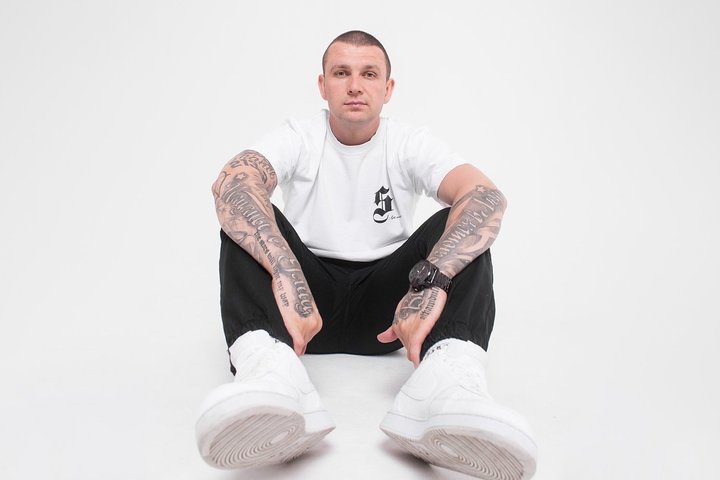
Another example is rapper Nurminsky, who started with Tatar rap but later “hit” with hits in Russian. Essentially, a large audience learned about him as a Russian rapper. As he explained in one interview, Russian tracks give him more resonance, while he makes Tatar ones “on vacation.” This year, Nurminsky released a “Collection of Tatar Songs” with songs from different years. In 2025, he released the track “Kayttym” (“I Returned”): “I returned, missing it, from the big city to my village.”
— It seems to me that this is simply an attempt to expand the audience: the same Nurminsky reached all of Russia when he started rapping in Russian, — agrees music critic Nikolai Redkin. — That is, you may lose some respect within the community, but overall, more people will listen to you. After all, songs in incomprehensible languages are sporadic hits, a kind of 'exotic' that a person indulges in occasionally, but they won't listen to it constantly; they need something they understand.
But such examples in Tatar pop music are rather the exception. Some big artists can be found with Russian songs: for example, Firdus Tyamaev translated his main hit “Sayra äydä, sandugach” (“Sing, Nightingale”) into “Solovya” (“The Nightingale”). But such a move does not turn into any big strategy.
Another option is albums by the duo “Aigel” in Tatar. The first of them, “Pyala” (“Glass”), attracted public attention several years after its release thanks to the series “The Boy's Word. Blood on the Asphalt.” At the same time, the next Tatar album, Killer Qız, is made with an emphasis on dance stylistics, where the language itself is certainly important but also works at the level of phonetics.
Is it better to sing in several languages from the start?
Characteristically, several young Tatar performers have already initially declared themselves as bilinguals and even trilinguals. That is, they do not first sing in Tatar and then decide to try themselves in Russian — they do it all simultaneously. For example, AliyaNur, who performed last week at the Buryat festival “Voice of Nomads," notes that she has been writing in two languages since about age 17:
— This was because in my family and among acquaintances, people always spoke not only Tatar. Today, I have set myself an important mission: to spread light through my songs to my listeners. No matter what language, no matter what genre, no matter what image — the main thing is to make the listener feel my support through my songs.
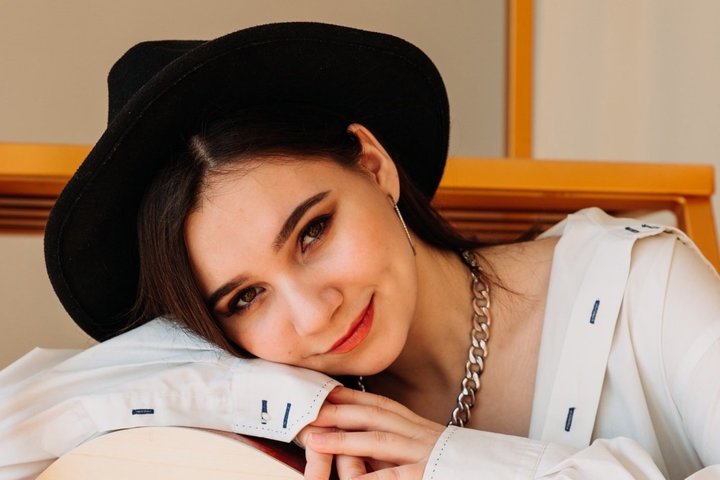
— There is no actual statistic in open sources on how profitable this is, — ironically comments Ilyas Gafarov, founder of the Tatar indie label Yummy Music. — For example, Rishat Tukhvatullin's new 'Russian' single is not yet visible in his top 10 compositions, but AliyaNur's collaboration with Russian-speaking colleagues gave her not only a bright, high-quality video clip but also performances at the 'New Year's Song' and 'Voice of Nomads.' Probably, the artist's understanding of their song's audience still matters, no matter what language they sing in.
Fauzia Kadyrova, also known as singer Defne, first released compositions under the name Fauzia. When she started singing in Tatar, she chose a new pseudonym for this direction. The project began to work so well that Kadyrova has temporarily paused releasing songs under the name Fauzia.
— t seems to me that everything depends on the person and the music, — says Kadyrova. — There are many factors here; a two-sided effect can often occur. The weak point of our artists is that they write Russian lyrics to Tatar melodies, which sounds strange to me: the music is canonically Tatar, but the lyrics are Russian — who will listen to that is unclear. Tatars will ask why it's in Russian. For Russian pop music, such a genre is too weak. Or they switch too abruptly, and it is unclear why there is no strategy or brand. As if they treat it not as work, but as a joke.
Gauga band vocalist Oscar Yunusov once released a track in Russian but soon deleted it. At the same time, he is thinking of trying himself, for example, in English:
— Tim Bulatov from Lumen told us: come on, sing in Russian. In general, many people suggest it, but I don't really feel like it myself. But in terms of experience, it is interesting if done well, not just for the sake of it.

What if we look not only at the Russian market?
— Every singer has their own path. And for many, this choice helps, — says Ilfar Karimov, executive director of the radio station. — For example, there is a singer Amirchik; if I'm not mistaken, his song became popular in Korea and Asia in general. As for Tatar singers, part of the audience took their experiments negatively. But if the song is high-quality and memorable, why not sing it; it will have an audience. Uzbek and Tajik singers do this, so why shouldn't Tatar stars do the same?
In general, says music critic Sergei Mezenov, in the current situation, “no strategy is at all ironclad; everything is very chaotic and silly.”
At the same time, he notes that there are less obvious examples of mixing languages. For instance, the Tuvan band “Yat-Kha”: “They have such a mix of everything in the world: Tuvan, folk, rock hits of the 70s, and songs with lyrics built on Russian translations of Japanese poetry.”
Another example is the Krasnoyarsk band Aina, singing in Evenki and Russian. Mezenov notes that there is not much folk music in their music in his understanding, but they mainly perform at ethnically oriented events:
— Addressing Evenki, even if it is purely at the level of the song's language rather than the sound of the music, marks them for promoters in a certain way, — says Mezenov, agreeing that, when scaling up, any Russian artist comes to the Russian language. Another option is to look globally from the start, where the native dialect, on the contrary, becomes the main feature.
— The ethno segment is quite broad if one does not confine oneself to Russia, as, for example, the Tuvans do, — says the critic. — Perhaps that is why they may not worry about moving towards some kind of crossover within the Russian Federation, because their cultural identity, slightly different from the Russian one, allows them to travel abroad.
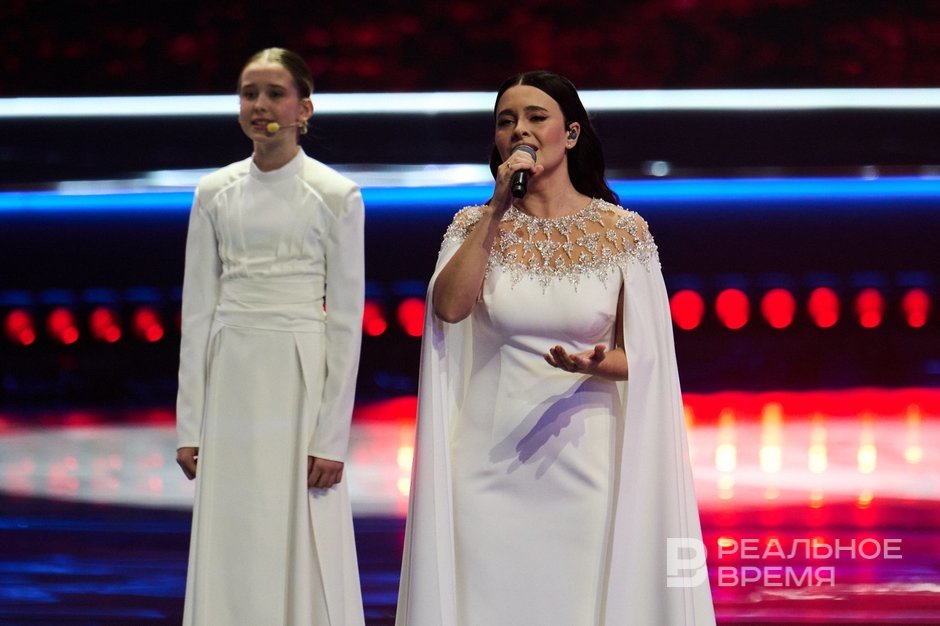
— I can judge by myself — many tell me that I limited myself for a long time when I sang only in Tatar. And in my case, it is organic to sing in Russian, Turkish, and Tatar, for instance. And to change genres, — says singer Elmira Kalimullina. — And I sing without an accent — this is an important element. Many artists look ridiculous when experimenting. But in a modern tolerant society — everything is okay or indifferent. When you live in Russia and sing only in the language of a small nation, you can win a large audience, but then it is very difficult to keep them. People, not understanding what you are singing about, will not last long. This is not classical music, which has been passed down for centuries regardless of the language it is sung in.
— Mixed albums are a strange thing to me, — Kalimullina notes.
— I sincerely believe that language limits the audience relatively little, especially in our world, where any video and even a concert can be accompanied by subtitles if it is important to convey the meaning, — says music critic Natalya Yugrinova. — In my opinion, music, delivery, charisma, and professionalism have a much stronger influence on the size of the audience than language.
Yugrinova points out that language can attract “exoticism”: for example, the band Sigur Rós sings in Icelandic and even in a made-up language, while Tinariwen sings in a Tuareg dialect.
— Probably, in practice, a rare language really narrows the audience precisely because the entire infrastructure (radio, playlists, promotion, critics) is geared towards certain languages and markets, and it is physically harder for a rare language to get there. But this is a somewhat different reason than 'the listener does not understand the words and therefore won't listen,'— notes Yugrinova. — I listen to a lot of Algerian-Moroccan-Francophone artists, and now among them there is a very strong trend towards mixing three languages — Arabic, in different dialects, French, and English, but they manage to do it fun and natural, giving the feeling that this is exactly how they think, in all three at once.
— In Russia, there are performers who sing in several languages. Usually, they start with their native language and then add Russian, — notes music critic Aidar Khusnutdinov. — If these are mainstream performers (Nurminsky, Elvin Gray), their native language is a natural means of communication with their audience. Having switched to Russian — let's be honest — it is just as natural for them and their listeners; they do not lose their old audience, only gain a new one. Such a move does not look like a sellout or 'betrayal.' If these are 'niche' performers, they often build their interaction with the audience on content about the Tatar language, Tatar identity, and so on, making it a feature that helps them promote and 'sell' their work. In such a case, switching to Russian may be perceived negatively. But this will be the case until these performers write a hit in any language and move into the first category.