National museum shows ancient Egyptian and antique collections
A significant part of the ancient collection presented in the newly opened “Cabinet of curiosities”
To mark its 131st anniversary, the National Museum of the Republic of Tatarstan fulfilled a long-held dream by opening the exhibition “Cabinet of Curiosities: Ancient Egyptian and Antique Collections.” The foundation for these collections was laid by Andrei Fedorovich Likhachev. The museum emphasizes that visitors can see these ancient finds without traveling to major capitals. However, not all items from the funds are on display — the sarcophagus of Nesitaudjatakhet, a priestess-singer of the god Amun, still awaits restoration, but Egyptian specialists recently examined it, so progress is being made.
Starting with Andrei Likhachev
Museum Director Ayrat Faizrakhmanov says that opening such a cabinet was a dream of Gulchachak Nazipova, who held his position for 14 years. Chief Curator Svetlana Izmailova also spoke of it often, and among the initiators is Irada Ayupova, the Minister of Culture of Tatarstan.
For a long time, the room where the cabinet is located remained closed. The museum has similar halls: one dedicated to numismatics, another to Tatar jewelry art, and a third housing an Orthodox collection.
— These cabinets have special security; we are accounting for “Louvre risks” here, — notes Faizrakhmanov, adding that the space was organized thanks to the national project “Family," which specifically funded the purchase of equipment.
The exhibition currently features items from several collections. The first is from Andrei Fedorovich Likhachev, whose collections marked the museum's beginning. There are also items purchased by museum trustee Vasily Zausailov. After the revolution, in 1928, many exhibits were transferred to the museum from the Cabinet of Material Culture History at the Eastern Pedagogical Institute. This included collections from the Museum of Antiquities and Arts of the Kazan Imperial Museum and gifts from the Ottoman governor of Egypt, Abbas II Hilmi, to Alexander II. Another part is the collection of Professor Nikolai Vysotsky, purchased specifically for the National Museum of Tatarstan.
Nine and a half centuries
The exhibition covers the period from the 4th century BC to the 4th century AD. In total, 167 items are on display, while the museum's total fund in this area holds 250 items. A catalog of the ancient Egyptian collection, in both paper and digital formats, is currently being prepared.
The oldest exhibit here is a vessel from the 4th millennium BC, dating to predynastic Egypt. Among the larger exhibits are a vessel from Cyprus and an amphora from 100–140 AD. Finally, there is a fragment of marble from the Colosseum, from the collection of Professor Dubyago, who brought it from Rome. Leonid Shiryaev, who also teaches the protection of cultural heritage sites, suggested that the professor was likely given it as a gift.
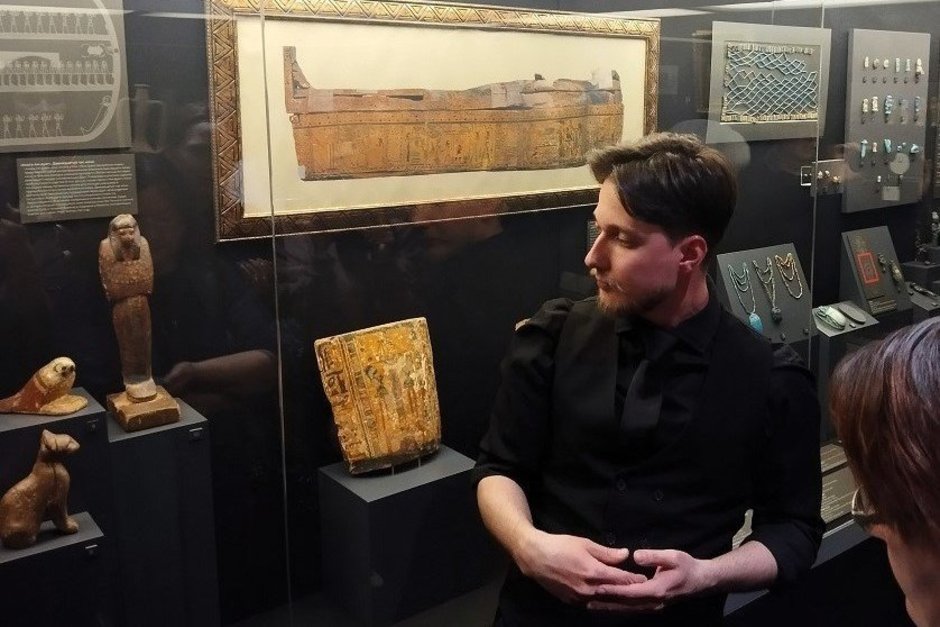
— You don't need to go to St. Petersburg or the Hermitage; you don't need to go to Moscow. There, of course, everything is beautiful and rich. They have a huge number of splendid exhibits. But you can also come in Kazan, at home, and see Ancient Egypt and antiquity, — notes Leonid Shiryaev, a researcher at the National Museum and the exhibition's chief curator.
Also on display is a fragment of the “Amduat” papyrus from the 10th–9th century BC, which was placed in burials to ensure the deceased a safe passage through the afterlife (Duat). Such a manuscript can be seen, for example, in Giza.
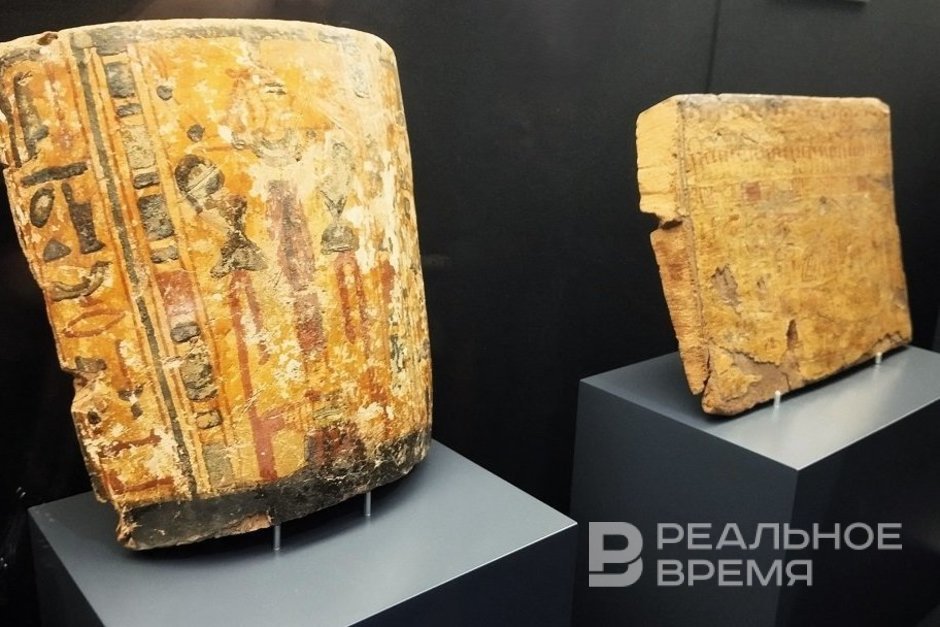
Journalists naturally expected to see the sarcophagus of Nesitaudjatakhet at the exhibition. However, fragments of other sarcophagi were on display, for example, with images of the goddess Isis and the goddess Hathor (purchased by Zausailov in 1901). Saw cuts are visible on them, indicating they were once separated. The museum also has a mummy, but not human — a crocodile mummy. The sarcophagus awaits funding for restoration and is kept in storage.
Ushabti for pharaohs
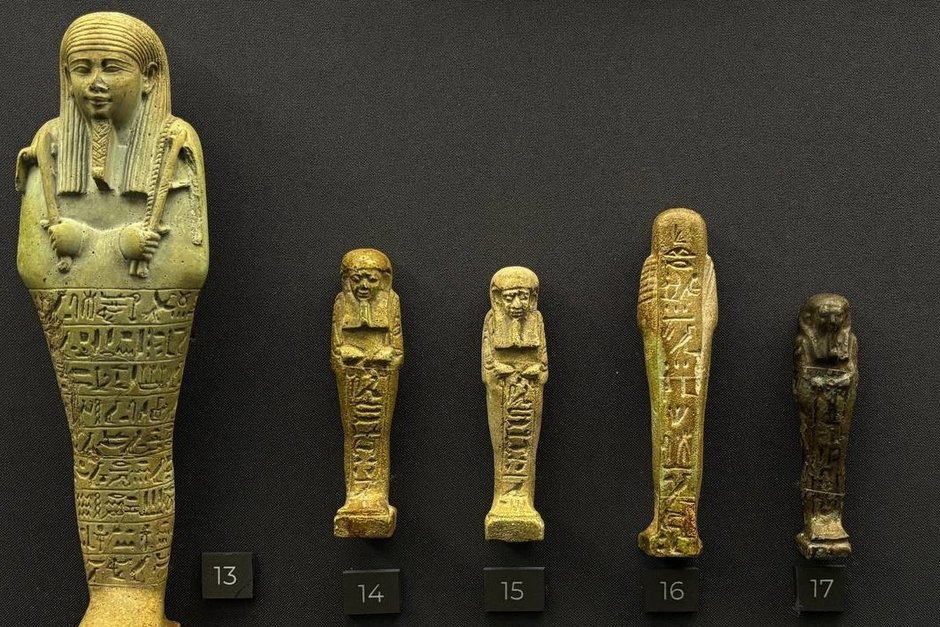
A large collection of ushabti — figurines intended to perform agricultural labor for the deceased in the afterlife — attracts attention. For example, those of Prince Ramesses Montuhirkhepeshef, son of Pharaoh Ramesses IX. There are also many amulets, such as the kukish amulet, which protects against evil spirits.
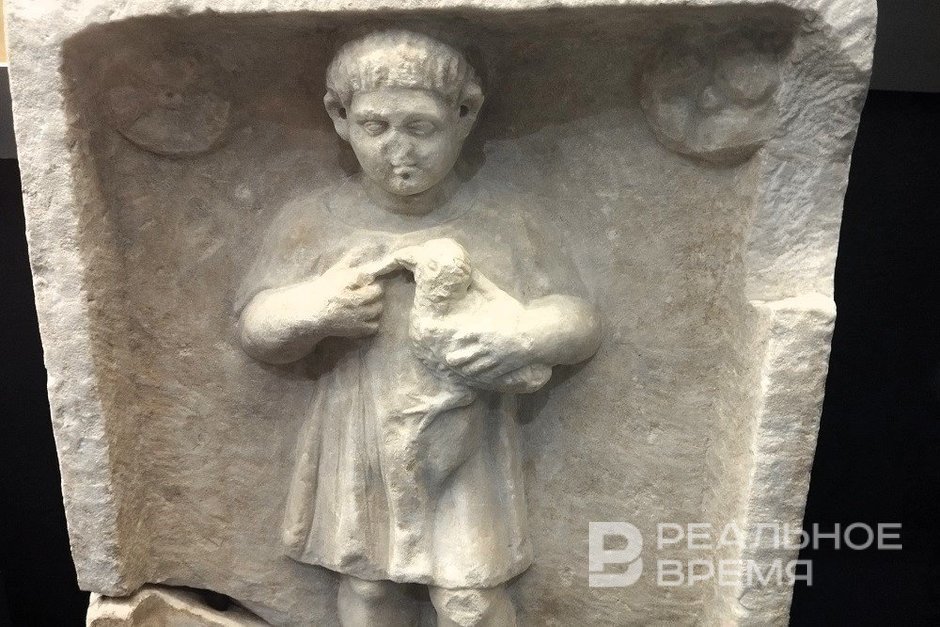
The exhibition concludes with a child's tomb relief from the 1st–3rd centuries AD, possibly from the Northern Black Sea region. The child is depicted with a chicken because, Shiryaev explained, the Greeks initially considered chickens pets and did not eat them.
Incidentally, the exhibition can be explored independently, as the exhibits have fairly detailed labels. However, the museum expects there will also be an audio guide.
The exposition will not be permanent; it will run until November. This is partly due to the need to maintain strict storage conditions and the lack of sufficient specialists. For instance, the sarcophagi require a special microclimate and expensive equipment. Some rarities will likely be replaced by copies — they simply cannot be exposed to light for so long. However, the concept of the “Cabinet of Curiosities” as a deliberately small “wow” exhibition will be preserved.
— Our plans over the next 3–4 years are to restore the items in the ancient Egyptian collection and display them in a larger space, — promised Ayrat Faizrakhmanov. — It seems to me that this is something worth coming to Kazan for, because there is nothing else like this in the Volga region. And, for example, there is no such collection of ushabti even in St. Petersburg, as Egyptologist specialists themselves admit.