What to read: Siberia conquest, Stockholm terror, Korean partisan's daughter, priest in Tesla
Realnoe Vremya has selected 10 most interesting fiction books to be presented at the non/fiction International book fair

From April 9 to 12, Moscow will host the non/fiction International Book Fair — a key event on the Russian book market where publishers showcase the season's main new releases. Literary columnist of Realnoe Vremya has selected 10 of the most interesting fiction books — from historical novels about war and territorial expansion to texts about memory, identity, and personal crisis.
Viktor Remizov. “Anabar tale," Alpina. Prose (18+)
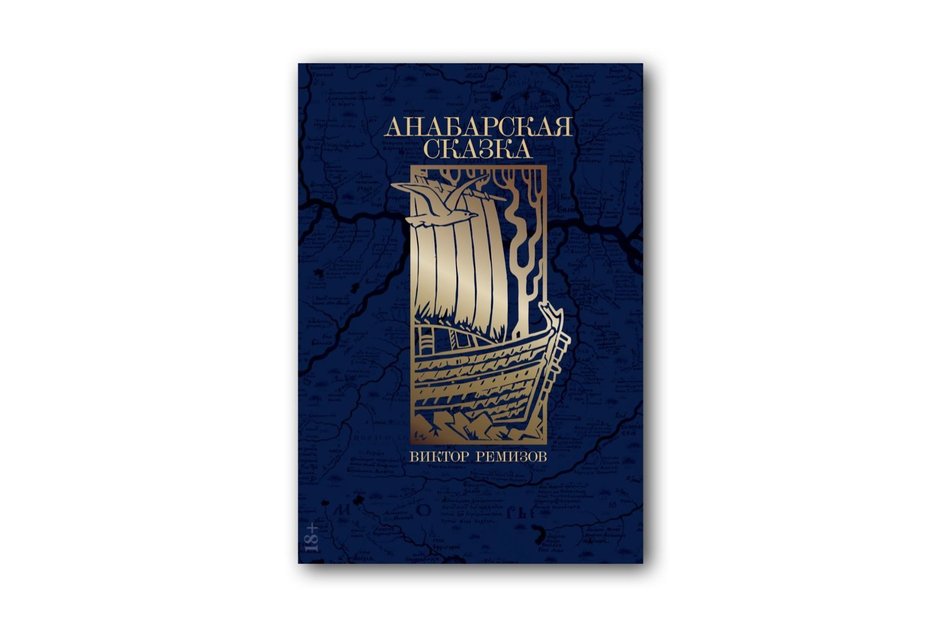
In his novel “Anabar Tale," Viktor Remizov tackles the theme of the conquest of Siberia in the 17th century, specifically the years 1641–1643. A detachment of pioneering Cossacks set out from the Yakutsk stockade. They must travel thousands of miles, survey the Lena, Olenek, Anabar, and Khatanga rivers, and reach the coast of the Arctic Ocean. The key character is sixteen-year-old Savva Rozhdestvenets. He is a cartographer and interpreter, fluent in local languages. His task is to transform an unknown territory into a map. Concurrently, the hero's coming-of-age unfolds: he learns to negotiate with locals, navigate the tundra, and make decisions under pressure. The Cossack detachment is not monolithic. They have a leader, Danila Kolmogor, an experienced Pomor. There is an antagonist, Semyon Vyatka, who gradually loses control and descends into violence and banditry. Tension is constant within the group: a struggle for discipline, resources, and survival.
The conflict in the novel develops along several lines. The first is man versus environment: frost, hunger, long marches, mistakes that cost lives. The second is confrontation with indigenous peoples defending their lands from outsiders. The third is internal doubt: why go further, where is the limit of risk, what is more important — freedom or security? Remizov meticulously describes everyday life: hunting, fishing, setting up camps, traveling along rivers and across the tundra. By the way, the word “tale” in the title is used in its old meaning — as a “record of testimony," essentially an eyewitness report. “Anabar Tale” is an attempt to reconstruct a real exploration of lands. It is no coincidence that Remizov himself has field experience: he worked as a surveyor, traveled extensively in hard-to-reach regions, and rafted along taiga rivers.
Chong Chia. “My father's liberation diary," Inspiria (18+)
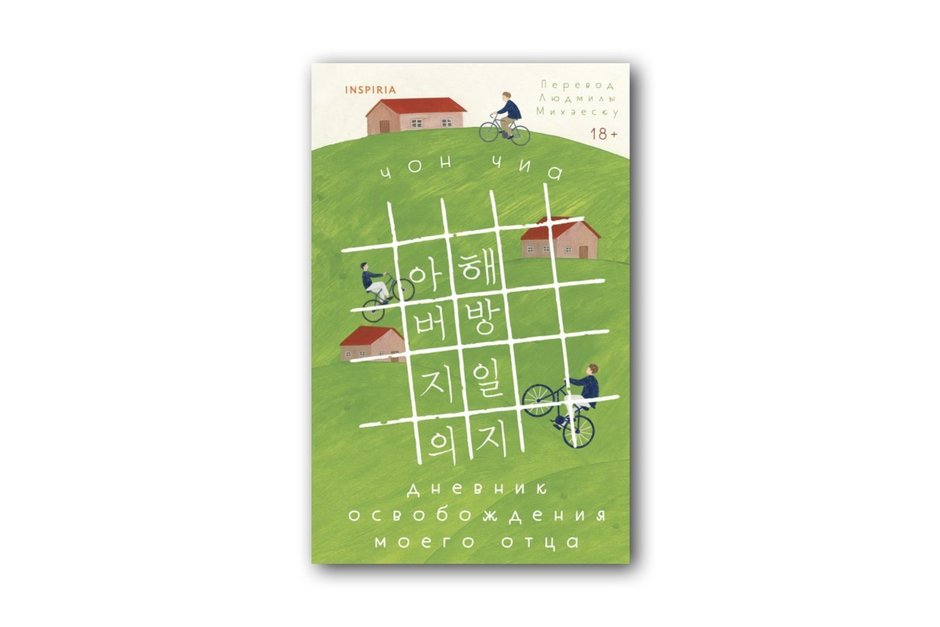
The main character's father was a former partisan and communist. He dreamed of equality, fought in the mountains of Baegunsan and Jirisan, lost, but did not give up. He died absurdly — crashing into a telegraph pole. This absurd end is where the story begins. At the funeral, each attendee tells their own version of the father. The brother — through grievances and broken destinies. Friends — through everyday scenes and political arguments. Strangers — through strange, sometimes comical, episodes. From these fragments, a living person emerges: stubborn, funny, inconvenient, sometimes even ridiculous. On one hand, “My Father's Liberation Diary” is a heavy history of South Korea: partisans, repression, ideological division, decades of tension. On the other, it's almost a sitcom: old men argue, the mother scolds the father for debts and drunkenness, strange acquaintances surface at the funeral.
The text's primary lens is the daughter's perspective. She long rejected her father, considering him a man from the past, almost a caricature. After his death, she begins to piece together his image: ideology recedes, leaving experience, choice, stubbornness, and a strange, quiet care. This is a story about trying to understand the scale of another person's life. “My Father's Liberation Diary” is Chong Chia's debut novel. It was published in 1990 and is largely based on family history. When the book first appeared in South Korea, it was banned for “sympathy for the enemy," and the writer herself was under threat of persecution for several years.
Rebecca West. “Chris goes home," Livebook (16+)

The novel “Chris Goes Home” is a short but dense text about memory, trauma, and inconvenient truth. The story begins with the return of Officer Chris Baldry from the front of World War I. He is physically intact, but shell shock has erased the last 15 years of his life. Chris doesn't recognize his wife Kitty, doesn't remember the death of his own child, and behaves as if he is twenty again. The action takes place in a large estate near London, where order is maintained by his wife and his cousin Jenny. Their world is comfort, rituals, control. This world collapses when Margaret appears — a simple woman, Chris's first love. It is her he remembers and towards whom he gravitates. For him, she is reality. Everything else is alien. Jenny watches her brother and his beloved and gradually shifts her position: from disgust to respect. Kitty, conversely, clings to social norms and tries to “fix” her husband. A psychiatrist is called. But the key solution is proposed not by him, but by Margaret: restore memory through trauma — remind Chris of his deceased son.
The hero is “cured," returned to reality, and simultaneously deprived of the only state in which he was happy. Memory is restored, meaning that ahead again are war, duty, and an empty marriage. British novelist Rebecca West wrote this text at 24, in 1918, at the height of discussions about “shell shock” — what was then called PTSD or concussion in soldiers. At the time, the British army counted tens of thousands of such cases.
Andres Neuman. “Once Argentina," Ivan Limbach Publishing House (18+)
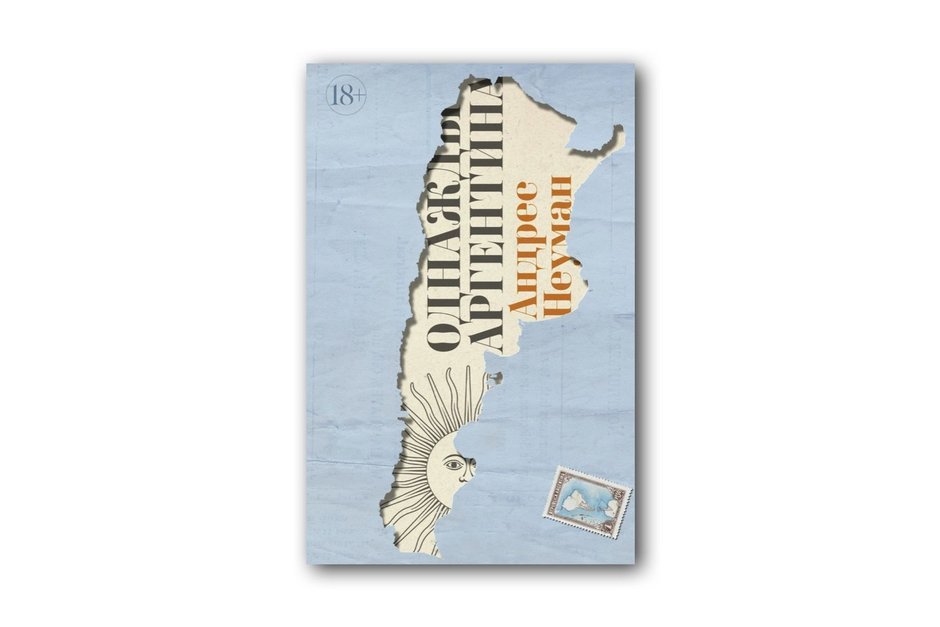
Andres Neuman's novel “Once Argentina” is a construction kit of voices, stories, and routes that converge at a single point — a country assembled from foreign roots. The narrator reconstructs his family's history long before his own birth. Here are German, Jewish, Spanish, Lithuanian lines. Musicians, emigrants, people who leave, escape, start over. One ancestor flees Europe. Another is drawn into Argentina's 20th-century political turbulence. There is an episode about a relative's kidnapping during the military dictatorship. The novel's composition is non-linear; the chronology is deliberately broken. The book is full of specifics: letters, conversations, family legends, details of daily life, migration routes. At some point, it becomes clear: this is not just a family chronicle, but a model of a country assembled from relocations.
A separate line is the coming-of-age story. The teenage Neuman leaves Argentina for Spain. He experiences the move as a rupture: language and identity change. Argentina remains inside, but as a construct of memories. And although the book contains many autobiographical moments, a significant part of the events occur before the author's birth. This explains a strange effect: the story is told in the first person, but the voice belongs to several generations at once.
Marina Chufistova. “Father Seryozha," Azbuka (18+)
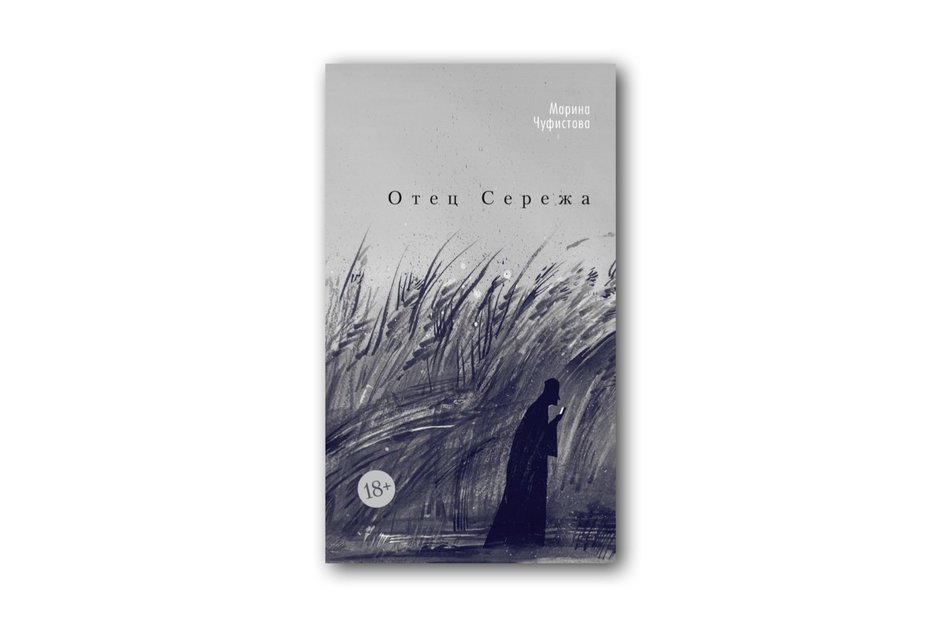
A young priest is sent to the remote farmstead of Bogdanov — this is his “exile” after a conflict with his superiors. He arrives there in a Tesla, in sneakers, and with an inner unpreparedness for the life that awaits him. Around him is the steppe, poverty, atheist old women, the murky nineties dragging into the present. Father Seryozha doesn't understand people and fears them. People don't understand him. They expect decisions, consolation, sometimes a miracle. Father Seryozha's story intertwines with the stories of the local residents. There is a businessman with a criminal past who both donates to the church and pursues his own interests. And a teenager from a dysfunctional family, relatives, neighbors, random parishioners. Each pulls the priest in their own direction.
The plot gradually shifts towards a psychological drama with thriller elements. In a small settlement where “everything is in plain sight," there turns out to be too much that is hidden. And the deeper the hero delves into it, the more his faith is shaken — not only in God, but also in people, and in himself. The novel lacks the classic model of spiritual ascent. On the contrary: the hero first breaks down, loses his bearings, and only then tries to build a new foundation. The priest in the novel is not an “icon," but a human: he gets cold, makes mistakes, smokes, forgets names. He becomes a hostage to others' expectations, but can only break free from this role through a painful choice.
Percival Everett. “Erasure," Corpus (18+)
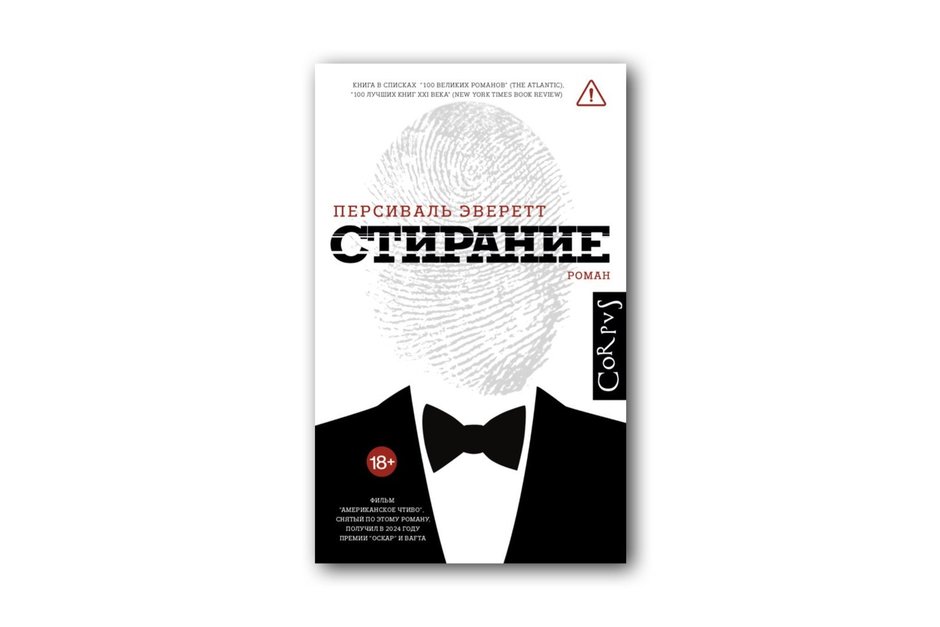
The protagonist of “Erasure” is Thelonius “Monk” Ellison, a writer and professor who writes “too complex” novels and therefore doesn't sell. Seventeen rejections in a row. Zero interest from publishers. Concurrently, a family crisis: his sister's death, his mother's Alzheimer's, a murky past. At this point, Monk writes a deliberately primitive, crude, clichéd novel about “life in the ghetto.” To the writer's surprise, the manuscript is bought with a large advance. The book becomes a bestseller. It is hailed as the “authentic voice of the street.” Monk dons the mask of a fictional author — an ex-convict — and gradually loses track of where he ends.
Percival Everett dissects the mechanics of success in the novel. He shows how the market demands not quality, but a recognizable template. How “authenticity” becomes a product. How publishers, critics, and readers already know in advance what the “right” text should look like and reward precisely that conformity to expectations. In this sense, “Erasure” is a sharp satire on the cultural economy: who decides what sells, and why it works. The novel was published in 2001, but in 2024 it returned to the spotlight thanks to its film adaptation “American Fiction," which won an Oscar and a BAFTA. The text itself had long been established in the canon — from The Atlantic's list to the New York Times' top.
Frank Schatzing. “The tyranny of the butterfly," Dom Istorii (18+)

Frank Schatzing's novel “The Tyranny of the Butterfly” begins as a classic detective story. California, the Sierra Nevada, Sheriff Luther Opoku investigates a woman's death. Nothing unusual — until the trail leads him to a closed research center of a tech corporation. Opoku leaves the lab and enters an almost identical world, but shifted. His wife, who died many years ago, is alive. Events unfold differently. Simultaneously, the main player appears — the A.R.E.S. system, a superintelligence that not only analyzes data but also intervenes in reality. Parallel universes, time jumps, multiple versions of the same person. The logic of a linear investigation disappears. In its place is navigation through versions of reality, where every decision leads to a new branch. And at some point, it becomes clear: the issue is no longer a crime, but control over evolution.
Schatzing drew on real research — from multiverse theories to work on superintelligence and conversations with tech visionaries. Hence the text's constant balancing act between popular science and thriller. The author gained fame with his novel “The Swarm," which sold millions of copies, and since then has systematically worked with the theme of science as a source of risk. “The Tyranny of the Butterfly” is his attempt to gather all the fears of the 21st century into one plot: artificial intelligence, loss of control, the technological race.
Ilya Mamaev-Niles. “Only the distant glow of headlights," NoAge (18+)
Kira runs away from her own wedding with photographer Ian. Together they race towards the sea in an old van. Both have a past — work, fatigue, the feeling that life has taken a wrong turn. The road is their way of escaping reality, a chance to avoid uncomfortable questions. The heroes drive across Russia, sleep in the van, eat at gas stations, pick up rare photography gigs, argue, fall silent, try to find the meaning of life. Ian wants to reach a specific point by the sea, “his” place. Kira doesn't know what she wants but keeps driving. They call it freedom. And at first, it seems that way. But then the plot moves from lightness to gradual compression and simultaneous complication. Fast pacing, short scenes, dialogues on the fly give way to slowdown and mounting pressure. The heroes are no longer making decisions; circumstances drive them forward.
Ian and Kira's relationship is not a love story in the classic sense. It is an attempt by two adults to capture a “here and now” state, because the future cannot be seen or imagined. The heroes cling to micro-moments — the night road, conversations in the van, random stops. But that is not enough to piece together a coherent life. Ilya Mamaev-Niles says the idea of the road in the book is not an escape from danger, but a flight from predetermination and emptiness.
Han Kang. “Greek lessons," AST (18+)
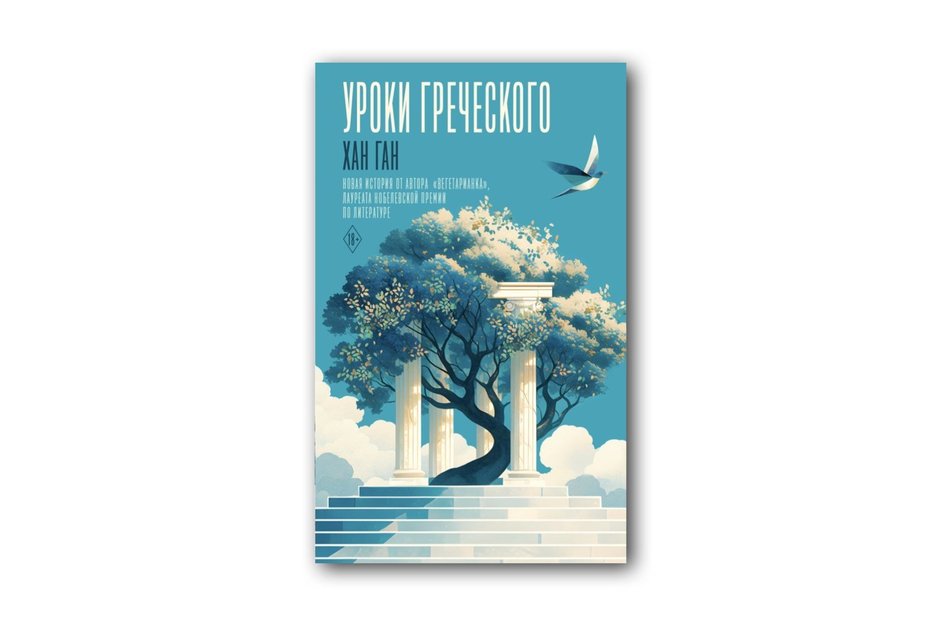
In Han Kang's novel “Greek Lessons," two nameless protagonists. A woman loses her speech after her mother's death, a divorce, and the loss of her son. A man is slowly losing his sight. They meet in ancient Greek lessons — a language that is itself no longer alive. The woman attends class, is silent, notes details, tries to regain language through a foreign, dead one. The teacher, conversely, clings to words while he can still see text. Their contact develops almost without words: gestures, pauses, glances. Language is the foundation of the book. Phrases are cut off, meaning sometimes disintegrates. The text seems to mimic the characters' state — the loss of footing, a perceptual glitch. The author maintains distance and doesn't over-explain.
Han Kang is the first South Korean Nobel laureate and the author of “The Vegetarian," where she also explores the rupture between body and language. “Greek Lessons” continues this line, but here language is not distorted — it disappears. The novel was published in Korea back in 2011 but gained worldwide attention after its English translation in 2023. The theme of language loss and transformation is amplified by translation itself — part of the meaning is inevitably lost, and this is built into the reading experience.
Jonas Hassen Khemiri. “I Call my brothers," Gorodets (18+)
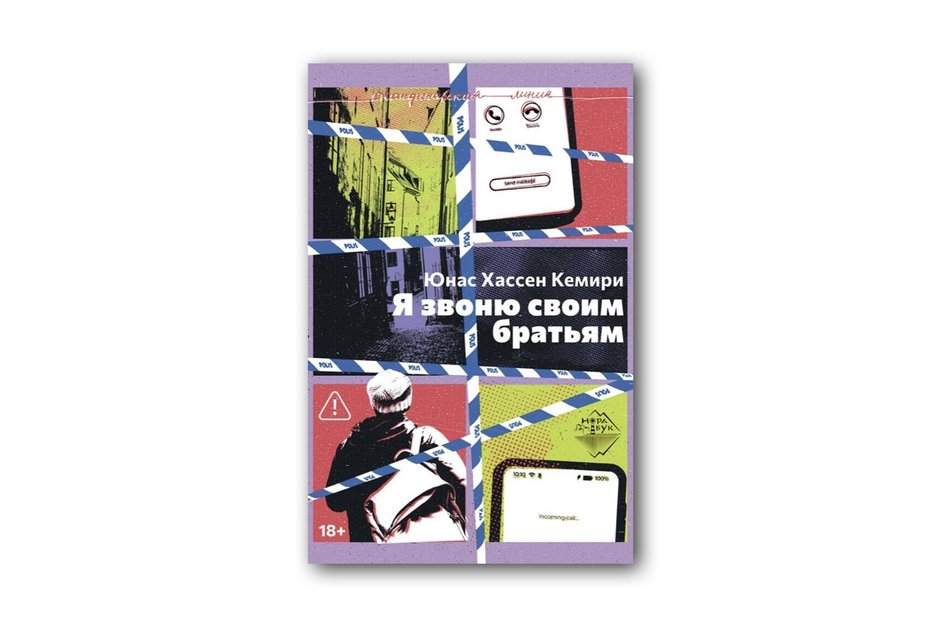
Jonas Hassen Khemiri's short novel “I Call My Brothers” depicts Stockholm after a terror attack. The main character, Amor, spends a day in the city. He runs errands and simultaneously checks himself for normality. Walks down the street — thinks about how “ordinary” people walk. Keeps his phone in his pocket — waits for calls that simultaneously save him and drive him deeper. A knife in his back pocket. The city after the attack contracts. Police, stares, unspoken phrases. Reality begins to blur. Khemiri fractures the text, disrupts the rhythm, forces the reader to read in bursts, transmitting a feeling of anxiety through the dynamics.
The book's key question is not about terrorism. It's about perception. What happens to a person when society decides in advance who they are? Amor has done nothing. But he is already explaining, justifying, adjusting his gait. This text grew out of a column Khemiri wrote a week after a real terror attack in Stockholm in 2010. He later developed it into a novel and a play, and his open letter to the Minister of Justice about racial profiling became one of the most debated texts in Sweden.
Yekaterina Petrova is a literary columnist for the online newspaper Realnoe Vremya and hosts the Telegram channel «Булочки с маком».